

How Minor Maintenance Issues Can Have a Bigger Impact Than You Think
You’re getting ready to sell your home.
You’ve cleaned the carpets.
Touched up the paint.
Decluttered the closets.
The landscaping looks great.
As you walk through the house, you notice a few small issues:
- A dripping faucet
- A loose handrail
- A missing outlet cover
- A sticky door latch
- A burned-out light bulb
Nothing major.
Nothing expensive.
Nothing that seems worth worrying about.
Or is it?
While these items may seem minor, small repairs can have a surprisingly large impact during the home-selling process. They can influence buyer perception, appear in inspection reports, and sometimes raise questions about overall maintenance.
The good news?
Many of these issues are inexpensive and easy to address before listing.
Small issues can have a surprisingly large impact during the home-selling process. They can influence buyer perception, appear in inspection reports, and sometimes raise questions about overall maintenance. [Why Small Repairs Matter Before Listing]
BAM Home Inspections Share to X
Buyers Notice More Than You Think
When homeowners live in a property for years, it’s easy to become accustomed to minor imperfections.
That loose doorknob?
You’ve probably stopped noticing it.
The dripping bathroom faucet?
It’s become background noise.
The sticking screen door?
You’ve learned how to work around it.
Buyers, however, are seeing the home for the first time.
They notice everything.
And while a single minor issue rarely affects a transaction, multiple small issues can create an impression that the home hasn’t been maintained as carefully as it actually has.
Perception matters.

Small Issues Can Lead to Bigger Questions
Imagine a buyer notices:
- Burned-out light bulbs
- Missing caulk around a bathtub
- Loose cabinet hardware
- A leaking hose bib
- A damaged window screen
Individually, these aren’t major concerns.
But collectively, they may cause the buyer to wonder:
“If these visible items haven’t been maintained, what about the things I can’t see?”
That’s not necessarily a fair conclusion.
But it’s a common human reaction.
Addressing minor issues beforehand helps create confidence in the home’s overall condition.

Home Inspectors Report What They Observe

One of the most common misconceptions sellers have is: "The inspector won't mention something that small." In reality, inspectors document observed deficiencies regardless of size. [Why Small Repairs Matter Before Listing]
BAM Home Inspections Share to X
One of the most common misconceptions sellers have is:
“The inspector won’t mention something that small.”
In reality, inspectors document observed deficiencies regardless of size.
Examples may include:
- Loose handrails
- Missing GFCI protection
- Dripping faucets
- Inoperable light fixtures
- Damaged weatherstripping
- Missing outlet covers
- Cracked window panes
- Loose toilets
- Damaged caulking
Many of these items are simple repairs.
However, once documented in an inspection report, they often become discussion points during negotiations.
The Psychology of Deferred Maintenance
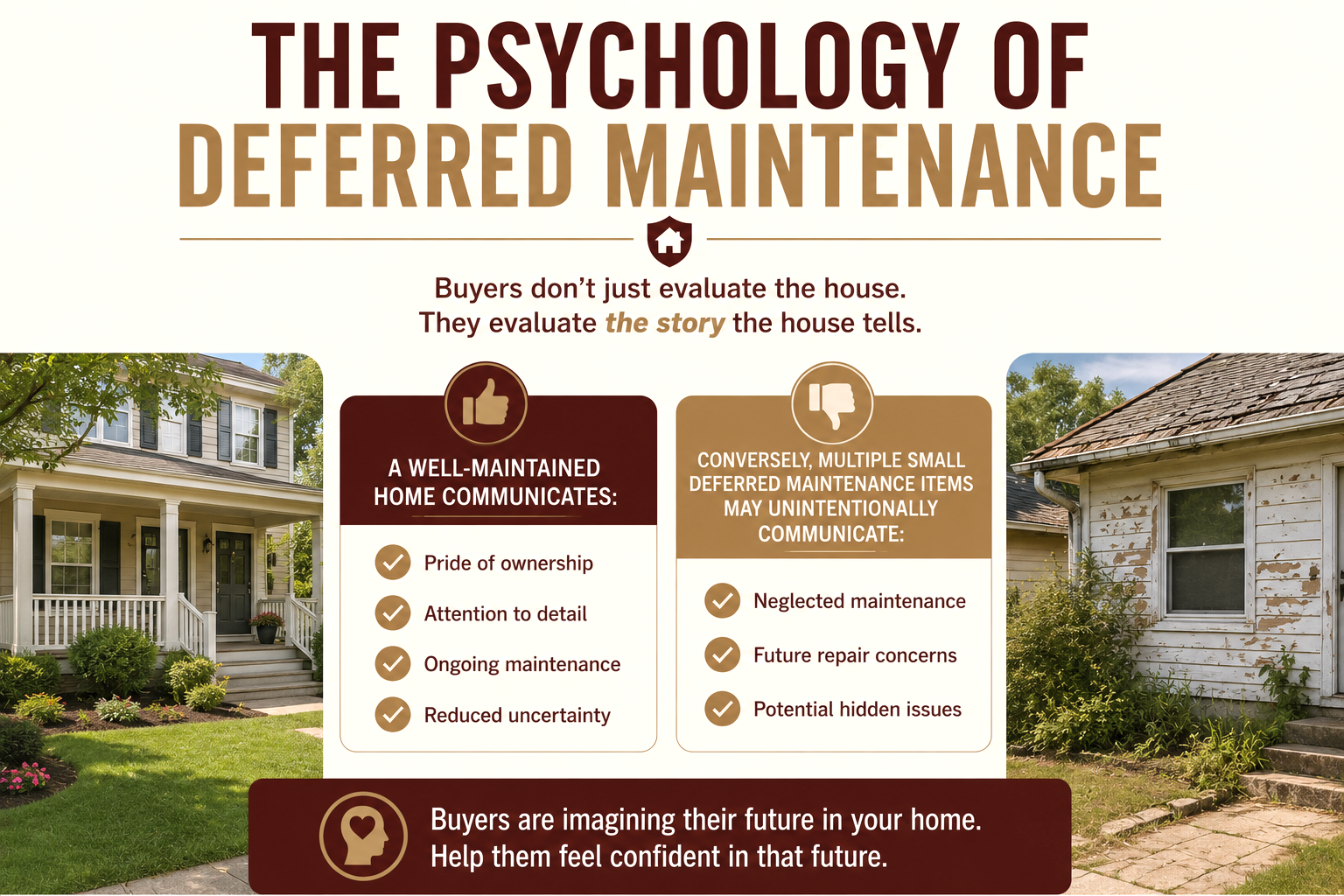
Buyers don’t just evaluate the house.
They evaluate the story the house tells.
A well-maintained home communicates:
✓ Pride of ownership
✓ Attention to detail
✓ Ongoing maintenance
✓ Reduced uncertainty
Conversely, multiple small deferred maintenance items may unintentionally communicate:
✓ Neglected maintenance
✓ Future repair concerns
✓ Potential hidden issues
Whether those assumptions are accurate or not, they can influence buyer confidence.
The Most Common Small Repairs Worth Addressing
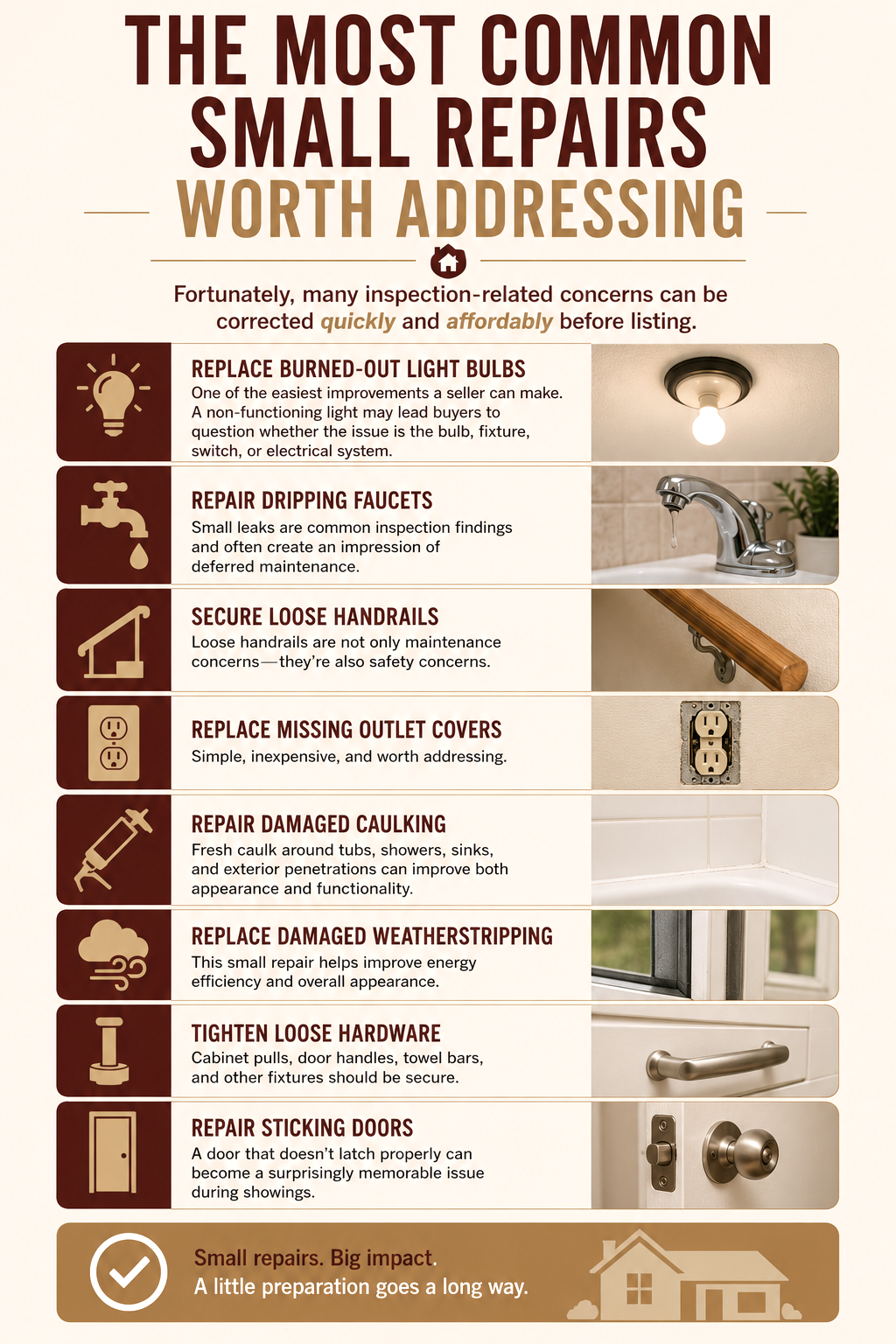
Fortunately, many inspection-related concerns can be corrected quickly and affordably before listing.
- Replace Burned-Out Light Bulbs
- One of the easiest improvements a seller can make.
- A non-functioning light may lead buyers to question whether the issue is the bulb, fixture, switch, or electrical system.
- Repair Dripping Faucets
- Small leaks are common inspection findings and often create an impression of deferred maintenance.
- Small leaks are common inspection findings and often create an impression of deferred maintenance.
- Secure Loose Handrails
- Loose handrails are not only maintenance concerns—they’re also safety concerns.
- Loose handrails are not only maintenance concerns—they’re also safety concerns.
- Replace Missing Outlet Covers
- Simple, inexpensive, and worth addressing.
- Simple, inexpensive, and worth addressing.
- Repair Damaged Caulking
- Fresh caulk around tubs, showers, sinks, and exterior penetrations can improve both appearance and functionality.
- Fresh caulk around tubs, showers, sinks, and exterior penetrations can improve both appearance and functionality.
- Replace Damaged Weatherstripping
- This small repair helps improve energy efficiency and overall appearance.
- This small repair helps improve energy efficiency and overall appearance.
- Tighten Loose Hardware
- Cabinet pulls, door handles, towel bars, and other fixtures should be secure.
- Cabinet pulls, door handles, towel bars, and other fixtures should be secure.
- Repair Sticking Doors
- A door that doesn’t latch properly can become a surprisingly memorable issue during showings.
Small Repairs Can Reduce Inspection Findings
No home is perfect.
Even newer homes have inspection findings.
The goal isn’t to eliminate every comment from the inspection report.
The goal is to reduce avoidable findings that don’t need to be there.
Addressing small repairs before listing often results in:
- Fewer minor inspection comments
- Less buyer concern
- Fewer repair requests
- Smoother negotiations
That’s a win for everyone involved.

Colorado Seller Tip
Before listing, walk through your home as if you were seeing it for the first time.
Ask yourself:
✓ Does every light work?
✓ Do doors latch properly?
✓ Are faucets dripping?
✓ Are handrails secure?
✓ Are smoke alarms functioning?
✓ Is caulking intact?
✓ Are outlet covers present?
Small details often create a big impression.
What Sellers Should Not Do
While addressing minor repairs is usually beneficial, sellers should avoid attempting major repairs outside their expertise.
Electrical, structural, roofing, plumbing, and HVAC concerns are often best left to qualified professionals.
The goal isn’t to perform a full renovation before listing.
The goal is to address simple maintenance items that improve presentation and reduce unnecessary inspection findings.
The goal isn't to perform a full renovation before listing. While addressing minor repairs is usually beneficial, sellers should avoid attempting major repairs outside their expertise. [Why Small Repairs Matter Before Listing]
BAM Home Inspections Share to X
The Return on Investment Is Often Excellent
One of the best things about small repairs is that many require:
- Minimal cost
- Minimal time
- Minimal effort
Yet they can positively influence:
- Buyer confidence
- Property presentation
- Inspection outcomes
- Negotiation discussions
A few pre-listing improvements offer a better return on investment.

Final Thoughts
Selling a home is about more than square footage and finishes.
It’s also about confidence.
Buyers want to feel that the home has been cared for.
Addressing small repairs before listing helps communicate exactly that.
Will fixing a dripping faucet or replacing a missing outlet cover dramatically increase the sale price?
Probably not.
But it may help create a stronger overall impression, reduce unnecessary inspection findings, and make buyers feel more comfortable moving forward.
And sometimes, it’s the small things that make the biggest difference.

Seller Success Tip
Don’t underestimate the power of small repairs.
A weekend spent addressing minor maintenance items today may help create a smoother transaction tomorrow.
Frequently Asked Questions (FAQs)
Yes. While a single burned-out light bulb or dripping faucet may seem insignificant, multiple minor issues can influence how buyers perceive the overall condition of the home. Small repairs help demonstrate pride of ownership and attention to maintenance, which can increase buyer confidence.
Absolutely. Home inspectors document observed deficiencies regardless of size. Common findings may include loose handrails, dripping faucets, missing outlet covers, damaged caulking, sticking doors, or inoperable light fixtures. While many of these items are inexpensive to repair, they can become discussion points during negotiations once included in the inspection report.
Some of the most worthwhile repairs include:
- Replacing burned-out light bulbs
- Repairing dripping faucets
- Securing loose handrails
- Replacing missing outlet covers
- Repairing damaged caulking
- Replacing worn weatherstripping
- Tightening loose hardware
- Fixing sticking doors
These improvements are typically inexpensive and can have a positive impact on buyer perception and inspection results.
In many cases, yes. While no home is free from inspection findings, addressing obvious maintenance items before listing can help reduce avoidable comments in the inspection report. Fewer minor findings may lead to fewer repair requests, smoother negotiations, and a more positive experience for both buyers and sellers.
Not necessarily. Simple maintenance items are often reasonable for homeowners to address. However, significant concerns involving electrical systems, roofing, plumbing, structural components, or HVAC equipment are generally best left to qualified professionals. Sellers should focus on safe, appropriate repairs and avoid work beyond their level of expertise.
Yes. Buyers often evaluate not only the home itself but also how well it appears to have been maintained. A collection of small issues—such as loose hardware, damaged caulking, missing outlet covers, and dripping faucets—can sometimes create concerns about deferred maintenance or hidden problems. Addressing these items beforehand can help create a stronger overall impression and encourage buyer confidence.