
Septic Inspections in Colorado
Understand one of the most critical—and costly—systems on the property.
Septic systems are one of the most important components of a home—and one of the least understood. Unlike city sewer systems, septic systems are entirely the homeowner’s responsibility. A septic inspection evaluates the condition and function of the system, helping identify potential issues before they become major problems.
looking for something specific?
click for your question -->
What is a Septic Inspection?
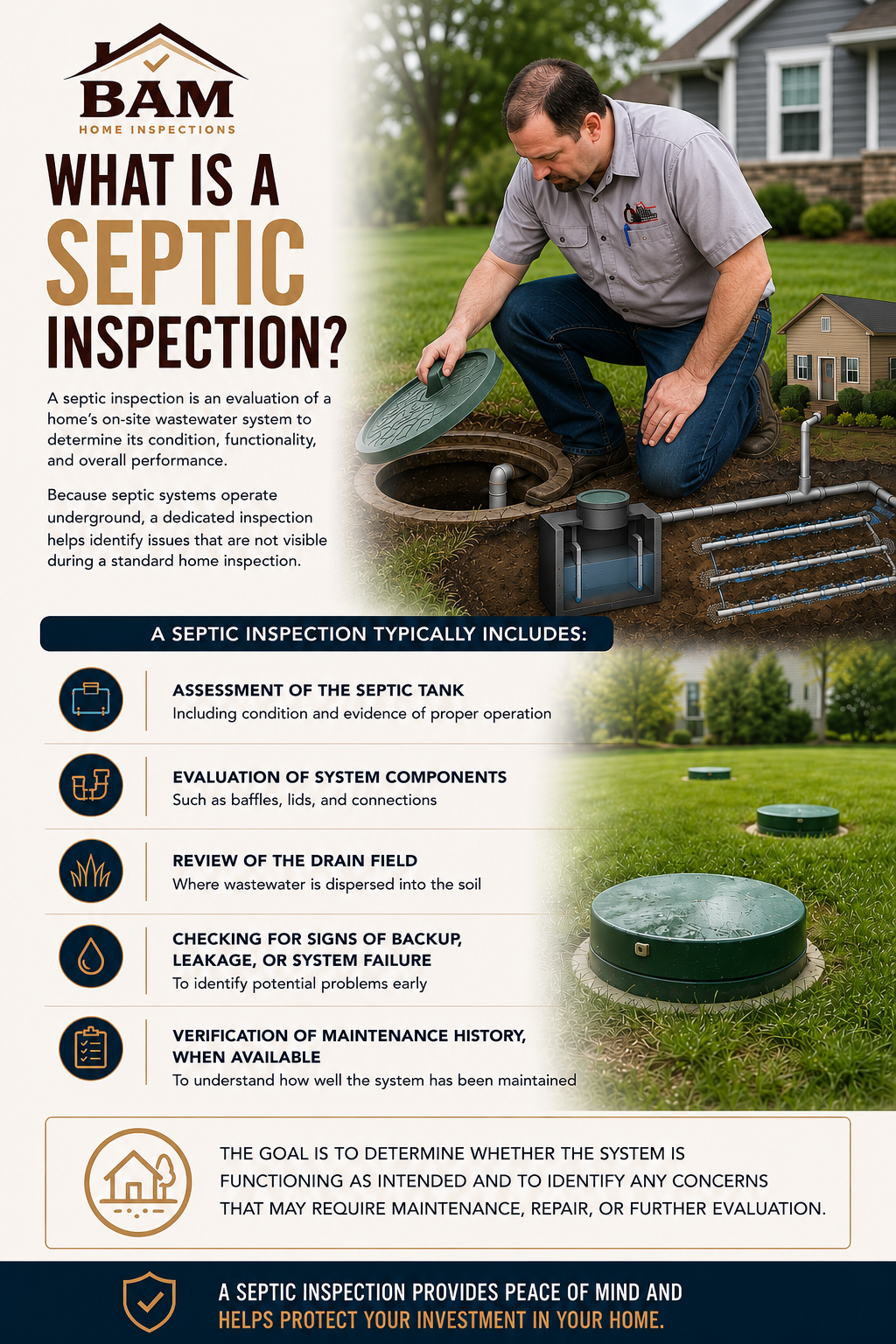
A septic inspection is an evaluation of a home’s on-site wastewater system to determine its condition, functionality, and overall performance. Because septic systems operate underground, a dedicated inspection helps identify issues that are not visible during a standard home inspection.
A septic inspection typically includes:
- Assessment of the septic tank, including condition and evidence of proper operation
- Evaluation of system components, such as baffles, lids, and connections
- Review of the drain field, where wastewater is dispersed into the soil
- Checking for signs of backup, leakage, or system failure
- Verification of maintenance history, when available
The goal is to determine whether the system is functioning as intended and to identify any concerns that may require maintenance, repair, or further evaluation.

Do I Need a Septic Inspection When Buying a Home?
Yes. If the home uses a septic system, a septic inspection is strongly recommended when buying a home.
Unlike homes connected to a municipal sewer system, a septic system is a private, on-site wastewater system. Its condition, performance, and maintenance history can vary—and issues are not always visible during a standard home inspection.
A septic inspection helps:
- Evaluate the condition of the tank and components
- Identify signs of failure, backup, or improper function
- Assess drainage and absorption performance in the drain field
- Determine if maintenance or repairs may be needed
\Septic system repairs or replacement can be costly, making it important to understand the system’s condition before closing on your transaction.
Are Septic Inspections Important In Colorado?
Yes. Septic inspections are important throughout Colorado’s Front Range—including Colorado Springs, Castle Rock, Pueblo, and surrounding areas—where many homes rely on septic systems. Properties outside municipal sewer service depend on private septic systems, which are not publicly maintained or monitored. Their condition can vary based on soil composition, usage, maintenance history, and local environmental factors.
A septic inspection helps evaluate:
- System condition and functionality, including the tank and visible components
- Drain field performance, which is influenced by soil type and drainage characteristics common in Colorado
- Signs of backup, failure, or improper operation
- Maintenance needs or potential repairs, which can be costly if overlooked
Because septic systems are underground, issues are not always visible during a standard home inspection.


What Are Some Fast Facts About Septic Inspections?
- 🚽 Septic Systems Are Not Connected to City Sewer. Homes with septic systems rely on an on-site wastewater system that must be properly maintained and functioning to safely process household waste.
- 💰 Repairs or Replacement Can Be Expensive. Major septic repairs—or full system replacement—can cost thousands to tens of thousands of dollars, making inspection especially important before purchase.
- 🔍 Most of the System Is Underground & Out of Sight. Because septic components are buried, many issues are not visible during a standard home inspection and can go unnoticed without a dedicated evaluation.
- 🛠️ Inspection Evaluates Tank, Components & System Function. A septic inspection may include evaluation of the tank, lids, baffles, connections, drain field indicators, and signs of proper operation or failure, depending on system access and inspection scope.
- 🏡 Recommended for All Homes with Septic Systems. Whether buying a home, approaching the end of a builder warranty, or evaluating an existing property, a septic inspection provides valuable insight into system condition and performance.
- 🤝 Can Provide Valuable Negotiation Leverage. Identifying deficiencies before closing may help buyers negotiate repairs, credits, or maintenance before taking ownership.
- ⚠️ Septic Problems Are Often Hidden Until Failure Occurs. Slow drains, odors, soggy areas, or backups may not appear until a system is already experiencing significant issues.
- ⏳ Early Detection Can Help Avoid Costly Surprises. Identifying concerns early may allow for maintenance or minor repairs before larger failures develop.
Septic Inspections in Colorado
Proudly serving Colorado Springs and surrounding communities, including Monument, Fountain, Peyton, and Woodland Park—along with the greater Front Range, including Castle Rock, Denver, and Pueblo.
Our certified, highly experienced septic technicians bring extensive knowledge of common regional conditions that can impact your septic tank.
Please note, that in El Paso County, the septic inspection is the responsibility of the seller, whereas in Teller County, it is the responsibility of the buyer. Availability may vary accordingly.


What additional services are available?
A sewer scope is most valuable when combined with a full home inspection.
Also consider:
Radon Testing
Radon is an odorless, colorless, and naturally occurring radioactive gas that can cause serious health issues over time.
Wood-Destroying Organism Inspection
Our WDO inspection includes a detailed examination of the home looking for signs of wood destroying organisms to include termites, carpenter ants, carpenter beetles, and wood-boring beetles. Fulfills most VA Loan requirements.
Mold Testing
Mold is more than just an unsightly problem—it can affect both the structural integrity of a home and the health of those living inside it.
FAQs
A septic inspection typically includes:
- Assessment of the septic tank, including condition and evidence of proper operation
- Evaluation of system components, such as baffles, lids, and connections
- Review of the drain field, where wastewater is dispersed into the soil
- Checking for signs of backup, leakage, or system failure
- Verification of maintenance history, when available
The goal is to determine whether the system is functioning as intended and to identify any concerns that may require maintenance, repair, or further evaluation.
The cost of a septic inspection typically ranges from a few hundred to several hundred dollars, depending on the scope of the inspection and the type of system.
Pricing can vary based on several factors, including:
- Type of septic system (conventional vs. advanced systems)
- Scope of inspection, such as a basic evaluation vs. a more comprehensive inspection with pumping or specialized testing
- Accessibility of components, including the tank and lids
- Local service providers and additional services required
More comprehensive inspections—especially those that include pumping the tank or evaluating the drain field in detail—may cost more but provide a deeper understanding of the system’s condition.
A septic inspection typically takes 1 to 3 hours, depending on the type of system, accessibility, and scope of the evaluation.
The duration can vary based on several factors, including:
- Type and complexity of the septic system
- Accessibility of the tank, lids, and components
- Whether pumping is required as part of the inspection
- Condition of the system and any findings that require closer evaluation
Because septic systems are underground, additional time may be needed to locate and access components or to perform a more thorough assessment of the system’s performance.
Septic system repairs are typically the homeowner’s responsibility, but they can often be negotiated during a real estate transaction. If issues are identified during a septic inspection, buyers and sellers may work together to determine how repairs will be handled prior to closing. This can depend on the severity of the issue, local requirements, and the terms of the purchase agreement.
With proper maintenance, a septic system can last for decades—but lifespan can vary based on usage, design, and environmental conditions.
Many well-maintained systems function effectively for 20 to 40 years or more, but performance depends on several key factors, including:
- Regular maintenance and pumping, which helps prevent buildup and system strain
- Household usage and water volume, which can impact system capacity over time
- Soil conditions and drainage, which affect how well the drain field functions
- System design and installation quality
- Environmental factors, such as moisture levels and seasonal changes
Without proper care, systems may experience reduced efficiency, drainage issues, or premature failure.
Because septic systems operate underground, early warning signs may be subtle. Recognizing these indicators can help prevent more serious and costly problems.
Signs of septic failure may include:
- Slow drains or frequent backups in sinks, tubs, or toilets
- Sewage odors inside the home or around the yard
- Standing water or soggy soil near the septic tank or drain field
- Unusually lush or fast-growing grass over the drain field area
- Gurgling sounds in plumbing fixtures
- Wastewater surfacing above ground
These conditions may indicate that the system is not properly processing or dispersing wastewater.
Yes. Many septic system issues can be repaired, depending on the type and severity of the problem. Common septic concerns—such as minor blockages, damaged components, or maintenance-related issues—can often be addressed with targeted repairs or servicing. In some cases, routine maintenance like pumping or cleaning can restore proper function.
Repairs may include:
- Clearing blockages or buildup in the system
- Repairing or replacing components, such as baffles, lids, or pipes
- Addressing drainage issues within the system
- Improving system performance through maintenance or adjustments
More significant issues—such as drain field failure or extensive system damage—may require more involved repairs or partial system replacement.
Yes. Some lenders and local jurisdictions require a septic inspection as part of a real estate transaction. In certain areas, including El Paso County (Colorado Springs), local regulations require the seller to provide a current septic inspection report. In this case, the report must typically be no more than 6 months old at the time of the transaction.
Even when not required by a lender or local authority, a septic inspection is strongly recommended when a home relies on an on-site wastewater system. Because septic systems are not connected to public sewer and operate below ground, their condition is not always visible.
In most cases, no. It’s best not to pump the septic tank before a septic inspection—unless specifically recommended by the inspector. Pumping the tank before the inspection can make it more difficult to evaluate the system’s current condition. Inspectors often rely on observing liquid levels, flow, and signs of use to assess how the system is functioning.
Instead, the typical process is:
- The inspection is performed first to evaluate the system under normal operating conditions
- Pumping may be recommended during or after the inspection, if needed for further evaluation or maintenance
- In some cases, pumping is included as part of a more comprehensive inspection
Pumping too early can temporarily mask certain issues, such as improper drainage or system overload, which are important to identify during the inspection process.
Yes. A septic inspection is worth it because it helps identify hidden issues before they become costly problems. Septic systems operate underground, which means their condition is not always visible. Without an inspection, problems such as system failure, drainage issues, or costly repairs may go unnoticed until after you move in.
A septic inspection provides value by:
- Identifying potential issues early, before they worsen
- Evaluating system performance and condition
- Helping you avoid unexpected repair or replacement costs
- Providing clear information for negotiation during a home purchase
Septic system repairs or replacement can be significant, making a professional inspection a relatively small investment compared to the potential cost of undiscovered issues.