

How a Little Preparation Can Help Your Inspection Go More Smoothly
You’ve accepted an offer.
The inspection is scheduled.
Now what?
For many sellers, inspection day can feel stressful. Questions begin to arise:
- Should I be home?
- What should I clean?
- Do I need to fix anything beforehand?
- What if the inspector can’t access something?
The good news is that preparing for a home inspection doesn’t have to be complicated.
In fact, a little preparation can go a long way toward helping the inspection proceed smoothly and ensuring the buyer receives the most accurate evaluation possible.
One of the biggest misconceptions sellers have is that preparing for an inspection means hiding defects or making the home appear perfect.
That’s not the goal.
The goal is simple:
Help the inspector access and evaluate the home’s systems and components safely and efficiently.
Use this checklist to prepare for inspection day.
One of the biggest misconceptions sellers have is that preparing for an inspection means hiding defects or making the home appear perfect. That's not the goal. [The Ultimate Seller Checklist Before Inspection Day]
BAM Home Inspections Share to X
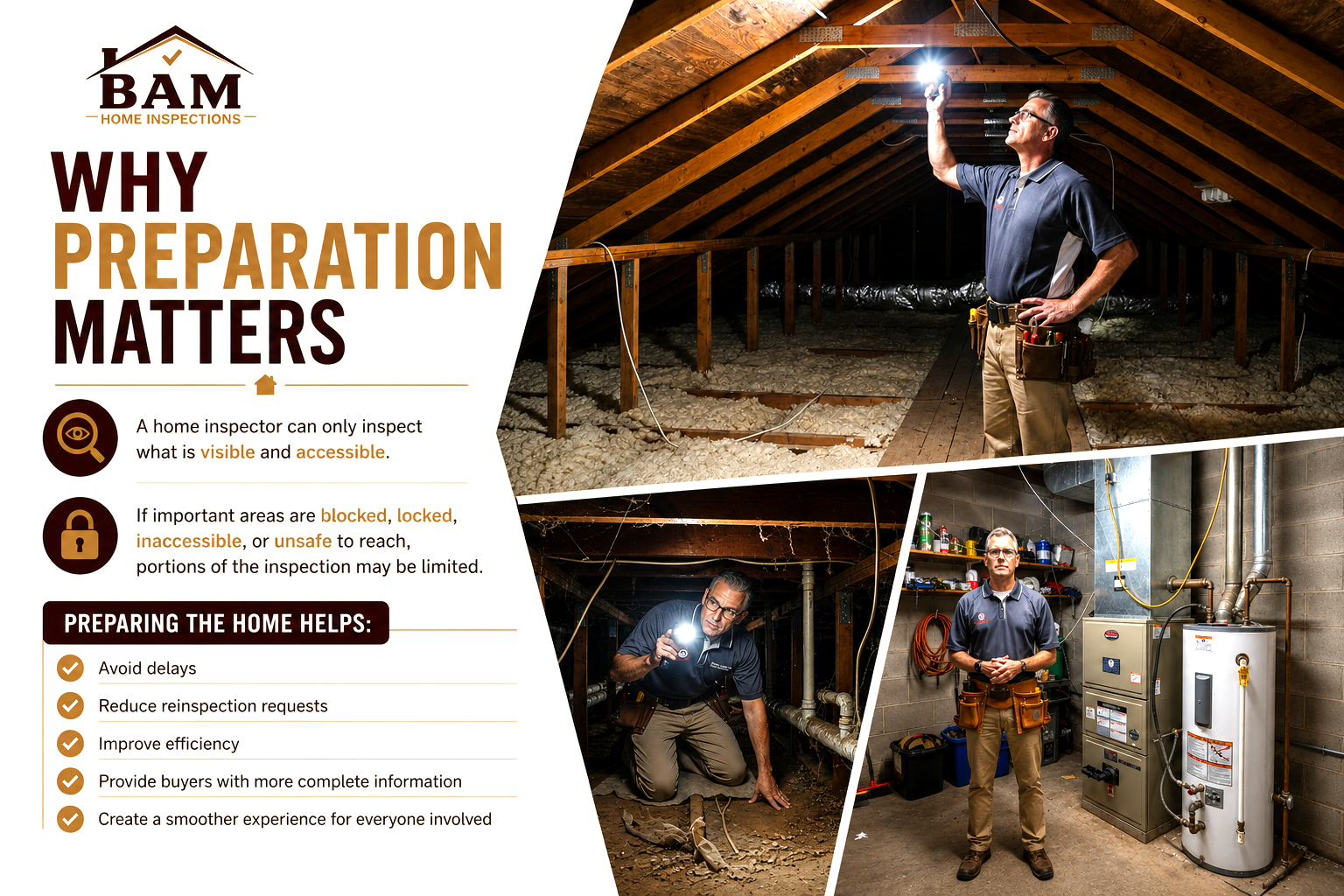
Why Preparation Matters
A home inspector can only inspect what is visible and accessible.
If important areas are blocked, locked, inaccessible, or unsafe to reach, portions of the inspection may be limited.
Preparing the home helps:
✓ Avoid delays
✓ Reduce reinspection requests
✓ Improve efficiency
✓ Provide buyers with more complete information
✓ Create a smoother experience for everyone involved
Exterior Checklist
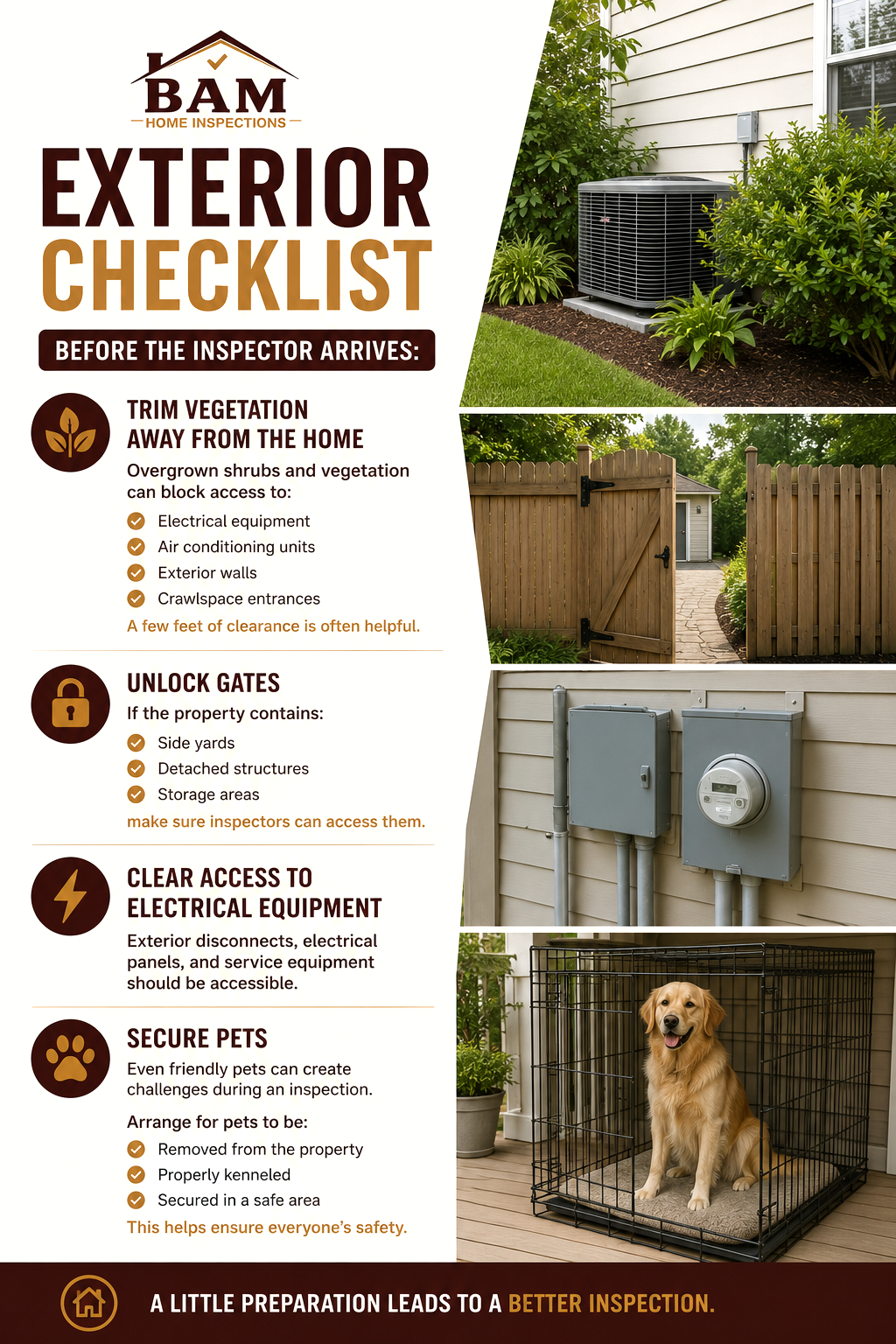
Before the inspector arrives:
Trim Vegetation Away from the Home
- Overgrown shrubs and vegetation can block access to:
- Electrical equipment
- Air conditioning units
- Exterior walls
- Crawlspace entrances
A few feet of clearance is often helpful.
Unlock Gates
- If the property contains…
- Side yards
- Detached structures
- Storage areas
…make sure inspectors can access them.
Clear Access to Electrical Equipment
- Exterior disconnects, electrical panels, and service equipment should be accessible.
Secure Pets
Even friendly pets can create challenges during an inspection.
- Arrange for pets to be:
- Removed from the property
- Properly kenneled
- Secured in a safe area
This helps ensure everyone’s safety.
Interior Checklist
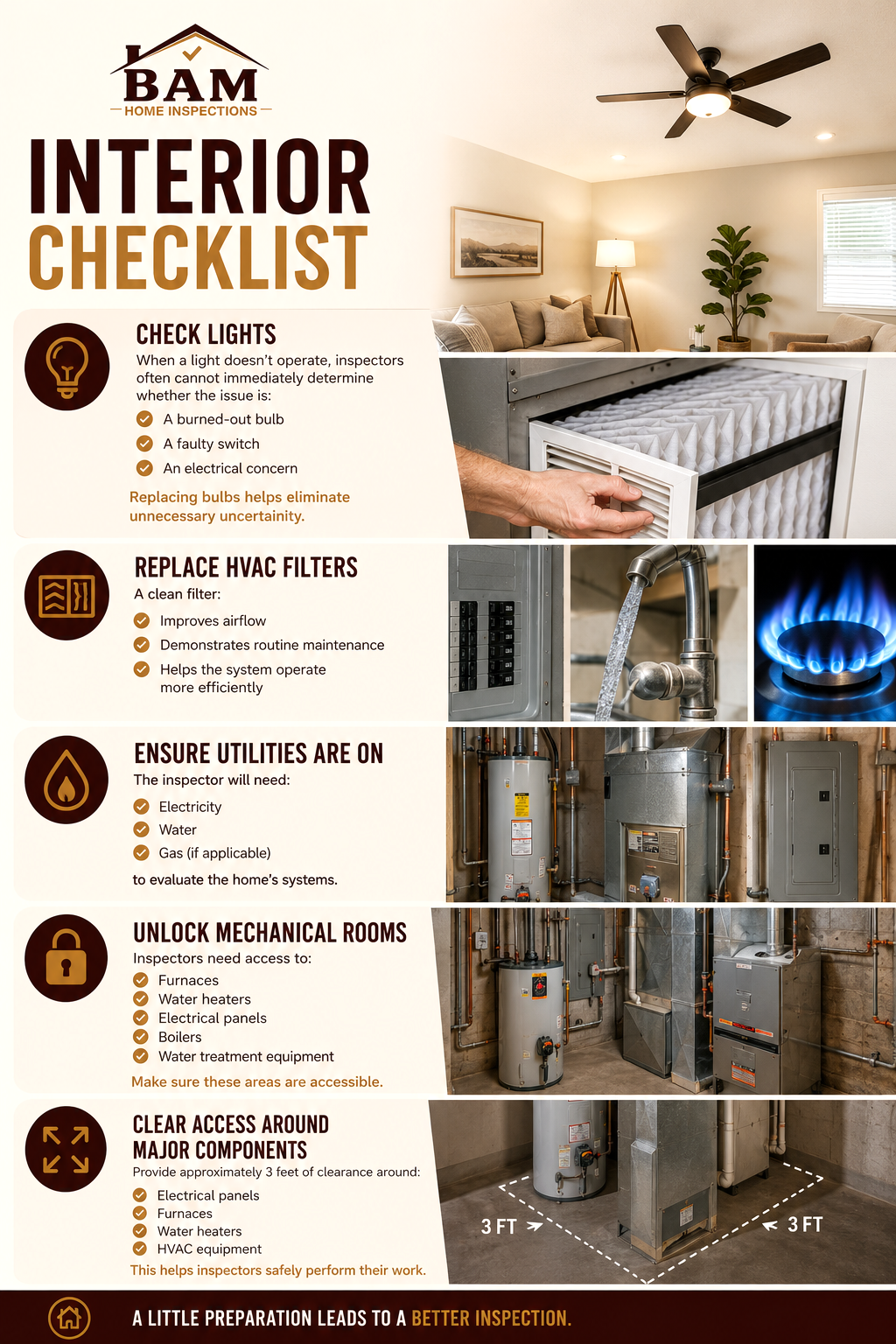
When a light doesn't operate, inspectors often cannot immediately determine what the issue is. Replacing light bulbs helps eliminate unnecessary uncertainty. Read for more seller tips. [The Ultimate Seller Checklist Before Inspection Day]
BAM Home Inspections Share to X
Replace Burned-Out Light Bulbs
This is one of the easiest things sellers can do.
When a light doesn’t operate, inspectors often cannot immediately determine whether the issue is:
- A burned-out bulb
- A faulty switch
- An electrical concern
Replacing bulbs helps eliminate unnecessary uncertainty.
Replace HVAC Filters
A clean filter:
- Improves airflow
- Demonstrates routine maintenance
- Helps the system operate more efficiently
Ensure Utilities Are On
The inspector will need:
✓ Electricity
✓ Water
✓ Gas (if applicable)
to evaluate the home’s systems.
Unlock Mechanical Rooms
Inspectors need access to:
- Furnaces
- Water heaters
- Electrical panels
- Boilers
- Water treatment equipment
Make sure these areas are accessible.
Clear Access Around Major Components
Provide approximately 3 feet of clearance around:
- Electrical panels
- Furnaces
- Water heaters
- HVAC equipment
This helps inspectors safely perform their work.
Attic, Crawlspace, and Garage Checklist
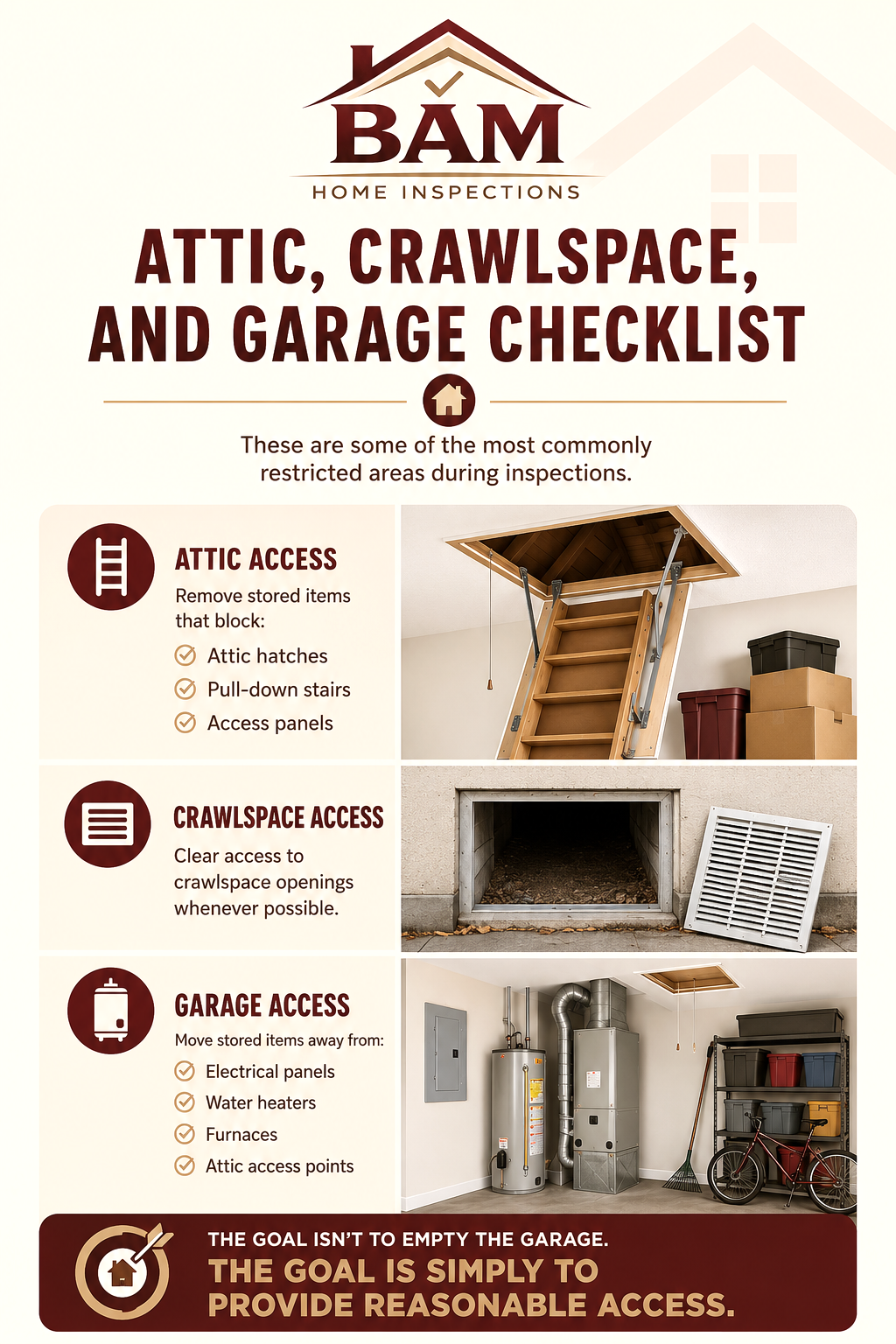
These are some of the most commonly restricted areas during inspections.
Attic Access
Remove stored items that block:
- Attic hatches
- Pull-down stairs
- Access panels
Crawlspace Access
- Clear access to crawlspace openings whenever possible.
Garage Access
Move stored items away from:
- Electrical panels
- Water heaters
- Furnaces
- Attic access points
The goal isn’t to empty the garage.
The goal is simply to provide reasonable access.
Attic, crawlspace, and garage access are some of the most commonly restricted areas during inspections. The goal isn't to empty everything, but to provide reasonable access. [The Ultimate Seller Checklist Before Inspection Day]
BAM Home Inspections Share to X
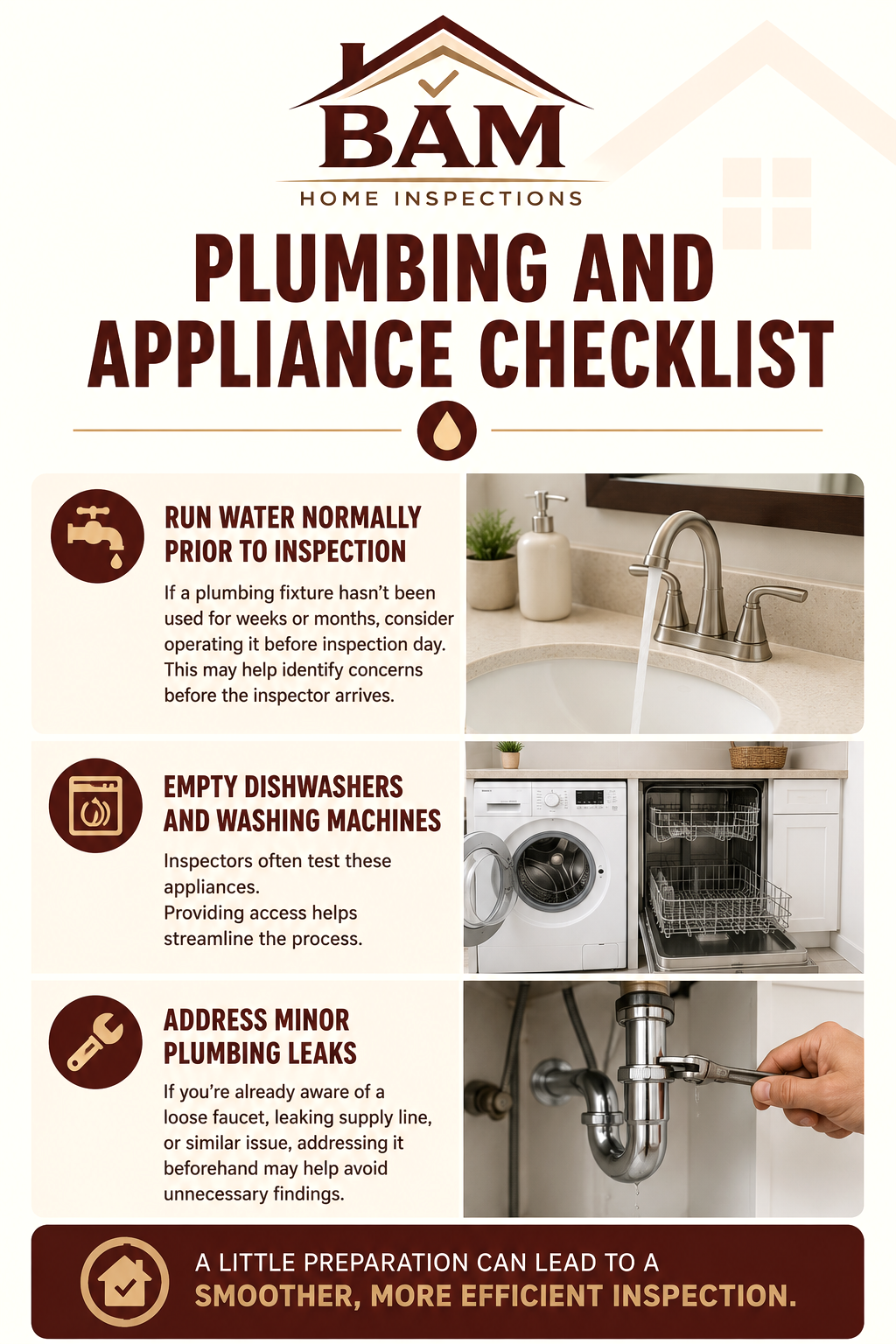
Plumbing and Appliance Checklist
Run Water Normally Prior to Inspection
- If a plumbing fixture hasn’t been used for weeks or months, consider operating it before inspection day.
- This may help identify concerns before the inspector arrives.
Empty Dishwashers and Washing Machines
- Inspectors often test these appliances.
- Providing access helps streamline the process.
Address Minor Plumbing Leaks
- If you’re already aware of a loose faucet, leaking supply line, or similar issue, addressing it beforehand may help avoid unnecessary findings.
Run water normally prior to inspection, empty dishwashers and washing machines, and address minor plumbing leaks to expedite the inspection and mitigate unnecessary findings. [The Ultimate Seller Checklist Before Inspection Day]
BAM Home Inspections Share to X
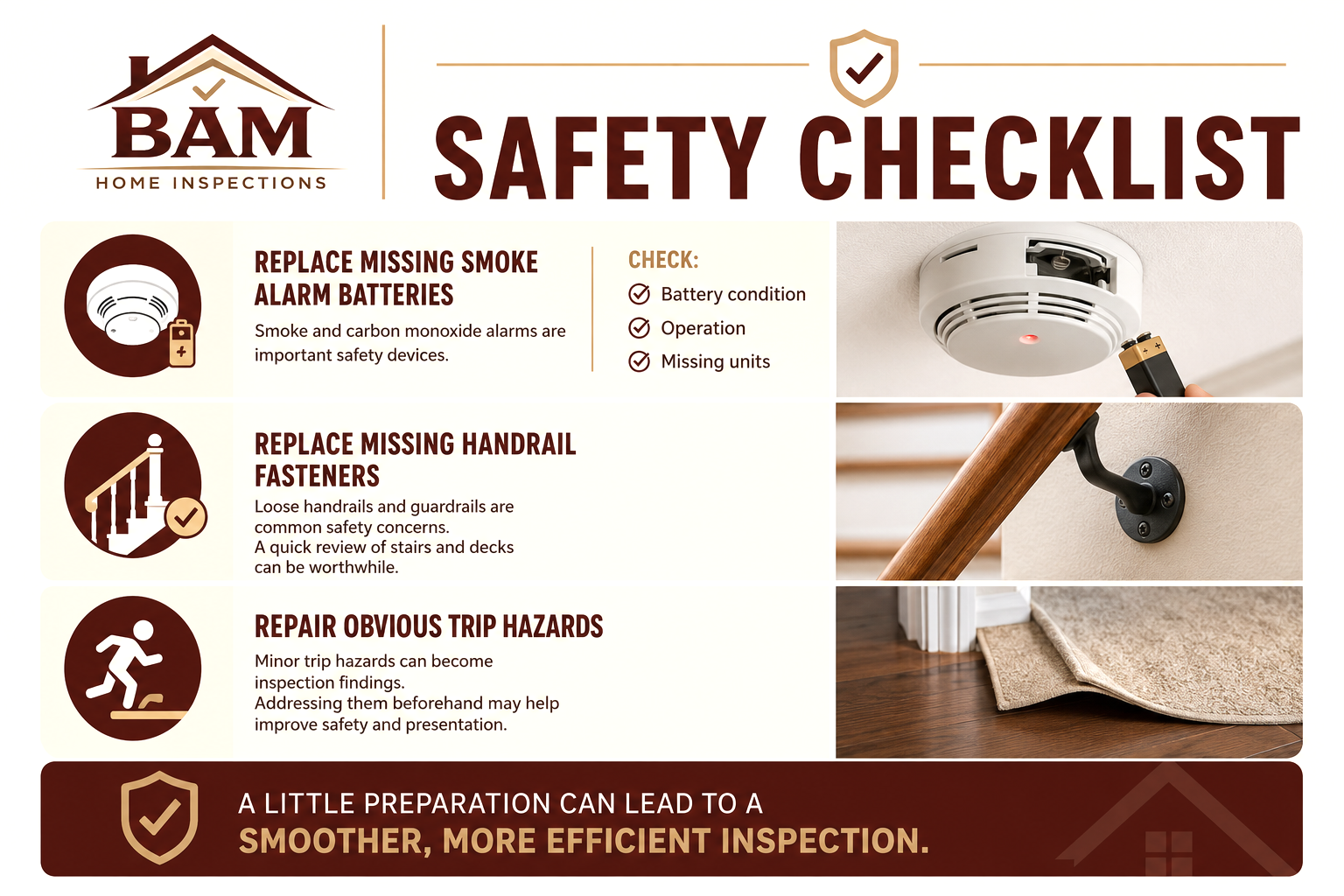
Safety Checklist
Replace Missing Smoke Alarm Batteries
- Smoke and carbon monoxide alarms are important safety devices.
- Check:
- Battery condition
- Operation
- Missing units
- Check:
Replace Missing Handrail Fasteners
- Loose handrails and guardrails are common safety concerns.
- A quick review of stairs and decks can be worthwhile.
Repair Obvious Trip Hazards
- Minor trip hazards can become inspection findings.
- Addressing them beforehand may help improve safety and presentation.
Colorado Seller Tip
If your home has any of the following, consider making supporting documentation available:
✓ Roof replacement records
✓ Furnace service records
✓ Water heater replacement documentation
✓ Radon mitigation documentation
✓ Sewer line repairs
✓ Septic system records
✓ Major remodeling permits
Buyers appreciate documentation, and it can help answer questions that arise during the inspection process.
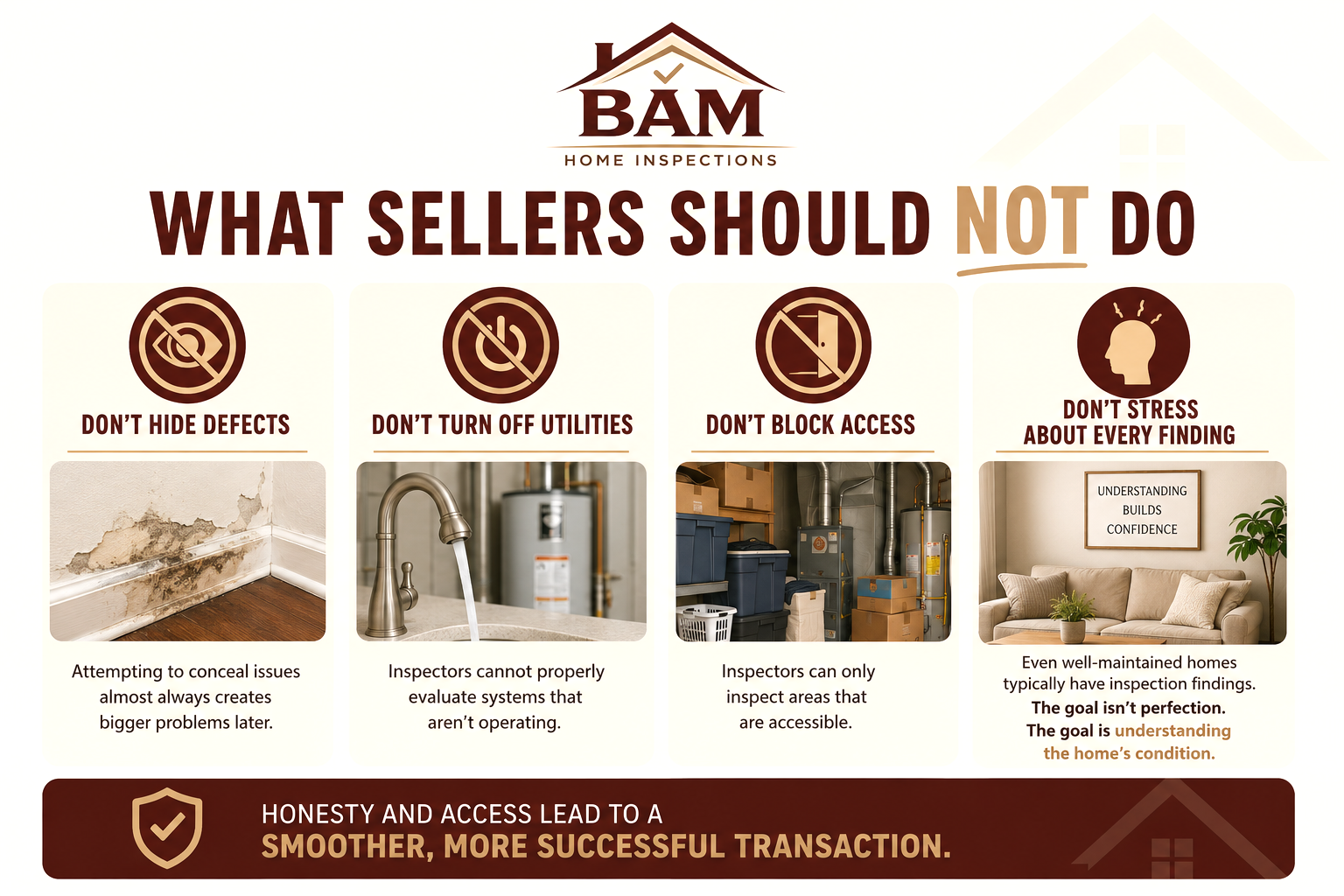
What Sellers Should NOT Do
Don’t Hide Defects
- Attempting to conceal issues almost always creates bigger problems later.
Don’t Turn Off Utilities
- Inspectors cannot properly evaluate systems that aren’t operating.
Don’t Block Access
- Inspectors can only inspect areas that are accessible.
Don’t Stress About Every Finding
- Even well-maintained homes typically have inspection findings.
- The goal isn’t perfection.
- The goal is understanding the home’s condition.
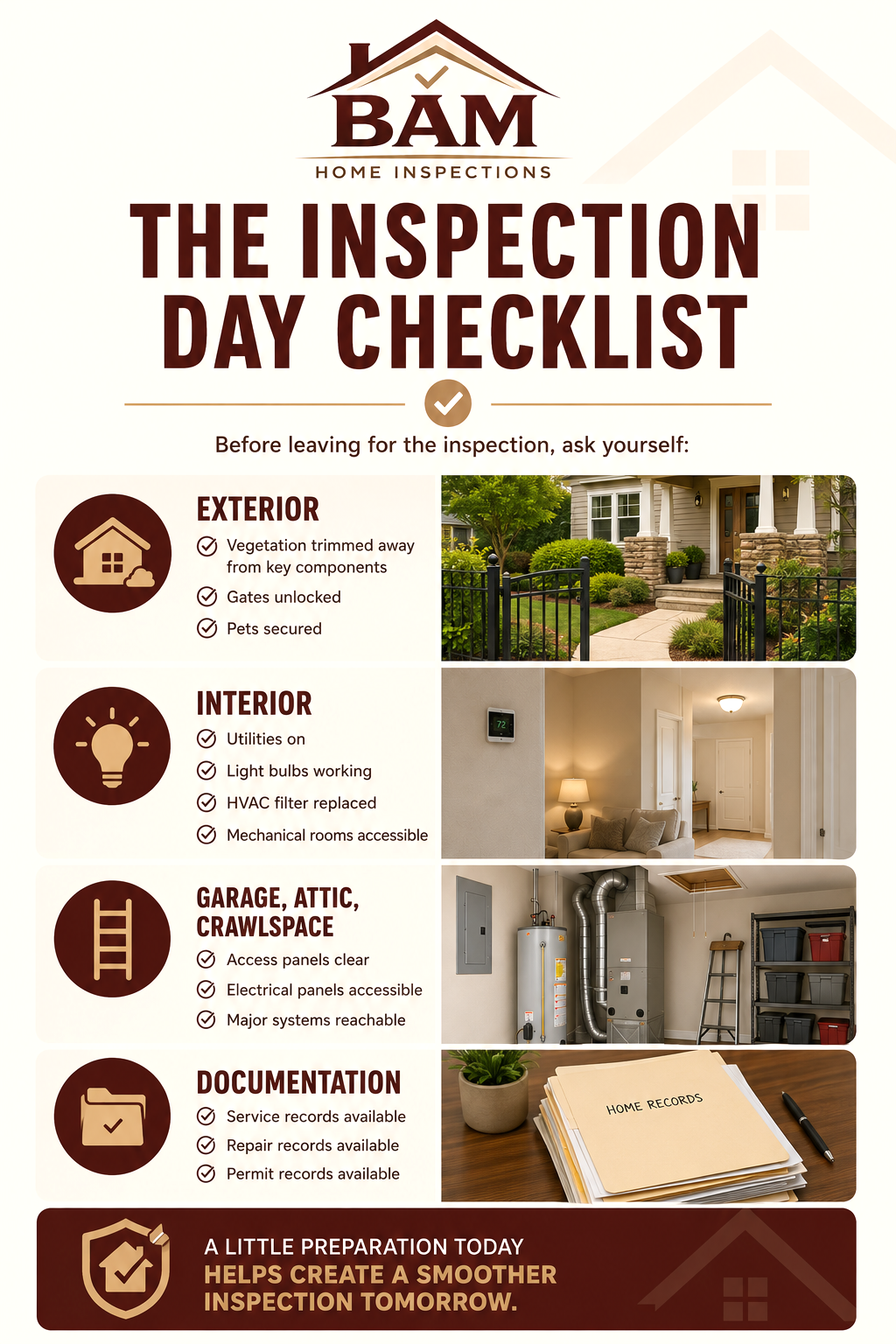
The Inspection Day Checklist
Before leaving for the inspection, ask yourself:
Exterior
✓ Vegetation trimmed away from key components
✓ Gates unlocked
✓ Pets secured
Interior
✓ Utilities on
✓ Light bulbs working
✓ HVAC filter replaced
✓ Mechanical rooms accessible
Garage, Attic, Crawlspace
✓ Access panels clear
✓ Electrical panels accessible
✓ Major systems reachable
Documentation
✓ Service records available
✓ Repair records available
✓ Permit records available
Final Thoughts
A home inspection doesn’t have to be stressful.
The best inspections occur when the home’s systems and components are accessible, the utilities are operating, and everyone understands the purpose of the process.
Remember:
The goal isn’t to prepare a perfect home.
The goal is to prepare an accessible home.
A little preparation can help the inspection proceed more smoothly, reduce unnecessary delays, and provide buyers with a clearer understanding of the property.
And that’s good for everyone involved.

Seller Success Tip
Think of inspection day as an opportunity—not an obstacle.
The more accessible the home is, the more complete the inspection can be, helping buyers move forward with confidence and helping transactions stay on track.
Frequently Asked Questions (FAQs)
Practices vary by market, but many sellers choose to leave the property during the inspection. This allows the inspector, buyer, and real estate agents to move freely through the home and discuss findings openly. If you do remain at the property, it’s generally best to give the inspection team space to perform their work.
Accessibility is key. Inspectors need access to the home’s major systems and components, including the electrical panel, furnace, water heater, attic, crawlspace, garage, and exterior areas. Clearing access and ensuring utilities are operational can help the inspection proceed more smoothly and reduce the likelihood of reinspection requests.
If you’re already aware of simple maintenance items—such as burned-out light bulbs, loose handrails, minor plumbing leaks, or missing smoke detector batteries—it may make sense to address them beforehand. However, sellers should avoid attempting to conceal defects or perform repairs they are not qualified to complete properly.
Helpful documentation may include:
- Roof replacement records
- Furnace service records
- Water heater replacement documentation
- Radon mitigation records
- Sewer line repair records
- Septic system records
- Remodeling permits and receipts
Providing documentation can help answer buyer questions and demonstrate a history of responsible homeownership.
Not necessarily. Even well-maintained homes typically have inspection findings. The purpose of the inspection is not to determine whether a home is perfect, but to help buyers understand its condition. Most reports contain a combination of maintenance items, aging components, recommendations, and observations that are common for homes of similar age and condition.
No. Homes do not “pass” or “fail” a home inspection. A home inspection is an evaluation of the property’s visible and accessible systems and components at the time of the inspection. The inspector’s role is to document observations and findings—not to assign a grade. The inspection simply provides information that helps buyers and sellers make informed decisions moving forward.