

Why the Way Findings Are Communicated Matters Just as Much as the Findings Themselves
Most buyers remember the inspection.
Few remember the inspection report.
What they remember is how they felt.
Confident.
Overwhelmed.
Reassured.
Anxious.
Excited.
Terrified.
And surprisingly, those emotions are often influenced less by the home’s condition and more by how the inspection findings were communicated.
After more than 20,000 home inspections across Colorado, we’ve learned something important:
The best inspectors don’t just identify defects.
They provide perspective.
Let’s talk about the difference.
The best inspectors don't just identify defects. They provide perspective. Let's talk about the difference. [The Difference Between an Alarmist Inspector and a Helpful Inspector]
BAM Home Inspections Share to X
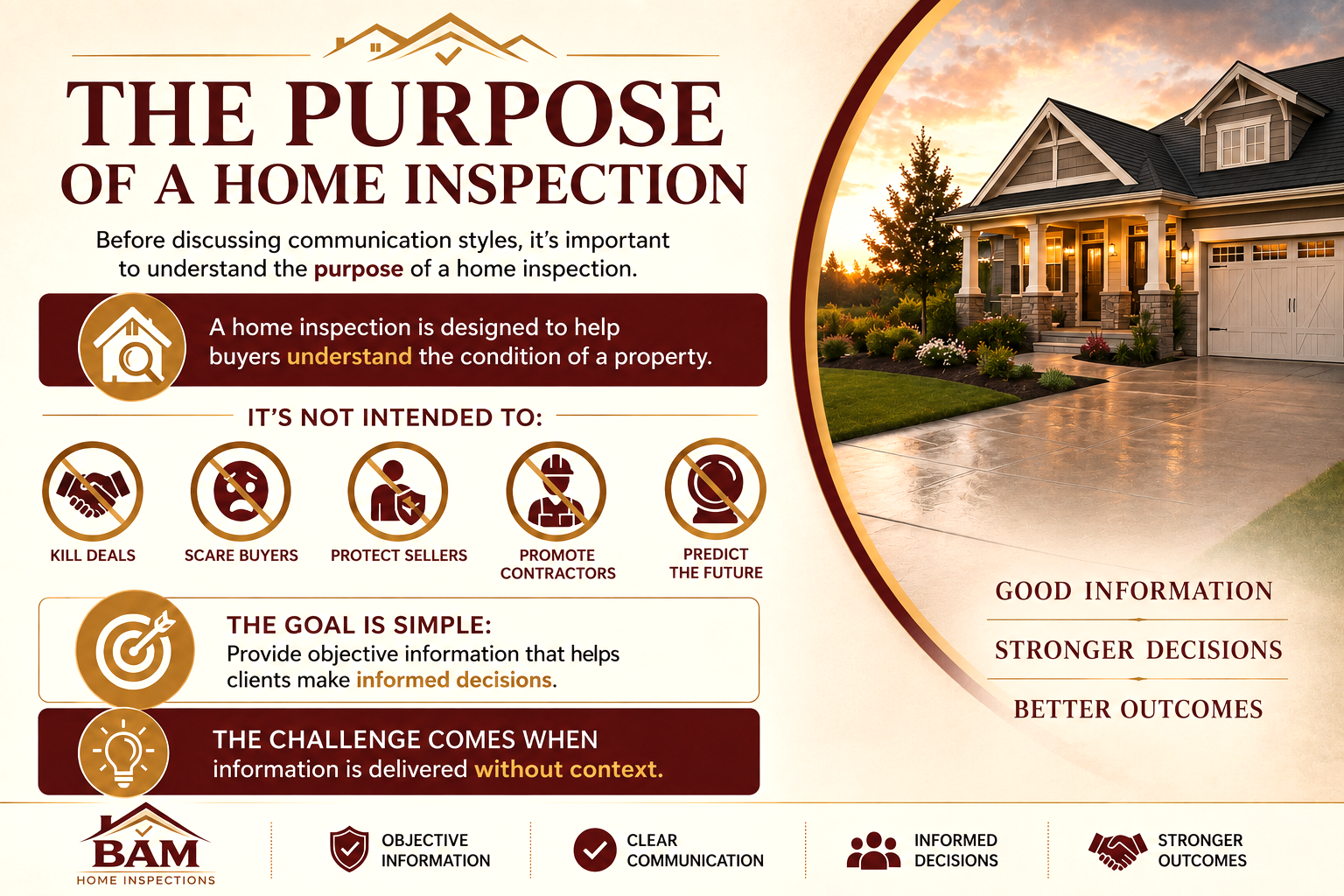
The Purpose of a Home Inspection
Before discussing communication styles, it’s important to understand the purpose of a home inspection.
A home inspection is designed to help buyers understand the condition of a property.
It’s not intended to:
- Kill deals
- Scare buyers
- Protect sellers
- Promote contractors
- Predict the future
The goal is simple:
Provide objective information that helps clients make informed decisions.
The challenge comes when information is delivered without context.
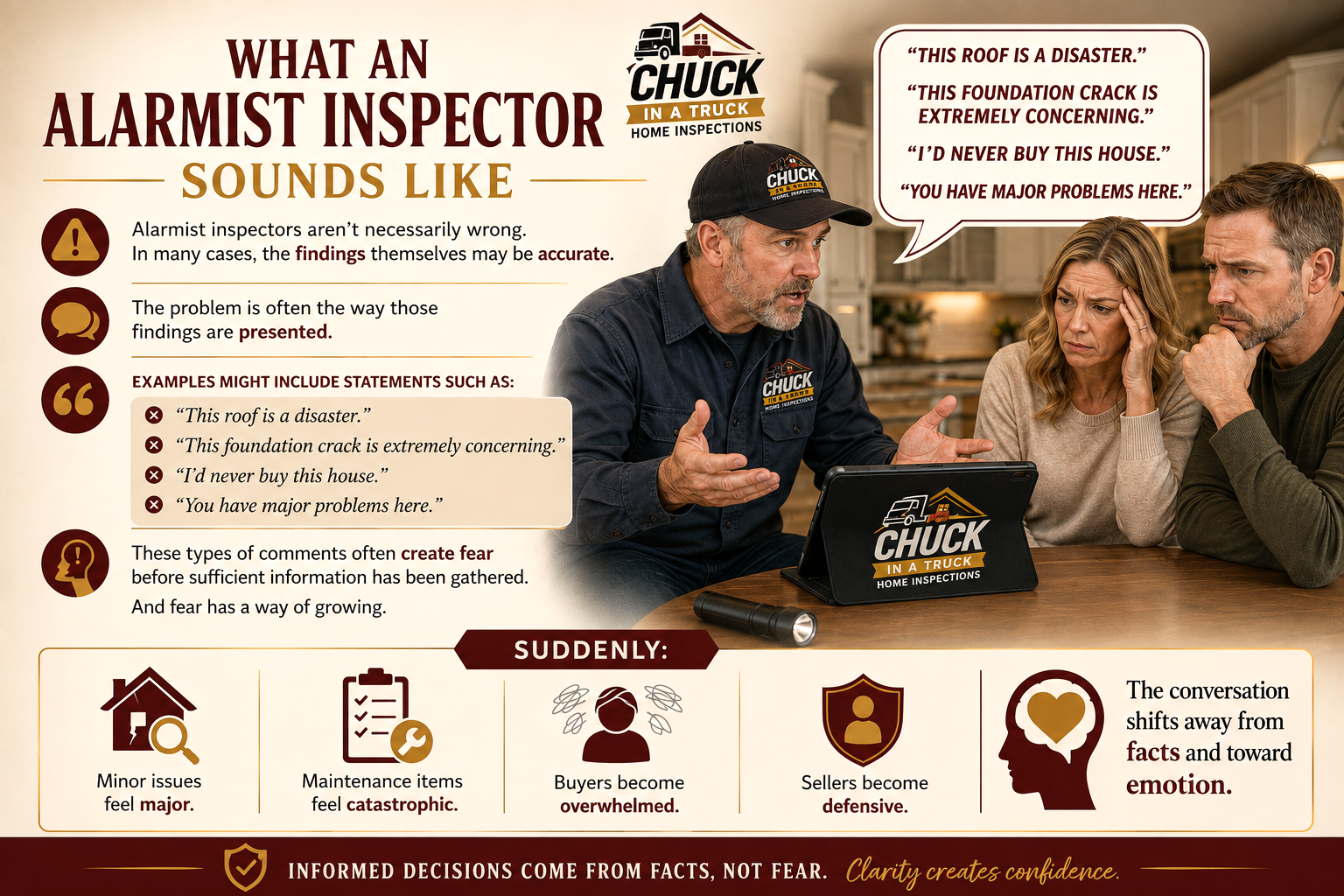
What an Alarmist Inspector Sounds Like
Alarmist inspectors aren’t necessarily wrong.
In many cases, the findings themselves may be accurate.
The problem is often the way those findings are presented.
Examples might include statements such as:
“This roof is a disaster.”
“This foundation crack is extremely concerning.”
“I’d never buy this house.”
“You have major problems here.”
These types of comments often create fear before sufficient information has been gathered.
And fear has a way of growing.
Suddenly:
- Minor issues feel major.
- Maintenance items feel catastrophic.
- Buyers become overwhelmed.
- Sellers become defensive.
The conversation shifts away from facts and toward emotion.
What a Helpful Inspector Sounds Like
A helpful inspector communicates the same observations differently.
Instead of creating fear, they create understanding.
Examples may sound like:
“This roof shows signs of aging and may require attention in the future.”
“This crack is common in Colorado homes, though additional evaluation may be appropriate if movement appears ongoing.”
“Let’s talk about what this finding means.”
“Here’s what I’d recommend you focus on.”
Notice the difference.
The facts haven’t changed.
The perspective has.

Helpful Inspectors Separate Findings Into Categories
One of the most valuable things an inspector can do is help clients understand which findings deserve the most attention.
Not all findings carry the same significance.
For example:
Routine Maintenance
- Caulking
- Weatherstripping
- Minor plumbing repairs
- HVAC filters
Safety Concerns
- Missing smoke alarms
- Missing GFCI protection
- Loose handrails
Aging Components
- Older furnaces
- Older water heaters
- Aging roofs
Significant Defects
- Active leaks
- Structural concerns
- Sewer line failures
- Major electrical hazards
Helpful inspectors help clients prioritize.
Alarmist inspectors often make everything feel urgent.

Colorado Homes Require Colorado Context
This is particularly important along the Front Range.
Colorado homes experience:
- Expansive soils
- Foundation movement
- Hail
- Intense UV exposure
- Freeze-thaw cycles
- Significant temperature swings
Without local experience, normal Colorado conditions can sometimes be misunderstood.
For example:
A concrete crack that may appear alarming to someone unfamiliar with expansive soils could be relatively common in many Colorado neighborhoods.
That doesn’t mean it should be ignored.
It means context matters.

The Most Valuable Word in Home Inspections
If we could choose one word that separates great inspectors from average inspectors, it would be:
Perspective.
Perspective helps buyers understand:
- What matters now
- What can wait
- What should be monitored
- What deserves additional evaluation
Without perspective, every finding can feel equally important.
And they aren’t.

The Realtor's Perspective
Experienced Realtors understand something many buyers don’t:
Every home has findings.
Every single one.
New homes.
Luxury homes.
Historic homes.
Townhomes.
Condos.
Inspection reports are not lists of reasons to cancel contracts.
They’re tools for understanding a property.
The best Realtors appreciate inspectors who help clients focus on significance rather than quantity.

What We've Learned After 20,000+ Inspections
The transactions most likely to succeed aren’t necessarily the homes with the fewest findings.
They’re the transactions where buyers understand the findings.
Knowledge reduces uncertainty.
Perspective reduces anxiety.
And informed clients make better decisions.
We’ve seen buyers move forward confidently after receiving lengthy reports because they understood what truly mattered.
We’ve also seen minor findings create unnecessary stress when context was missing.
The difference wasn’t the home.
The difference was communication.

What Buyers Should Look For in an Inspector
A great inspector should be:
- Thorough
- Identifying visible concerns and documenting observations.
- Identifying visible concerns and documenting observations.
- Objective
- Focused on facts rather than emotion.
- Focused on facts rather than emotion.
- Educational
- Helping clients understand the home’s systems and components.
- Helping clients understand the home’s systems and components.
- Balanced
- Neither minimizing concerns nor exaggerating them.
- Neither minimizing concerns nor exaggerating them.
- Available
- Willing to answer questions and provide clarification.

Final Thoughts
The best inspectors don’t tell clients what to think.
They help clients understand what they’re seeing.
They identify defects.
They explain significance.
They provide context.
And they help buyers make informed decisions based on facts rather than fear.
Because ultimately, a home inspection isn’t about finding problems.
It’s about understanding the home.
And understanding almost always leads to better decisions.

Realtor Takeaway
An inspection report doesn’t create anxiety.
A lack of perspective does.
The most valuable inspectors aren’t the ones who find the most defects.
They’re the ones who help clients understand what those defects actually mean.