

Why Discovering Problems Before Buyers Do Can Help You Sell With Confidence
Imagine accepting a great offer on your home.
Everything seems to be moving smoothly.
The buyers are excited.
The closing date is set.
Then the buyer’s inspection report arrives.
Suddenly, issues you didn’t know existed become the center of the conversation.
The buyer requests repairs.
Negotiations begin.
The transaction becomes more stressful than expected.
Unfortunately, this scenario plays out every day.
That’s why many homeowners are asking an important question:
Should I get a home inspection before I list my home for sale?
For many sellers, the answer may be yes.
A pre-listing inspection can help identify concerns before buyers discover them, allowing sellers to make informed decisions and move forward with greater confidence.
A pre-listing inspection can help identify concerns before buyers discover them, allowing sellers to make informed decisions and move forward with greater confidence. [Should You Get a Pre-listing Inspection?]
BAM Home Inspections Share to X
What Is a Pre-Listing Inspection?
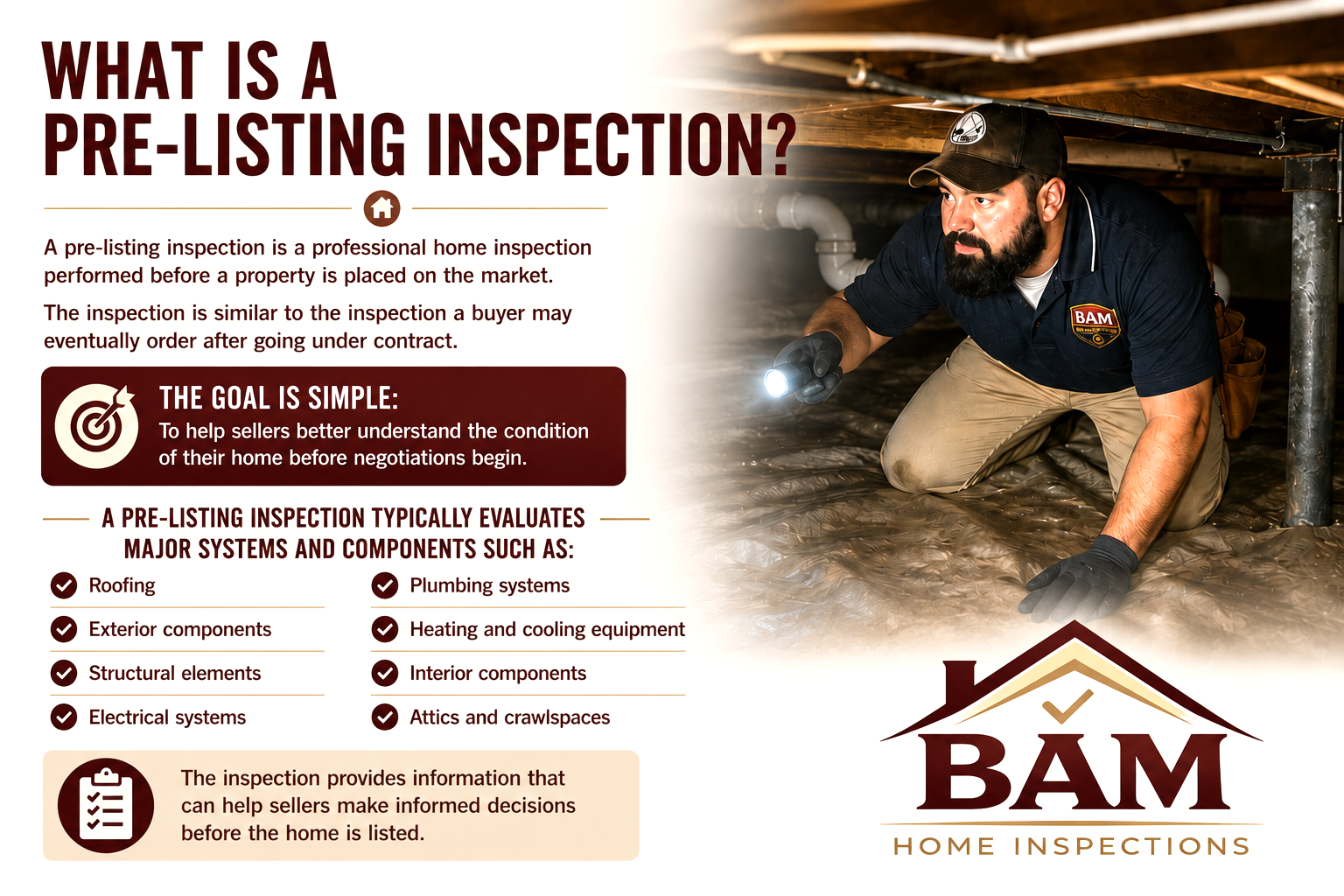
A pre-listing inspection is a professional home inspection performed before a property is placed on the market.
The inspection is similar to the inspection a buyer may eventually order after going under contract.
The goal is simple:
To help sellers better understand the condition of their home before negotiations begin.
A pre-listing inspection typically evaluates major systems and components such as:
- Roofing
- Exterior components
- Structural elements
- Electrical systems
- Plumbing systems
- Heating and cooling equipment
- Interior components
- Attics and crawlspaces
The inspection provides information that can help sellers make informed decisions before the home is listed.
Why Sellers Are Choosing Pre-Listing Inspections
One of the biggest advantages of a pre-listing inspection is the opportunity to reduce surprises.
Most homeowners know their homes better than anyone else.
But even well-maintained homes can contain hidden issues.
Examples may include:
- Minor roof concerns
- Aging water heaters
- HVAC deficiencies
- Plumbing leaks
- Safety concerns
- Deferred maintenance items
Identifying these issues before listing gives sellers options.
And options create flexibility.


Benefit #1: Fewer Surprises During Negotiations
One of the most stressful parts of a real estate transaction often occurs after the buyer’s inspection.
Unexpected findings can lead to:
- Repair requests
- Price reductions
- Seller concessions
- Delays
- Frustration
A pre-listing inspection helps sellers understand potential concerns before they become negotiation points.
That doesn’t mean every issue must be repaired.
It simply means you’re not caught off guard.

Benefit #2: More Time to Address Concerns
When buyers discover an issue during the inspection period, sellers often face tight deadlines.
Decisions must be made quickly.
Repairs may need to be scheduled immediately.
Contract timelines can create pressure.
A pre-listing inspection allows sellers to evaluate concerns on their own timeline.
This provides the opportunity to…
- Obtain contractor estimates
- Complete repairs
- Budget appropriately
- Gather documentation
…before the home ever hits the market.
Benefit #3: Stronger Disclosure and Transparency
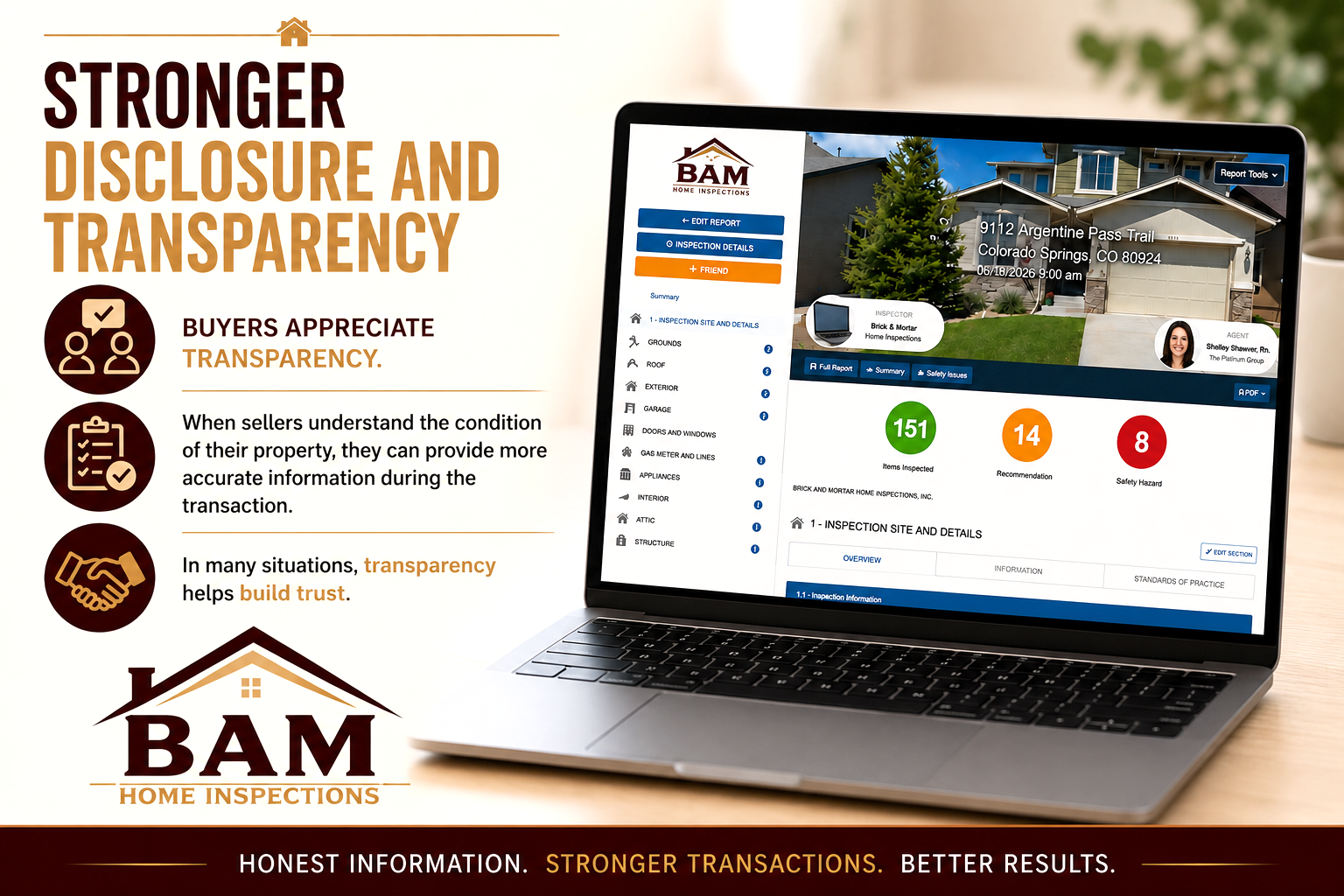
Buyers appreciate transparency.
When sellers understand the condition of their property, they can provide more accurate information during the transaction.
In many situations, transparency helps build trust.
A buyer who believes the seller is being open and forthcoming may feel more confident moving forward.
Benefit #4: Smoother Transactions
No inspection can guarantee a perfect transaction.
However, pre-listing inspections often help reduce uncertainty.
The fewer surprises that arise during escrow, the smoother the process tends to be for everyone involved.
That includes…
- Sellers
- Buyers
- Realtors
- Lenders
A smoother transaction often leads to less stress and fewer last-minute complications.

Benefit #5: Better Pricing Decisions
A pre-listing inspection can also help sellers make informed pricing decisions.
For example:
A home with a newer roof, updated HVAC equipment, and well-maintained systems may support stronger buyer confidence.
Conversely, if significant deferred maintenance exists, sellers can factor that information into their pricing strategy.
Knowledge helps create realistic expectations.

Colorado Seller Tip
If your home has any of the following, consider making supporting documentation available:
✓ Roof replacement records
✓ Furnace service records
✓ Water heater replacement documentation
✓ Radon mitigation documentation
✓ Sewer line repairs
✓ Septic system records
✓ Major remodeling permits
Buyers appreciate documentation, and it can help answer questions that arise during the inspection process.
When a Pre-Listing Inspection May Make the Most Sense
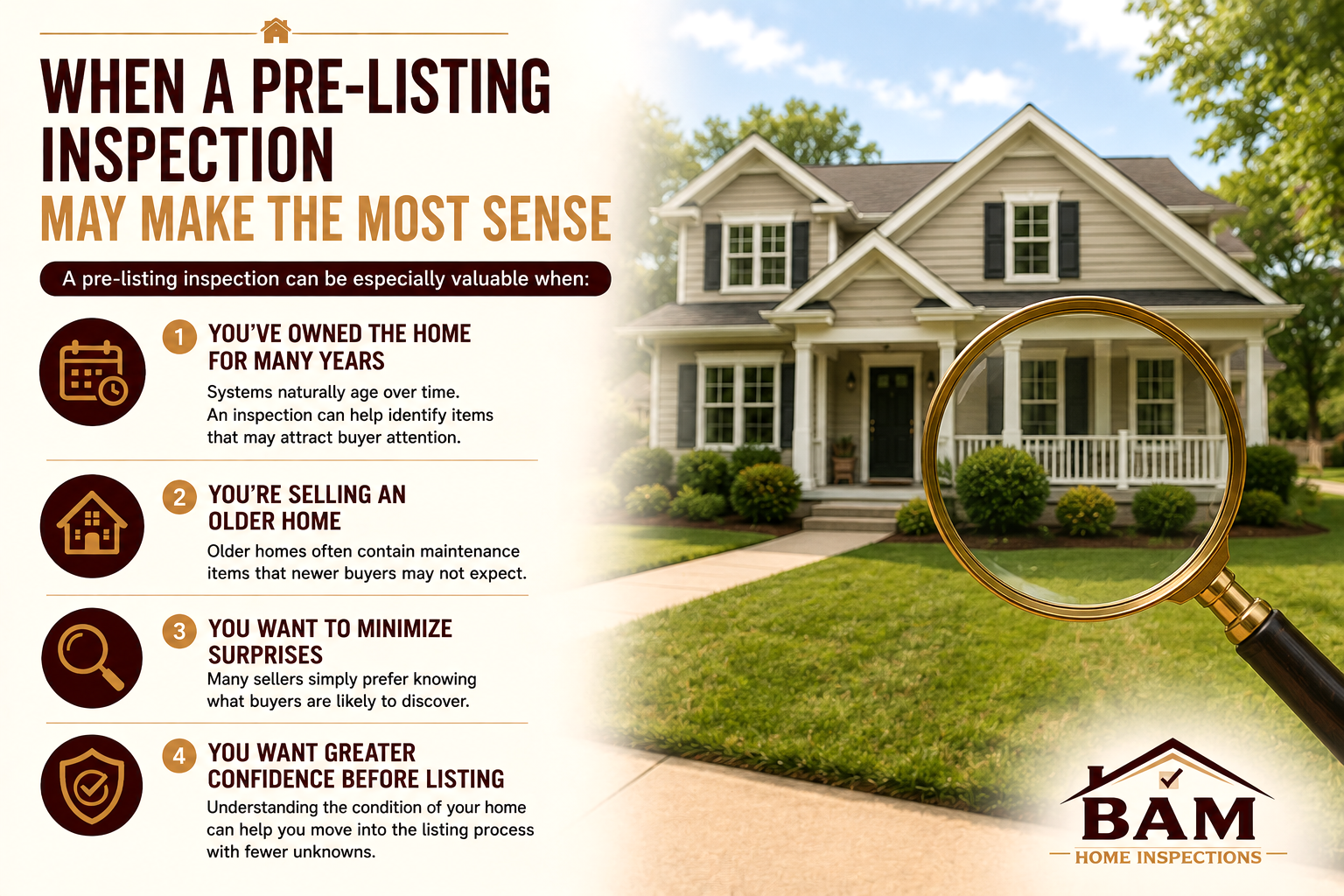
A pre-listing inspection can be especially valuable when:
- You’ve Owned the Home for Many Years
- Systems naturally age over time.
- An inspection can help identify items that may attract buyer attention.
- You’re Selling an Older Home
- Older homes often contain maintenance items that newer buyers may not expect.
- Older homes often contain maintenance items that newer buyers may not expect.
- You Want to Minimize Surprises
- Many sellers simply prefer knowing what buyers are likely to discover.
- Many sellers simply prefer knowing what buyers are likely to discover.
- You Want Greater Confidence Before Listing
- Understanding the condition of your home can help you move into the listing process with fewer unknowns.
What a Pre-Listing Inspection Doesn't Do
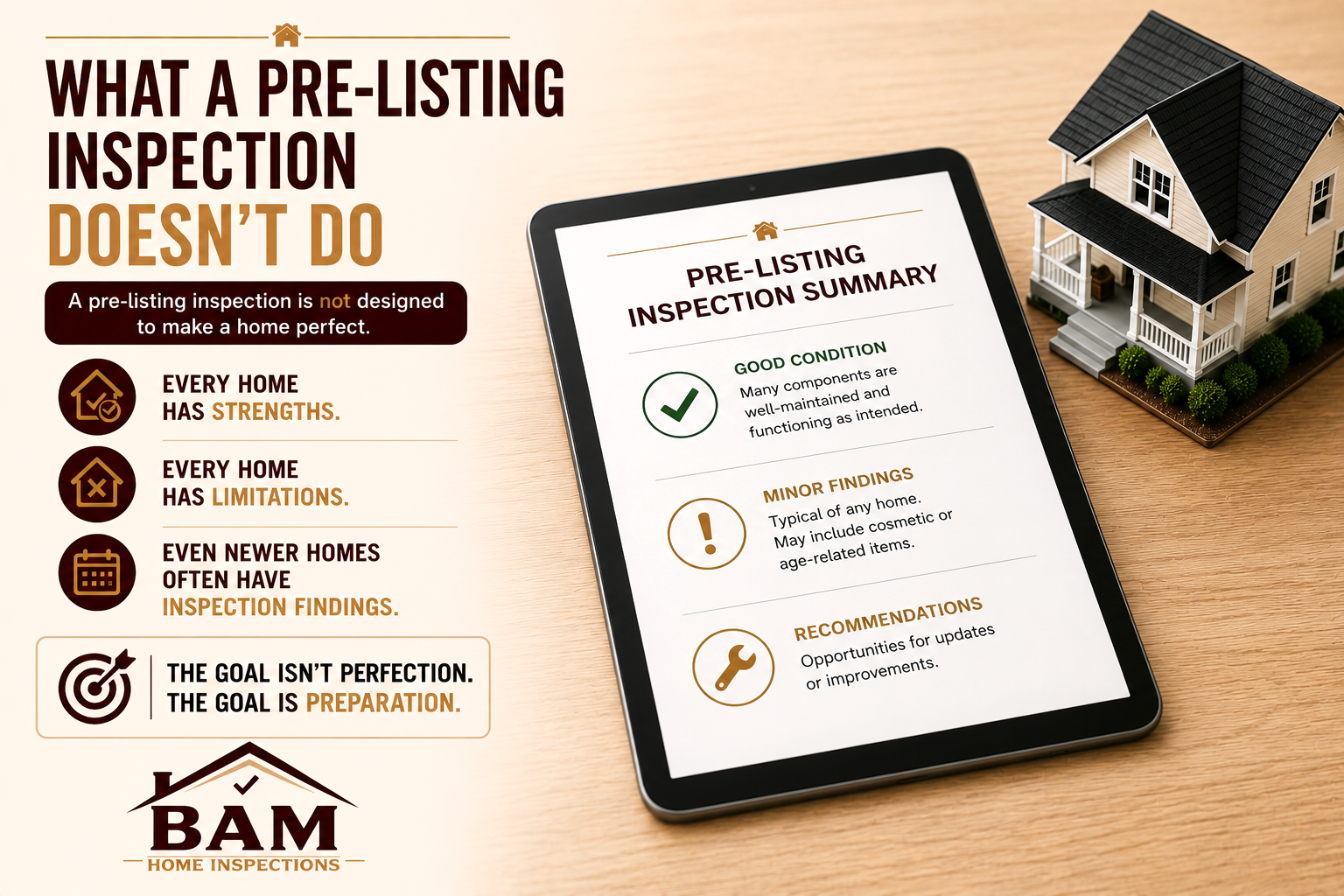
A pre-listing inspection is not designed to make a home perfect.
Every home has strengths.
Every home has limitations.
Even newer homes often have inspection findings.
The goal isn’t perfection.
The goal is preparation.
Final Thoughts
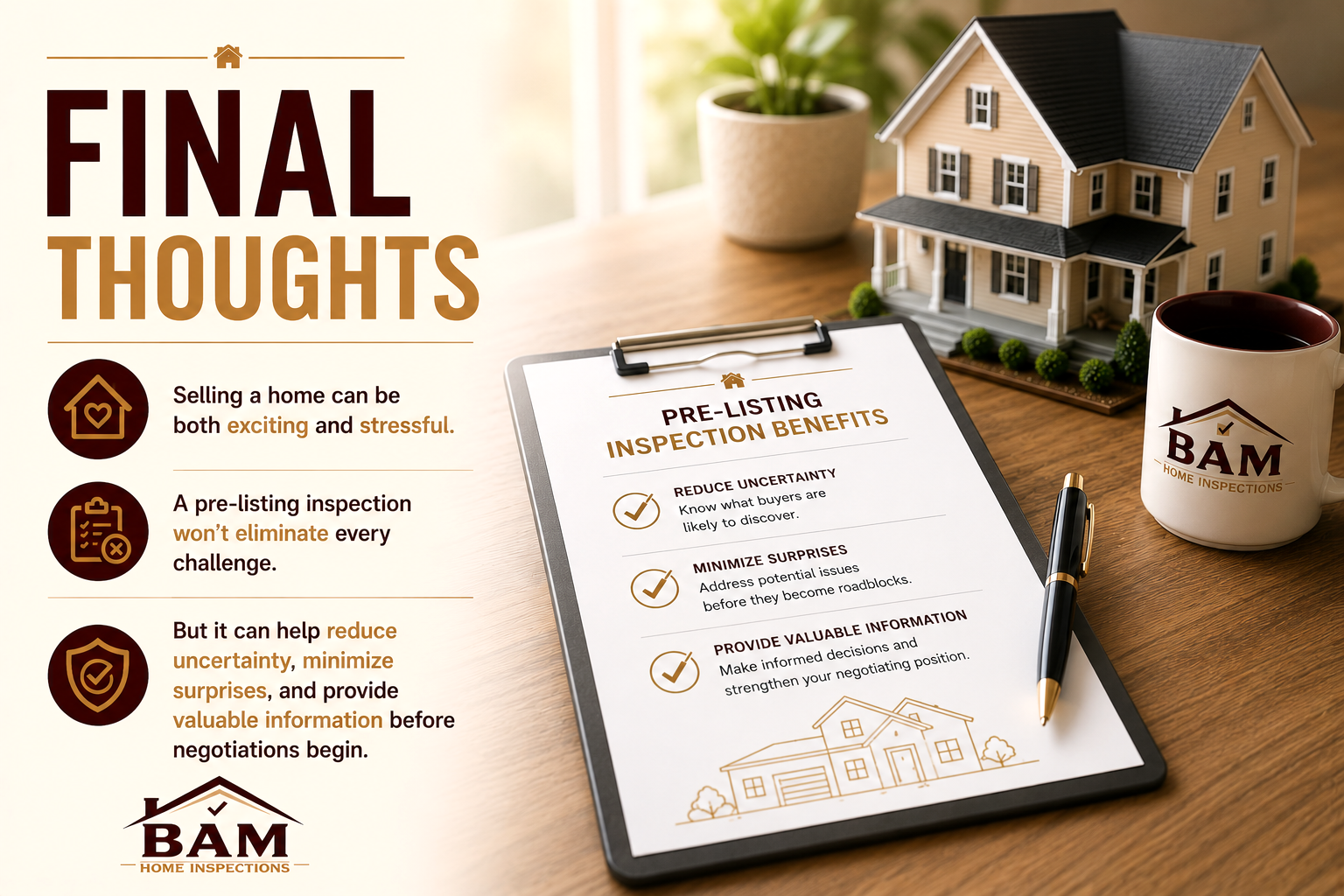
Selling a home can be both exciting and stressful.
A pre-listing inspection won’t eliminate every challenge.
But it can help reduce uncertainty, minimize surprises, and provide valuable information before negotiations begin.
For many sellers, that’s a significant advantage.
Because when you’re preparing to sell one of your largest investments, there’s real value in knowing what buyers are likely to discover before they discover it.
Seller Success Tip
The best time to learn about a concern is before it becomes a negotiation issue.
A pre-listing inspection gives sellers the opportunity to prepare, plan, and move forward with greater confidence.
Frequently Asked Questions (FAQs)
No.
A pre-listing inspection provides information.
It does not obligate you to perform repairs.
Some sellers choose to address concerns before listing.
Others decide to disclose findings and price the home accordingly.
Every situation is different.
Usually, yes.
Most buyers will still conduct their own inspection during the due diligence period.
A pre-listing inspection doesn’t replace the buyer’s inspection.
Instead, it helps sellers prepare for it.
While any property can benefit, pre-listing inspections are particularly valuable for:
- Older homes
- Homes with deferred maintenance
- Estate sales
- Long-term ownership properties
- Homes that haven’t been inspected in many years
These situations often contain unknowns that sellers may not be aware of.
One of the greatest benefits is reducing surprises. A pre-listing inspection helps sellers identify potential concerns before buyers discover them during their inspection period. This allows sellers to make informed decisions, gather estimates, complete repairs if desired, and approach negotiations with greater confidence.
No. A pre-listing inspection provides information, not obligations. Some sellers choose to address certain concerns before listing, while others disclose the findings and adjust their pricing or negotiation strategy accordingly. The goal is to understand the home’s condition—not necessarily to make every repair.
In most cases, yes. A pre-listing inspection does not replace the buyer’s inspection. Most buyers will still conduct their own due diligence. However, a pre-listing inspection can help sellers anticipate potential concerns and reduce the likelihood of being caught off guard during negotiations.
While any home can benefit, pre-listing inspections are especially valuable for:
- Older homes
- Homes with deferred maintenance
- Estate sales
- Long-term ownership properties
- Homes that haven’t been professionally inspected in many years
These situations often involve unknowns that sellers may not be aware of until a buyer’s inspection takes place.
Yes. Understanding the condition of major systems and components can help sellers and their real estate professionals make more informed pricing decisions. Knowing whether the roof, HVAC equipment, plumbing, or other systems are in good condition—or may need future attention—can help establish realistic expectations before the property hits the market.
For many sellers, yes. Compared to the value of the home being sold, a pre-listing inspection is often a relatively small investment that can provide valuable information, reduce uncertainty, improve transparency, and help avoid last-minute surprises during the transaction. Even if no major concerns are found, many sellers appreciate the confidence that comes from understanding what buyers are likely to discover during their own inspection.