
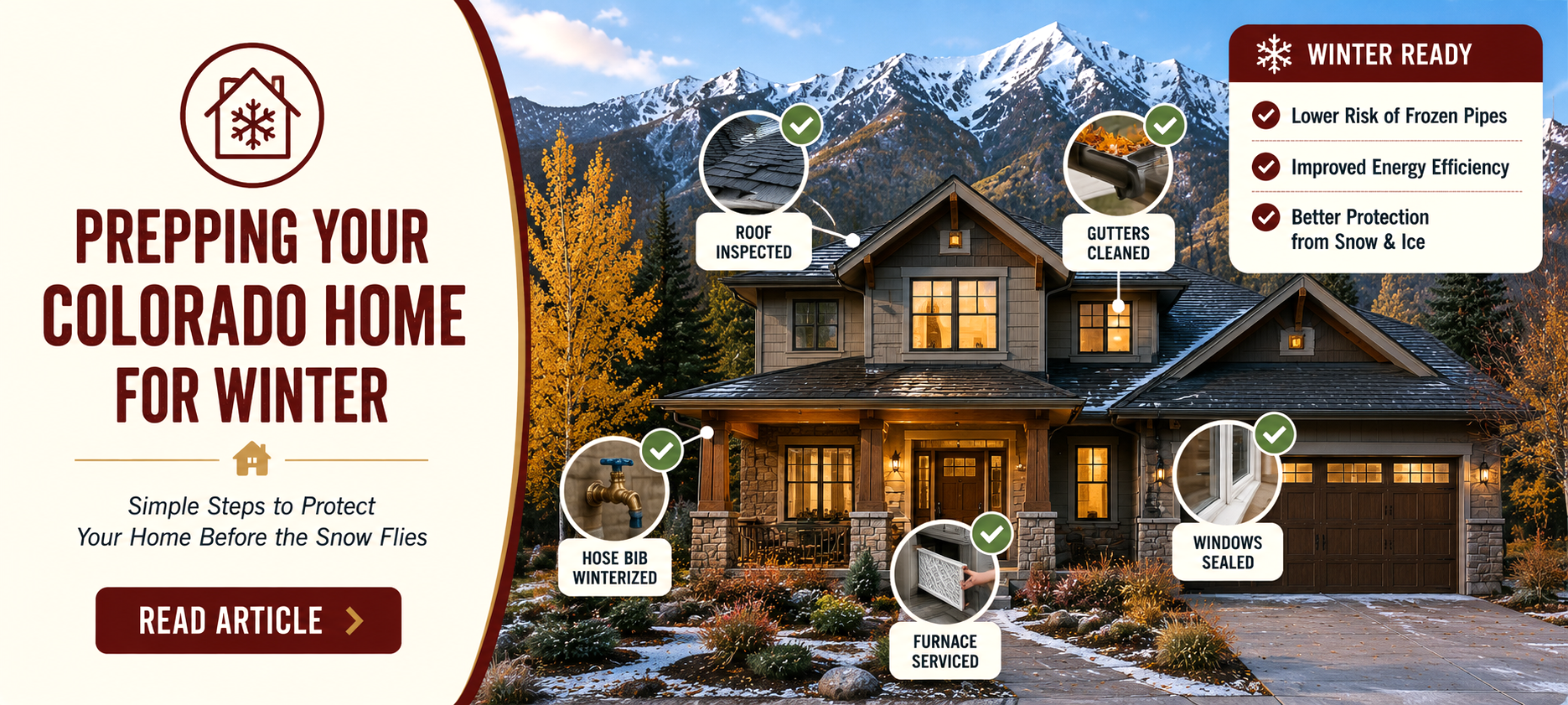
A Homeowner's Guide to Protecting Your Investment Before the Snow Flies
Colorado winter is beautiful—but it can also be hard on homes.
From freezing temperatures and heavy snow loads to ice dams and frozen pipes, winter weather can expose weaknesses in a home and turn small maintenance issues into costly repairs.
The good news is that a little preparation in the fall can go a long way toward protecting your property, improving energy efficiency, and helping you avoid unexpected headaches when temperatures drop.
Whether you’re a new homeowner or a long-time Colorado resident, here are some of the most important steps you can take to prepare your home for winter.

1. Service Your Heating System Before You Need It
Nothing gets a homeowner’s attention faster than a furnace that stops working on the coldest winter night of the year.
Before winter arrives protect your investment by:
- Replacing or cleaning furnace filters.
- Scheduling professional maintenance if your system hasn’t been serviced recently.
- Testing your thermostat.
- Ensuring all supply and return vents are unobstructed.
A well-maintained heating system operates more efficiently, helps reduce utility costs, and lowers the likelihood of unexpected breakdowns during extreme weather.

Pro Tip: Furnace
Replace standard furnace filters every 1-3 months during peak heating season.
2. Inspect Gutters and Downspouts
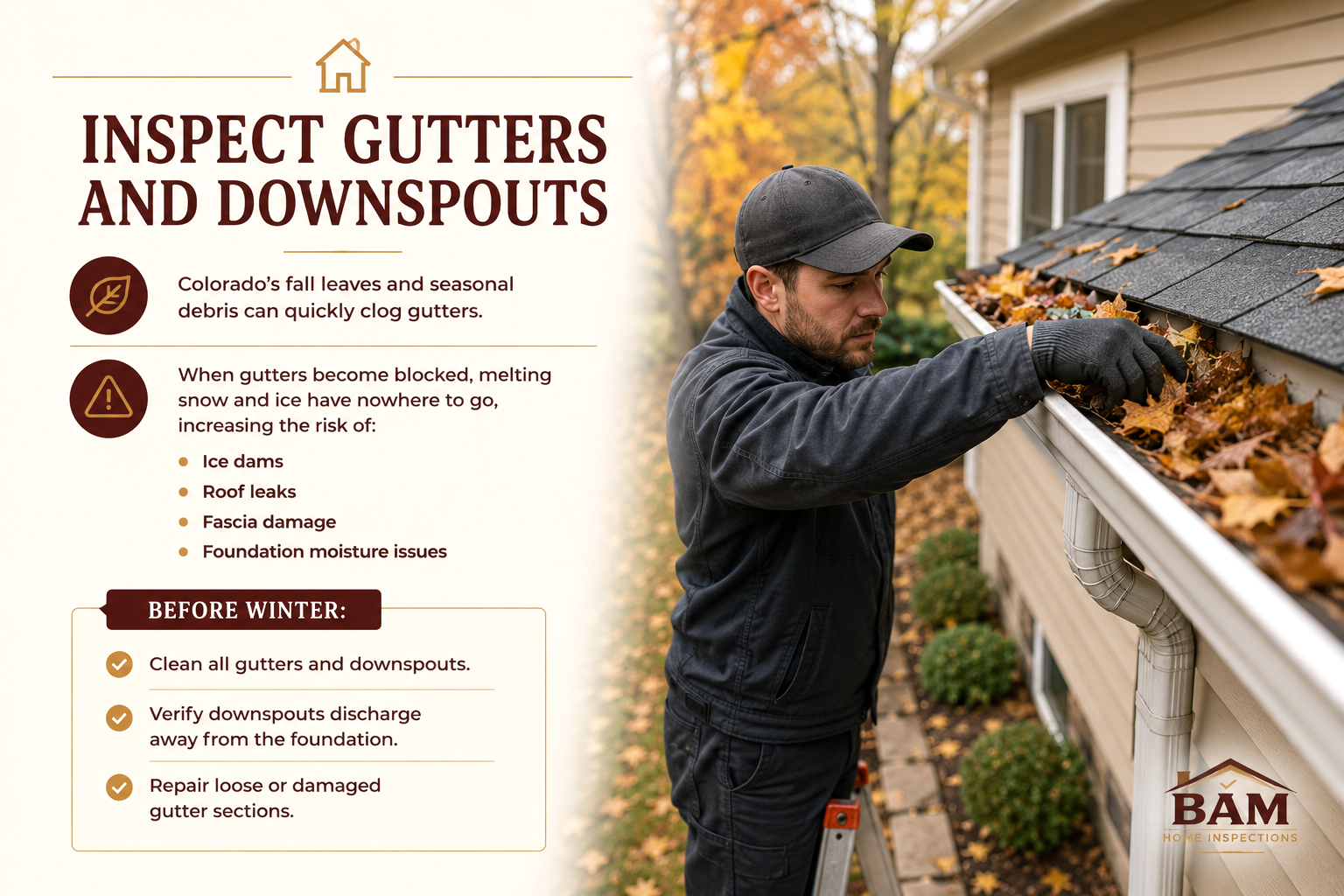
Colorado’s fall leaves and seasonal debris can quickly clog gutters.
When gutters become blocked, melting snow and ice have nowhere to go, increasing the risk of…
- Ice dams
- Roof leaks
- Fascia damage
- Foundation moisture issues
Before winter:
✓ Clean all gutters and downspouts.
✓ Verify downspouts discharge away from the foundation.
✓ Repair loose or damaged gutter sections.
3. Check the Roof for Potential Problems BEFORE Winter Finds Them
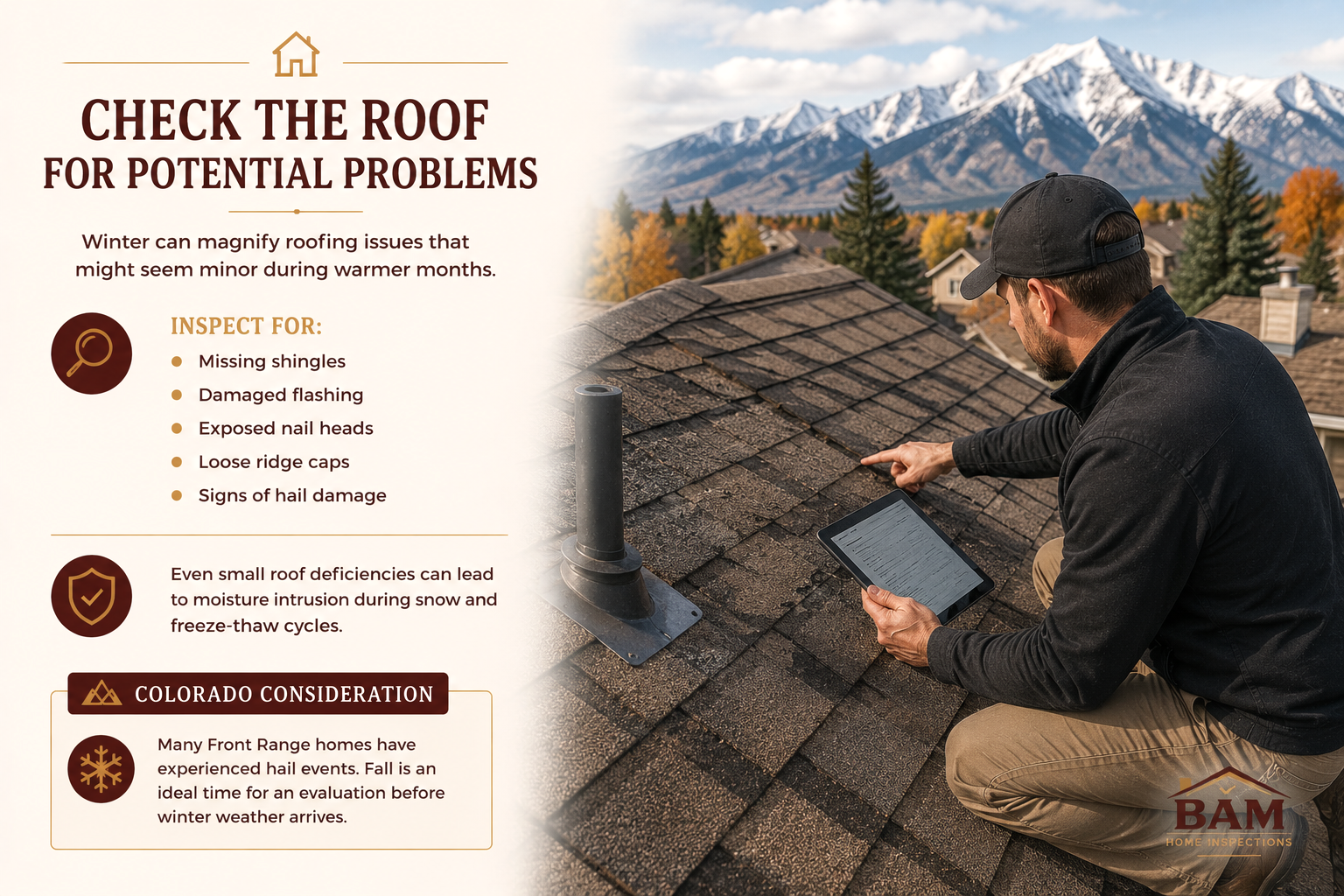
Winter can magnify roofing issues that might seem minor during warmer months.
Protect your investment by inspecting for:
- Missing shingles
- Damaged flashing
- Exposed nail heads
- Loose ridge caps
- Signs of hail damage
Even small roof deficiencies can allow moisture intrusion during snow and freeze-thaw cycles.
Colorado Consideration
Many Front Range homes have experienced hail events. If you’re unsure about the condition of your roof, fall is an ideal time for an evaluation before winter weather arrives.
4. Protect Exterior Faucets and Irrigation Systems
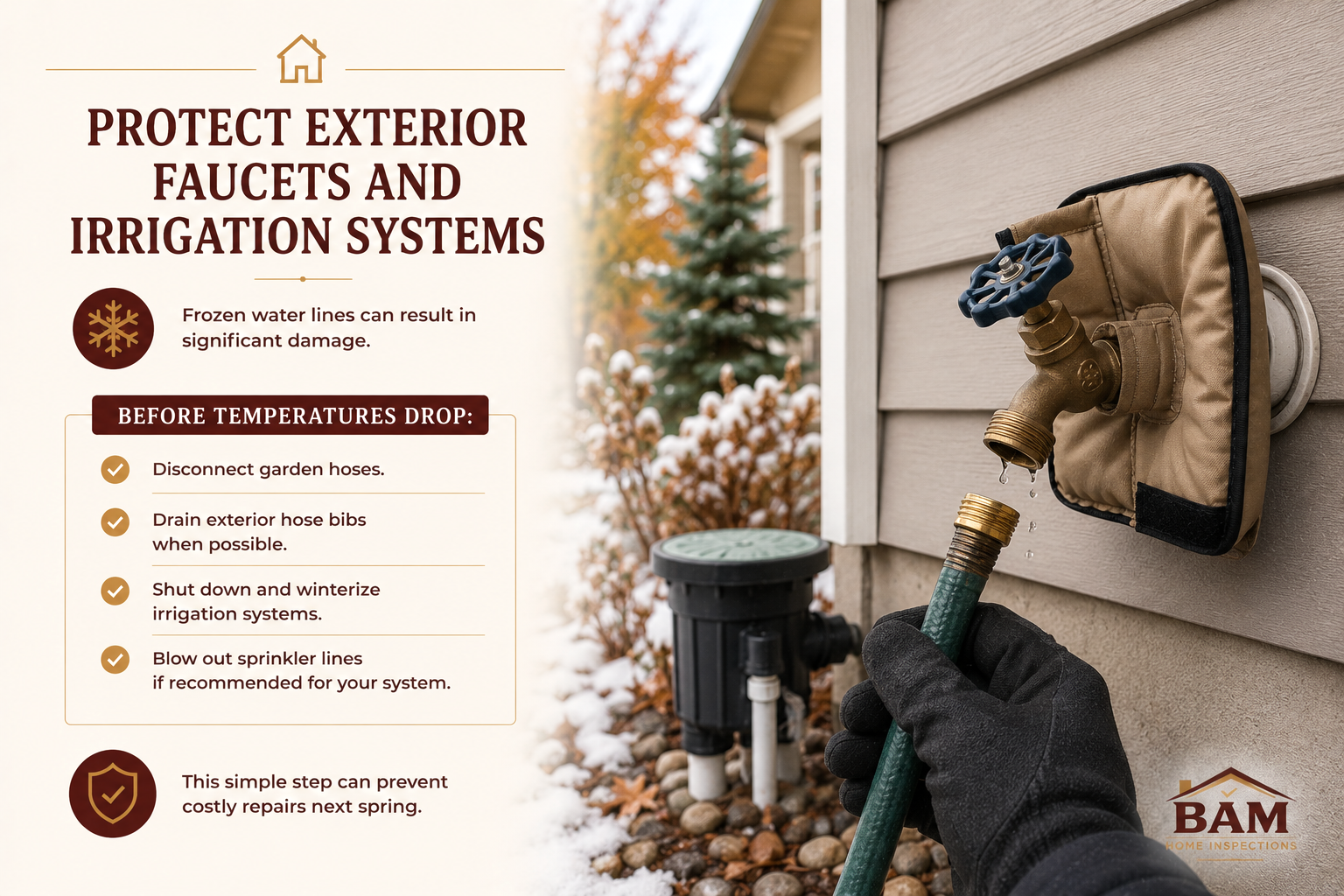
Frozen water lines can result in significant damage.
Before temperatures drop:
- Disconnect garden hoses.
- Drain exterior hose bibs when possible.
- Shut down and winterize irrigation systems.
- Blow out sprinkler lines if recommended for your system.
These simple steps can prevent costly repairs next spring.
5. Seal Drafts Around Windows and Doors
Small air leaks can have a surprisingly large impact on comfort and energy efficiency.
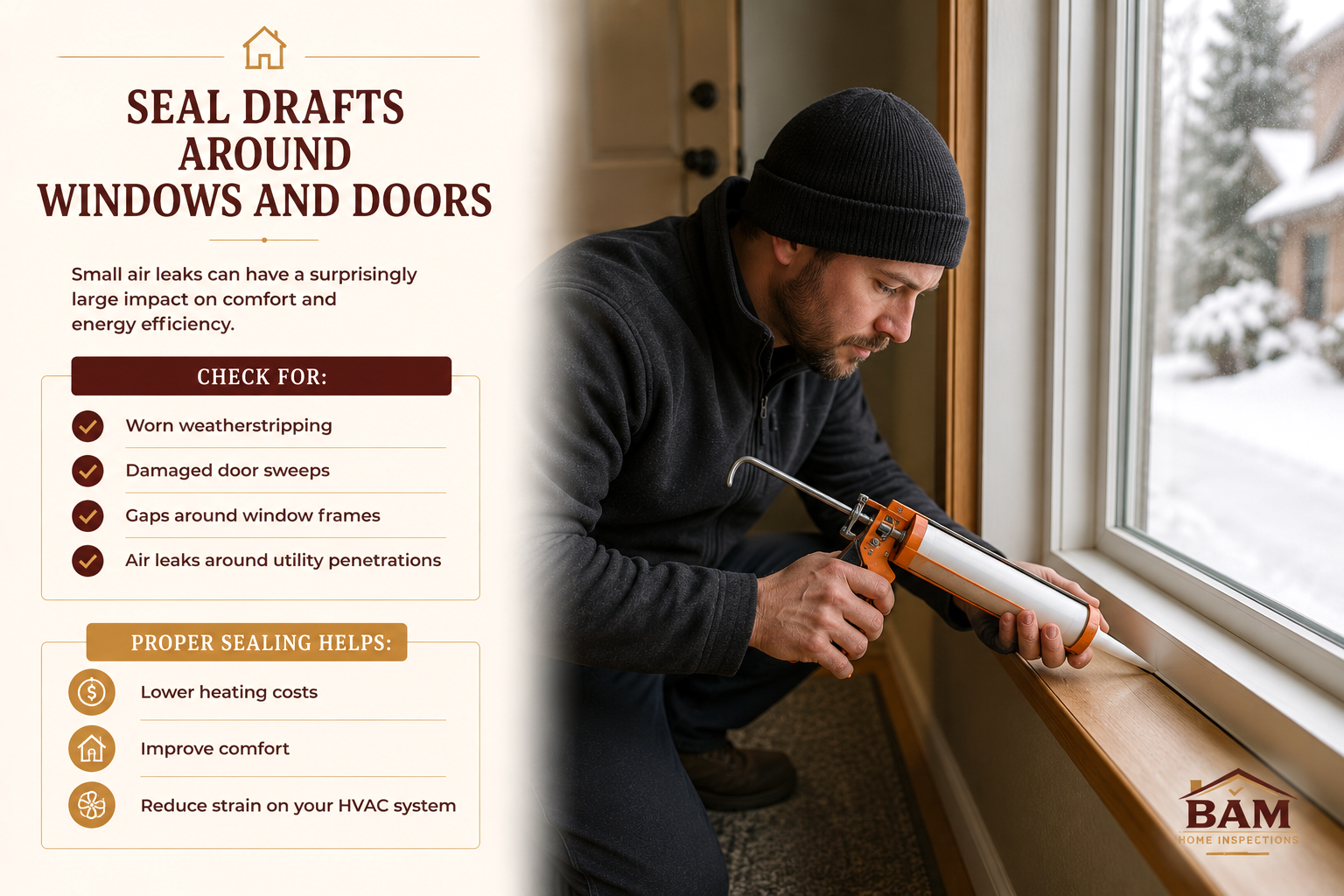
Check for:
- Worn weatherstripping
- Damaged door sweeps
- Gaps around window frames
- Air leaks around utility penetrations
Proper Sealing Helps:
- Lower heating costs
- Improve comfort
- Reduce strain on your HVAC systemlevels.
6. Inspect Attic Insulation and Ventilation
Attics play a critical role in winter performance.
Insufficient insulation can contribute to:
- Heat loss
- Higher utility bills
- Ice dam formation
Proper attic ventilation helps maintain consistent roof temperatures and reduces moisture-related concerns.
If portions of your attic are accessible, look for:
- Compressed insulation
- Missing insulation
- Signs of moisture intrusion
- Evidence of previous roof leaks

7. Test Smoke and Carbon Monoxide Detectors
As heating systems operate more frequently during winter, this is an excellent time to check life-safety devices.
Replace batteries if needed and test all:
- Smoke detectors
- Carbon monoxide detectors
This is one of the easiest and most important maintenance tasks homeowners can perform.

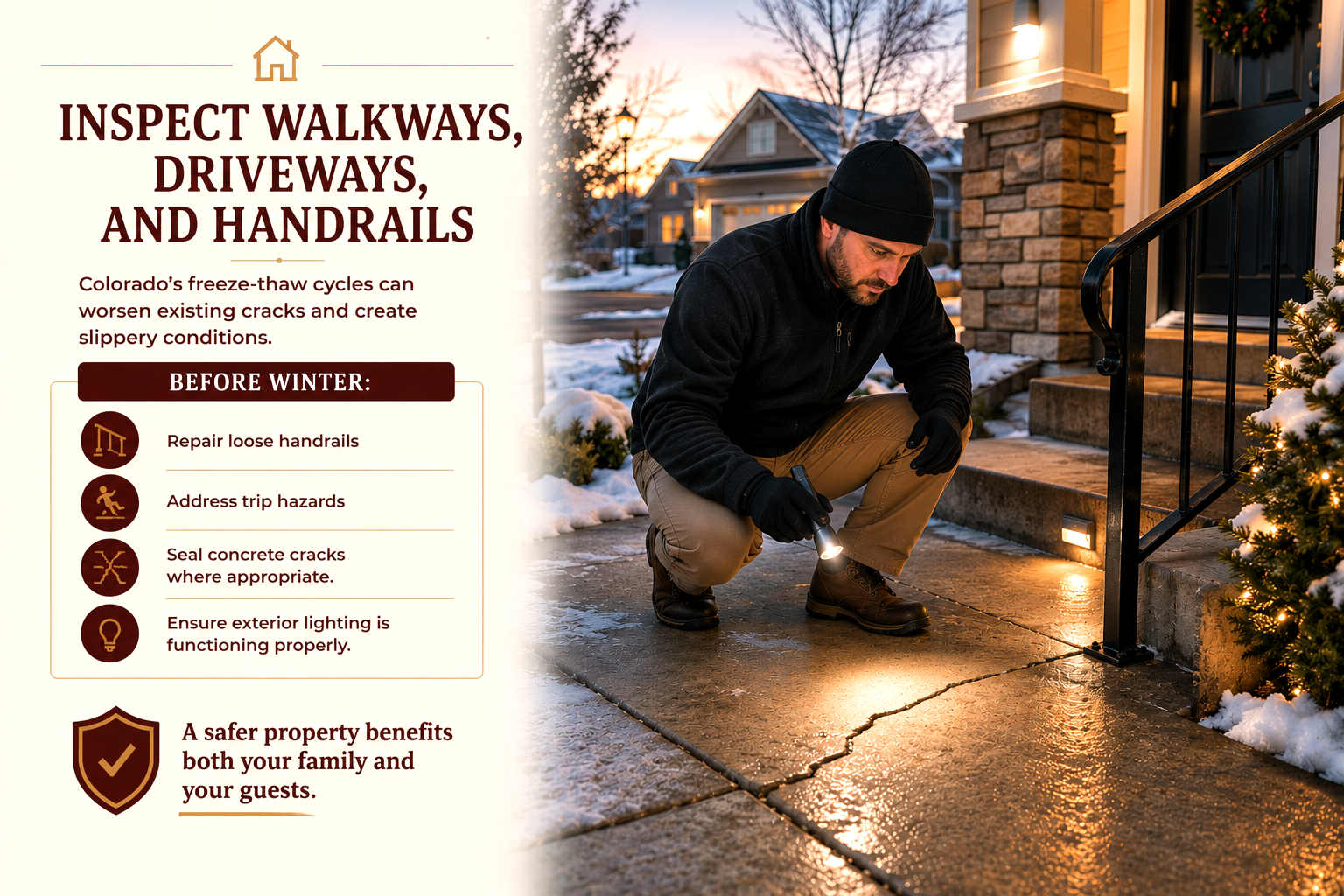
8. Inspect Walkways, Driveways, and Handrails
Colorado’s freeze-thaw cycles can worsen existing cracks and create slippery conditions.
Before winter:
- Repair loose handrails.
- Address trip hazards.
- Seal concrete cracks where appropriate.
- Ensure exterior lighting is functioning properly.
A safer property benefits both your family and your guests.
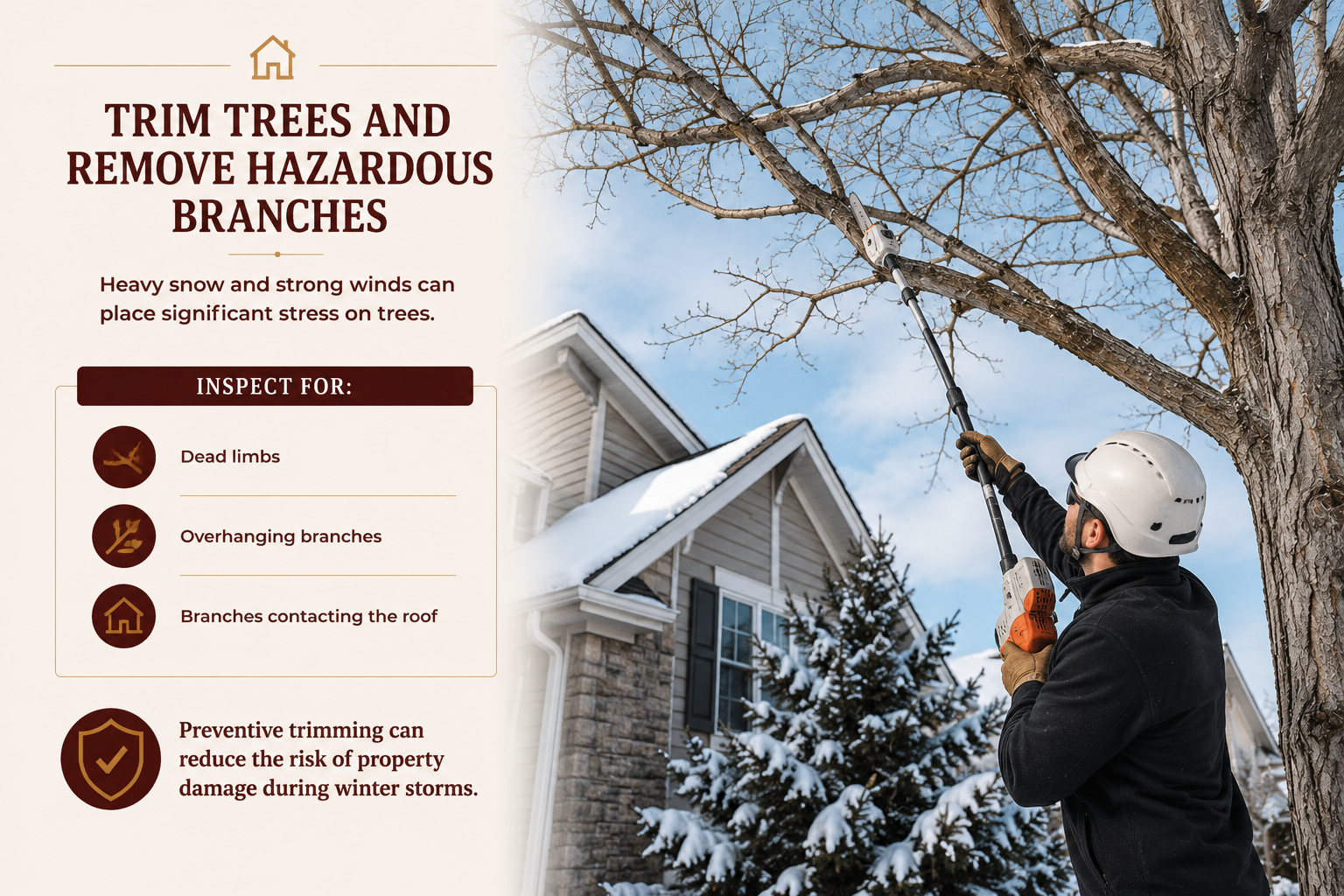
9. Trim Trees and Remove Hazardous Branches
Heavy snow and strong winds can place significant stress on trees.
Inspect for:
- Dead limbs
- Overhanging branches
- Branches contacting the roof
Preventive trimming can reduce the risk of property damage during winter storms.
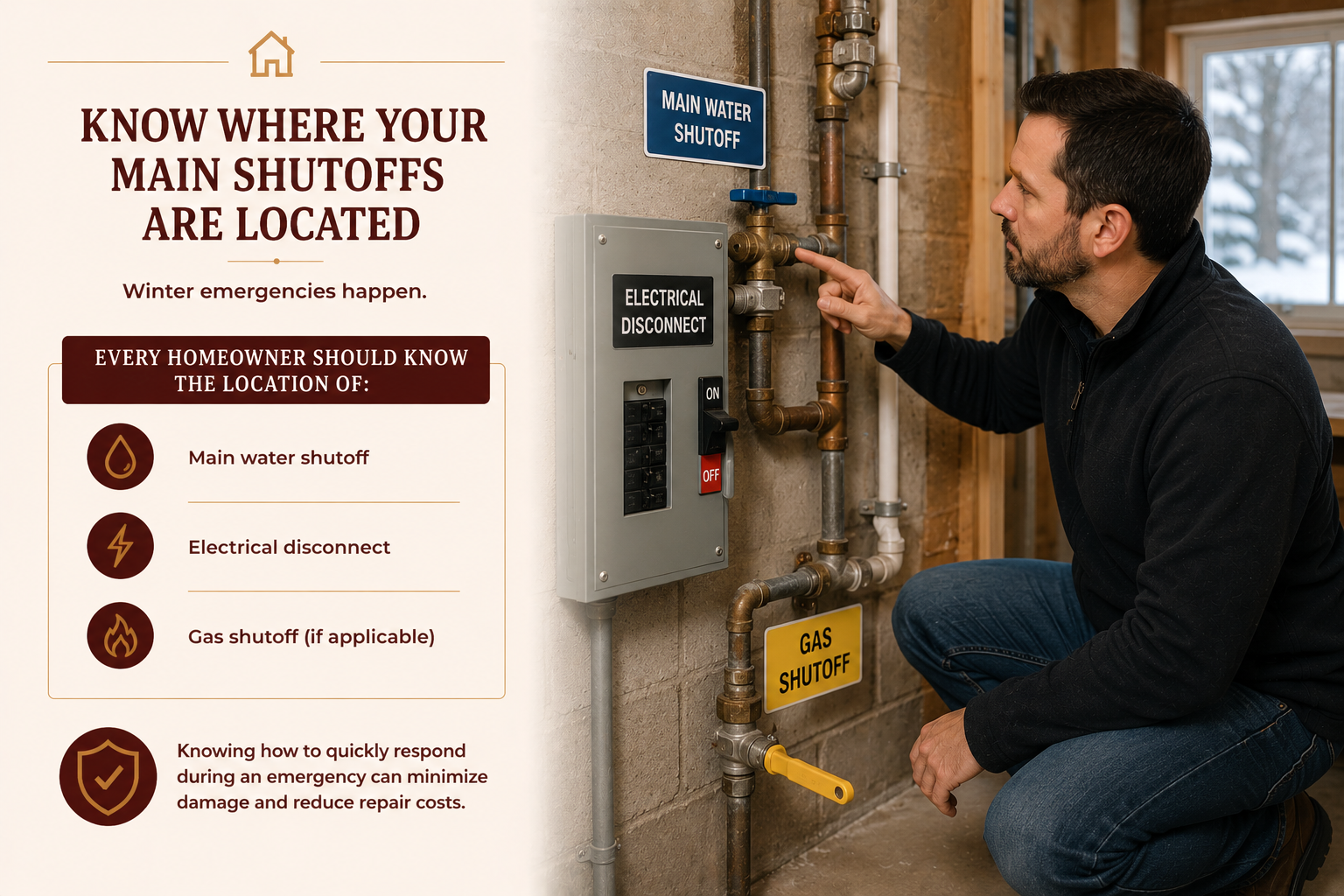
10. Know Where Your Main Shutoffs Are Located
Winter emergencies happen.
Every homeowner should know the location of:
- Main water shutoff
- Electrical disconnect
- Gas shutoff (if applicable)
Knowing how to quickly respond during an emergency can minimize damage and reduce repair costs.
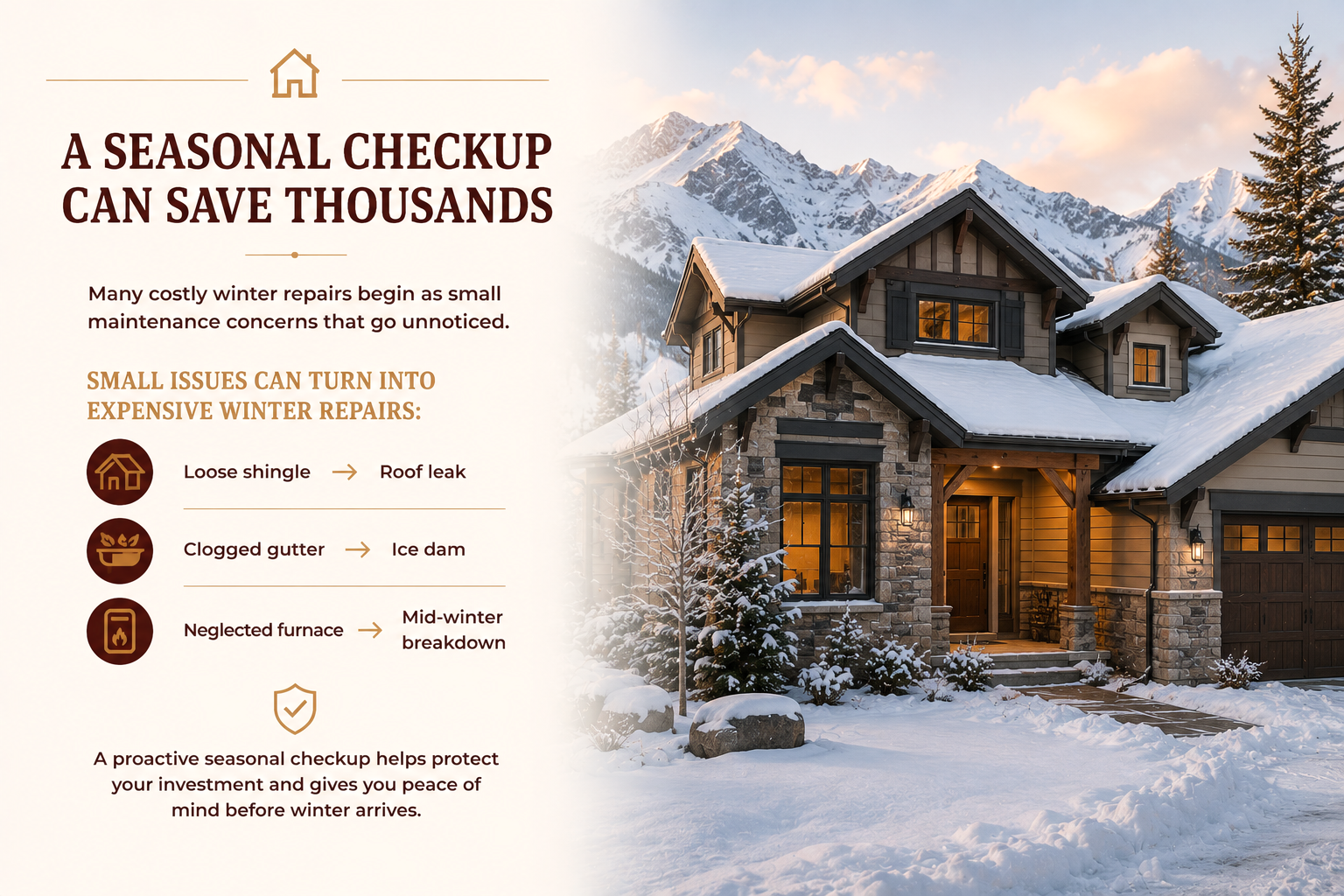
A Seasonal Checkup Can Save Thousands
Many costly winter repairs begin as small maintenance concerns that go unnoticed.
A loose shingle becomes a roof leak.
A clogged gutter contributes to ice dams.
A neglected furnace fails during a cold snap.
The good news is that most of these issues can be identified and addressed before winter weather arrives.
Taking a proactive approach not only helps protect your investment but also provides peace of mind knowing your home is prepared for whatever a Colorado winter may bring.
Final Thoughts
Colorado homeowners face unique seasonal challenges, but a little preparation goes a long way.
By inspecting key systems, performing routine maintenance, and addressing small concerns before temperatures drop, you can improve your home’s efficiency, reduce the likelihood of costly repairs, and enjoy a safer, more comfortable winter season.
Your home works hard for you year-round. A little attention before winter arrives can help ensure it’s ready for the months ahead.
Frequently Asked Questions (FAQs)
Ideally, homeowners should begin winter preparation in early fall before freezing temperatures arrive. This allows time to service heating equipment, clean gutters, inspect the roof, winterize irrigation systems, and address maintenance concerns before snow and ice create additional challenges.
While every home is different, servicing your heating system is one of the most important tasks. A furnace failure during a Colorado cold snap can create comfort, safety, and property concerns. Replacing filters, testing the system, and scheduling professional maintenance can help reduce the likelihood of unexpected breakdowns.
Clogged gutters can prevent melting snow and ice from draining properly. This may contribute to ice dams, roof leaks, fascia damage, and moisture issues around the foundation. Cleaning gutters and verifying proper downspout drainage can help protect the home throughout the winter season.
Homeowners can reduce the risk of frozen pipes by disconnecting garden hoses, winterizing irrigation systems, draining exterior hose bibs when appropriate, and sealing drafts around the home. Taking these steps before freezing temperatures arrive can help prevent costly water damage and plumbing repairs.
Proper attic insulation helps reduce heat loss and improve energy efficiency, while adequate ventilation helps maintain consistent roof temperatures and manage moisture. Together, these systems can help lower utility costs, improve comfort, and reduce the likelihood of ice dam formation.
Some of the most commonly overlooked items include damaged roof flashing, clogged gutters, unsealed air leaks around windows and doors, neglected furnace maintenance, and exterior hose bibs that haven’t been properly winterized. These small issues can become much larger and more expensive problems once Colorado’s winter weather arrives.