
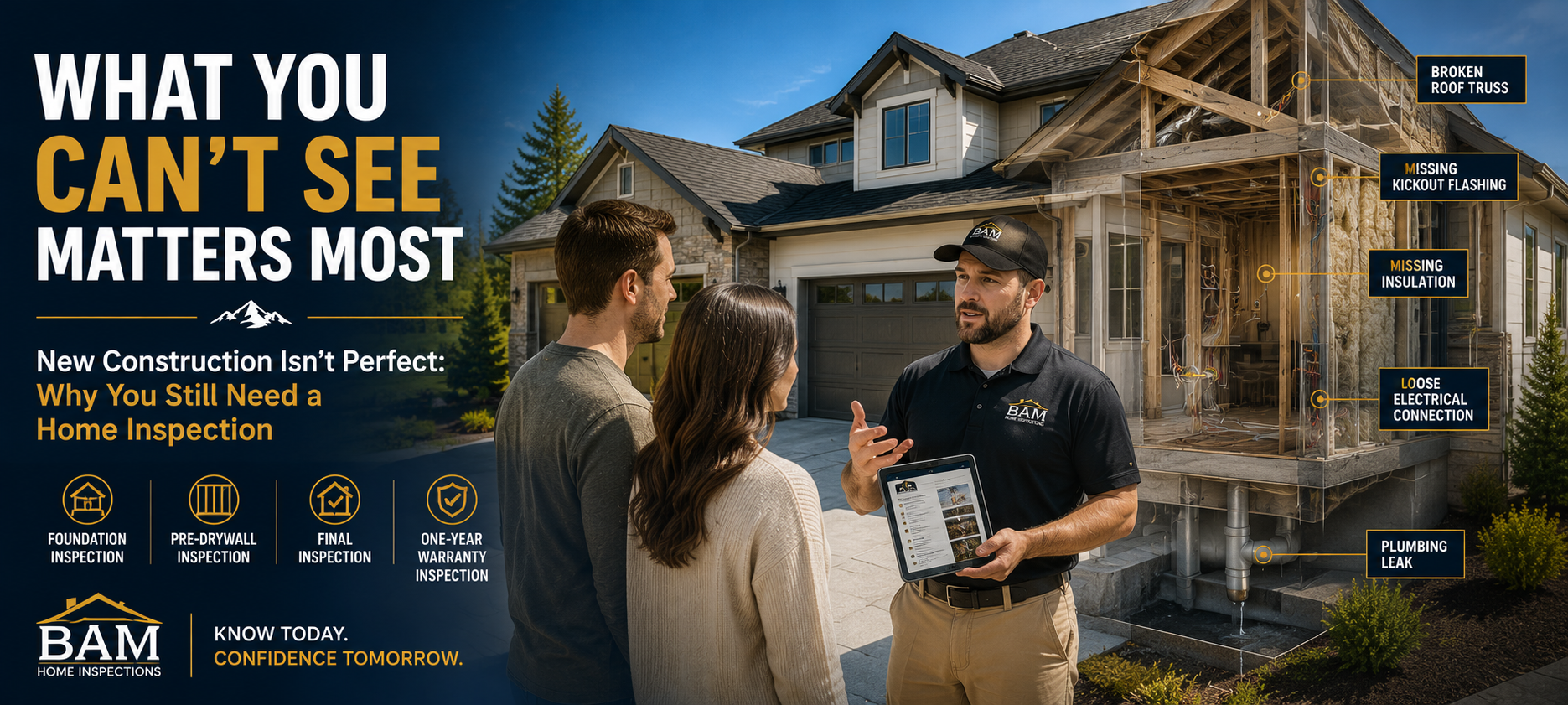
Don't Let the Fresh Paint Fool You
Imagine taking the delivery of a brand-new vehicle and discovering loose wiring, leaking fluids, missing bolts, and malfunctioning equipment.
You’d never accept it.
Yet many home buyers assume a newly constructed home is automatically flawless simply because nobody has lived in it before.
The reality?
New construction homes routinely contain defects.
Most are minor.
Some are significant.
A few can be surprisingly expensive.
The fact that a home is new doesn’t guarantee that it’s defect-free.
That’s why one of the smartest investments a buyer can make is a professional home inspection.
Yet many home buyers assume a newly constructed home is automatically flawless simply because nobody has lived in it before. The reality? New construction homes routinely contain defects. [New Construction Isn't Perfect: Why You Still Need a Home Inspection]
BAM Home Inspections Share to X
New Construction Isn't Perfect. It's Simply Unlived In.
There’s no question that buying a newly constructed home is exciting.
Everything is new:
- The roof
- The appliances
- The flooring
- The plumbing fixtures
- The heating and cooling systems
Because everything is brand new, many buyers assume everything must also be perfect.
Unfortunately, that’s not always the case.
Many inspection companies across the country routinely identify dozens—and sometimes hundreds—of defects in newly constructed homes before the buyer ever moves in.
The good news?
Most of these issues can often be corrected by the builder before closing if they’re identified early.
Many inspection companies across the country routinely identify dozens—and sometimes hundreds—of defects in newly constructed homes before the buyer ever moves in. The good news? Most of these issues can often be corrected by the builder before closing if they're identified early. [New Construction Isn't Perfect: Why You Still Need a Home Inspection]
BAM Home Inspections Share to X
Builders Are Human, and Mistakes Happen
Building a home is an incredibly complex process.
A typical new construction home may involve:
- Excavation crews
- Foundation contractors
- Framers
- Roofers
- Electricians
- Plumbers
- HVAC technicians
- Drywall crews
- Painters
- Flooring installers
- Landscapers
Dozens of people.
Hundreds of decisions.
Thousands of opportunities for something to be missed.
This doesn’t mean builders are careless. It means construction is a human process. And wherever people are involved, mistakes can happen.
Building a home is an incredibly complex process. Dozens of people. Hundreds of decisions. Thousands of opportunities for something to be missed. This doesn't mean builders are careless. It means construction is a human process. And wherever people are involved, mistakes can happen. [New Construction Isn't Perfect: Why You Still Need a Home Inspection]
BAM Home Inspections Share to X
Examples of missed items may include:
- Missing insulation
- Improperly installed flashing
- Loose electrical connections
- Plumbing leaks
- HVAC performance issues
- Structural framing defects
- Improper grading around the home
Most are correctable.
The key is finding them before they become your responsibility.
Building Codes Are the Floor—Not the Ceiling
One of the most common misconceptions among buyers is that municipal building inspections guarantee quality. They don't. Building codes establish minimum standards for safety and construction. [New Construction Isn't Perfect: Why You Still Need a Home Inspection]
BAM Home Inspections Share to X
One of the most common misconceptions among buyers is that municipal building inspections guarantee quality.
They don’t.
Building codes establish minimum standards for safety and construction.
Think of building codes as the floor, not the ceiling.
A home can technically meet code requirements and still have:
- Workmanship concerns
- Drainage issues
- Cosmetic defects
- Performance problems
- Maintenance concerns
Passing a municipal inspection doesn’t necessarily mean the home is free of defects.
It simply means the home met the applicable code requirements at the time of inspection.
A private home inspection serves a different purpose.
It focuses on helping the buyer better understand the overall condition, performance, and quality of the home.
Municipal Inspections and Private Home Inspections Are Not the Same
Many buyers assume:
“The city already inspected it.”
That’s true.
But municipal inspectors and private home inspectors serve very different roles.
Municipal Inspector
- Represents the local jurisdiction
- Verifies code compliance
- Reviews specific phases of construction
- Has limited time at each property
Private Home Inspector
- Works exclusively for the buyer
- Evaluates the home’s visible systems and components
- Looks for defects, deficiencies, and performance concerns
- Provides a detailed report with photographs and recommendations
Both inspections are valuable.
They simply serve different purposes.
Municipal inspectors and private home inspectors serve very different roles. [New Construction Isn't Perfect: Why You Still Need a Home Inspection]
BAM Home Inspections Share to X
Common Issues Found in New Construction Homes
You might be surprised by some of the defects inspectors routinely identify in brand-new homes.
Examples include:
Roofing Issues
Missing kickout flashing
Improper flashing installation
Damaged shingles
Exposed fasteners
Structural Concerns
Damaged trusses
Improper framing connections
Unsupported components
HVAC Problems
Improper duct installation
Airflow deficiencies
Incomplete system setup
Plumbing Defects
Leaks
Improper drain connections
Missing supports
Electrical Issues
Inoperable outlets
Missing GFCI protection
Improper wiring connections
Drainage Problems
Negative grading
Improper water management
Areas where water may collect near the foundation
While many of these issues may seem minor, addressing them early can prevent larger and more expensive problems later.
Three Opportunities to Catch Problems Before Move-In
One of the biggest advantages of buying during the construction process is the opportunity to inspect the home at multiple stages.
Foundation Inspection
Pre-Drywall Inspection
Final Inspection
Performed after the foundation is poured but before construction progresses.
This inspection helps identify concerns related to:
- Foundation construction
- Drainage
- Structural preparation
One of the most valuable inspections available.
Performed before insulation and drywall are installed, allowing visibility into areas that will soon be concealed.
This inspection may evaluate:
- Framing
- Plumbing
- Electrical wiring
- HVAC ductwork
- Structural components
Once drywall is installed, many of these systems are no longer visible.
Performed near completion of construction and prior to closing.
This inspection evaluates:
- Roofing
- Electrical systems
- Plumbing systems
- HVAC equipment
- Interior finishes
- Exterior components
- Safety concerns
For many buyers, this is their last opportunity to identify concerns before taking ownership.
Why "The Warranty Will Cover It" Isn't Always the Best Plan
In some cases, defects may cause secondary damage before they're discovered. For example: A small plumbing leak behind a wall could eventually lead to moisture damage, mold growth, or damaged finishes. [New Construction Isn't Perfect: Why You Still Need a Home Inspection]
BAM Home Inspections Share to X
Many new homes include builder warranties.
That’s a good thing.
However, warranties aren’t a substitute for a thorough inspection.
Builder warranties often:
- Exclude cosmetic concerns
- Require documentation
- Limit coverage
- Require the buyer to identify the problem
In some cases, defects may cause secondary damage before they’re discovered.
For example:
A small plumbing leak behind a wall could eventually lead to moisture damage, mold growth, or damaged finishes.
Finding problems early is almost always preferable to discovering them after move-in.
Don't Forget the One-Year Warranty Inspection
Scheduling a professional inspection before the builder's warranty expires can help identify concerns that may qualify for repair while coverage is still available. [New Construction Isn't Perfect: Why You Still Need a Home Inspection]
BAM Home Inspections Share to X
Even if you’ve already moved into your new home, another inspection opportunity remains.
Many builders provide a one-year warranty period.
As the home settles and experiences all four seasons, new issues sometimes emerge.
Examples may include:
- Settlement cracks
- Drainage concerns
- Roofing deficiencies
- HVAC performance issues
- Moisture intrusion
Scheduling a professional inspection before the builder’s warranty expires can help identify concerns that may qualify for repair while coverage is still available.
Many homeowners find this inspection to be one of the most valuable inspections they’ll ever have.
The Cost of Skipping a New Construction Inspection
Some buyers skip the inspection because they assume: “It’s brand new.”
Unfortunately, new doesn’t always mean problem-free.
Skipping an inspection can result in:
- Unexpected repair costs
- Missed defects
- Delayed warranty claims
- Safety concerns
- Frustration after move-in
Compared to the cost of the home itself, a professional inspection is a relatively small investment that can provide significant value and peace of mind.

Final Thoughts
A new construction home may be one of the largest investments you’ll ever make.
The fact that it’s new doesn’t guarantee it’s defect-free.
Construction is a human process.
And wherever people are involved, mistakes can happen.
A professional home inspection helps ensure those mistakes are identified before they become your responsibility.
Because when you’re investing hundreds of thousands of dollars in a new home, “brand new” should never be confused with “perfect.”
A quality home inspection provides something every buyer deserves:
Clarity.
Confidence.
And peace of mind before moving in.
Frequently Asked Questions (FAQs)
Yes. While new homes may not have years of wear and tear, they can still contain defects related to construction, installation, workmanship, or performance. Inspectors routinely identify issues involving roofing, plumbing, electrical systems, HVAC equipment, framing, drainage, and other components in newly constructed homes. A professional inspection helps identify these concerns before they become the buyer’s responsibility.
Municipal building inspections and private home inspections serve different purposes. Municipal inspectors verify compliance with applicable building codes during various stages of construction. A private home inspector works for the buyer and evaluates the home’s visible systems and components for defects, deficiencies, safety concerns, and performance issues. Both inspections are valuable, but they are not the same.
A pre-drywall inspection is performed before insulation and drywall are installed. This allows the inspector to evaluate framing, plumbing, electrical wiring, HVAC ductwork, and other structural components that will soon be concealed. Many buyers consider this one of the most valuable inspections because it provides visibility into areas that won’t be accessible later.
Yes. A warranty is not a substitute for an inspection. Warranties often have limitations, exclusions, and documentation requirements. In many cases, buyers must first identify a problem before submitting a warranty claim. Finding concerns before closing or before the warranty period expires is often easier and less costly than discovering them after damage has occurred.
Many builders provide a one-year warranty period on newly constructed homes. A one-year warranty inspection is performed near the end of that period to identify concerns that may have developed as the home settled and experienced seasonal changes. Common findings may include settlement cracks, drainage issues, roofing concerns, HVAC performance problems, or moisture intrusion. Identifying these issues before the warranty expires may allow the builder to address them under warranty coverage.
Some of the most common issues identified during new construction inspections include missing or improperly installed flashing, damaged roofing materials, plumbing leaks, HVAC installation concerns, electrical deficiencies, framing defects, and grading or drainage problems. While many of these issues are repairable, discovering them before closing gives buyers the opportunity to have them corrected before taking ownership.