

What Every Seller Should Know Before Listing
If you’ve lived in Colorado for any length of time, you’ve probably experienced a hailstorm.
Maybe it left a few dents in your gutters.
Maybe it damaged your roof.
Or maybe it passed through without causing any noticeable problems.
The challenge is that hail damage isn’t always obvious from the ground.
And when it’s time to sell your home, previously unknown hail damage can suddenly become an important part of the conversation.
Every year, Colorado home sellers are surprised when a buyer’s inspection reveals evidence of roof damage that they didn’t know existed.
The result can be delayed negotiations, insurance questions, repair requests, and unnecessary stress.
The good news?
Most of these surprises can be avoided with a little preparation.
Let’s look at what Colorado sellers should know about hail damage before listing their home.
Every year, Colorado home sellers are surprised when a buyer's inspection reveals evidence of roof damage that they didn't know existed. The good news? Most of these surprises can be avoided with a little preparation. [Hail Damage & Selling in Colorado]
BAM Home Inspections Share to X
Why Hail Matters in Colorado
Colorado consistently ranks among the most hail-prone states in the country.
Communities throughout the Front Range regularly experience storms capable of producing:
- Roof damage
- Gutter damage
- Window damage
- Siding damage
- Exterior component damage
In many cases, the damage isn’t visible from the ground.
Homeowners often have no idea a problem exists until an inspection occurs.

The Problem With Hidden Hail Damage
One of the most common scenarios looks something like this:
A seller lists their home.
The property goes under contract.
The buyer schedules a home inspection.
The inspector identifies evidence of hail damage.
Suddenly everyone is asking:
- When did this happen?
- Has an insurance claim been filed?
- Does the roof need replacement?
- Will the insurance company cover it?
- Who pays for repairs?
What started as a smooth transaction can quickly become complicated.

Can a Home Inspector Identify Hail Damage?
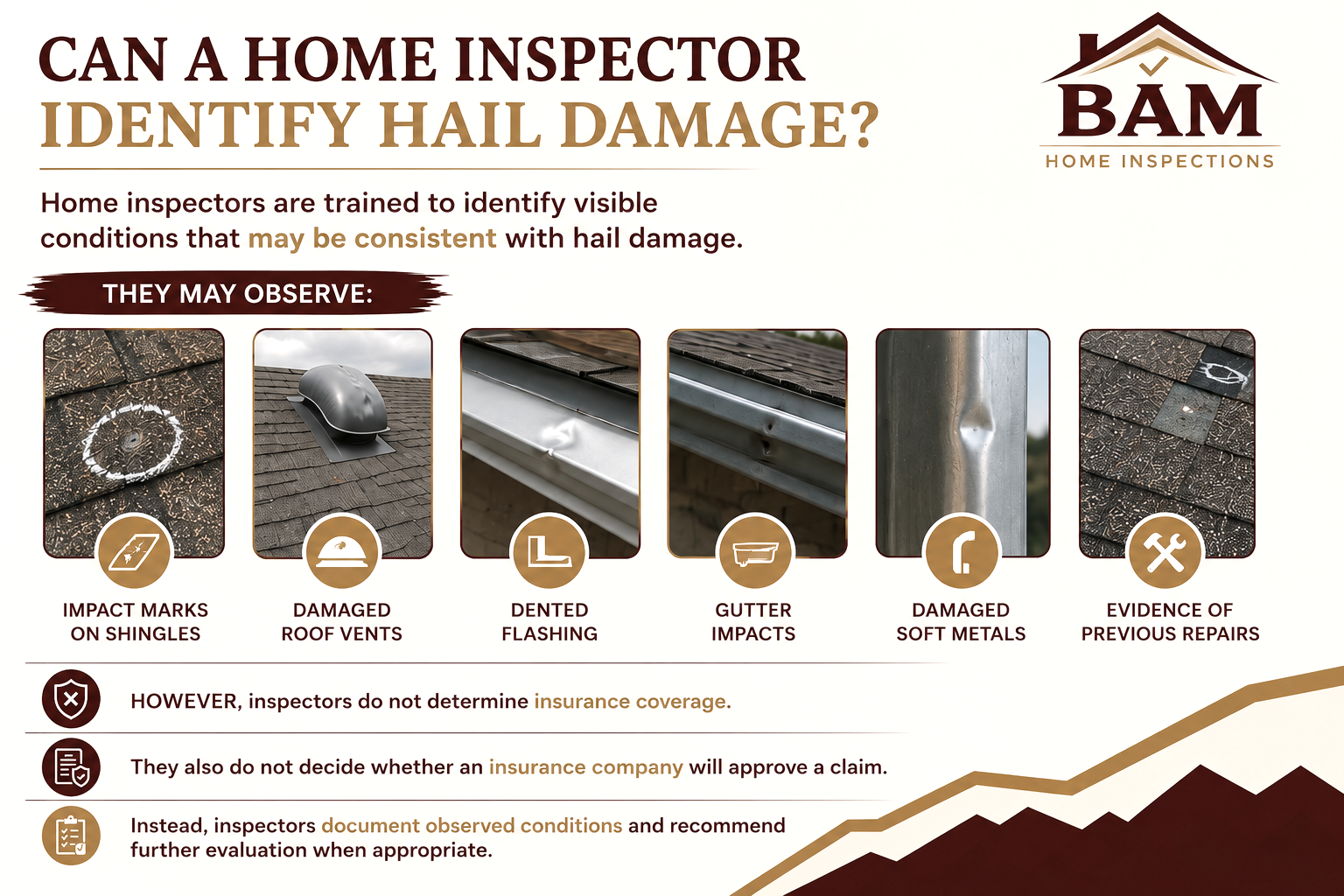
Home inspectors are trained to identify visible conditions that may be consistent with hail damage.
They may observe:
- Impact marks on shingles
- Damaged roof vents
- Dented flashing
- Gutter impacts
- Damaged soft metals
- Evidence of previous repairs
However, inspectors do not determine insurance coverage.
They also do not decide whether an insurance company will approve a claim.
Instead, inspectors document observed conditions and recommend further evaluation when appropriate.
What Happens If Hail Damage Is Found During the Buyer's Inspection?
Every transaction is different, but several outcomes are common.
The Seller Addresses the Issue
The seller may choose to…
- File an insurance claim (if appropriate)
- Replace the roof
- Complete repairs
…before closing.
The Buyer and Seller Negotiate
The parties may agree to…
- A price adjustment
- Seller concessions
- A repair credit
…rather than completing repairs before closing.
Further Evaluation Is Requested
In some cases, a qualified roofing contractor may be asked to provide additional evaluation.

Why Sellers Should Consider Evaluating the Roof Before Listing
One of the best ways to avoid surprises is to understand the condition of the roof before the home hits the market.
This doesn’t necessarily mean replacing the roof.
It means gathering information.
Knowing the roof’s condition before listing allows sellers to…
- Make informed decisions
- Gather documentation
- Address concerns proactively
- Reduce unexpected negotiation challenges
Information creates options.

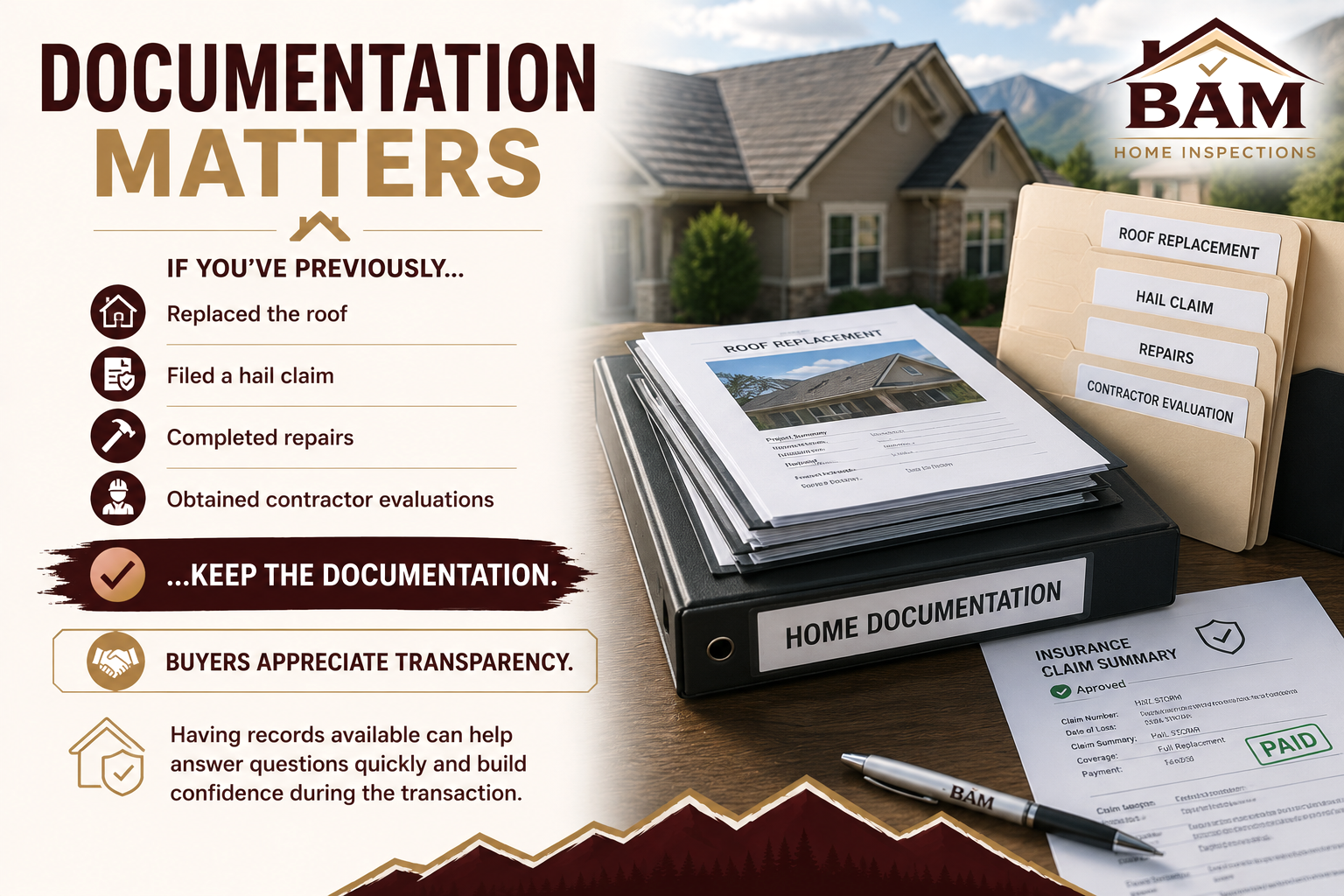
Documentation Matters
If you’ve previously…
- Replaced the roof
- Filed a hail claim
- Completed repairs
- Obtained contractor evaluations
…keep the documentation.
Buyers appreciate transparency.
Having records available can help answer questions quickly and build confidence during the transaction.
Common Areas Where Hail Damage Appears
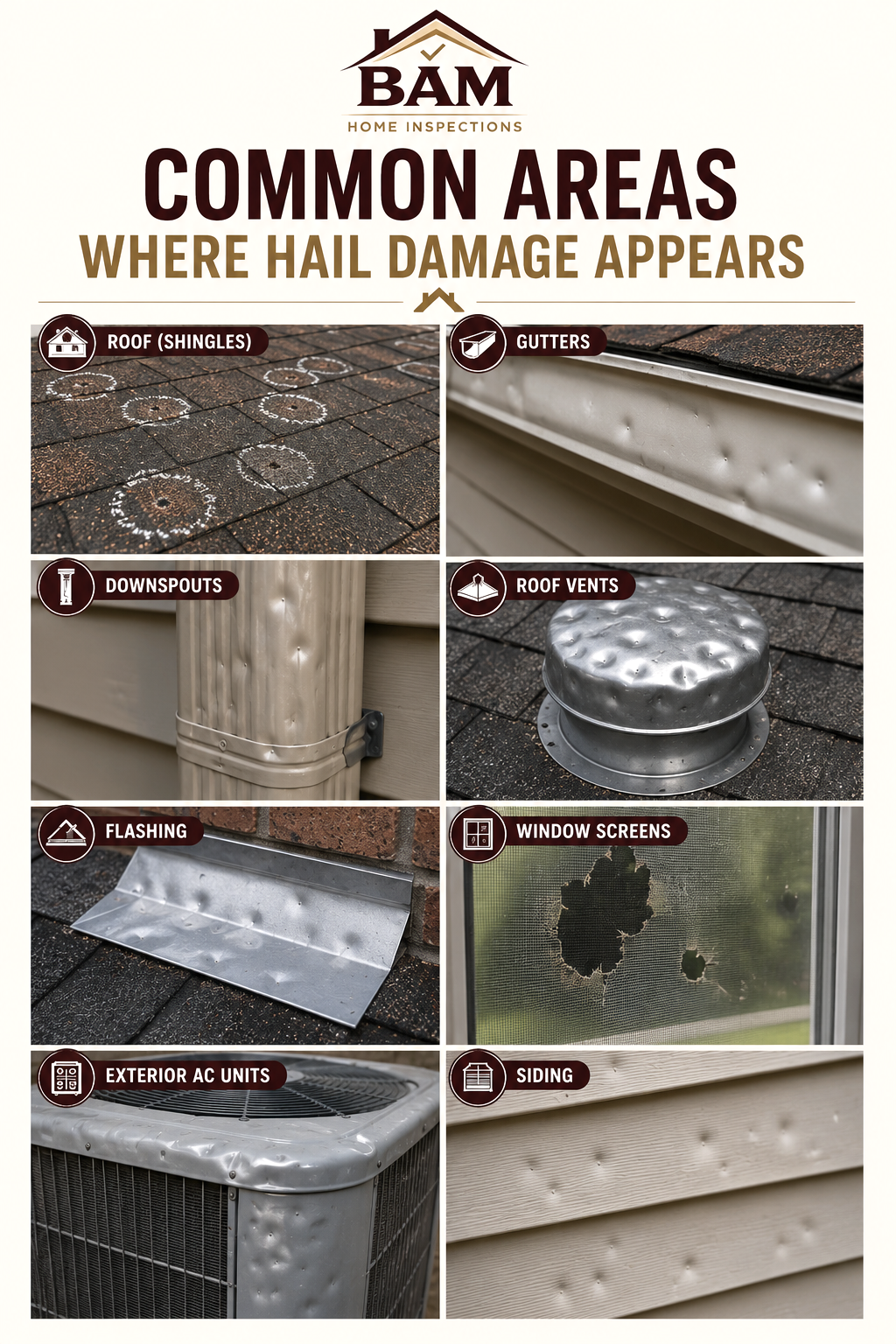
Most homeowners immediately think about shingles.
However, hail often affects other components as well.
Inspectors frequently observe damage to:
Gutters
- Dents and impact marks are common indicators of previous hail events.
Downspouts
- Soft metal components often reveal storm impacts.
Roof Vents
- Vent caps and turbine vents can be susceptible to hail damage.
Flashing
- Metal flashing frequently shows evidence of impacts.
Window Screens
- Hail can tear or damage screens.
Exterior Air Conditioning Units
- Condenser fins may show signs of hail impacts.
Siding
- Depending on the material, siding can also sustain damage.
Colorado Seller Tip
If your roof is more than a few years old and you know the home has experienced significant hail events, consider having it evaluated before listing.
You don’t want the buyer’s inspection to be the first time anyone looks closely at the roof.
Being proactive often leads to smoother transactions and fewer surprises.
What Buyers Should Understand
Finding hail damage doesn’t automatically mean the home is a bad investment.
The important questions are:
- How significant is the damage?
- Has it affected performance?
- Are repairs needed?
- Is replacement recommended?
- What documentation is available?
A knowledgeable inspector can help identify concerns and provide valuable perspective.

The Goal Isn't Perfection
Colorado roofs face some of the harshest weather conditions in the country.
Hail damage is common.
Roof aging is normal.
Maintenance is expected.
The goal isn’t finding a perfect roof.
The goal is understanding its condition and making informed decisions.

How a Pre-Listing Inspection Can Help
Many sellers choose to obtain a pre-listing inspection before putting their home on the market.
One of the biggest benefits is identifying concerns before buyers do.
If potential hail damage exists, sellers have the opportunity to…
- Gather information
- Consult contractors
- Explore insurance options
- Plan ahead
…before negotiations begin.

Final Thoughts
Hail damage is simply part of homeownership in Colorado.
Unfortunately, it’s also one of the most common issues that can create unexpected challenges during a real estate transaction.
The best way to reduce stress is through preparation.
Understanding the condition of your roof before listing can help avoid surprises, improve transparency, and create a smoother experience for everyone involved.
Because when it comes to selling a home in Colorado, few things are more valuable than knowing what buyers are likely to discover before they discover it.
Seller Success Tip
Don’t wait for the buyer’s inspection to reveal potential hail damage. A little preparation before listing can help prevent a lot of uncertainty later.
Frequently Asked Questions (FAQs)
In many cases, you can’t. Hail damage is often difficult to identify from the ground and may not cause immediate leaks or visible problems inside the home. That’s why many Colorado homeowners are surprised when hail-related concerns are discovered during a home inspection or roofing evaluation.
No. Home inspectors can identify visible conditions that may be consistent with hail damage, but they do not determine insurance coverage, claim eligibility, or whether a roof qualifies for replacement. Those decisions are typically made by insurance carriers based on their own evaluation processes.
Several outcomes are possible. The seller may choose to address the issue, the buyer and seller may negotiate concessions or credits, or a roofing contractor may be asked to provide additional evaluation. Every transaction is unique, but discovering the issue early generally provides more options than discovering it at the last minute.
In many cases, yes. If your home has experienced significant hail events or the roof is several years old, a pre-listing roof evaluation can help identify concerns before buyers do. Understanding the roof’s condition ahead of time allows sellers to gather information, review documentation, and make informed decisions before negotiations begin.
Not necessarily. The significance of hail damage depends on factors such as the extent of the damage, the roofing material, the age of the roof, and whether the damage affects performance. Some situations may warrant repairs, while others may require more extensive action. Additional evaluation is often necessary to determine the appropriate course of action.
Sellers should retain any available records related to roof replacements, insurance claims, contractor evaluations, repairs, invoices, warranties, and photographs. Having documentation readily available can help answer buyer questions, improve transparency, and create confidence during the transaction process.