

Helping Colorado Homeowners Invest Wisely Before Putting Their Home on the Market
One of the most common questions Realtors hear before listing a home is:
“What should I fix before we put the house on the market?”
It’s a fair question.
Every seller wants to maximize value, reduce surprises, and create a smoother transaction.
But after more than 20,000 home inspections across Colorado, we’ve learned something important:
Not every defect deserves a repair.
In fact, some sellers spend thousands of dollars fixing issues that buyers never would have cared about—while ignoring items that are almost certain to become negotiation points later.
The goal isn’t to make the home perfect.
The goal is to make smart decisions.
Let’s talk about where sellers should focus their time and money before listing.
Not every defect deserves a repair. In fact, some sellers spend thousands of dollars fixing issues that buyers never would have cared about—while ignoring items that are almost certain to become negotiation points later. [What Sellers Should Repair Before Listing...and What They Shouldn't]
BAM Home Inspections Share to X
Start With Safety Issues
If there is one category that deserves attention before listing, it’s safety-related concerns.
These are the types of items that often appear in inspection reports and can create immediate buyer concern.
Examples may include:
- Missing smoke alarms
- Missing carbon monoxide alarms
- Missing GFCI protection
- Loose handrails
- Exposed wiring
- Missing electrical panel covers
Many safety improvements are relatively inexpensive and can help reduce avoidable inspection findings.

Address Active Leaks
Water has the potential to damage multiple systems within a home.
Whether it’s:
- A plumbing leak
- A roof leak
- A leaking window
- A leaking hose bib
These are issues sellers should strongly consider addressing before listing.
Water problems rarely improve on their own.
They usually become larger—and more expensive—over time.

Fix Simple Plumbing Issues
Small plumbing concerns often create larger impressions than they deserve.
Examples include:
- Dripping faucets
- Running toilets
- Leaking shutoff valves
- Loose fixtures
These repairs are often inexpensive and can help demonstrate pride of ownership.
When buyers see obvious deferred maintenance, they sometimes begin wondering what else may have been neglected.

Improve Drainage Where Possible
Colorado homes frequently experience drainage-related concerns.
Common issues include:
- Downspouts discharging near foundations
- Negative grading
- Ponding water
- Irrigation overspray
Improving drainage before listing may help reduce questions related to moisture, settlement, and foundation movement.

Service Mechanical Systems
A furnace doesn’t need to be brand new.
An air conditioner doesn’t need to be perfect.
But sellers should consider ensuring systems have been reasonably maintained.
Documentation showing routine service and maintenance can provide reassurance to buyers.

Repair Broken Items
This may sound obvious, but it’s surprising how often broken components remain unresolved before listing.
Examples include:
- Broken windows
- Damaged door hardware
- Non-functional outlets
- Inoperable light fixtures
- Garage doors that don’t operate properly
These issues can create an impression that maintenance has been deferred throughout the home.

What Sellers Often Waste Money On
Now let’s discuss the other side of the equation.
Not every imperfection needs to be corrected.
In some cases, repairs provide little return on investment.
Cosmetic Imperfections
Minor cosmetic flaws are part of normal homeownership.
Examples include:
- Small drywall blemishes
- Minor paint touch-ups
- Small concrete cracks
- Normal wear and tear
While presentation matters, sellers don’t necessarily need to chase every cosmetic issue.
Most buyers understand that lived-in homes are not brand-new homes.

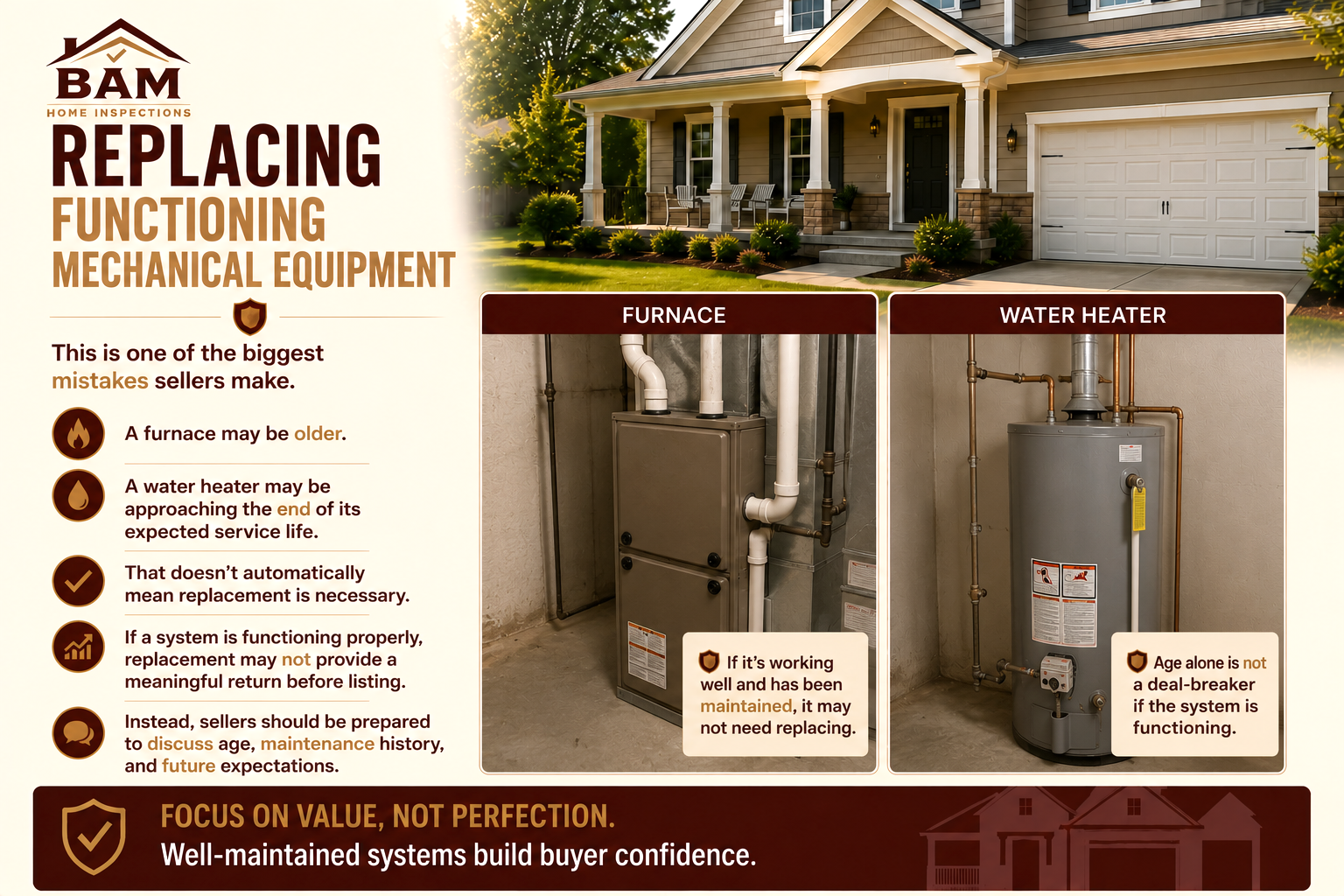
Replacing Functioning Mechanical Equipment
This is one of the biggest mistakes sellers make.
A furnace may be older.
A water heater may be approaching the end of its expected service life.
That doesn’t automatically mean replacement is necessary.
If a system is functioning properly, replacement may not provide a meaningful return before listing.
Instead, sellers should be prepared to discuss age, maintenance history, and future expectations.
Major Remodeling Projects
Sellers sometimes assume they need to remodel kitchens, bathrooms, or flooring before listing.
In many situations, this investment doesn’t produce a dollar-for-dollar return.
Today’s buyers often have their own preferences and renovation plans.
Major projects should be evaluated carefully before spending significant money.

Trying to Eliminate Every Inspection Finding
This may be the most important point in the entire article.
Every home has findings.
Every one.
Even newly constructed homes.
The goal is not to create a home that produces a perfect inspection report.
That home doesn’t exist.
The goal is to reduce avoidable concerns and create realistic expectations.

Consider a Pre-Listing Inspection
One of the best ways to determine which repairs deserve attention is through a pre-listing inspection.
A pre-listing inspection allows sellers to:
- Identify concerns early
- Prioritize repairs
- Gather documentation
- Reduce surprises
- Improve confidence during negotiations
Most importantly, it provides information before buyers become involved.
Information creates options.
Surprises create negotiations.

What We've Learned After 20,000+ Inspections
The smoothest transactions aren’t necessarily the homes with the fewest defects.
They’re the homes where sellers understand their property before buyers do.
When sellers focus on meaningful repairs and avoid unnecessary spending, they often enter the market with greater confidence and fewer surprises.

Final Thoughts
Preparing a home for sale doesn’t require perfection.
It requires strategy.
Address safety concerns.
Fix active leaks.
Repair broken items.
Improve maintenance where practical.
But don’t feel compelled to spend thousands of dollars chasing every cosmetic flaw or replacing systems that still function properly.
The goal isn’t to create a perfect house.
The goal is to create a smoother transaction.
Realtor Takeaway
The best pre-listing repairs aren’t always the most expensive ones.
They’re the repairs most likely to improve buyer confidence, reduce inspection surprises, and keep the transaction moving forward.
What Realtors Should Focus On
When helping sellers prepare for market, encourage them to think about repairs through three questions:
If yes, consider addressing it.
If yes, consider addressing it.
If yes, consider addressing it.
If the answer is no, the discussion often becomes less about repair and more about disclosure, pricing, and buyer expectations.