
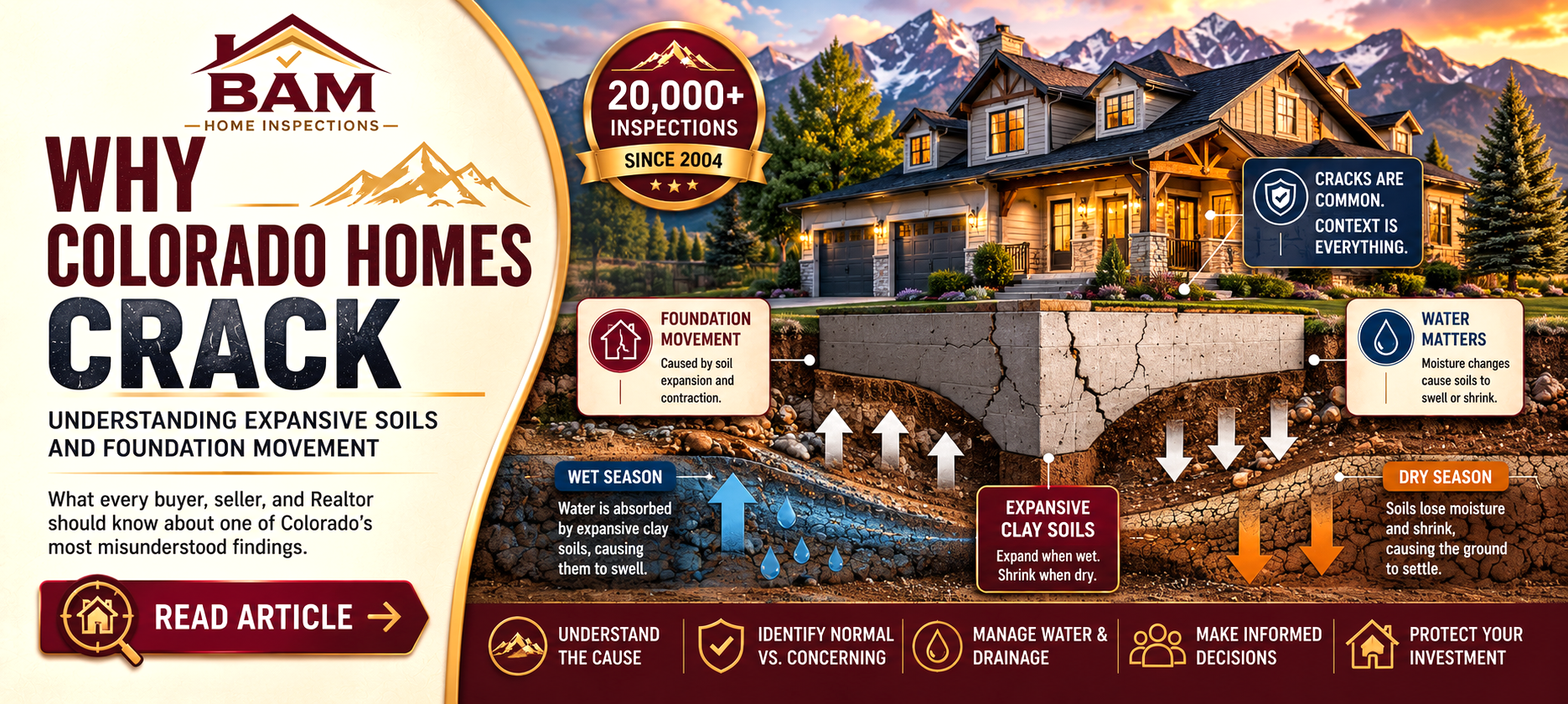
Understanding Expansive Soils and Foundation Movement Along the Front Range
Few words create more anxiety during a home inspection than:
Foundation crack.
Buyers worry.
Sellers become defensive.
Realtors brace for difficult conversations.
Yet after more than 20,000 home inspections across Colorado, we’ve learned something important:
Most cracks are not signs that a home is falling apart.
In fact, some cracking and movement are so common along Colorado’s Front Range that they are considered a normal part of homeownership.
The key is understanding why Colorado homes crack, what those cracks may mean, and when additional evaluation is warranted.
Let’s take a closer look.
In fact, some cracking and movement are so common along Colorado's Front Range that they are considered a normal part of homeownership. [Why Colorado Homes Crack]
BAM Home Inspections Share to X
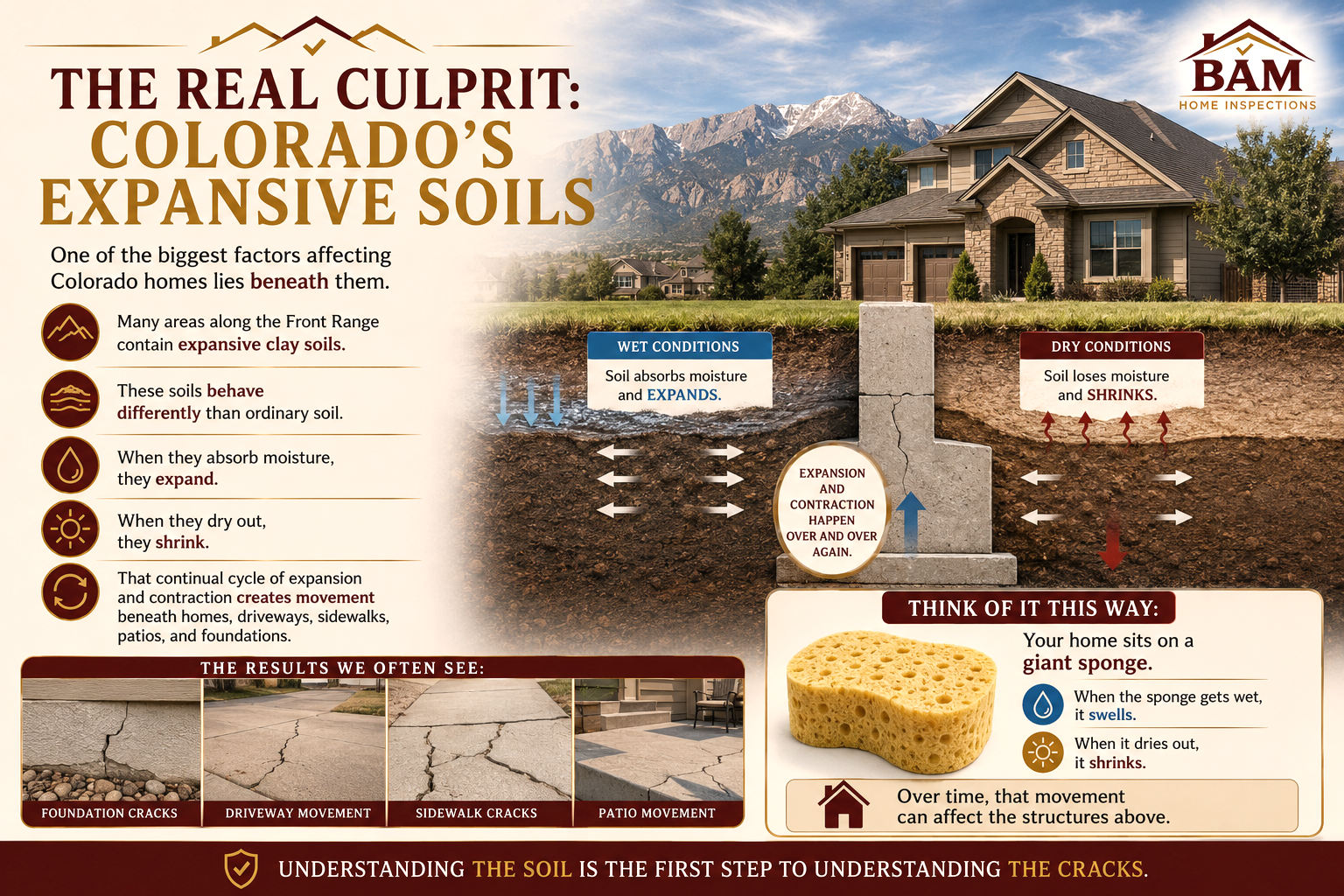
The Real Culprit: Colorado's Expansive Soils
One of the biggest factors affecting Colorado homes lies beneath them.
Many areas along the Front Range contain expansive clay soils.
These soils behave differently than ordinary soil.
When they absorb moisture, they expand.
When they dry out, they shrink.
That continual cycle of expansion and contraction creates movement beneath homes, driveways, sidewalks, patios, and foundations.
Think of it this way:
Your home sits on a giant sponge.
When the sponge gets wet, it swells.
When it dries out, it shrinks.
Over time, that movement can affect the structures above.
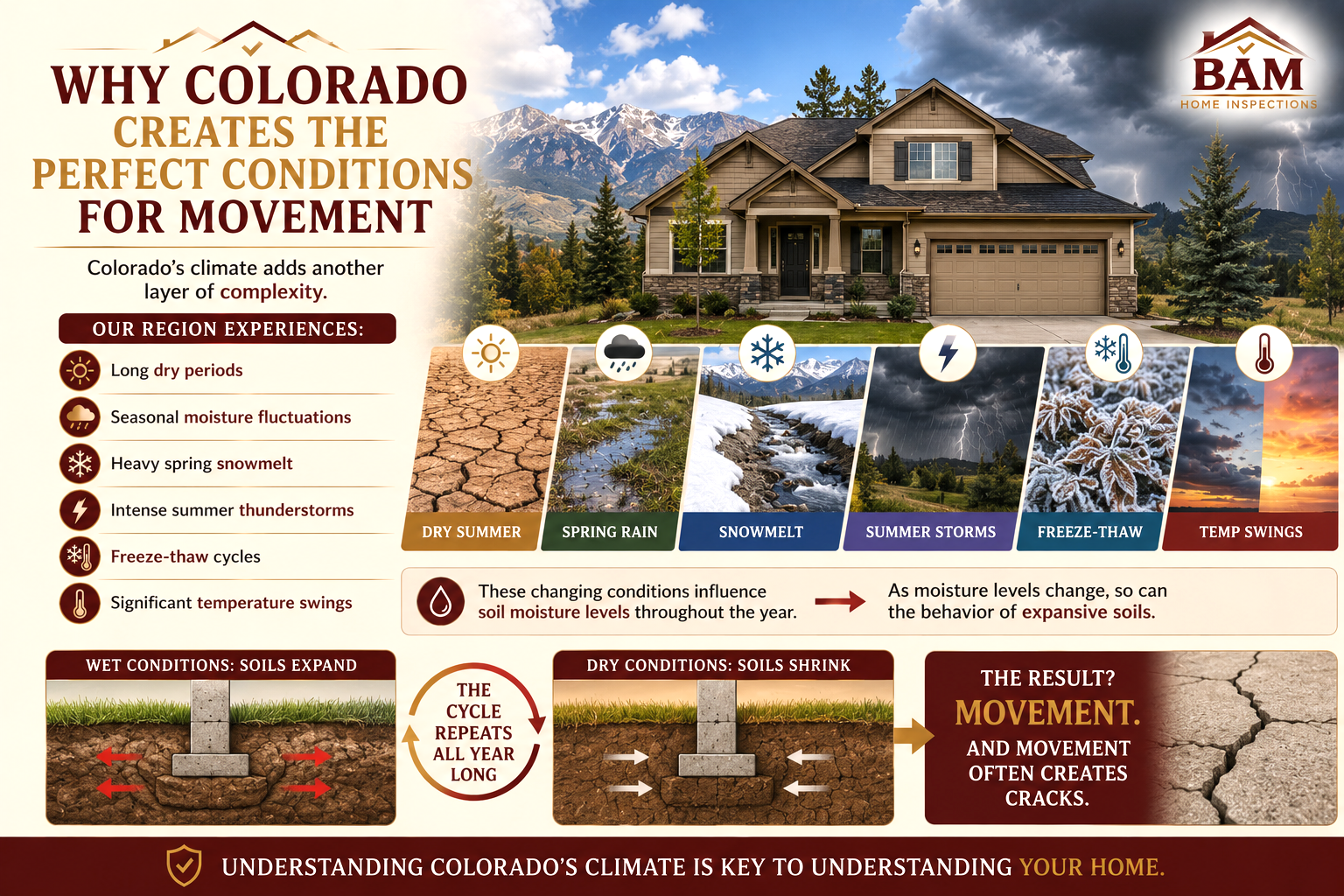
Why Colorado Creates the Perfect Conditions for Movement
Colorado’s climate adds another layer of complexity.
Our region experiences:
- Long dry periods
- Seasonal moisture fluctuations
- Heavy spring snowmelt
- Intense summer thunderstorms
- Freeze-thaw cycles
- Significant temperature swings
These changing conditions influence soil moisture levels throughout the year.
As moisture levels change, so can the behavior of expansive soils.
The result?
Movement.
And movement often creates cracks.
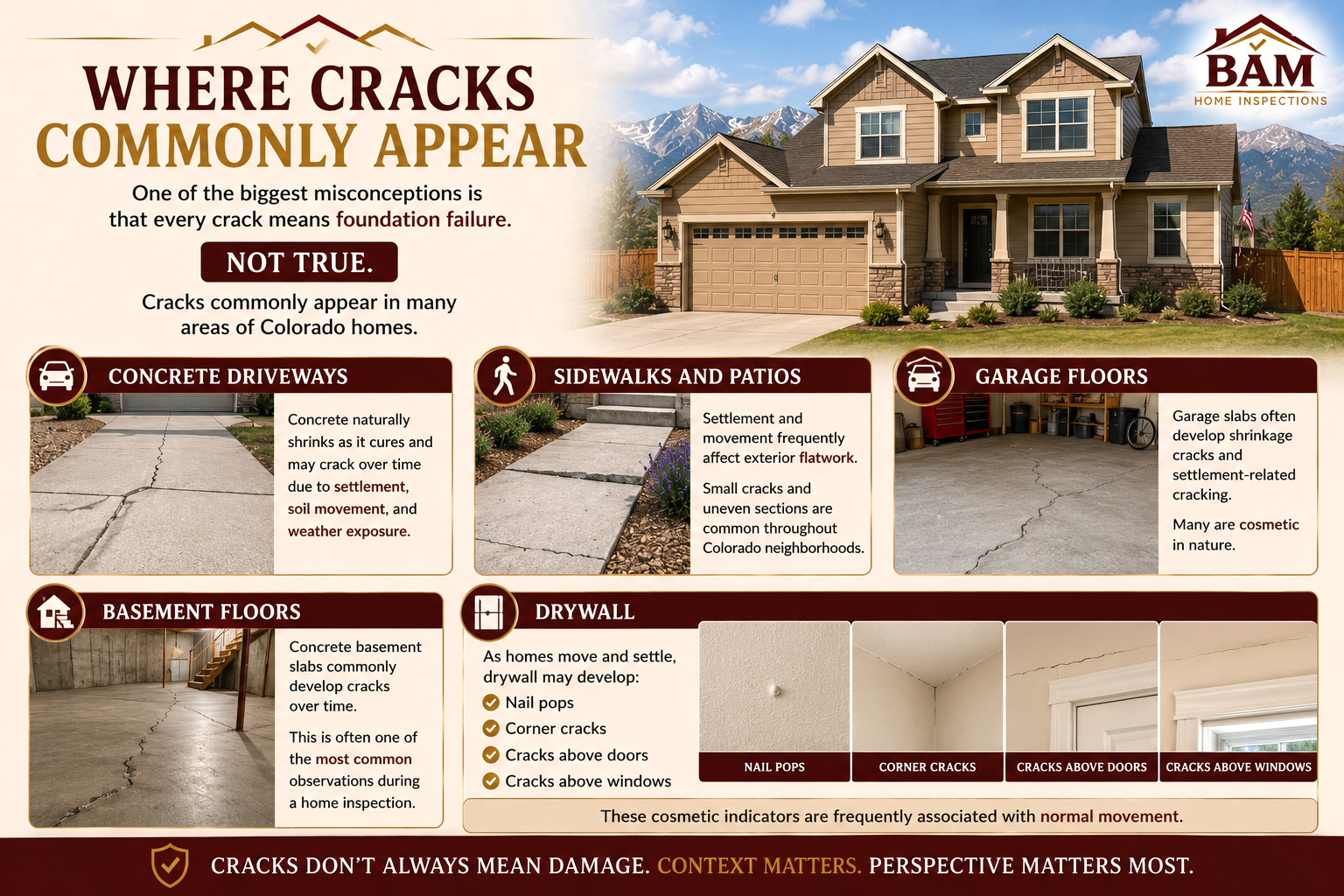
Where Cracks Commonly Appear
One of the biggest misconceptions is that every crack means foundation failure.
Not true.
Cracks commonly appear in many areas of Colorado homes.
Concrete Driveways
Concrete naturally shrinks as it cures and may crack over time due to settlement, soil movement, and weather exposure.
Sidewalks and Patios
Settlement and movement frequently affect exterior flatwork.
Small cracks and uneven sections are common throughout Colorado neighborhoods.
Garage Floors
Garage slabs often develop shrinkage cracks and settlement-related cracking.
Many are cosmetic in nature.
Basement Floors
Concrete basement slabs commonly develop cracks over time.
This is often one of the most common observations during a home inspection.
Drywall
As homes move and settle, drywall may develop:
- Nail pops
- Corner cracks
- Cracks above doors
- Cracks above windows
These cosmetic indicators are frequently associated with normal movement.
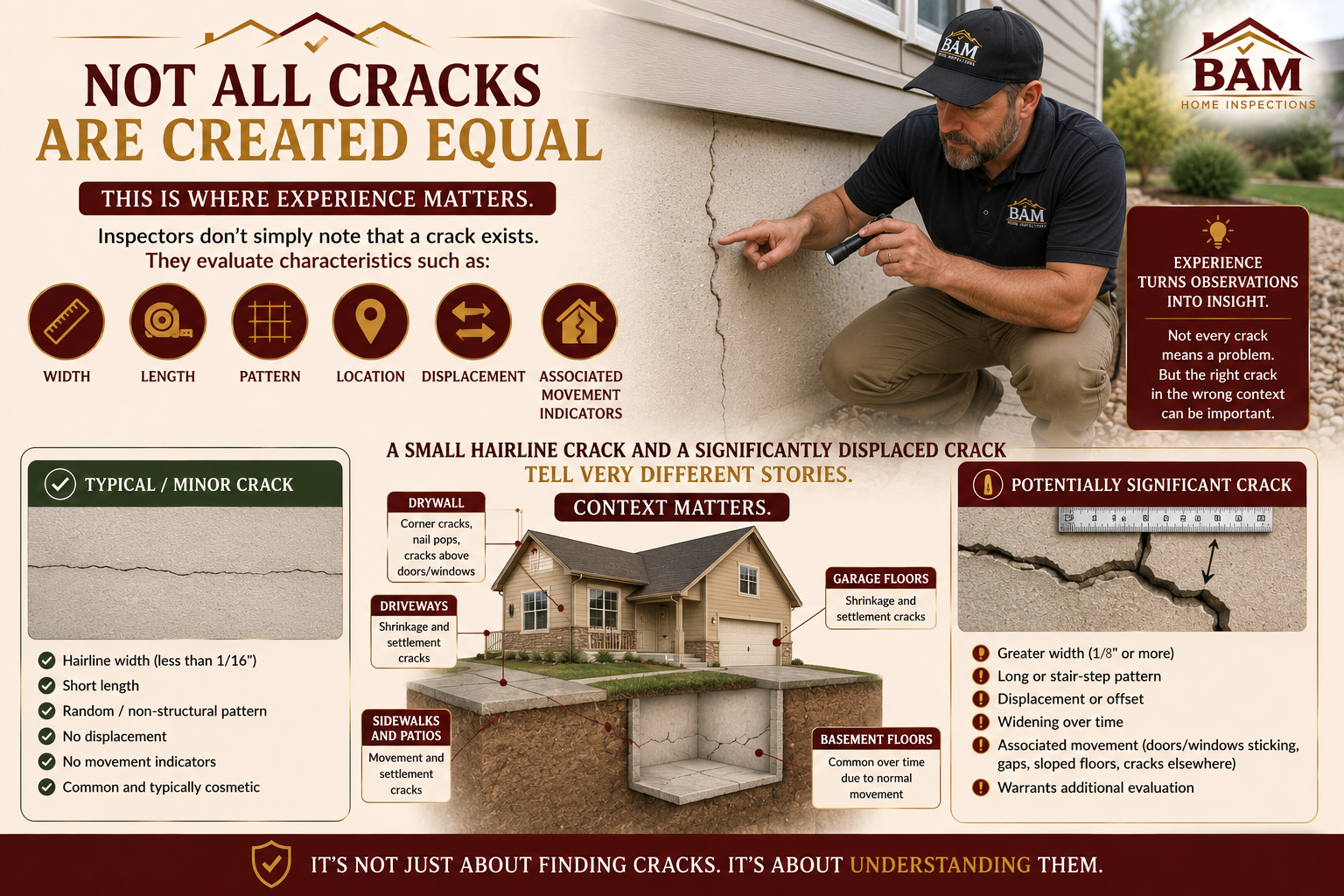
Not All Cracks Are Created Equal
This is where experience matters.
Inspectors don’t simply note that a crack exists.
They evaluate characteristics such as:
- Width
- Length
- Pattern
- Location
- Displacement
- Associated movement indicators
A small hairline crack and a significantly displaced crack tell very different stories.
Context matters.
Common Signs of Normal Settlement
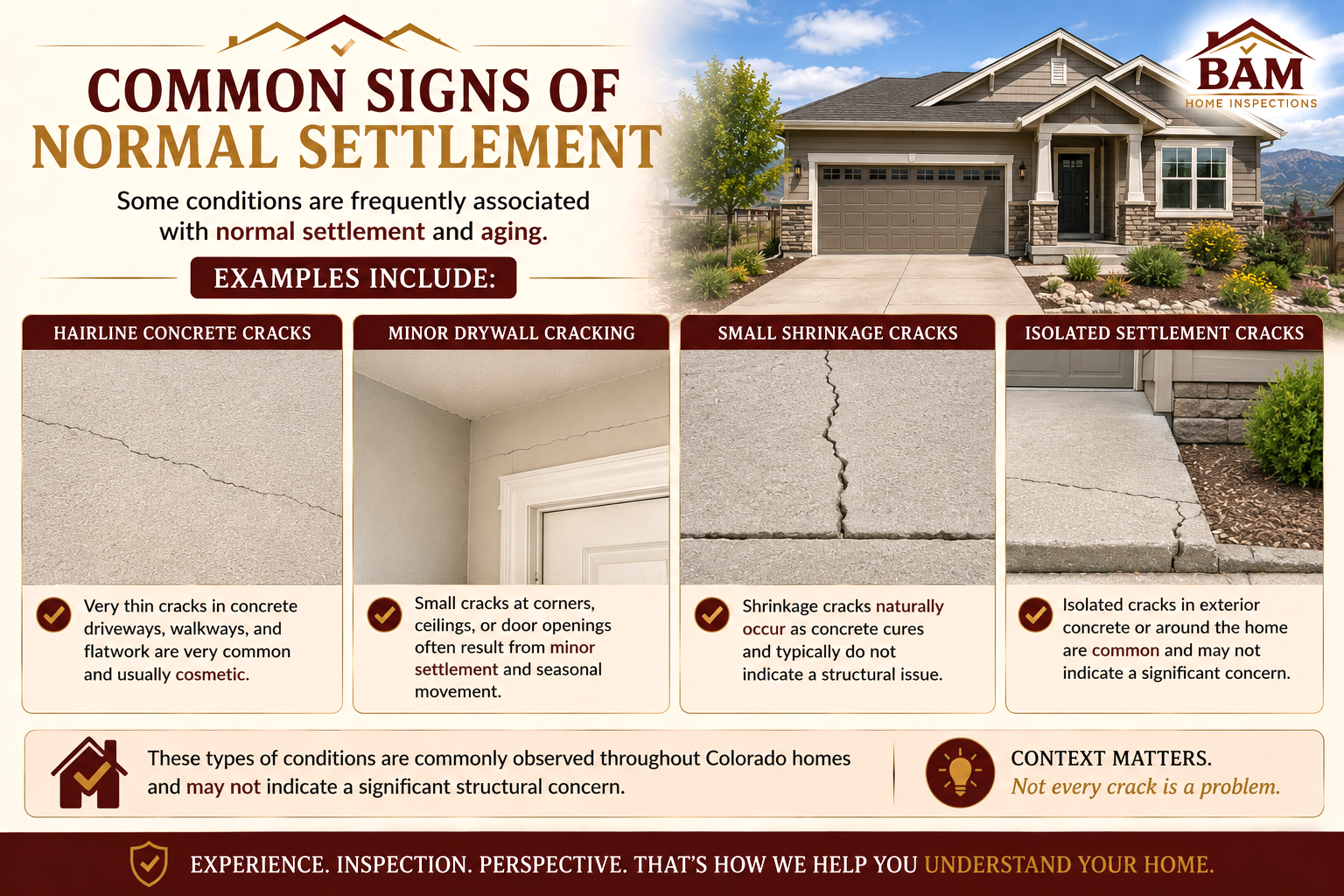
Some conditions are frequently associated with normal settlement and aging.
Examples include:
- Hairline concrete cracks
- Minor drywall cracking
- Small shrinkage cracks
- Isolated settlement cracks
These types of conditions are commonly observed throughout Colorado homes and may not indicate a significant structural concern.
Signs That May Warrant Further Evaluation
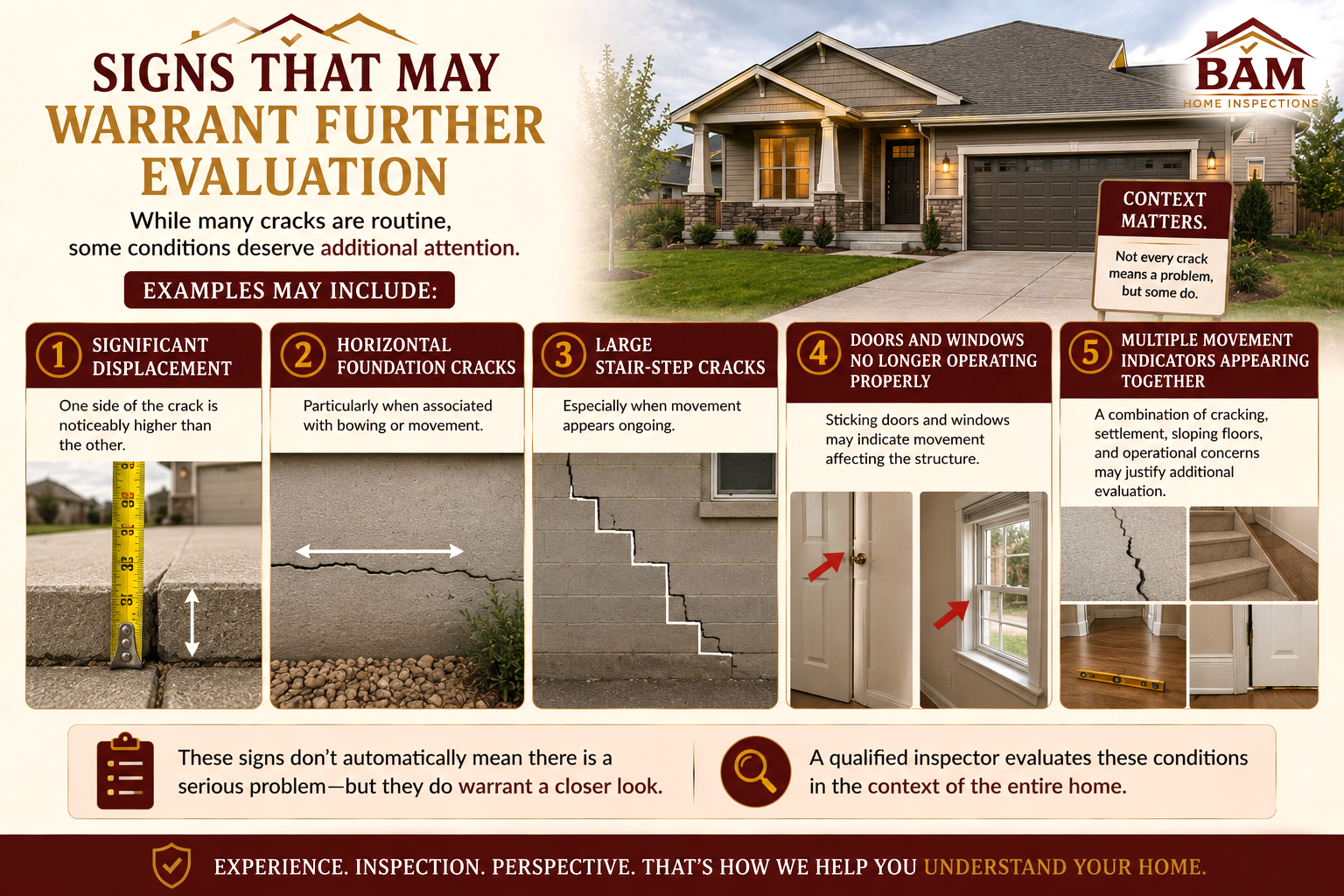
While many cracks are routine, some conditions deserve additional attention.
Examples may include:
Significant Displacement
One side of the crack is noticeably higher than the other.
Horizontal Foundation Cracks
Particularly when associated with bowing or movement.
Large Stair-Step Cracks
Especially when movement appears ongoing.
Doors and Windows No Longer Operating Properly
Sticking doors and windows may indicate movement affecting the structure.
Multiple Movement Indicators Appearing Together
A combination of cracking, settlement, sloping floors, and operational concerns may justify additional evaluation.
Water Often Makes Things Worse
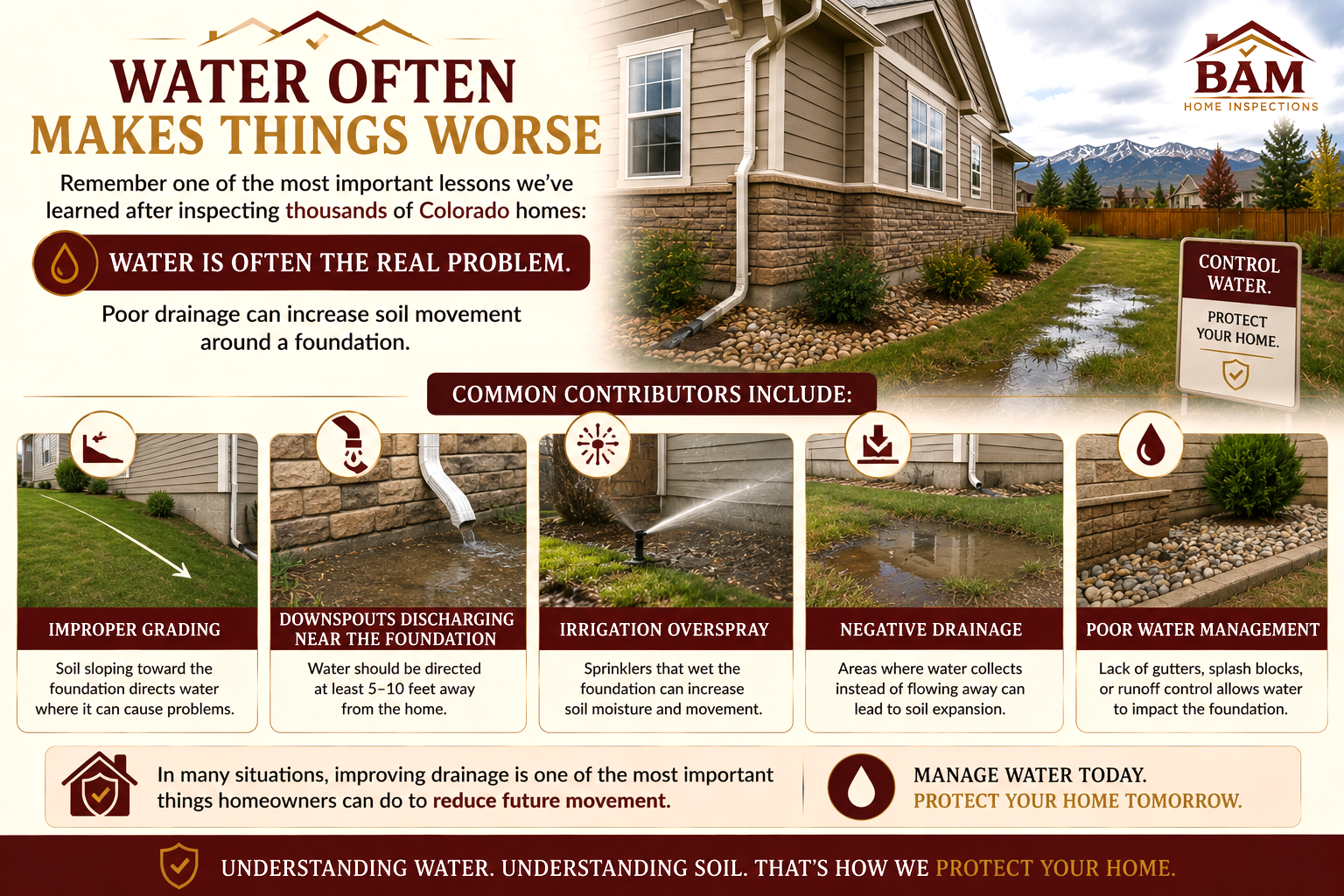
Remember one of the most important lessons we’ve learned after inspecting thousands of Colorado homes:
Water is often the real problem.
Poor drainage can increase soil movement around a foundation.
Common contributors include:
- Improper grading
- Downspouts discharging near the foundation
- Irrigation overspray
- Negative drainage
- Poor water management
In many situations, improving drainage is one of the most important things homeowners can do to reduce future movement.
What Homeowners Can Do
While homeowners can’t eliminate expansive soils, they can take steps to help manage conditions.
Maintain Consistent Moisture Levels
Avoid dramatic swings between excessively dry and excessively wet soil conditions.
Monitor Drainage
Ensure water flows away from the home.
Maintain Gutters and Downspouts
Proper roof drainage helps reduce concentrated water around the foundation.
Address Plumbing Leaks Promptly
Water beneath or adjacent to a home can contribute to soil movement.
Monitor Changes Over Time
New cracks or changing conditions may warrant further evaluation.

What Realtors Should Know
Foundation cracks often create fear because buyers don’t always understand what they’re seeing.
One of the most valuable things a Realtor can provide is perspective.
Not every crack is a structural defect.
Not every settlement issue requires major repairs.
And not every foundation concern should become a transaction-ending event.
Helping clients understand the difference between normal movement and potentially significant concerns can dramatically improve communication and reduce unnecessary anxiety.

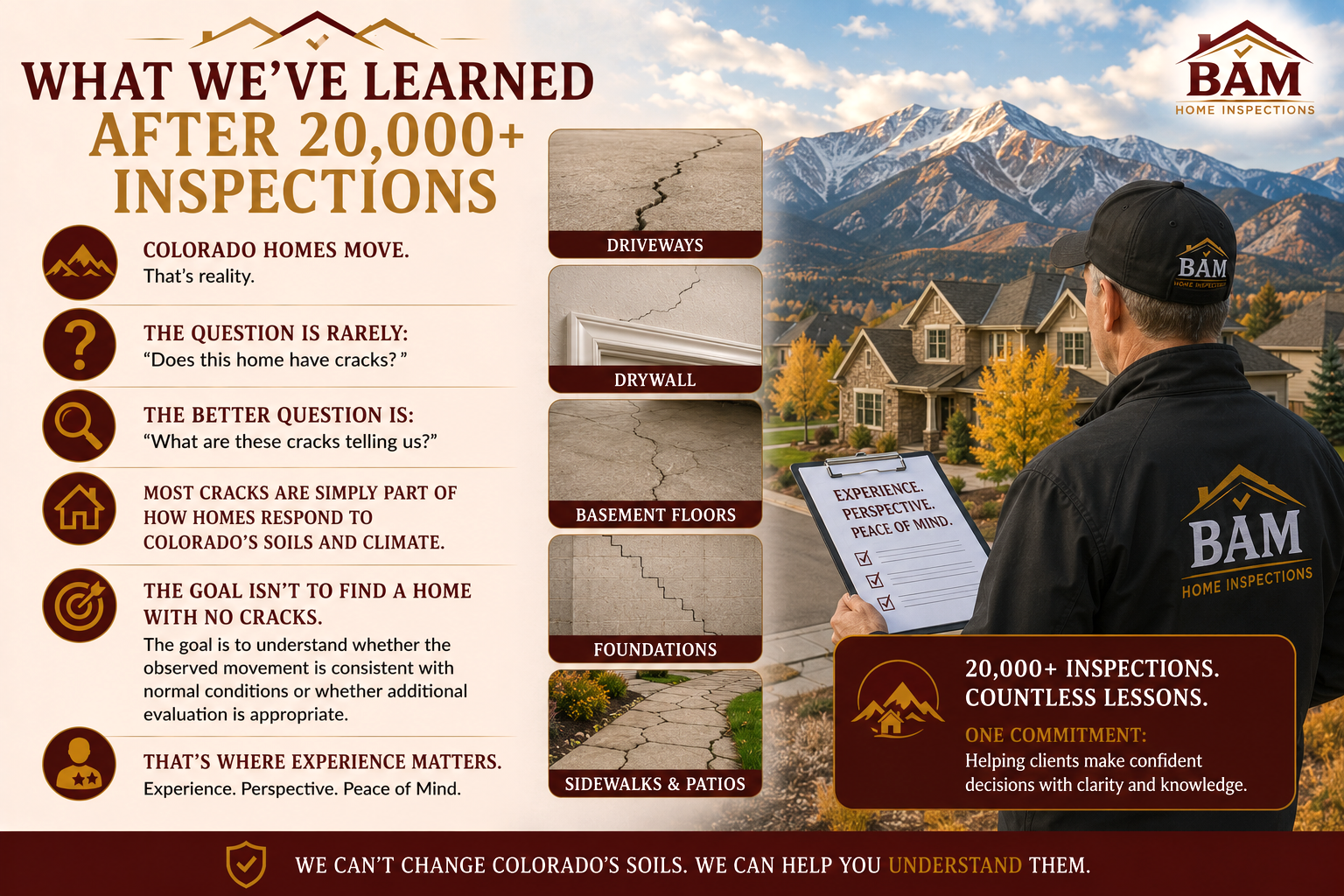
What We've Learned After 20,000+ Inspections
Colorado homes move.
That’s reality.
The question is rarely:
“Does this home have cracks?”
The better question is:
“What are these cracks telling us?”
Most cracks are simply part of how homes respond to Colorado’s soils and climate.
The goal isn’t to find a home with no cracks.
The goal is to understand whether the observed movement is consistent with normal conditions or whether additional evaluation is appropriate.
That’s where experience matters.
Final Thoughts
Foundation movement is one of the most misunderstood aspects of Colorado homeownership.
Cracks can be alarming.
But cracks alone rarely tell the entire story.
Understanding Colorado’s expansive soils, drainage conditions, and normal settlement patterns helps buyers, sellers, and Realtors make informed decisions rather than emotional ones.
And informed decisions almost always lead to better outcomes.
Realtor Takeaway
When it comes to foundation cracks, context is everything.
The presence of a crack isn’t nearly as important as understanding what caused it, whether it’s changing, and what it means for the future of the home.