

Understanding the Issues Inspectors Encounter Most Often
Every home has defects.
Whether a home is brand new, ten years old, or fifty years old, no property is perfect.
In fact, one of the biggest misconceptions about home inspections is that a “good” home will have no findings. The reality is that even well-maintained homes typically have a variety of maintenance items, aging components, and repair recommendations.
The purpose of a home inspection isn’t to find reasons to walk away from a property. It’s to help buyers better understand the home’s condition and prepare for future maintenance and repairs.
While every home is unique, there are certain issues that inspectors encounter again and again.
Let’s take a look at the ten most common home defects found during inspections.
Whether a home is brand new, ten years old, or fifty years old, no property is perfect. Let's take a look at the ten most common home defects found during inspections. [The 10 Most Common Home Defects]
BAM Home Inspections Share to X
1. Roof Issues
The roof is one of the hardest-working components of any home.
Constant exposure to Colorado’s intense sun, snow, hail, wind, and freeze-thaw cycles naturally causes wear over time.
Common roof-related findings include:
- Damaged or missing shingles
- Exposed fasteners
- Damaged or missing flashing
- Improper roof repairs
- Worn roofing materials
- Damaged vent boots
- Evidence of previous hail damage
Why It Matters
Roof defects can allow moisture intrusion that may damage other parts of the home if left unaddressed.

Colorado Consideration
Hail damage is one of the most common roof-related concerns found in Colorado homes.
2. Electrical Issues
Electrical systems are among the most important safety components of a home.
Many homes contain electrical deficiencies that developed over time or were installed under older standards.
Common findings include:
- Missing GFCI protection
- Missing AFCI protection
- Double-tapped breakers
- Improper wiring connections
- Open electrical junction boxes
- Missing outlet covers
- Improper grounding and bonding
Why It Matters
Electrical deficiencies can affect both safety and system performance.

Electrical systems are among the most important safety components of a home. Many homes contain electrical deficiencies that developed over time or were installed under older standards. [The 10 Most Common Home Defects]
BAM Home Inspections Share to X
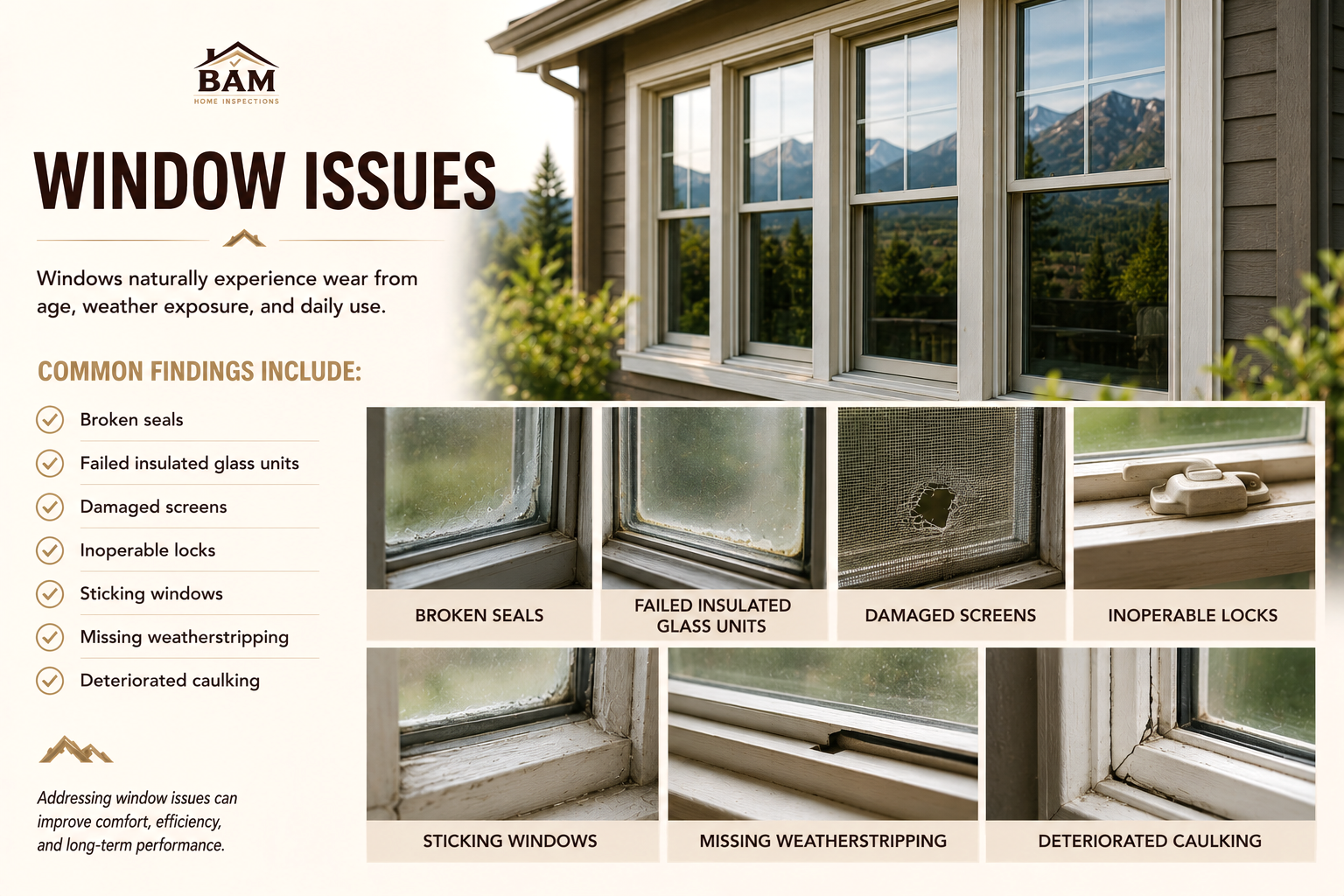
3. Window Issues
Windows naturally experience wear from age, weather exposure, and daily use.
Common findings include:
- Broken seals
- Failed insulated glass units
- Damaged screens
- Inoperable locks
- Sticking windows
- Missing weatherstripping
- Deteriorated caulking
Why It Matters
Window deficiencies can affect energy efficiency, comfort, and moisture protection.
4. Gutter and Drainage Issues
Water management is critical to protecting a home’s foundation and structure.
Inspectors frequently find:
- Clogged gutters
- Missing downspout extensions
- Improper drainage
- Damaged gutters
- Loose gutter attachments
- Overflow staining
Why It Matters
Improper drainage can contribute to moisture intrusion and foundation concerns over time.

Colorado Consideration
Heavy snowmelt and spring runoff can make proper drainage especially important.
5. Plumbing Issues
Plumbing systems contain numerous components that naturally wear out over time.
Common findings include:
- Dripping faucets
- Minor leaks
- Corrosion
- Aging water heaters
- Loose toilets
- Improper drain configurations
- Slow drains
Why It Matters
Small plumbing issues often become larger and more expensive if ignored.

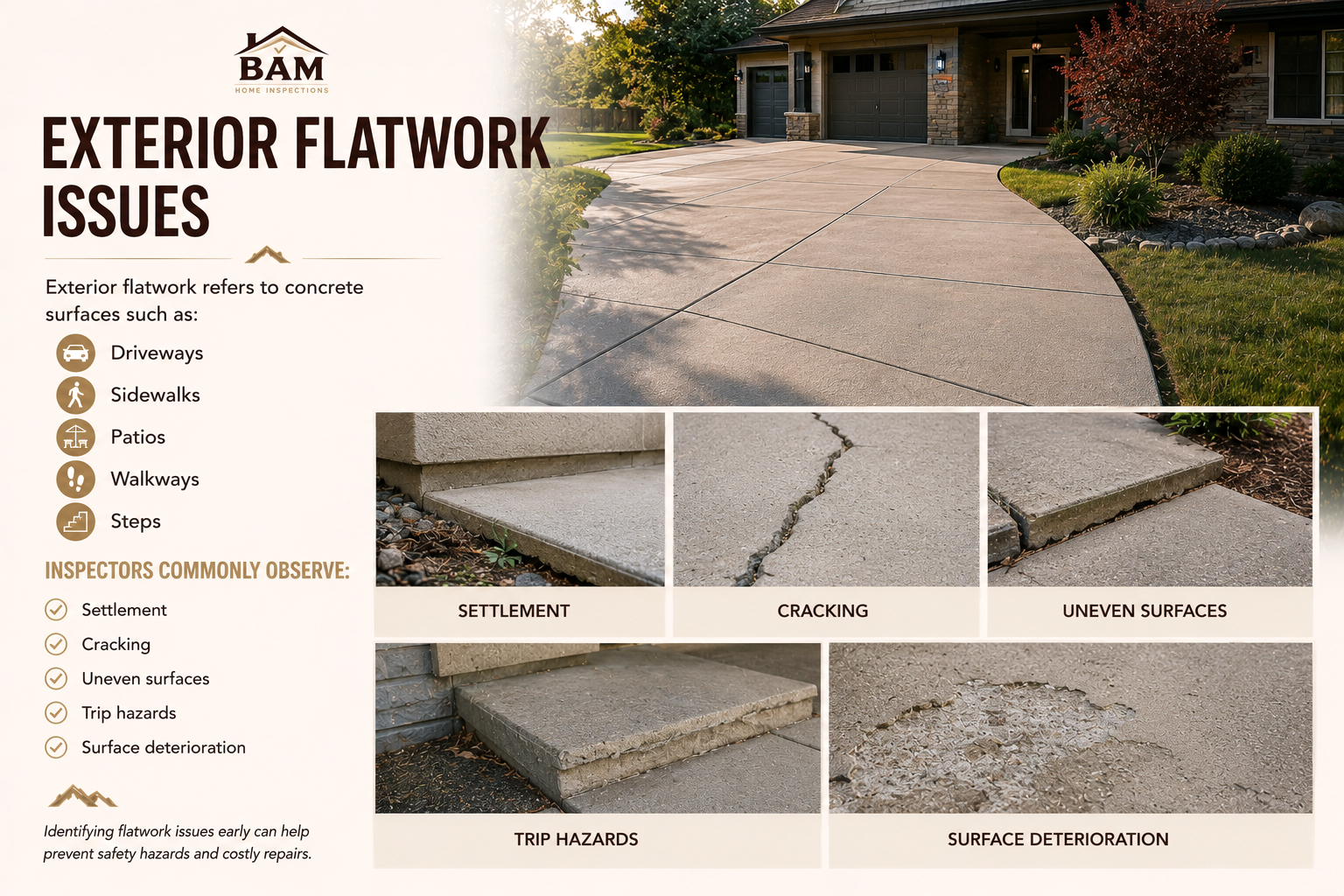
6. Exterior Flatwork Issues
Exterior flatwork refers to concrete surfaces such as:
- Driveways
- Sidewalks
- Patios
- Walkways
- Steps
Inspectors commonly observe:
- Settlement
- Cracking
- Uneven surfaces
- Trip hazards
- Surface deterioration
Why It Matters
Flatwork defects can affect safety and drainage.
Colorado Consideration
Expansive soils and freeze-thaw conditions often contribute to movement and cracking.
7. Heating and Cooling Issues
Heating and cooling systems are major investments and require routine maintenance.
Common findings include:
- Dirty HVAC filters
- Deferred maintenance
- Aging equipment
- Improper venting
- Condensate drainage issues
- Inadequate servicing
Why It Matters
HVAC systems impact comfort, efficiency, and indoor air quality.

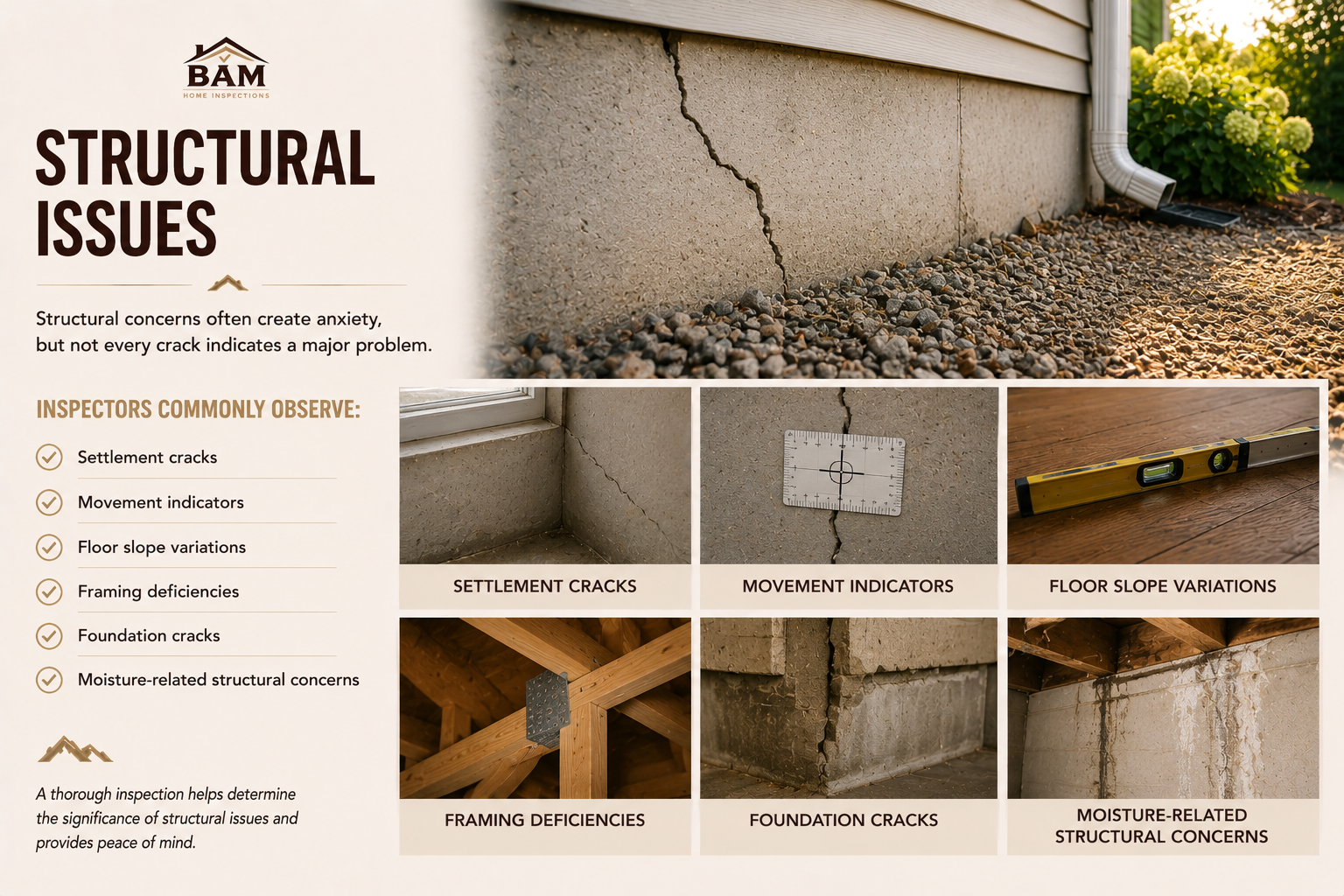
8. Structural Issues
Structural concerns often create anxiety, but not every crack indicates a major problem.
Inspectors commonly observe:
- Settlement cracks
- Movement indicators
- Floor slope variations
- Framing deficiencies
- Foundation cracks
- Moisture-related structural concerns
Why It Matters
Structural defects deserve careful evaluation because they can affect the home’s long-term performance.
Colorado Consideration
Most structural observations require further evaluation before conclusions can be made.
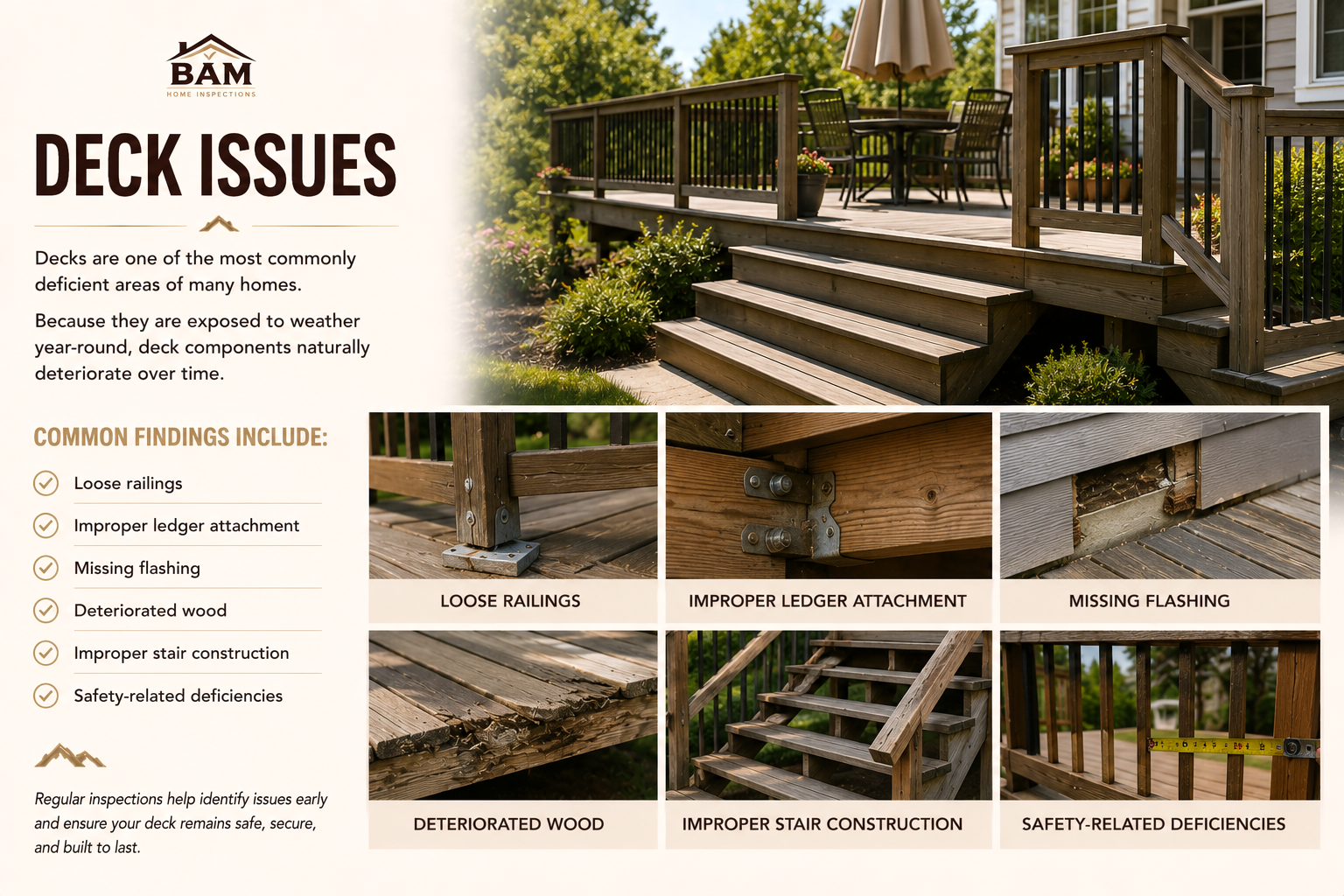
9. Deck Issues
Decks are one of the most commonly deficient areas of many homes.
Because they are exposed to weather year-round, deck components naturally deteriorate over time.
Common findings include:
- Loose railings
- Improper ledger attachment
- Missing flashing
- Deteriorated wood
- Improper stair construction
- Safety-related deficiencies
Why It Matters
Deck defects often involve safety concerns and should be addressed promptly.
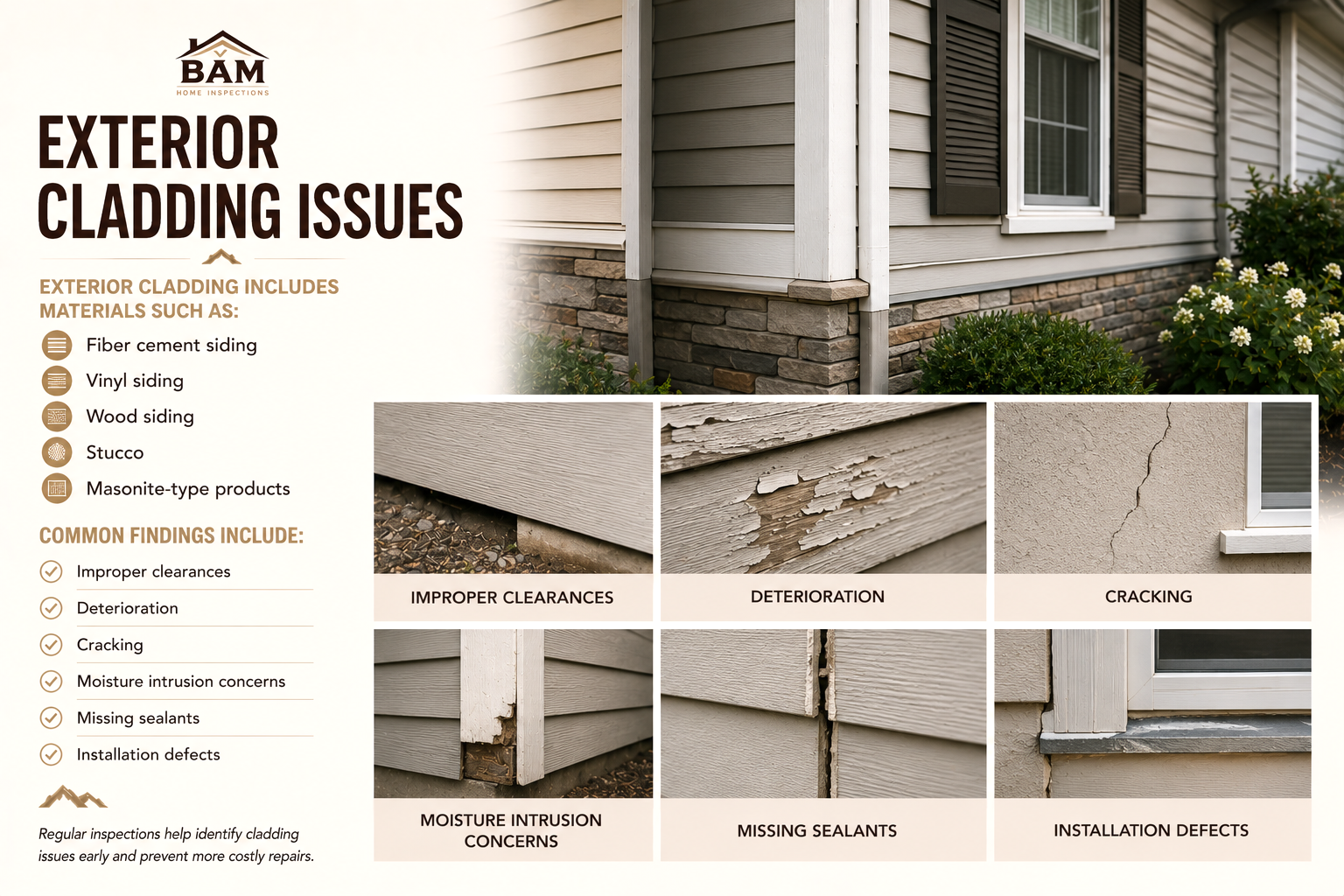
10. Exterior Cladding Issues
Exterior cladding includes materials such as:
- Fiber cement siding
- Vinyl siding
- Wood siding
- Stucco
- Masonite-type products
Common findings include:
- Improper clearances
- Deterioration
- Cracking
- Moisture intrusion concerns
- Missing sealants
- Installation defects
Why It Matters
The exterior cladding serves as a critical barrier against moisture and weather.
Final Thoughts
Every home has defects.
That’s normal.
The goal of a home inspection isn’t to find a perfect house because perfect houses don’t exist.
The goal is to help buyers understand the condition of the property, identify potential concerns, and make informed decisions.
Roof issues, plumbing concerns, electrical deficiencies, aging HVAC systems, and drainage problems are among the most common findings inspectors encounter. Understanding these common defects can help buyers approach the inspection process with realistic expectations and greater confidence.
Homebuyer Success Tip
The best inspection reports don’t tell you what’s wrong with a home.
They help you understand what the home needs to continue performing well for years to come.
Frequently Asked Questions (FAQs)
Yes. Every home has defects, regardless of age or condition. Even newly constructed homes often have inspection findings. Most reports contain a combination of maintenance items, aging components, safety recommendations, and repair needs. The goal of the inspection is not to find a perfect home but to help buyers understand the property’s condition.
Generally, buyers should pay the closest attention to issues involving:
- Significant roof damage
- Active water intrusion
- Major electrical hazards
- Structural movement
- Failed HVAC systems
- Serious drainage concerns
While routine maintenance items are common, major defects often warrant further evaluation and discussion before moving forward.
Colorado roofs are exposed to intense sun, hail, snow, wind, and freeze-thaw cycles throughout the year. These environmental conditions naturally contribute to wear and deterioration over time. As a result, inspectors frequently identify damaged shingles, flashing concerns, vent boot defects, and evidence of previous hail damage.
No. Some cracking is a normal part of settlement and aging. In Colorado, expansive soils and seasonal movement often contribute to concrete and foundation cracking. However, certain cracks, movement indicators, or structural concerns may warrant additional evaluation. An experienced inspector can help determine when further investigation may be appropriate.
Decks are exposed to weather year-round and are subject to ongoing wear and deterioration. Common findings include loose railings, deteriorated wood, improper stair construction, missing flashing, and attachment concerns. Because many deck defects involve safety issues, inspectors often pay close attention to deck conditions during the inspection process.
Not necessarily. The number of findings is often far less important than the significance of the findings. Many inspection reports contain numerous maintenance recommendations and minor repairs that are common in homeownership. Instead of asking, “How many defects were found?” buyers should ask, “Which defects should we focus on first?” That question often provides the clarity needed to make informed decisions.