

Understanding What Happens During a Home Inspection
One of the most common questions we hear from buyers and sellers is:
“What exactly does a home inspector look for?”
It’s a great question.
Most people know that a home inspection is an important part of the home-buying process, but many aren’t entirely sure what the inspector is evaluating—or why.
Some assume inspectors are simply looking for defects.
Others imagine inspectors are determining whether a home “passes” or “fails.”
The reality is much different.
A professional home inspection is a comprehensive visual evaluation of a home’s major systems and components. The goal isn’t to pass judgment on the home. The goal is to provide buyers with a clearer understanding of its condition.
Let’s take a look at what home inspectors actually examine during a typical inspection.
A professional home inspection is a comprehensive visual evaluation of a home's major systems and components. The goal isn't to pass judgment on the home. The goal is to provide buyers with a clearer understanding of its condition. [What Home Inspectors Actually Look For]
BAM Home Inspections Share to X
The Big Picture
Before we talk about specific systems, it’s important to understand the purpose of the inspection.
A home inspection helps answer questions such as:
- What is the overall condition of the home?
- Are there any significant safety concerns?
- Are major systems functioning as intended?
- What maintenance items should buyers expect?
- Are there components that may need attention in the near future?
The inspection helps buyers make informed decisions—not emotional ones.
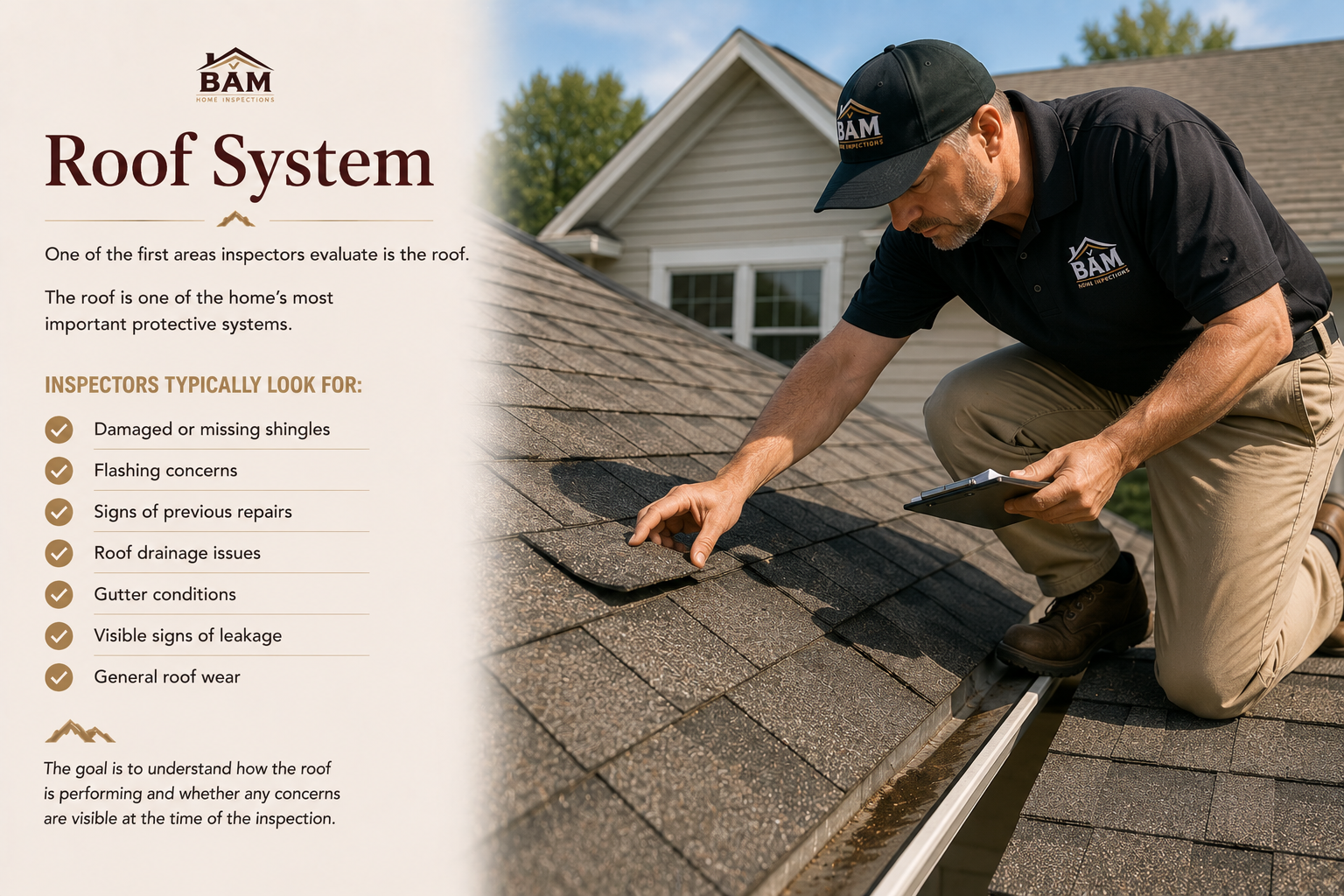
Roof System
One of the first areas inspectors evaluate is the roof.
The roof is one of the home’s most important protective systems.
Inspectors typically look for:
- Damaged or missing shingles
- Flashing concerns
- Signs of previous repairs
- Roof drainage issues
- Gutter conditions
- Visible signs of leakage
- General roof wear
The goal is to understand how the roof is performing and whether any concerns are visible at the time of the inspection.
Exterior Components
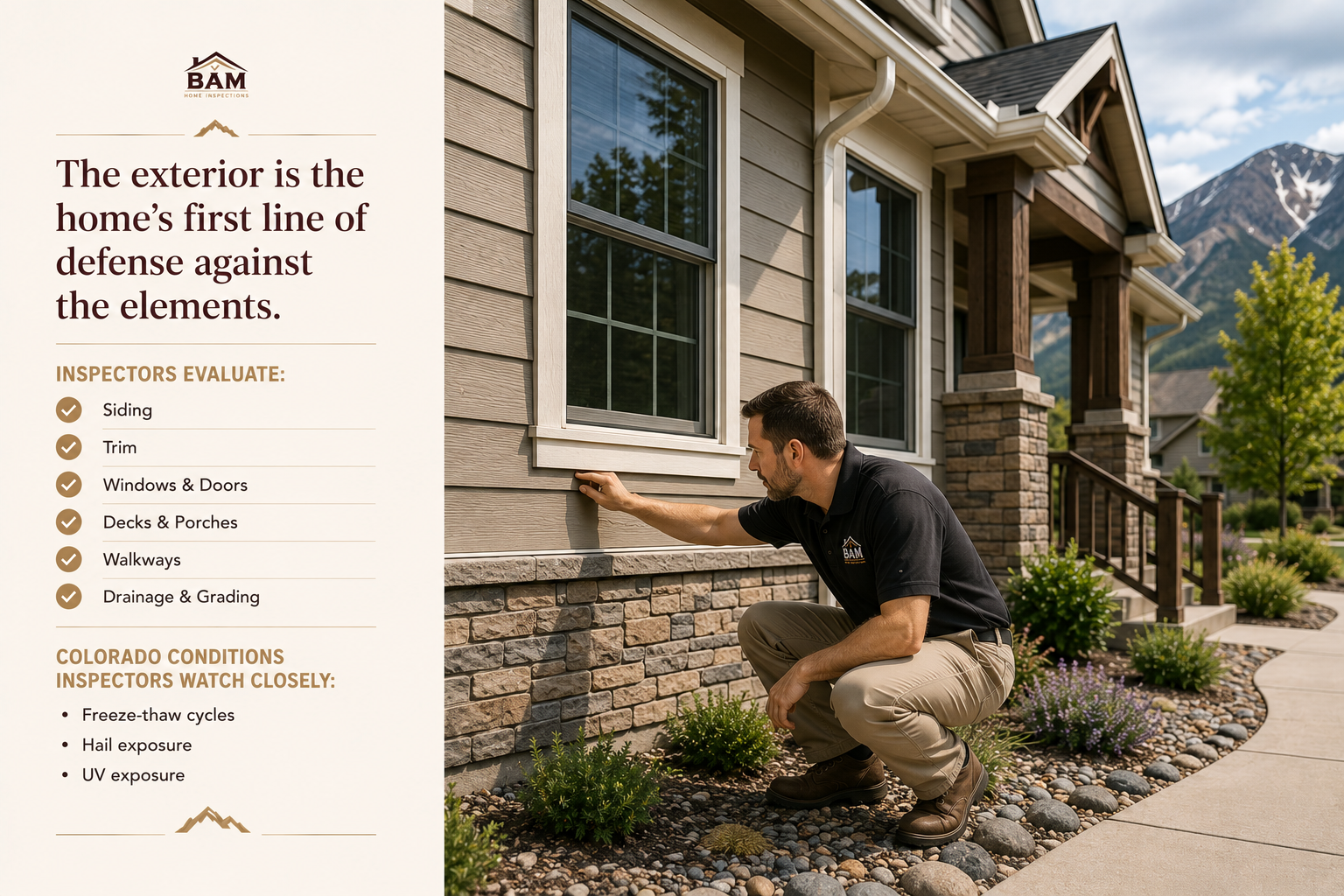
The exterior is the home’s first line of defense against the elements.
Inspectors evaluate:
- Siding
- Trim
- Windows
- Doors
- Decks
- Porches
- Walkways
- Drainage conditions
- Grading around the home
In Colorado, inspectors often pay particular attention to conditions that may be affected by:
- Freeze-thaw cycles
- Hail exposure
- UV exposure
Moisture management
Structural Components
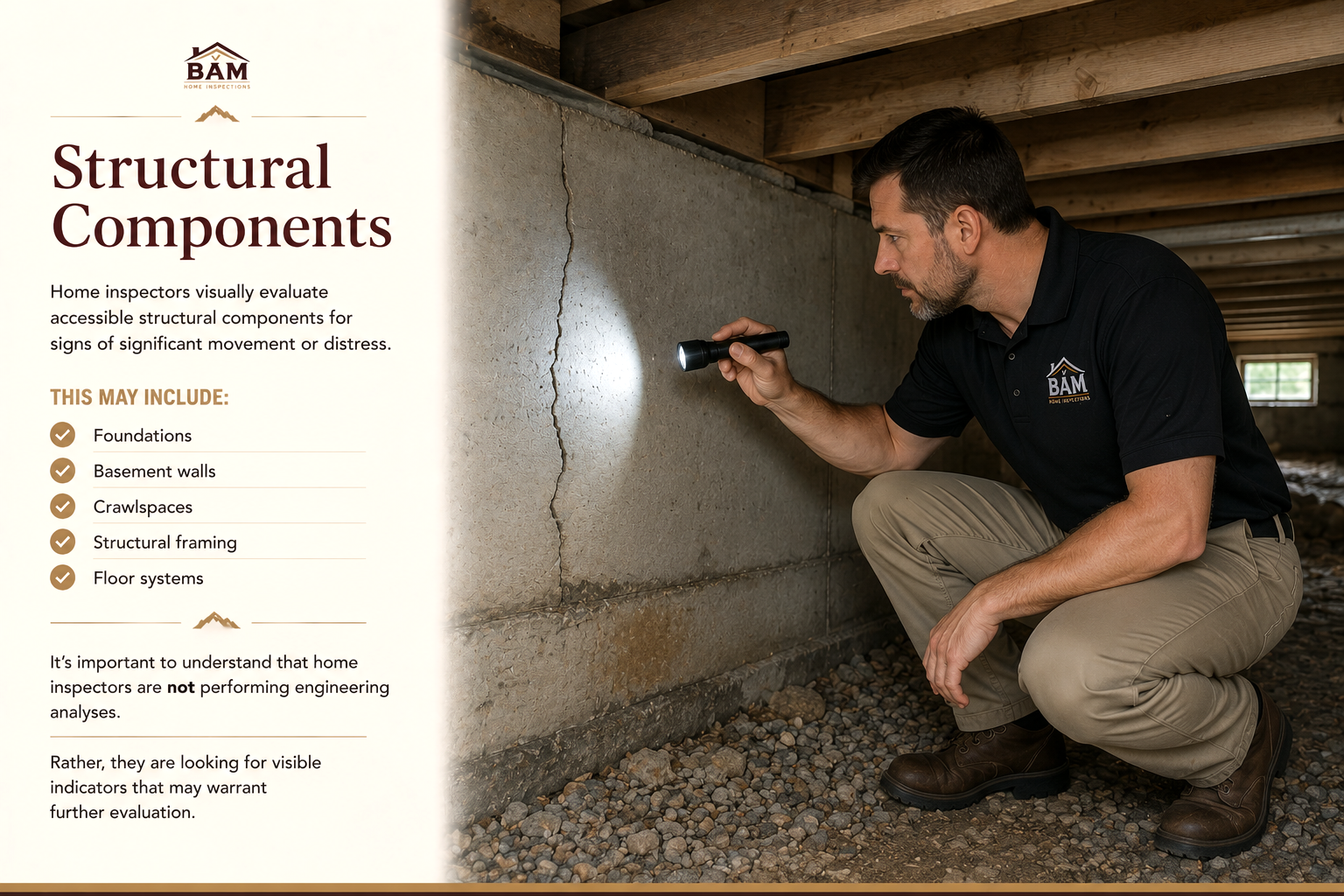
Home inspectors visually evaluate accessible structural components for signs of significant movement or distress.
This may include:
- Foundations
- Basement walls
- Crawlspaces
- Structural framing
- Floor systems
It’s important to understand that home inspectors are not performing engineering analyses.
Rather, they are looking for visible indicators that may warrant further evaluation.
Electrical System
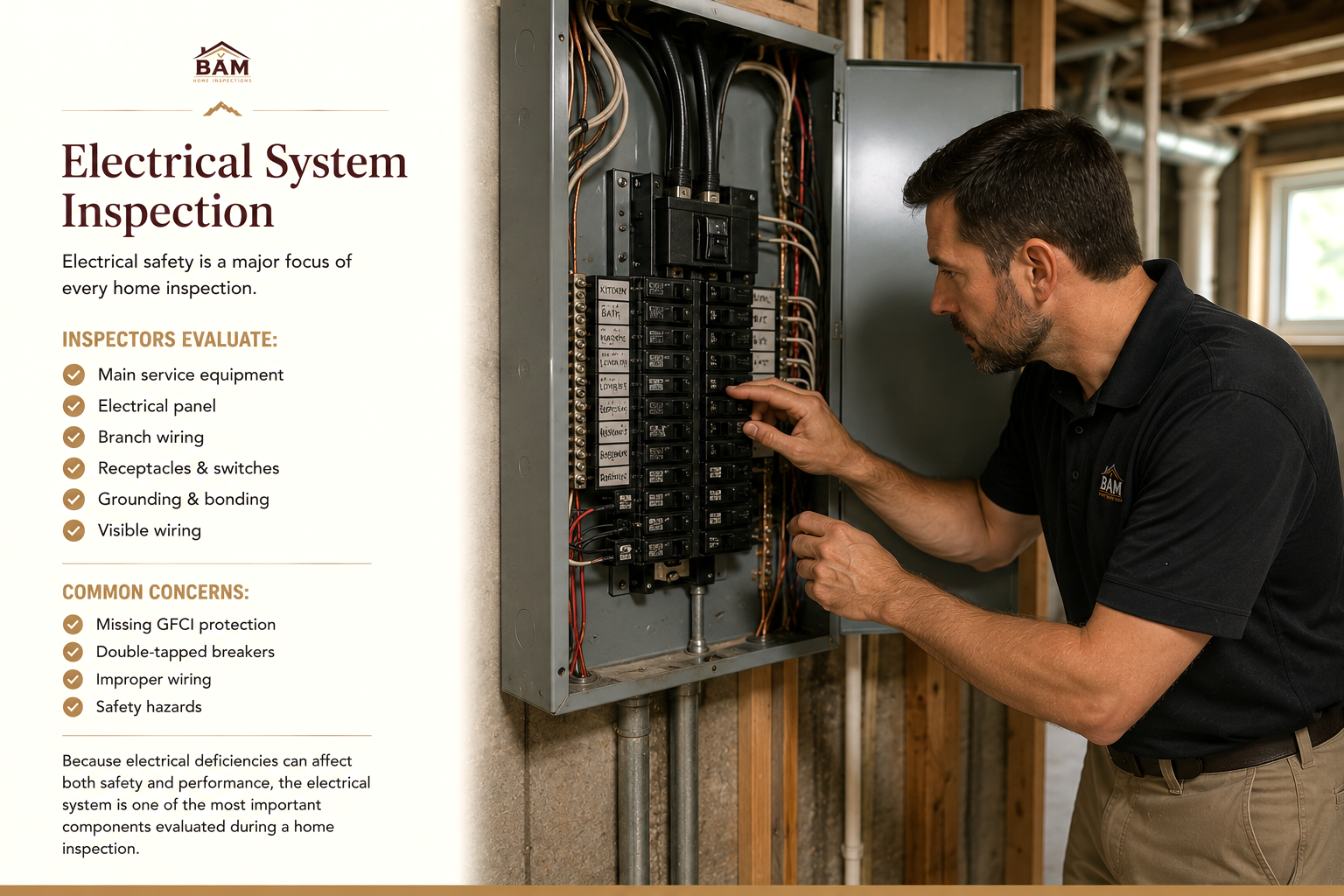
Electrical safety is a major focus of every home inspection.
Inspectors typically evaluate:
- Main service equipment
- Electrical panels
- Branch wiring
- Receptacles
- Switches
- Grounding and bonding
- Visible wiring conditions
Common concerns may include:
- Missing GFCI protection
- Double-tapped breakers
- Improper wiring
- Safety hazards
Because electrical issues can affect both safety and functionality, this is one of the most important parts of the inspection.
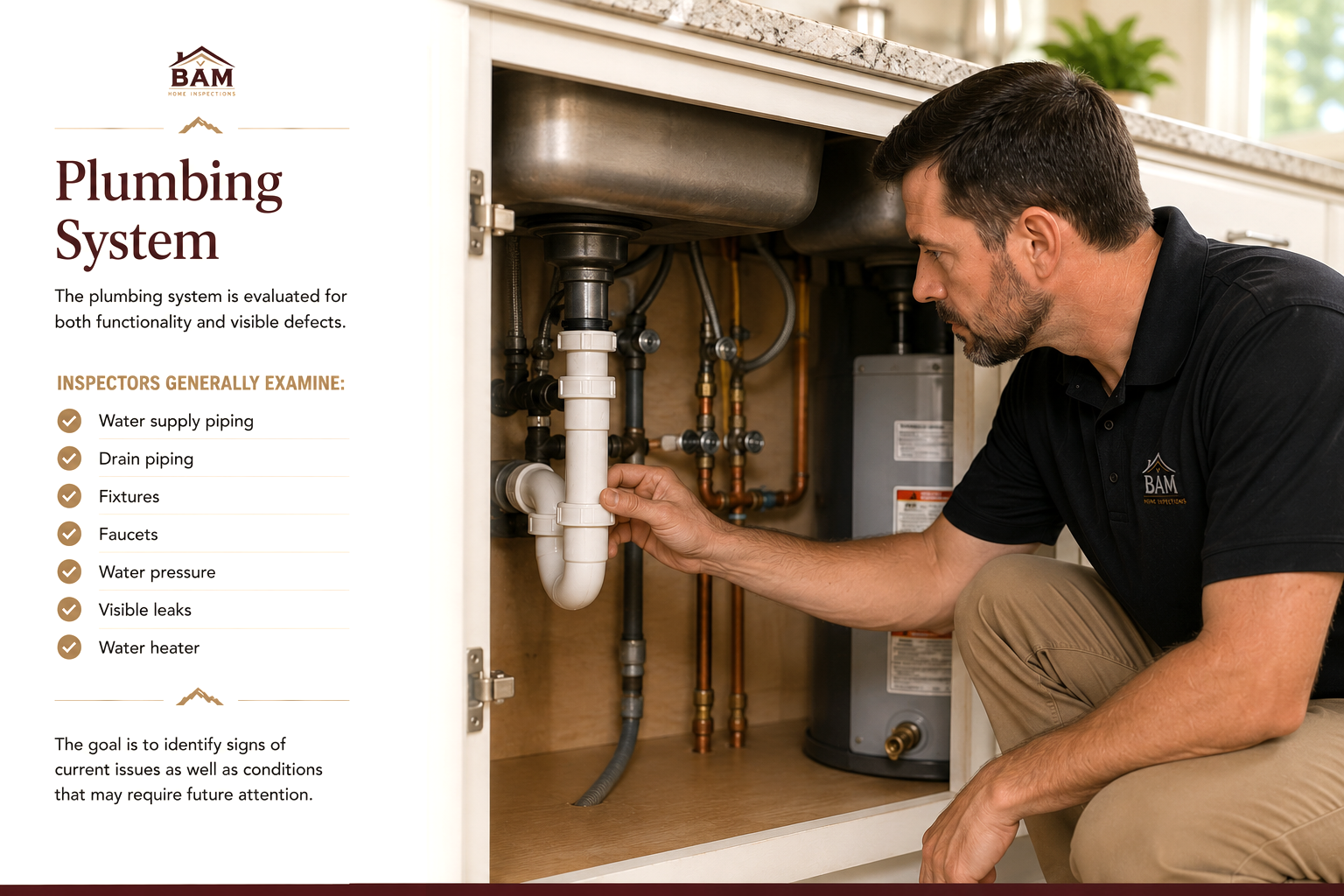
Plumbing System
The plumbing system is evaluated for both functionality and visible defects.
Inspectors generally examine:
- Water supply piping
- Drain piping
- Fixtures
- Faucets
- Water pressure
- Visible leaks
- Water heater
The goal is to identify signs of current issues as well as conditions that may require future attention.
Heating and Cooling Systems
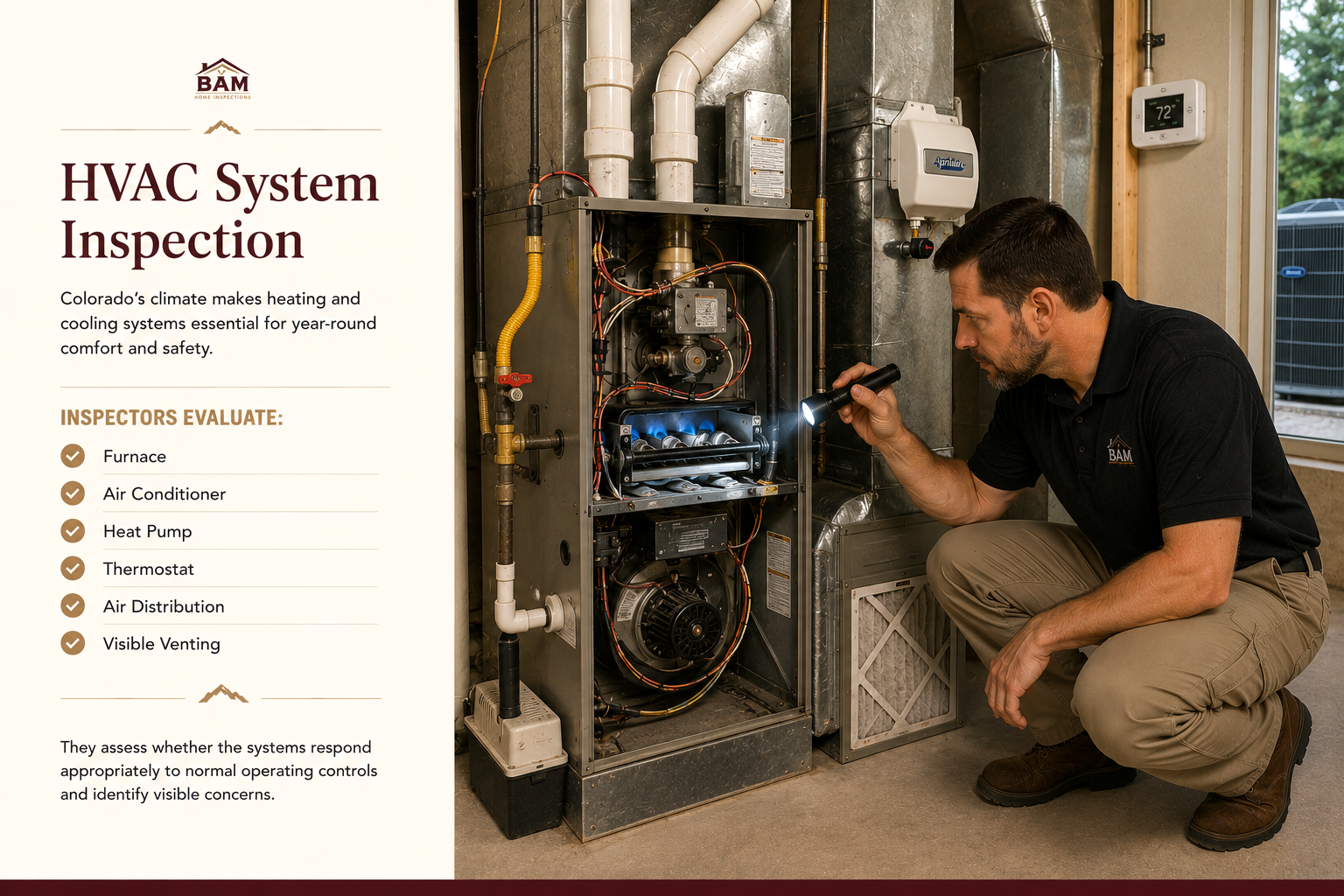
Colorado weather makes HVAC systems particularly important.
Inspectors evaluate:
- Furnaces
- Air conditioning systems
- Heat pumps
- Thermostats
- Distribution systems
- Visible venting components
They assess whether the systems respond appropriately to normal operating controls and identify visible concerns.
Attics
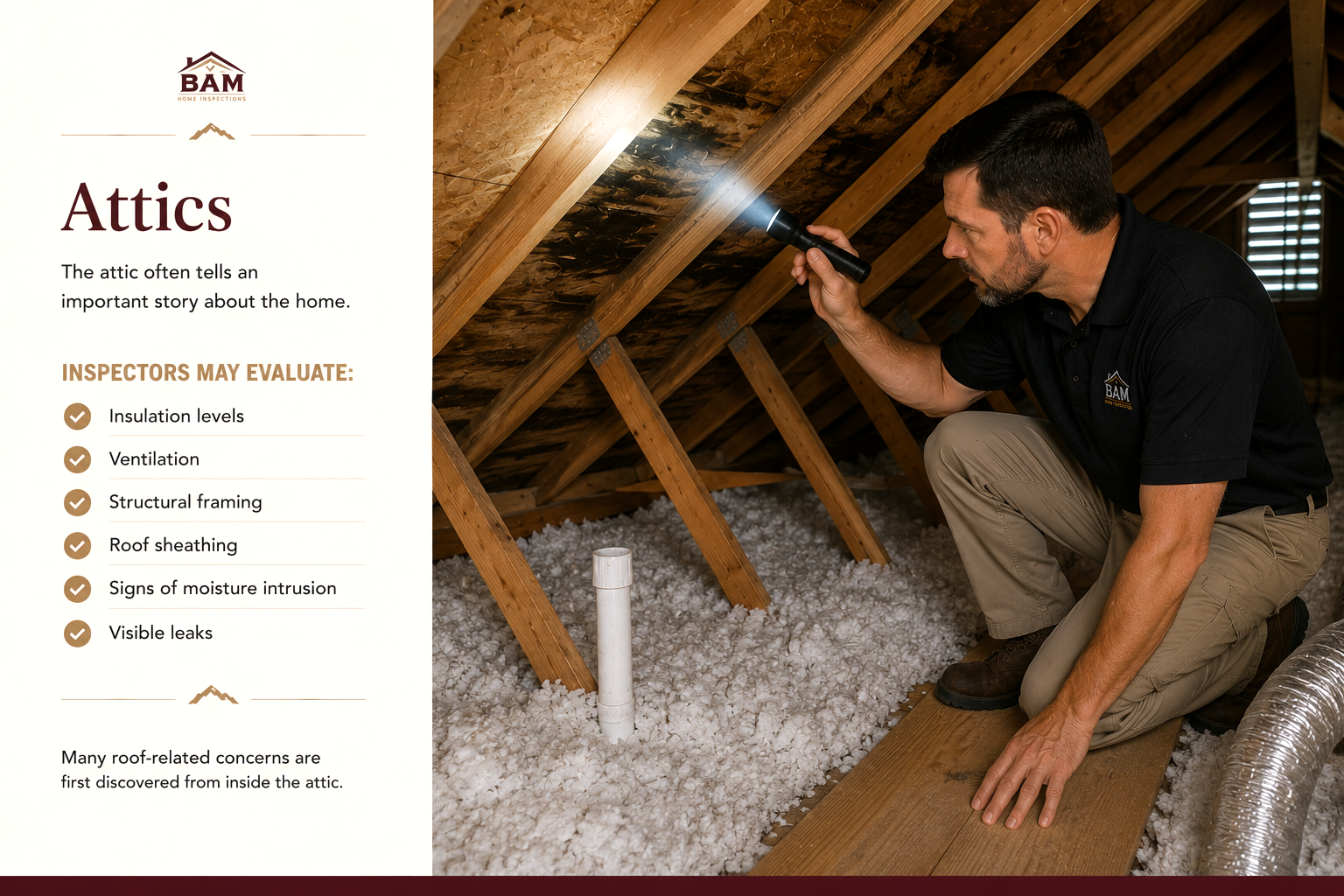
The attic often tells an important story about the home.
Inspectors may evaluate:
- Insulation levels
- Ventilation
- Structural framing
- Roof sheathing
- Signs of moisture intrusion
- Visible leaks
Many roof-related concerns are first discovered from inside the attic.
Crawlspaces and Basements
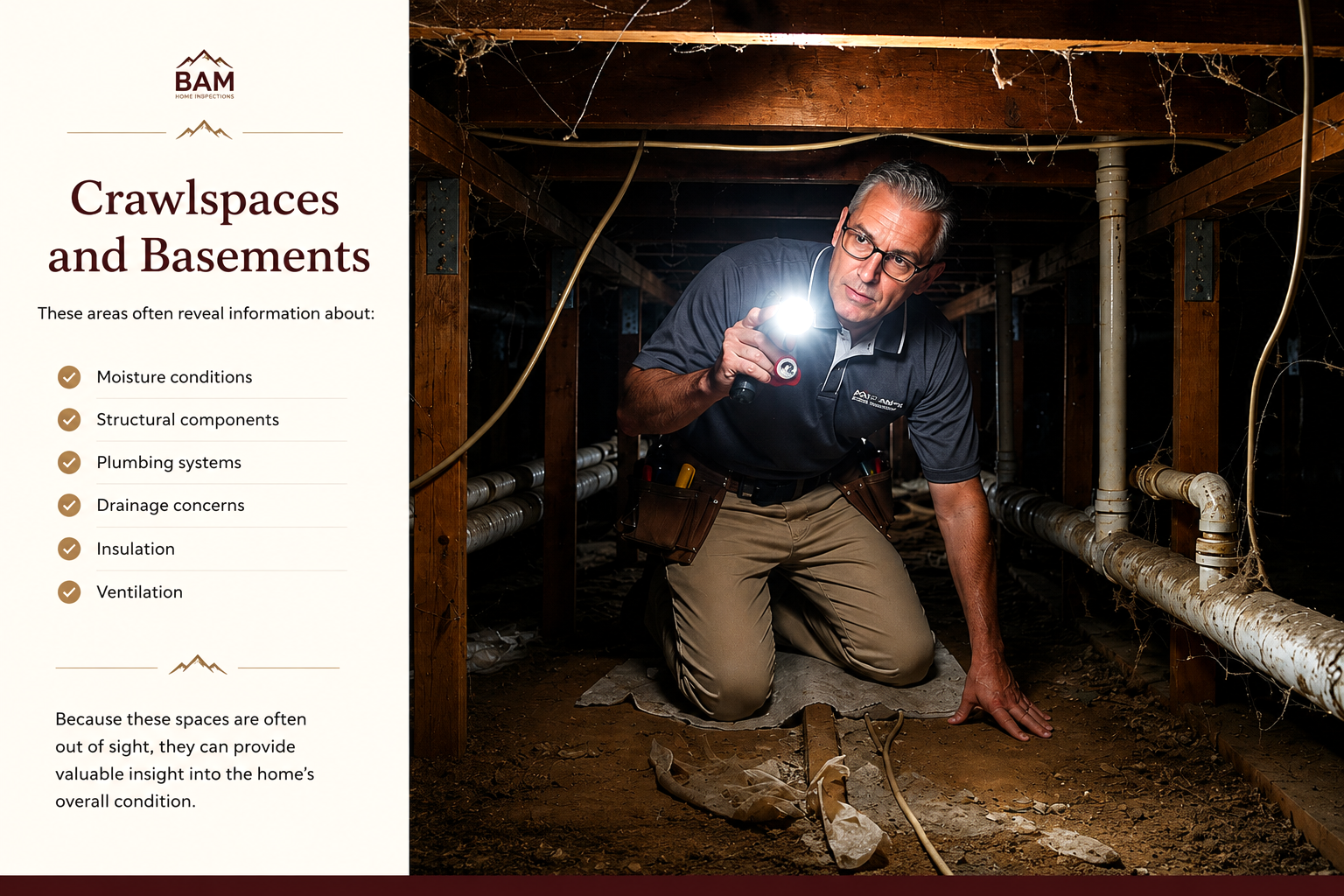
These areas often reveal information about:
- Moisture conditions
- Structural components
- Plumbing systems
- Drainage concerns
- Insulation
- Ventilation
Because these spaces are often out of sight, they can provide valuable insight into the home’s overall condition.
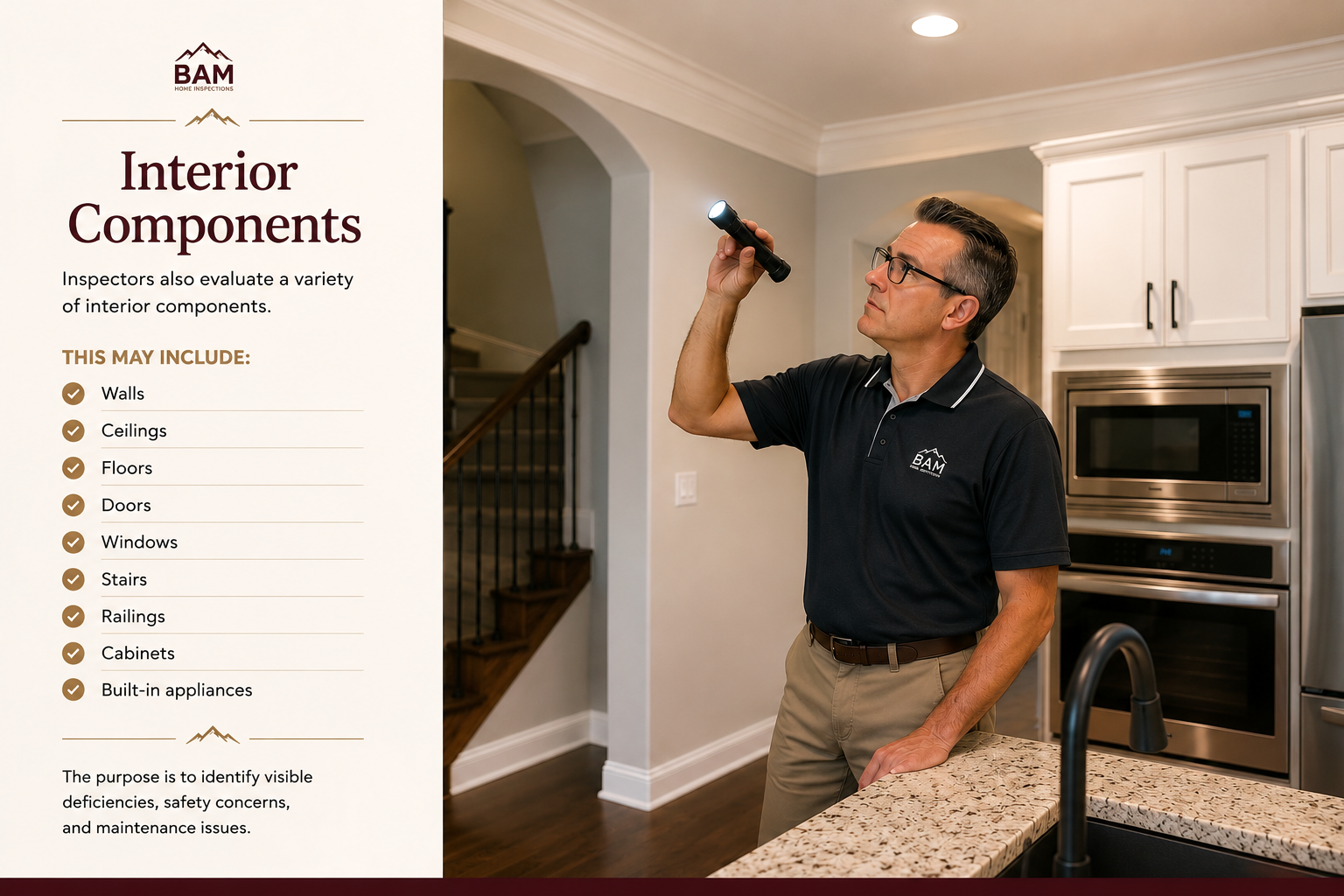
Interior Components
Inspectors also evaluate a variety of interior components.
This may include:
- Walls
- Ceilings
- Floors
- Doors
- Windows
- Stairs
- Railings
- Cabinets
- Built-in appliances
The purpose is to identify visible deficiencies, safety concerns, and maintenance issues.
Safety Concerns
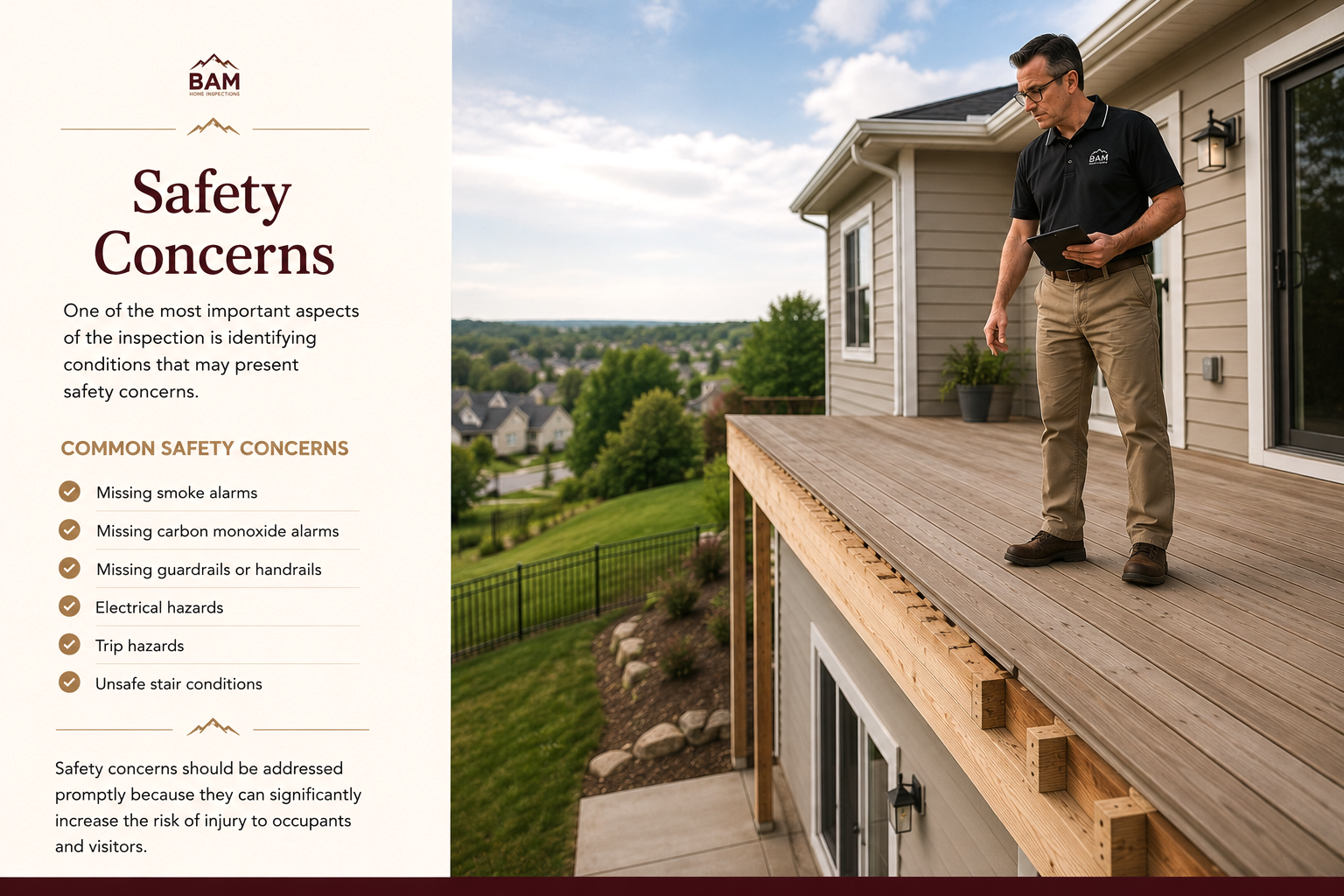
One of the most important aspects of the inspection is identifying conditions that may present safety concerns.
Examples may include:
- Missing smoke alarms
- Missing carbon monoxide alarms
- Loose handrails
- Electrical hazards
- Trip hazards
- Unsafe stair conditions
These findings often deserve special attention because they can affect the occupants’ safety.
What Home Inspectors Don't Do
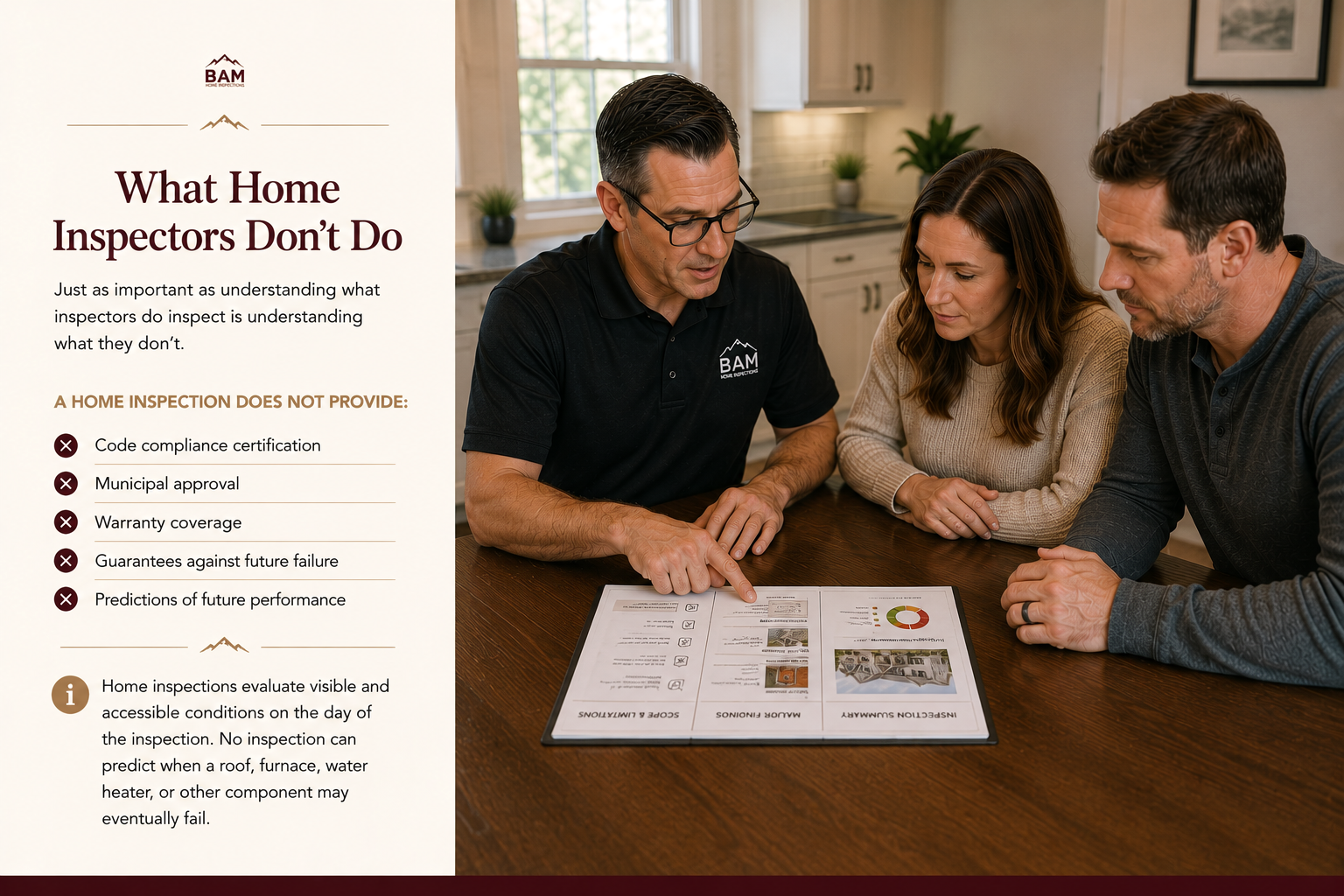
Just as important as understanding what inspectors do inspect is understanding what they don’t.
A standard home inspection is generally not:
- A code compliance inspection
- A municipal inspection
- A warranty
- A guarantee
- A prediction of future performance
Inspectors evaluate conditions that are visible and accessible on the day of the inspection.
No inspection can predict when a roof, furnace, water heater, or other component may eventually fail.
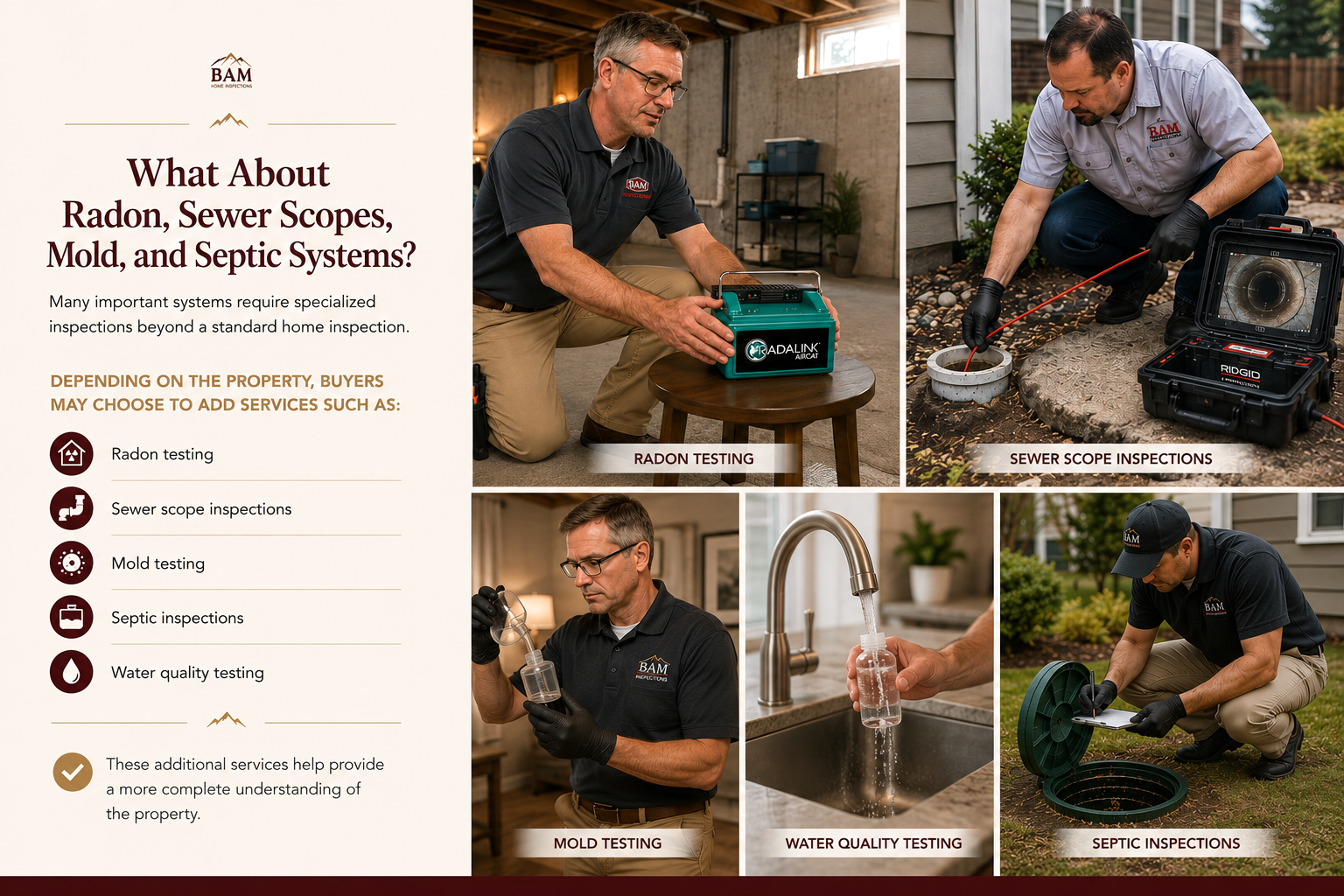
What About Radon, Sewer Scopes, Mold, and Septic Systems?
Many important systems require specialized inspections beyond a standard home inspection.
Depending on the property, buyers may choose to add services such as:
These additional services help provide a more complete understanding of the property.
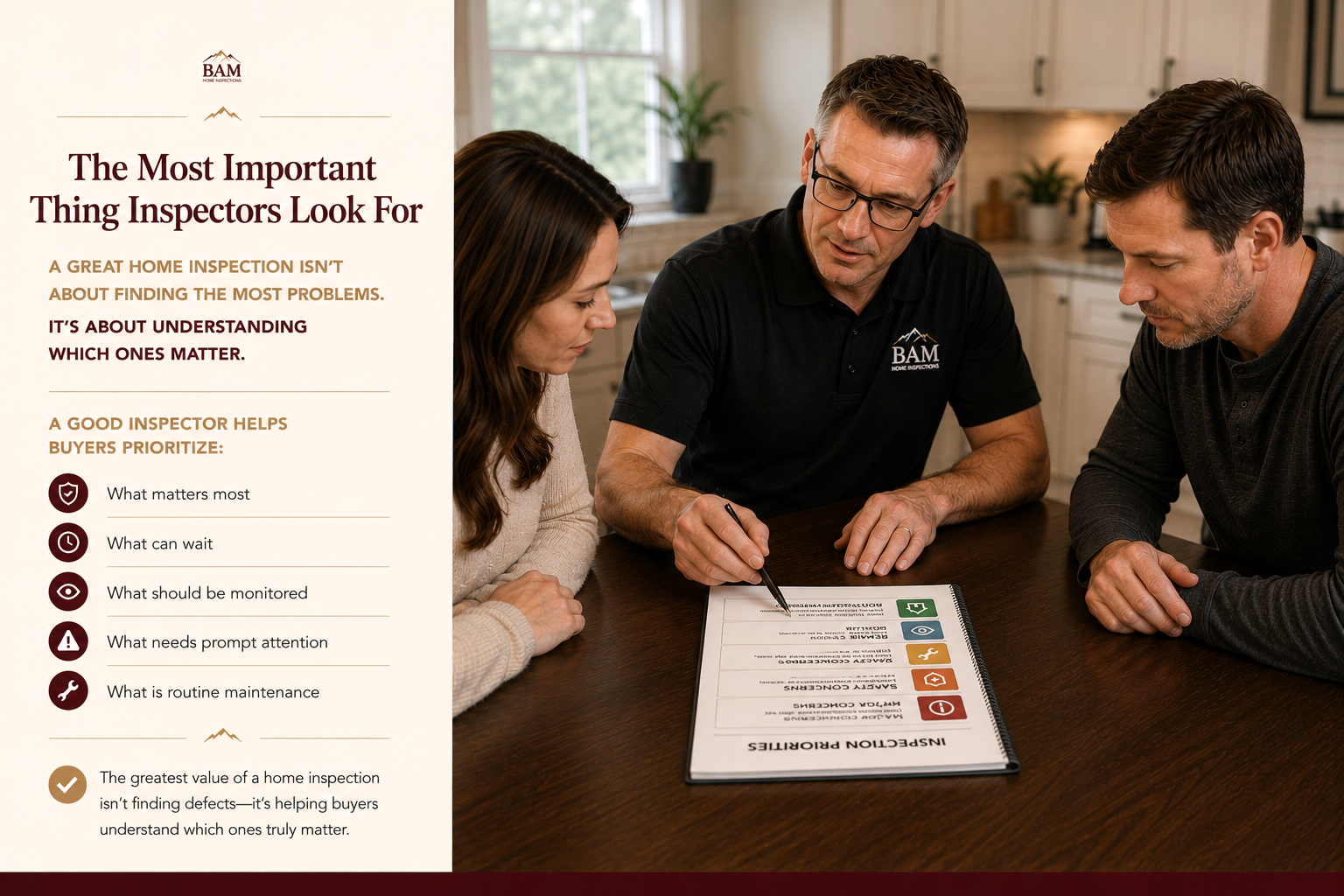
The Most Important Thing Inspectors Look For
Surprisingly, the most valuable thing an inspector provides isn’t a list of defects.
It’s perspective.
A good inspector helps buyers understand:
- What matters most
- What can wait
- What should be monitored
- What should be addressed soon
- What is simply routine maintenance
That’s where the real value of the inspection process comes from.
Colorado Home Seller Tip
Instead of asking:
“How many findings were in the report?”
Ask:
“Which findings are most important?”
A report with 50 observations may contain only a handful of items that truly deserve immediate attention.
Understanding the difference is key.
Final Thoughts
A home inspection is much more than a checklist.
It’s a detailed evaluation of the home’s major systems, components, safety features, and overall condition.
Home inspectors aren’t looking for reasons to kill a deal.
They’re looking for information that helps buyers make informed decisions.
Because when you’re making one of the largest investments of your life, understanding the home’s condition matters.
And the more you understand what home inspectors actually look for, the more confident you’ll feel throughout the entire process.
Seller Success Tip
The best inspection isn’t the one with the fewest findings.
It’s the one that gives you the clearest understanding of the home you’re about to purchase.
Frequently Asked Questions (FAQs)
No. Home inspectors do not pass or fail homes. Their job is to evaluate the visible and accessible systems and components of the property and provide objective information about its condition. The goal is to help buyers make informed decisions, not to determine whether a home is “good” or “bad.”
A standard home inspection typically includes evaluation of the roof, exterior components, structural elements, electrical system, plumbing system, heating and cooling equipment, attic, crawlspace or basement, interior components, and visible safety concerns. These systems collectively provide a picture of the home’s overall condition.
No. A home inspection evaluates conditions that are visible and accessible on the day of the inspection. Inspectors cannot predict exactly when a roof, furnace, water heater, appliance, or other component will fail. However, they may identify systems that are aging, deteriorated, or nearing the end of their expected service life.
Safety concerns can affect the well-being of the home’s occupants. Common examples include missing smoke alarms, missing carbon monoxide alarms, electrical hazards, loose handrails, trip hazards, and unsafe stair conditions. Identifying these issues helps buyers understand where attention may be warranted after closing.
Typically, no. These services generally require specialized equipment, training, or procedures beyond the scope of a standard home inspection. Depending on the property and location, buyers may choose to add services such as radon testing, sewer scope inspections, mold testing, septic inspections, or water quality testing to gain a more complete understanding of the home.
While inspectors identify defects, the greatest value often comes from helping buyers understand what those findings actually mean. A good inspector provides perspective by helping buyers distinguish between routine maintenance, safety concerns, aging components, and significant issues that may require immediate attention. This understanding allows buyers to make informed decisions with confidence.