

A Little Preparation Can Go a Long Way Toward Reducing Stress
For many homeowners, inspection day can feel a little intimidating.
You’ve spent years caring for your home.
You’ve cleaned, organized, decluttered, and prepared it for showings.
Now a professional inspector is coming to evaluate the property’s systems and components.
It’s natural to wonder:
- What if they find something?
- What should I do before the inspection?
- Should I be worried?
- What can I expect?
The good news is that most inspections are far less stressful than sellers imagine.
In fact, one of the best ways to reduce anxiety is to understand what the inspection is—and what it isn’t.
Because contrary to what many people believe, a home inspection is not a pass-or-fail test.
It’s simply an evaluation of the home’s condition on the day of the inspection.
And with a little preparation, sellers can approach inspection day with greater confidence and peace of mind.
A home inspection is not a pass-or-fail test. It's simply an evaluation of the home's condition on the day of the inspection. Read more on what to expect. [How Sellers Can Feel More Prepared Before Inspection Day]
BAM Home Inspections Share to X
First, Remember: No Home Is Perfect
One of the biggest misconceptions about home inspections is that the report should come back “clean.”
In reality, even newer homes typically have inspection findings.
Every home has:
- Wear and tear
- Maintenance items
- Aging components
- Minor deficiencies
That’s normal.
A home inspection is not about proving a home is perfect.
It’s about helping buyers better understand the property they’re purchasing.
When sellers understand this, much of the stress surrounding inspection day begins to fade.

Focus on What You Can Control
It’s easy to worry about what the inspector might find.
Instead, focus on the things you can control before the inspection.
Simple steps include:
✓ Replacing burned-out light bulbs
✓ Securing loose handrails
✓ Repairing dripping faucets
✓ Replacing HVAC filters
✓ Ensuring utilities are on
✓ Clearing access to major systems
✓ Securing pets
✓ Unlocking gates and access panels
These small actions help the inspection proceed more smoothly and demonstrate pride of ownership.

Make the Home Accessible
One of the most helpful things sellers can do is ensure the inspector can access key areas of the home...this helps avoid delays and reduces the likelihood of return visits. [How Sellers Can Feel More Prepared Before Inspection Day]
BAM Home Inspections Share to X
One of the most helpful things sellers can do is ensure the inspector can access key areas of the home.
Inspectors need access to:
- Electrical panels
- Furnaces
- Water heaters
- Attics
- Crawlspaces
- Garages
- Mechanical rooms
A home inspector can only inspect what is visible and accessible.
Taking a few minutes to clear access beforehand can help avoid delays and reduce the likelihood of return visits.
Gather Helpful Documentation
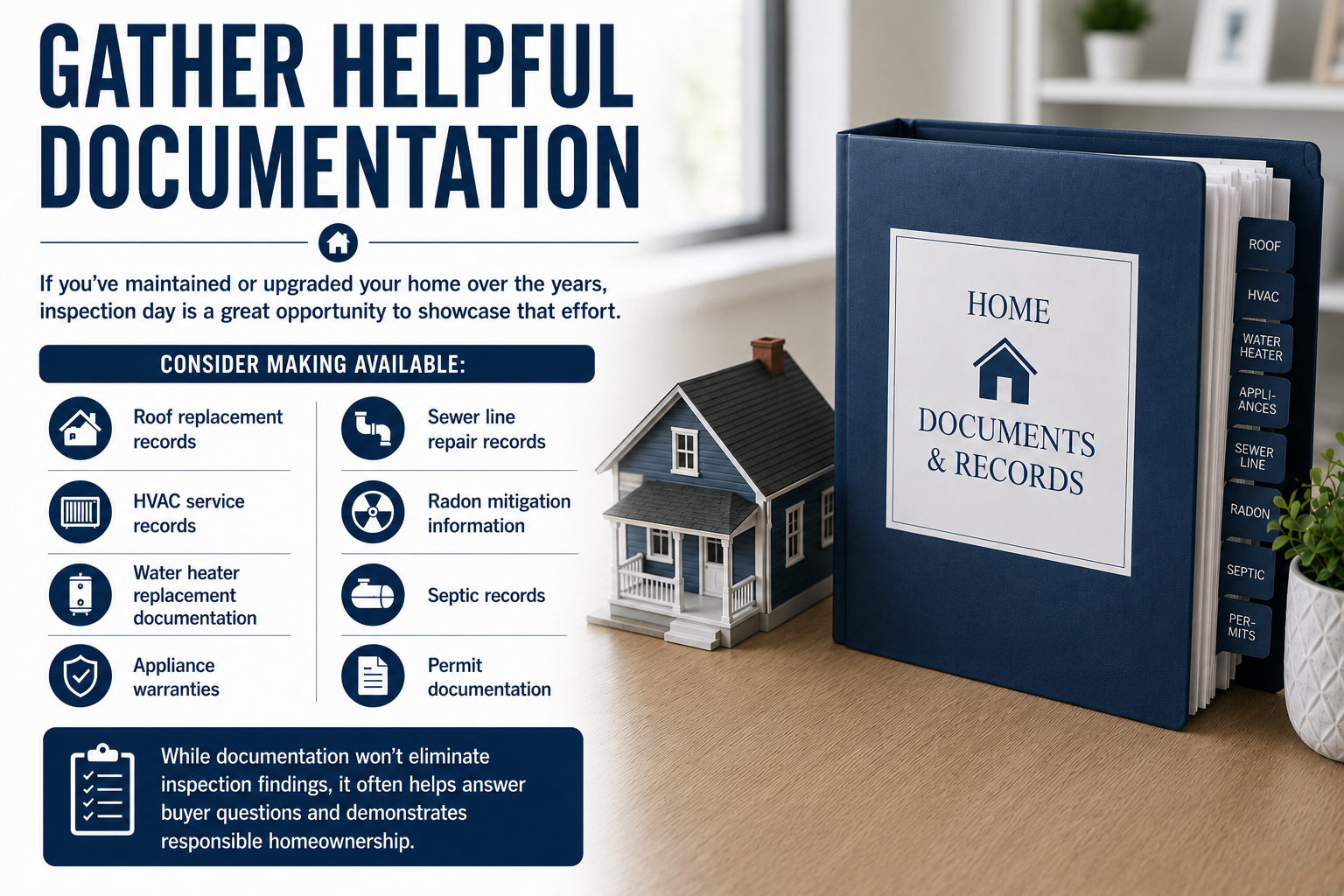
If you’ve maintained or upgraded your home over the years, inspection day is a great opportunity to showcase that effort.
Consider making available:
- Roof replacement records
- HVAC service records
- Water heater replacement documentation
- Appliance warranties
- Sewer line repair records
- Radon mitigation information
- Septic records
- Permit documentation
While documentation won’t eliminate inspection findings, it often helps answer buyer questions and demonstrates responsible homeownership.
Understand That Findings Are Normal
Many sellers become concerned when they hear that an inspector identified deficiencies.
But findings are a routine part of nearly every inspection.
A report may include items such as:
- Missing caulk
- Loose handrails
- Aging components
- Minor plumbing repairs
- Routine maintenance recommendations
This doesn’t mean something is wrong with the home.
It simply means the inspector is documenting observations and helping the buyer better understand the property.
Remember:
Finding issues is part of the inspection process.
Many sellers become concerned when they hear that an inspector identified deficiencies. But findings are a routine part of nearly every inspection. [How Sellers Can Feel More Prepared Before Inspection Day]
BAM Home Inspections Share to X
Avoid Last-Minute Panic
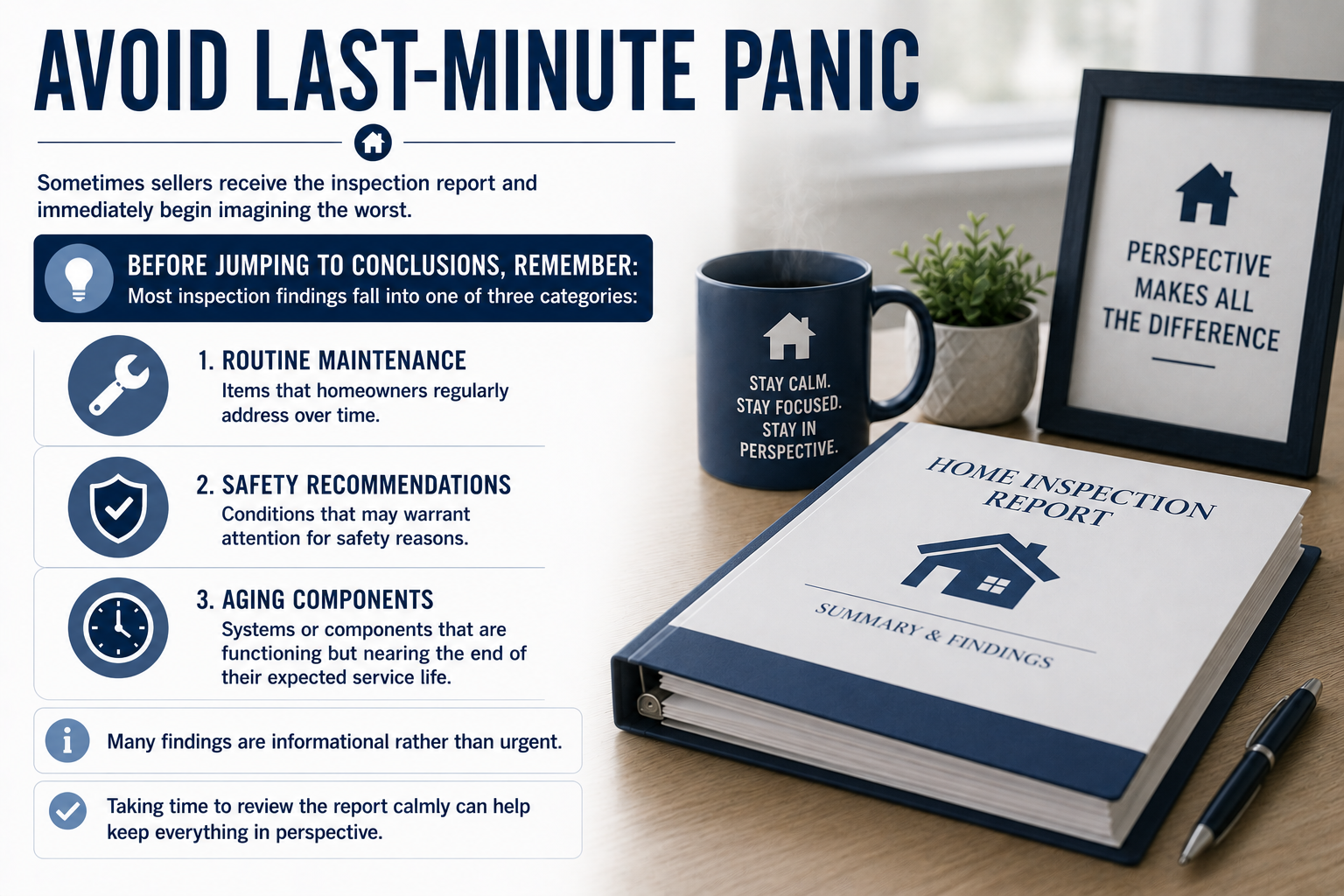
Sometimes sellers receive the inspection report and immediately begin imagining the worst.
Before jumping to conclusions, remember:
Most inspection findings fall into one of three categories:
Routine Maintenance
- Items that homeowners regularly address over time.
Safety Recommendations
- Conditions that may warrant attention for safety reasons.
Aging Components
- Systems or components that are functioning but nearing the end of their expected service life.
Many findings are informational rather than urgent.
Taking time to review the report calmly can help keep everything in perspective.
Trust the Process
The inspection is designed to provide information.
Information helps buyers make informed decisions.
Information also helps sellers understand how their home may be perceived by potential buyers.
A successful inspection isn’t one with no findings.
A successful inspection is one where everyone walks away with a better understanding of the property.
A successful inspection isn't one with no findings. A successful inspection is one where everyone walks away with a better understanding of the property. [How Sellers Can Feel More Prepared Before Inspection Day]
BAM Home Inspections Share to X
Colorado Seller Tip
Colorado homes experience unique conditions that naturally create maintenance needs over time.
Examples include:
- Intense sun exposure
- Freeze-thaw cycles
- Snow and ice
- Expansive soils
- Wind exposure
- Hail events
Because of these environmental factors, inspection findings related to maintenance and aging components are common.
Most buyers understand this.
Most Realtors understand this.
And experienced inspectors understand this as well.
What Sellers Should Remember on Inspection Day
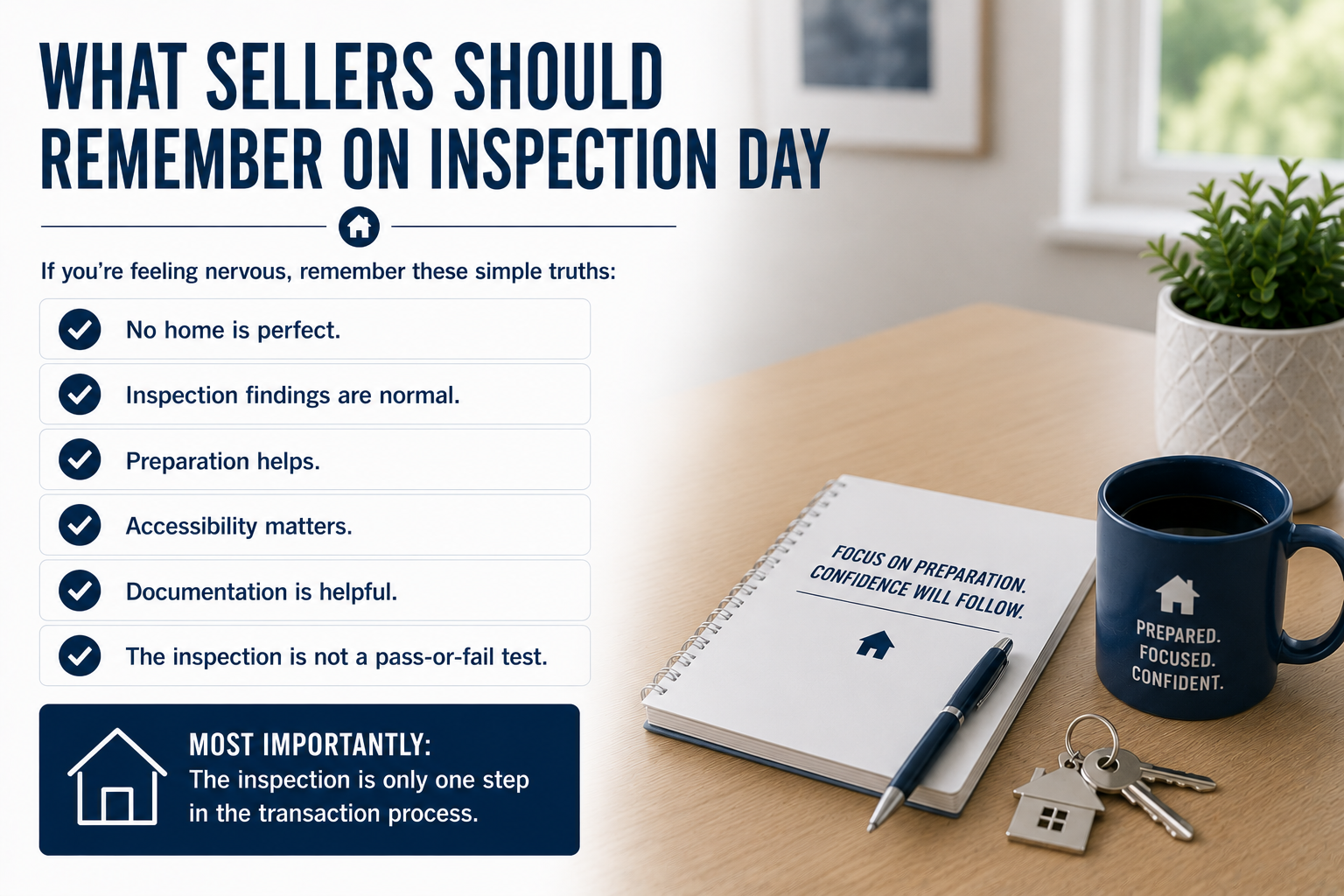
If you’re feeling nervous, remember these simple truths:
✓ No home is perfect.
✓ Inspection findings are normal.
✓ Preparation helps.
✓ Accessibility matters.
✓ Documentation is helpful.
✓ The inspection is not a pass-or-fail test.
Most importantly:
The inspection is only one step in the transaction process.
Final Thoughts
Selling a home can be emotional.
For many homeowners, it represents years of memories, hard work, and investment.
It’s understandable to feel a little anxious when inspection day arrives.
But preparation creates confidence.
By addressing small maintenance items, making the home accessible, gathering documentation, and understanding what to expect, sellers can approach inspection day with far less stress.
Remember:
The goal isn’t perfection.
The goal is preparation.
And when sellers are prepared, the inspection process tends to be smoother, more productive, and far less intimidating.

Seller Success Tip
The best way to feel prepared before inspection day is to focus on what you can control—and let the inspection process do what it was designed to do: provide clarity for everyone involved.
Frequently Asked Questions (FAQs)
Generally, no. Home inspections are a normal part of most real estate transactions. The purpose of the inspection is to help buyers better understand the home’s condition—not to determine whether the home is “good” or “bad.” Most homes, including newer homes, have inspection findings. Understanding this can help reduce unnecessary stress.
Focus on the things you can control. Replace burned-out light bulbs, secure loose handrails, repair minor plumbing leaks, replace HVAC filters, ensure utilities are on, clear access to major systems, and secure pets. These simple steps can help the inspection proceed more smoothly and create a better experience for everyone involved.
Inspectors can only evaluate areas that are visible and accessible. If access to the electrical panel, furnace, water heater, attic, crawlspace, or other major components is restricted, portions of the inspection may be limited. Providing clear access helps ensure buyers receive a more complete evaluation of the property.
Yes. Documentation such as roof replacement records, HVAC service records, water heater documentation, radon mitigation information, sewer repairs, septic records, and permit documentation can be helpful. These records often answer buyer questions and demonstrate responsible homeownership.
Many inspection findings involve routine maintenance, minor repairs, safety recommendations, or aging components. Examples may include loose handrails, missing caulk, dripping faucets, aging equipment, or other maintenance items. These findings are a normal part of the inspection process and do not necessarily indicate major problems with the home.
No. Home inspections are not pass-or-fail tests. An inspector’s role is to document the condition of the home’s visible and accessible systems and components at the time of the inspection. The report simply provides information that helps buyers and sellers make informed decisions. The presence of findings does not mean the home has “failed.”