
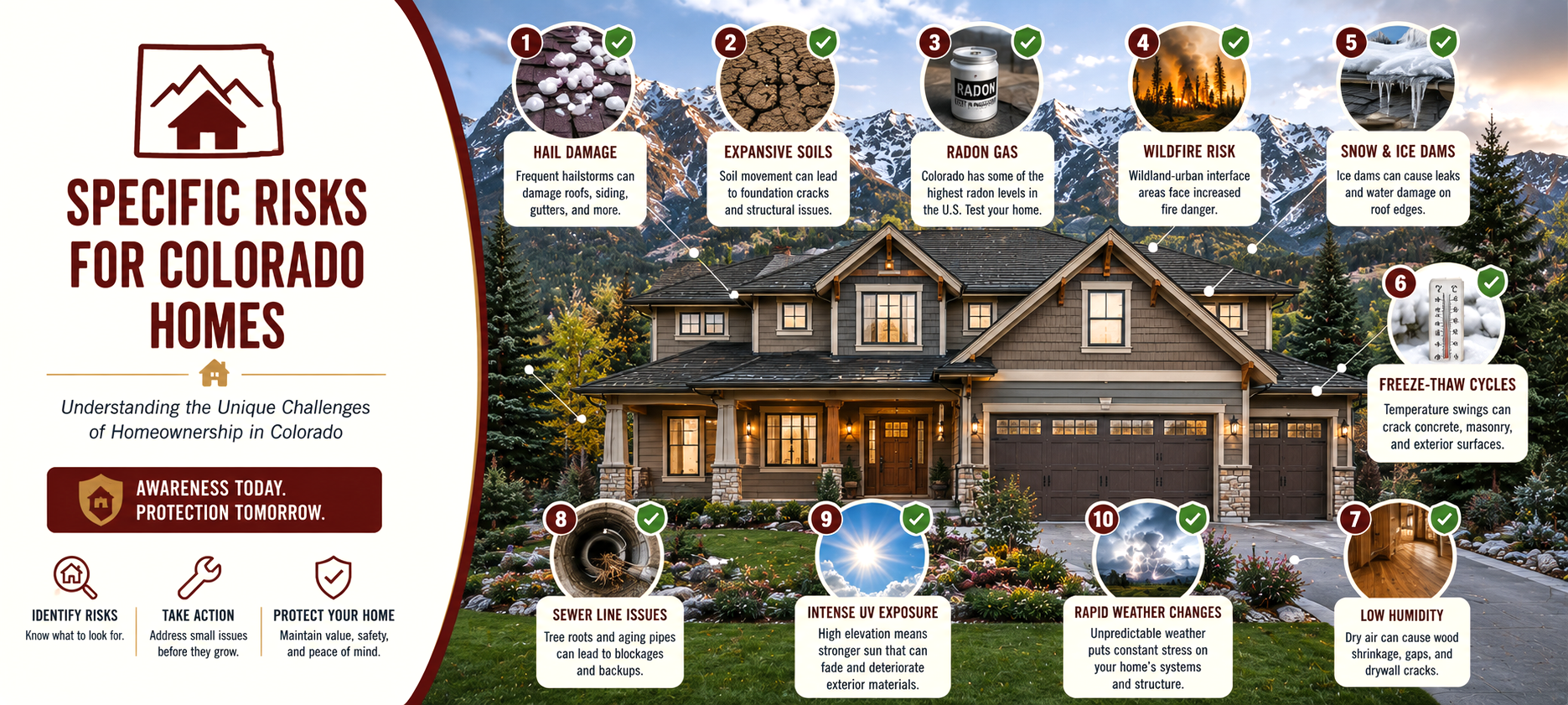
Understanding the Unique Challenges of Homeownership Along the Front Range
Colorado is one of the most beautiful places in the country to own a home. From breathtaking mountain views and sunny skies to four distinct seasons and abundant outdoor recreation, it’s easy to see why so many people choose to live here.
However, Colorado’s unique climate and geography also create challenges that homeowners in other parts of the country may never experience.
From hailstorms and wildfire risks to expansive soils and freeze-thaw cycles, Colorado homes face environmental conditions that can impact roofs, foundations, plumbing systems, and exterior components over time.
Understanding these risks can help homeowners protect their investment, plan for maintenance, and avoid costly surprises.
From hailstorms and wildfire risks to expansive soils and freeze-thaw cycles, Colorado homes face environmental conditions that can impact roofs, foundations, plumbing systems, and exterior components over time. [Specific Risks for Colorado Homes]
BAM Home Inspections Share to X
1. Hail Damage
If there’s one risk every Colorado homeowner should understand, it’s hail.
Colorado consistently ranks among the states experiencing the highest number of hail events each year. Along the Front Range, severe hailstorms can occur during spring and summer months and may cause significant damage to:
- Roofing materials
- Gutters
- Downspouts
- Siding
- Window screens
- Exterior paint
- Air conditioning equipment
One challenge is that hail damage is not always visible from the ground.
A roof may appear perfectly fine from the driveway while still exhibiting bruising, granule loss, or other damage that could shorten its lifespan.
What Homeowners Can Do
✓ Inspect roofs after major storms.
✓ Document storm events.
✓ Address damage promptly.
✓ Consider periodic roof evaluations.
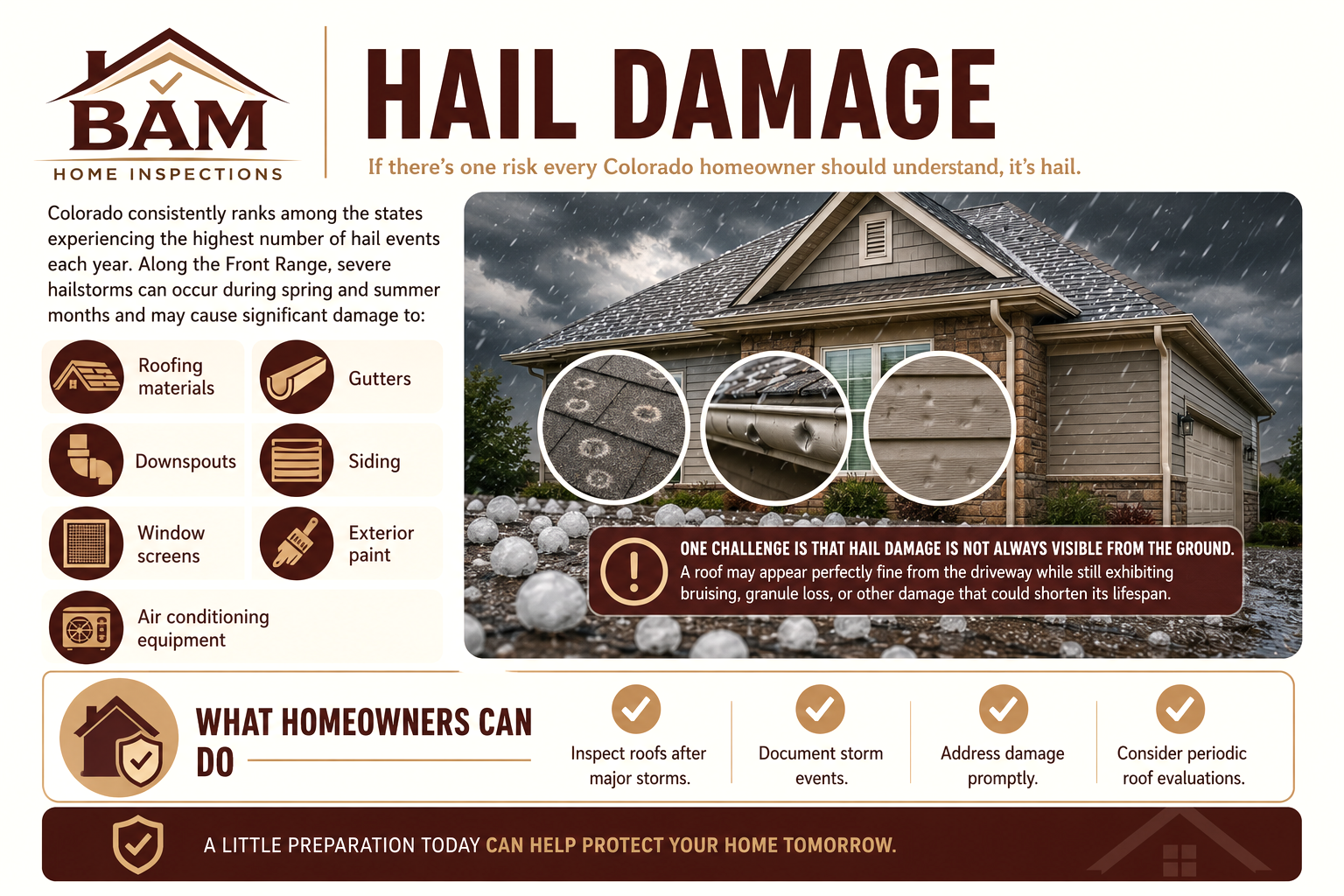
Colorado consistently ranks among the states experiencing the highest number of hail events each year. Along the Front Range, severe hailstorms can occur during spring and summer months and may cause significant damage. Read to protect your home. [Specific Risks for Colorado Homes]
BAM Home Inspections Share to X
2. Expansive Soils and Foundation Movement
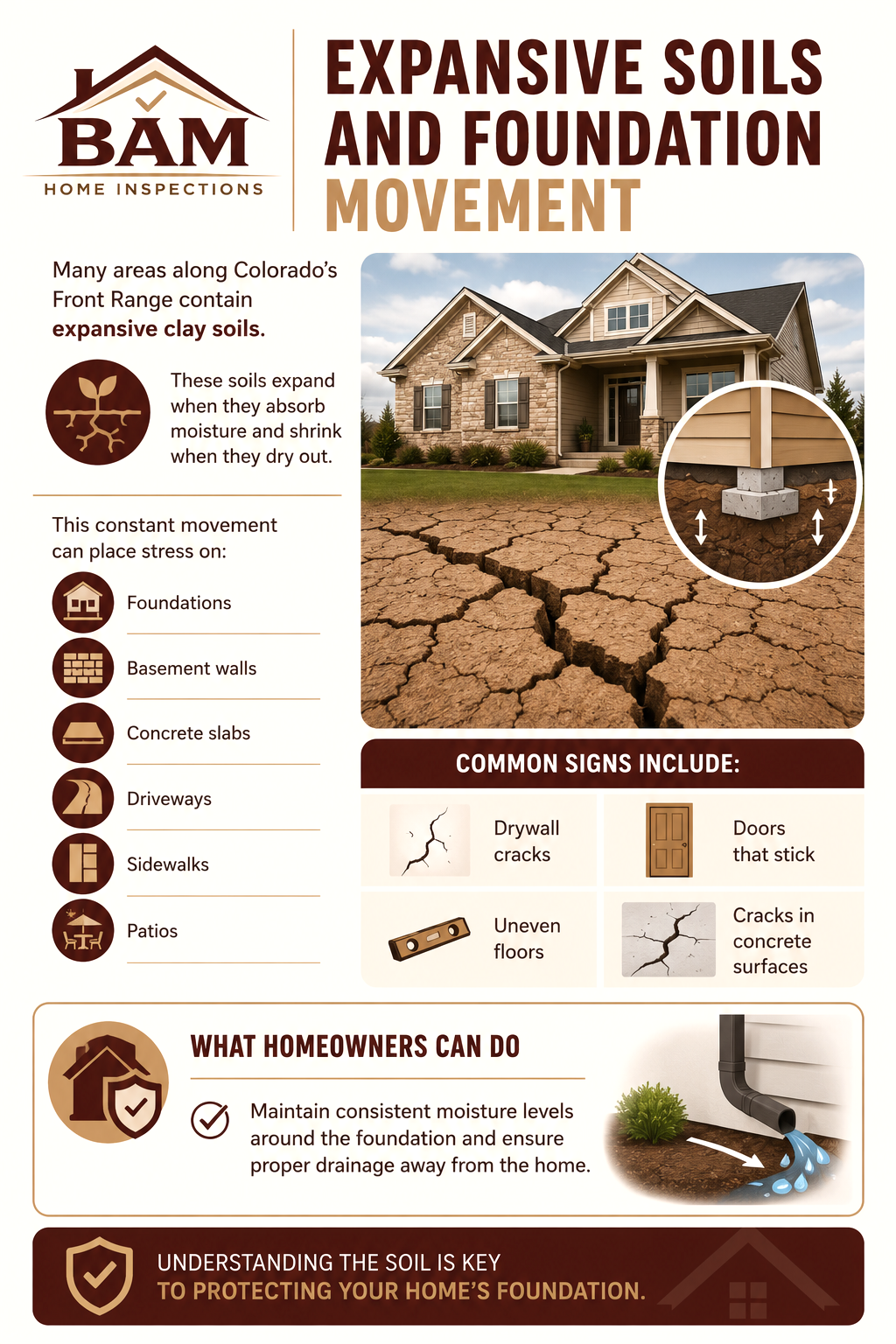
Many areas along Colorado’s Front Range contain expansive clay soils.
These soils expand when they absorb moisture and shrink when they dry out.
This constant movement can place stress on:
- Foundations
- Basement walls
- Concrete slabs
- Driveways
- Sidewalks
- Patios
Common signs include:
- Drywall cracks
- Doors that stick
- Uneven floors
- Cracks in concrete surfaces
What Homeowners Can Do
✓ Maintain consistent moisture levels around the foundation and ensure proper drainage away from the home.
3. Freeze-Thaw Cycles
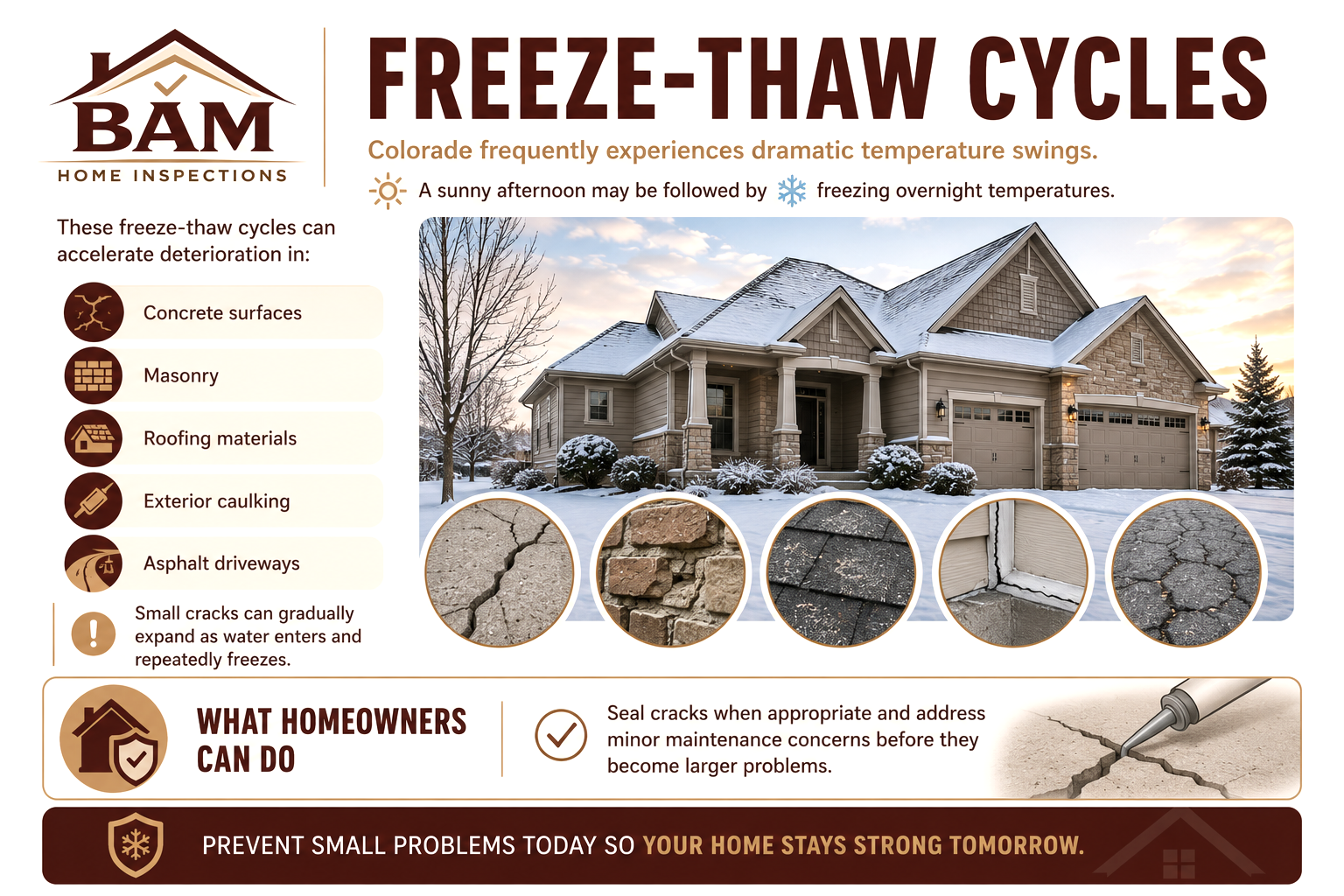
Colorado frequently experiences dramatic temperature swings.
A sunny afternoon may be followed by freezing overnight temperatures.
These freeze-thaw cycles can accelerate deterioration in:
- Concrete surfaces
- Masonry
- Roofing materials
- Exterior caulking
- Asphalt driveways
Small cracks can gradually expand as water enters and repeatedly freezes.
What Homeowners Can Do
✓ Seal cracks when appropriate and address minor maintenance concerns before they become larger problems.
4. Wildfire Risk
While not every Colorado community faces the same level of wildfire exposure, many homes along the Front Range and mountain communities exist within or near the wildland-urban interface.
Wildfire concerns often involve:
- Vegetation near structures
- Wood fencing attached to homes
- Combustible landscaping
- Debris accumulation in gutters
What Homeowners Can Do
✓ Create defensible space around the property and follow local wildfire mitigation recommendations.

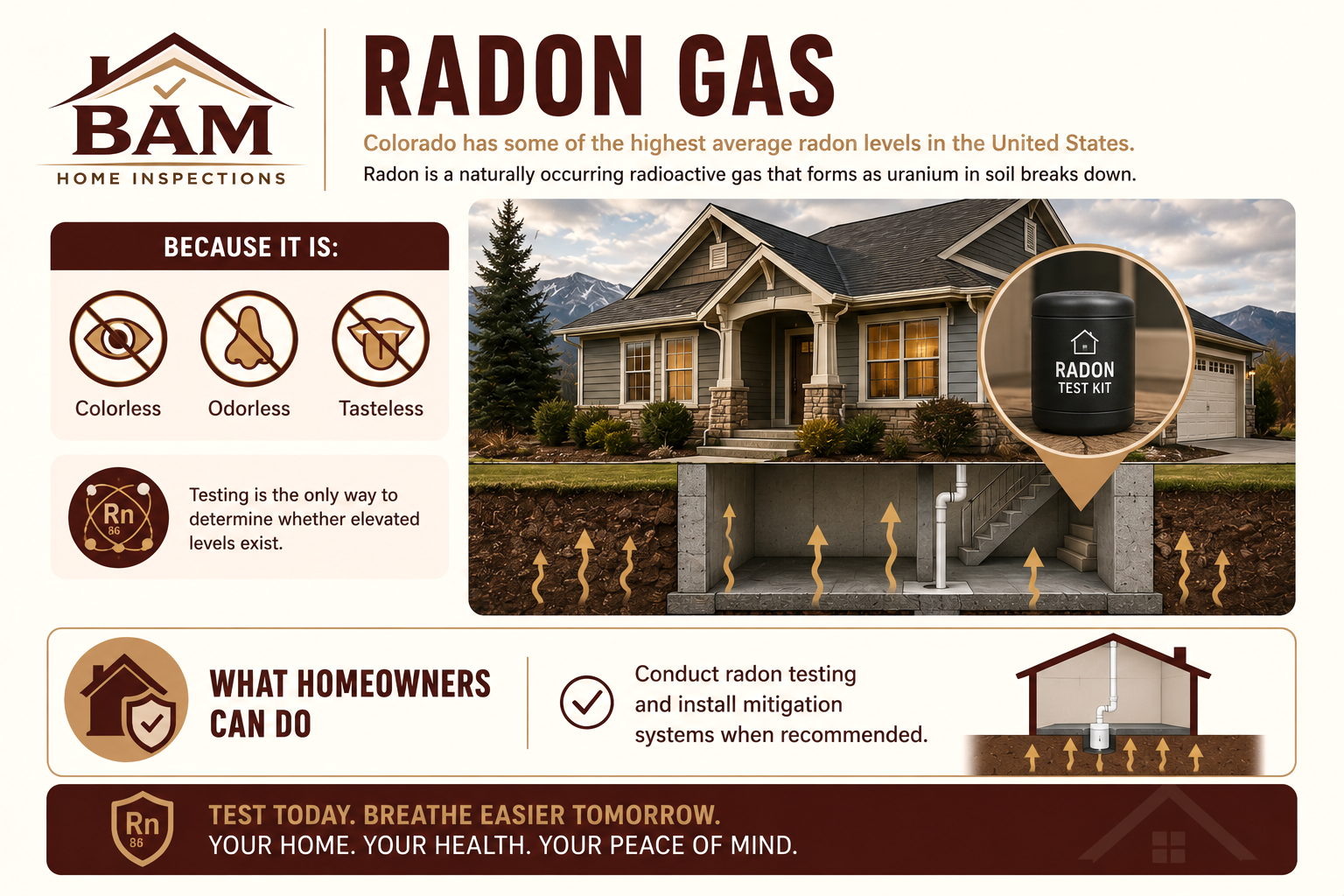
5. Radon Gas
Colorado has some of the highest average radon levels in the United States.
Radon is a naturally occurring radioactive gas that forms as uranium in soil breaks down.
Because it is:
- Colorless
- Odorless
- Tasteless
Testing is the only way to determine whether elevated levels exist.
What Homeowners Can Do
✓ Conduct radon testing and install mitigation systems when recommended.
6. Snow and Ice Dams
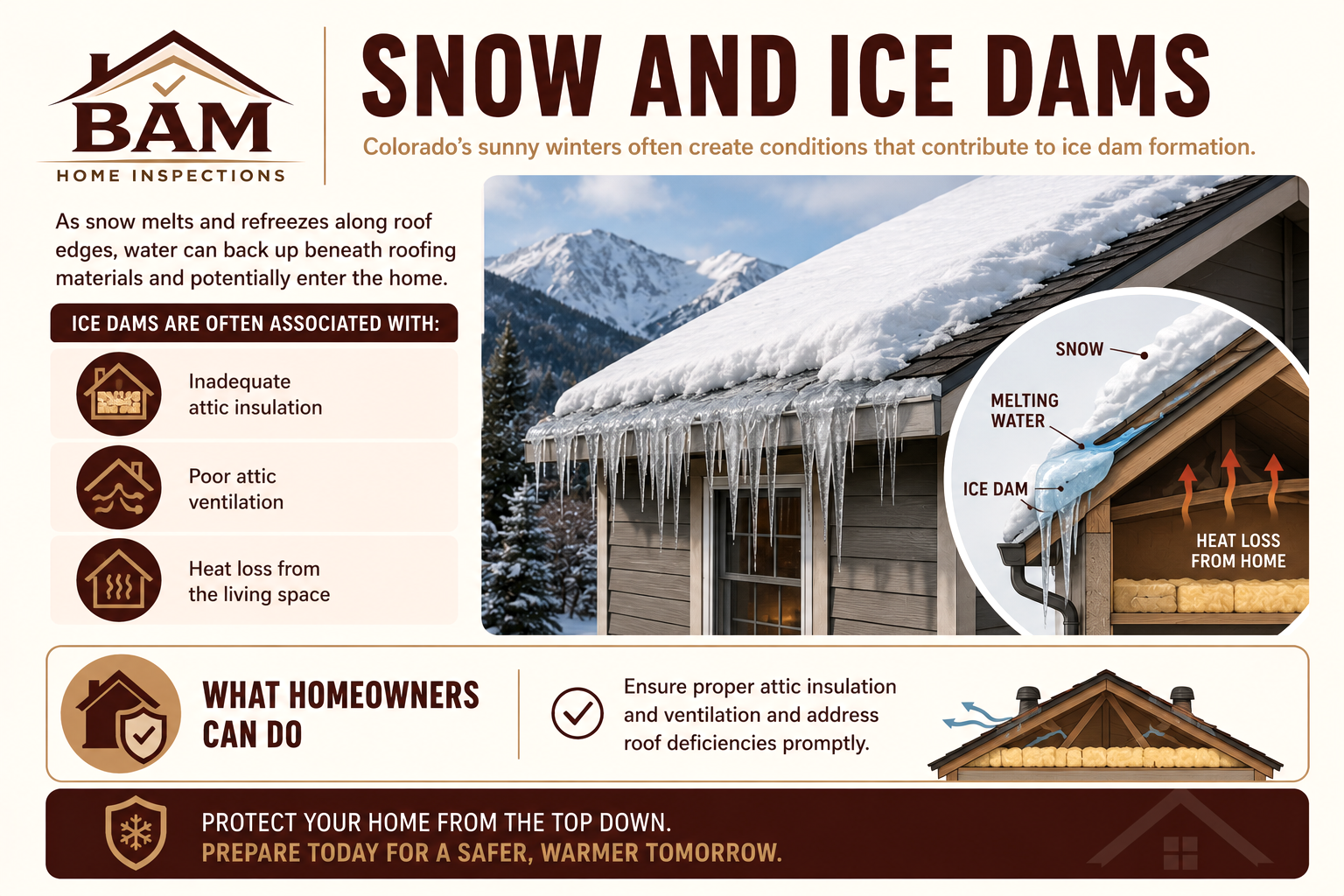
Colorado’s sunny winters often create conditions that contribute to ice dam formation.
As snow melts and refreezes along roof edges, water can back up beneath roofing materials and potentially enter the home.
Ice dams are often associated with:
- Inadequate attic insulation
- Poor attic ventilation
- Heat loss from the living space
What Homeowners Can Do
✓ Ensure proper attic insulation and ventilation and address roof deficiencies promptly.
7. Low Humidity and Wood Movement
Colorado’s dry climate creates unique challenges inside homes.
Low humidity can contribute to:
- Shrinking wood flooring
- Gaps between hardwood boards
- Wood trim separation
- Cracks in cabinetry
- Drywall nail pops
These conditions are often seasonal and may fluctuate throughout the year.
What Homeowners Can Do
✓ Maintain appropriate indoor humidity levels when practical.

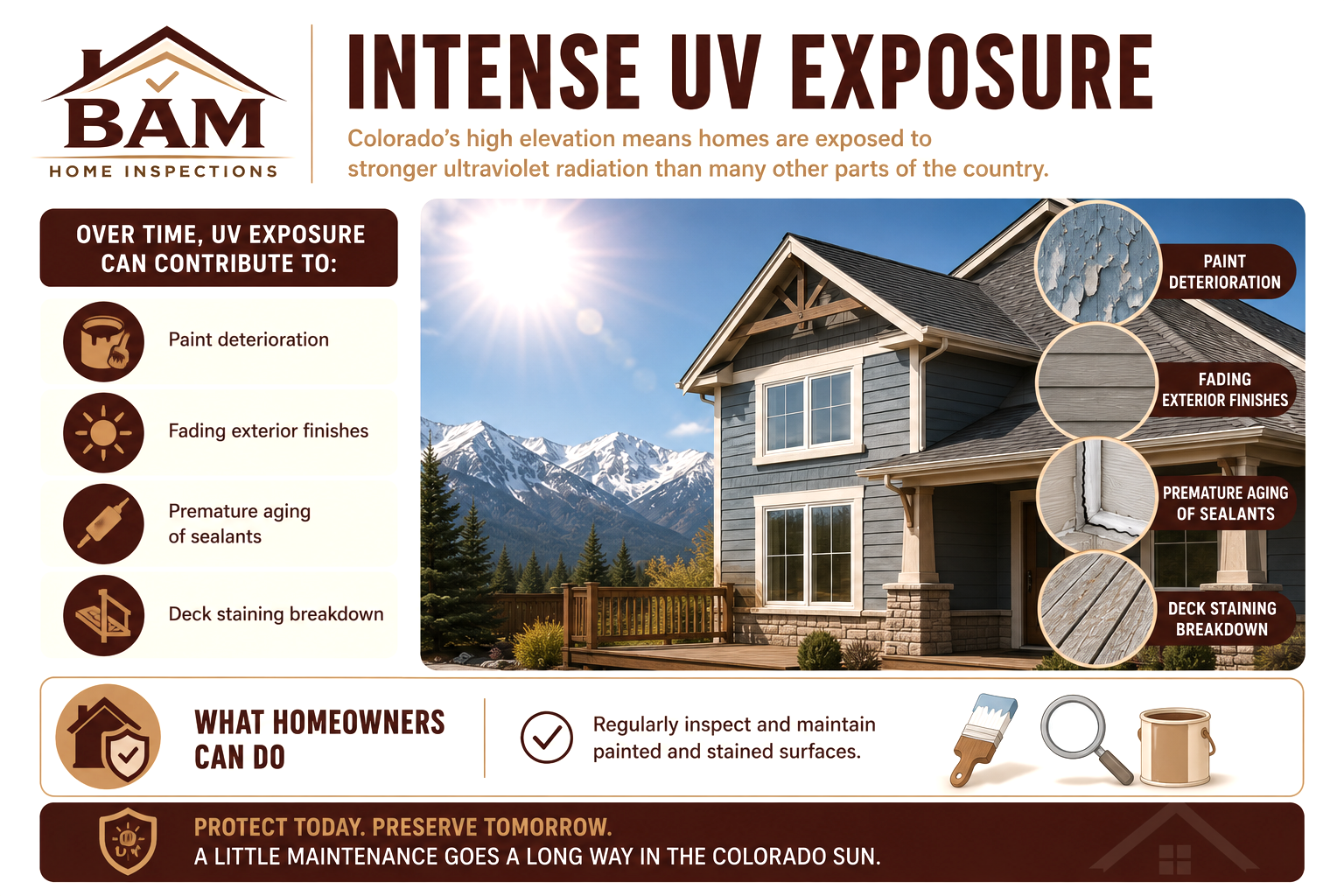
8. Intense UV Exposure
Colorado’s high elevation means homes are exposed to stronger ultraviolet radiation than many other parts of the country.
Over time, UV exposure can contribute to:
- Paint deterioration
- Fading exterior finishes
- Premature aging of sealants
- Deck staining breakdown
What Homeowners Can Do
✓ Regularly inspect and maintain painted and stained surfaces.
9. Sewer Line Problems
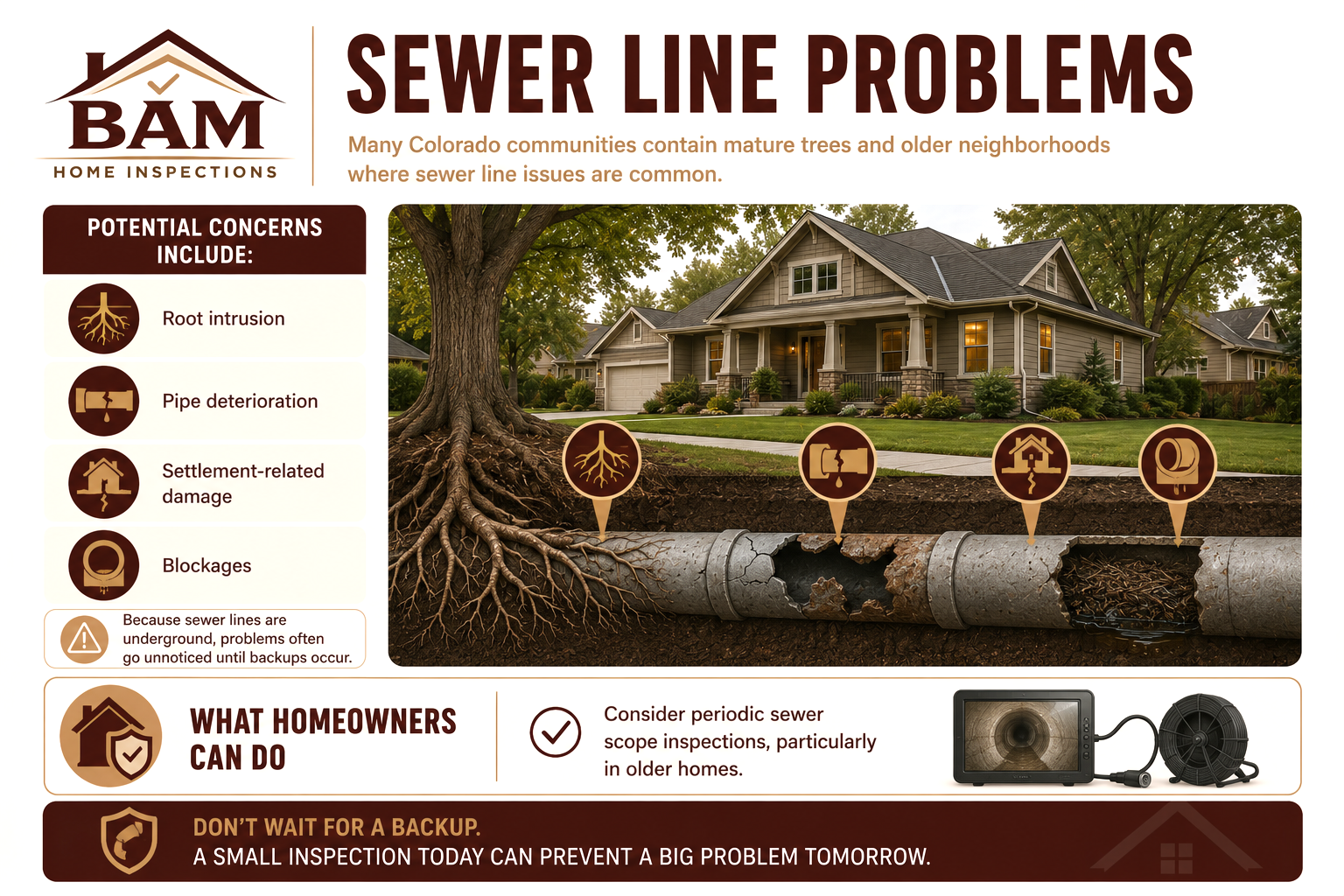
Many Colorado communities contain mature trees and older neighborhoods where sewer line issues are common.
Potential concerns include:
- Root intrusion
- Pipe deterioration
- Settlement-related damage
- Blockages
Because sewer lines are underground, problems often go unnoticed until backups occur.
What Homeowners Can Do
✓ Consider periodic sewer scope inspections, particularly in older homes.
Colorado Consideration
Spring is also an excellent time to inspect for hail damage that may have occurred during winter or early spring storms.
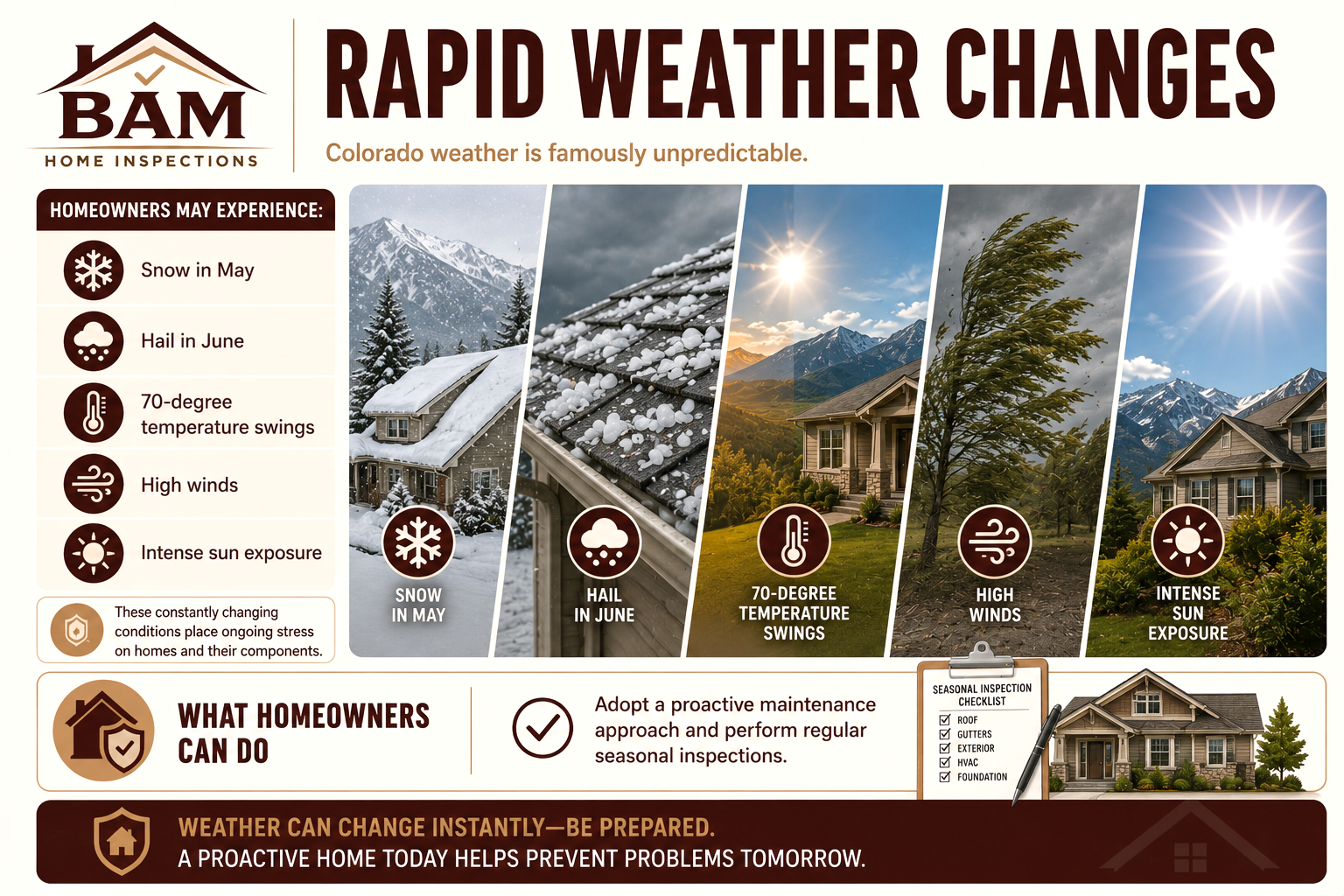
10. Rapid Weather Changes
Colorado weather is famously unpredictable.
Homeowners may experience:
- Snow in May
- Hail in June
- 70-degree temperature swings
- High winds
- Intense sun exposure
These constantly changing conditions place ongoing stress on homes and their components.
What Homeowners Can Do
✓ Adopt a proactive maintenance approach and perform regular seasonal inspections.
A Proactive Homeowner Is a Prepared Homeowner
Many of Colorado’s most common housing issues are not the result of poor construction or neglect.
They are simply the realities of owning a home in a state with unique environmental conditions.
Understanding these risks allows homeowners to:
- Plan maintenance budgets
- Address concerns early
- Protect property values
- Avoid unexpected repairs
The goal isn’t to eliminate every risk.
It’s to understand them, monitor them, and respond before small concerns become major problems.

Final Thoughts
Colorado offers an incredible quality of life, but homeownership here comes with challenges that are often different from those found elsewhere in the country.
Whether it’s hail damage, expansive soils, radon, freeze-thaw cycles, or wildfire concerns, awareness is one of the most powerful tools a homeowner can have.
By understanding the specific risks associated with Colorado homes and taking a proactive approach to maintenance, you can better protect your investment and enjoy greater confidence in your home for years to come.

Frequently Asked Questions (FAQs)
While every property is different, hail damage is one of the most common and costly risks facing Colorado homeowners. Severe hailstorms can damage roofing materials, gutters, siding, window screens, exterior finishes, and HVAC equipment. Because hail damage is not always visible from the ground, periodic inspections after major storms can be beneficial.
Many areas along the Front Range contain expansive clay soils that expand when wet and shrink when dry. This ongoing movement can place stress on foundations, basement walls, driveways, patios, and sidewalks. Maintaining proper drainage and consistent moisture levels around the foundation can help reduce the effects of soil movement.
Yes. Colorado has some of the highest average radon levels in the country, and radon cannot be detected without testing because it is colorless, odorless, and tasteless. Testing is the only reliable way to determine whether elevated radon levels are present in a home.
Ice dams typically form when snow on the roof melts and refreezes along colder roof edges. This process can cause water to back up beneath roofing materials and potentially enter the home. Inadequate attic insulation, poor ventilation, and heat loss from living spaces are common contributing factors.
Colorado’s dry climate and low humidity levels can cause wood products to shrink and expand seasonally. Homeowners may notice gaps between hardwood flooring boards, trim separation, cabinet movement, or drywall nail pops during drier times of the year. These conditions are often related to normal seasonal moisture fluctuations.
The best approach is proactive maintenance. Regular roof inspections, seasonal maintenance checklists, proper drainage management, radon testing, attic insulation improvements, sewer line evaluations when appropriate, and wildfire mitigation efforts can help homeowners identify concerns early and reduce the likelihood of costly repairs. While homeowners can’t control Colorado’s weather, they can prepare for it.