
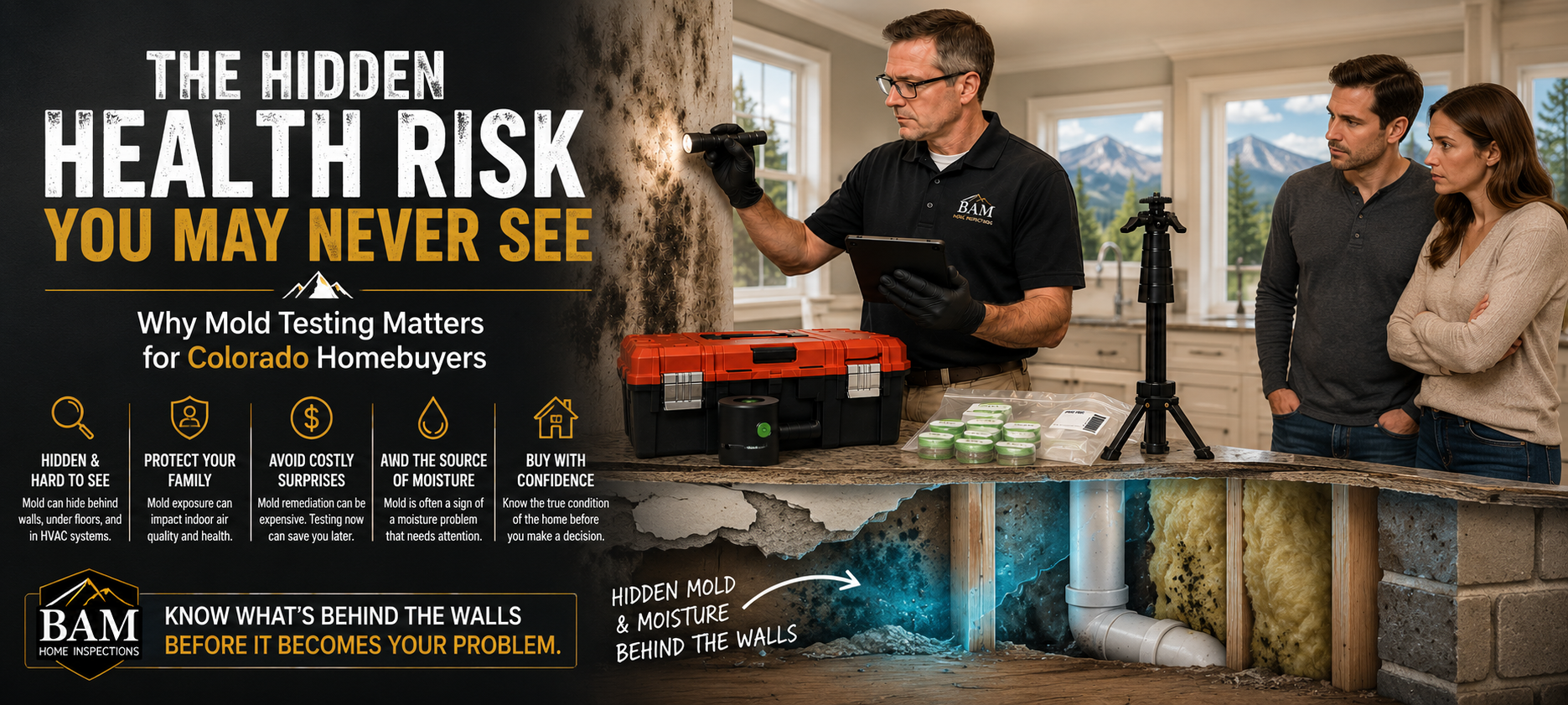
What Every Homebuyer Should Know Before Moving In
Imagine finding the perfect home.
The location is ideal.
The layout fits your family perfectly.
The inspection went well.
Everything appears clean and well-maintained.
Then, a few months after moving in, someone in the family begins experiencing persistent allergy symptoms.
A musty odor starts appearing after rainstorms.
Further investigation reveals a problem hidden behind a basement wall:
Mold.
Unfortunately, mold is one of the most common—and most misunderstood—issues found in homes.
Unlike a damaged roof or a cracked foundation, mold often remains hidden from view until it becomes a much larger problem.
That’s why mold testing can be one of the most valuable inspections a homebuyer chooses during the home-buying process.
Unlike a damaged roof or a cracked foundation, mold often remains hidden from view until it becomes a much larger problem. That's why mold testing can be one of the most valuable inspections a homebuyer chooses during the home-buying process. [The Hidden Health Risk You May Never See]
BAM Home Inspections Share to X
What Is Mold?
Mold is a naturally occurring fungus that thrives in environments where moisture is present.
Under the right conditions, mold can begin growing within 24 to 48 hours after a moisture event.
Common causes include:
- Plumbing leaks
- Roof leaks
- Foundation moisture intrusion
- Condensation
- Flooding
- Poor ventilation
- High indoor humidity
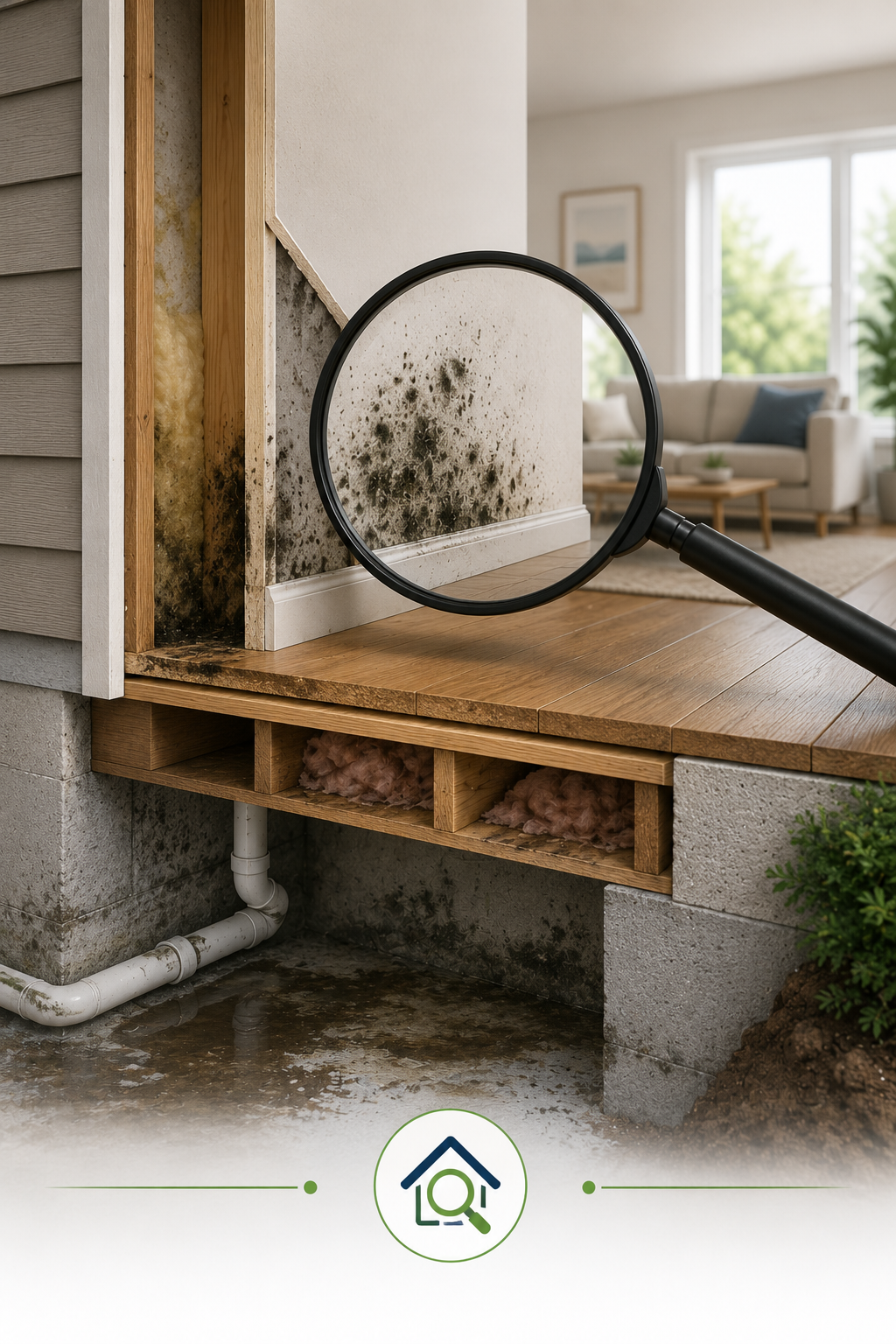
Because mold often develops behind walls, beneath flooring, inside crawlspaces, or within HVAC systems, it may not be visible during a typical walkthrough of the home.
Mold is a naturally occurring fungus that thrives in environments where moisture is present. Under the right conditions, mold can begin growing within 24 to 48 hours after a moisture event. [The Hidden Health Risk You May Never See]
BAM Home Inspections Share to X
Why Mold Can Be Difficult to Detect
One of the biggest misconceptions about mold is:
“If I don’t see mold, there probably isn’t a problem.”
Unfortunately, that’s not always true.
Mold frequently develops in hidden areas such as:
- Behind drywall
- Beneath carpet or flooring
- Inside crawlspaces
- Attics
- HVAC systems
- Behind cabinetry
- Under sinks
- Areas affected by previous water damage
A home may look perfectly clean while elevated mold levels remain hidden from view.
That’s why visual observations alone don’t always tell the full story.
A home may look perfectly clean while elevated mold levels remain hidden from view. [The Hidden Health Risk You May Never See]
BAM Home Inspections Share to X
Knowledge creates confidence. And confidence is exactly what buyers need when making one of the largest investments of their lives. [The Hidden Health Risk You May Never See]
BAM Home Inspections Share to X
Why Mold Testing Matters
Mold testing helps identify conditions that may not be obvious during a standard home inspection.
The goal isn’t to create fear.
The goal is to provide information.
Testing can help buyers:
- Better understand indoor air quality
- Identify hidden mold concerns
- Discover evidence of moisture-related issues
- Make informed decisions before closing
- Gain peace of mind about the home they’re purchasing
Knowledge creates confidence.
And confidence is exactly what buyers need when making one of the largest investments of their lives.
Why Mold Is a Concern for Some Families
Not everyone reacts to mold in the same way.
However, mold exposure may be of particular concern for:
- Individuals with asthma
- Allergy sufferers
- Young children
- Older adults
- Individuals with compromised immune systems
- People with respiratory sensitivities
In some cases, elevated mold levels may contribute to symptoms such as:
- Nasal congestion
- Coughing
- Eye irritation
- Sneezing
- Respiratory discomfort
Because every individual responds differently, buyers often choose mold testing simply to better understand the home’s environment before moving in.
Not everyone reacts to mold in the same way. Because every individual responds differently, buyers often choose mold testing simply to better understand the home's environment before moving in. [The Hidden Health Risk You May Never See]
BAM Home Inspections Share to X
Mold Often Indicates a Moisture Problem
One of the most important things buyers should understand is that mold is frequently a symptom—not the root cause.
Where mold exists, moisture is usually present.
That’s why discovering mold often leads to another important question:
“Why is moisture getting here?”
Potential causes may include:
Roof Leaks
Even small roof leaks can create conditions favorable for mold growth.
Plumbing Leaks
Slow leaks behind walls often remain hidden for long periods of time.
Poor Drainage
Improper grading or drainage can allow water to enter crawlspaces and basements.
Condensation
Bathrooms, laundry rooms, and HVAC systems may generate moisture under certain conditions.
Ventilation Problems
Poor airflow can contribute to elevated humidity levels.
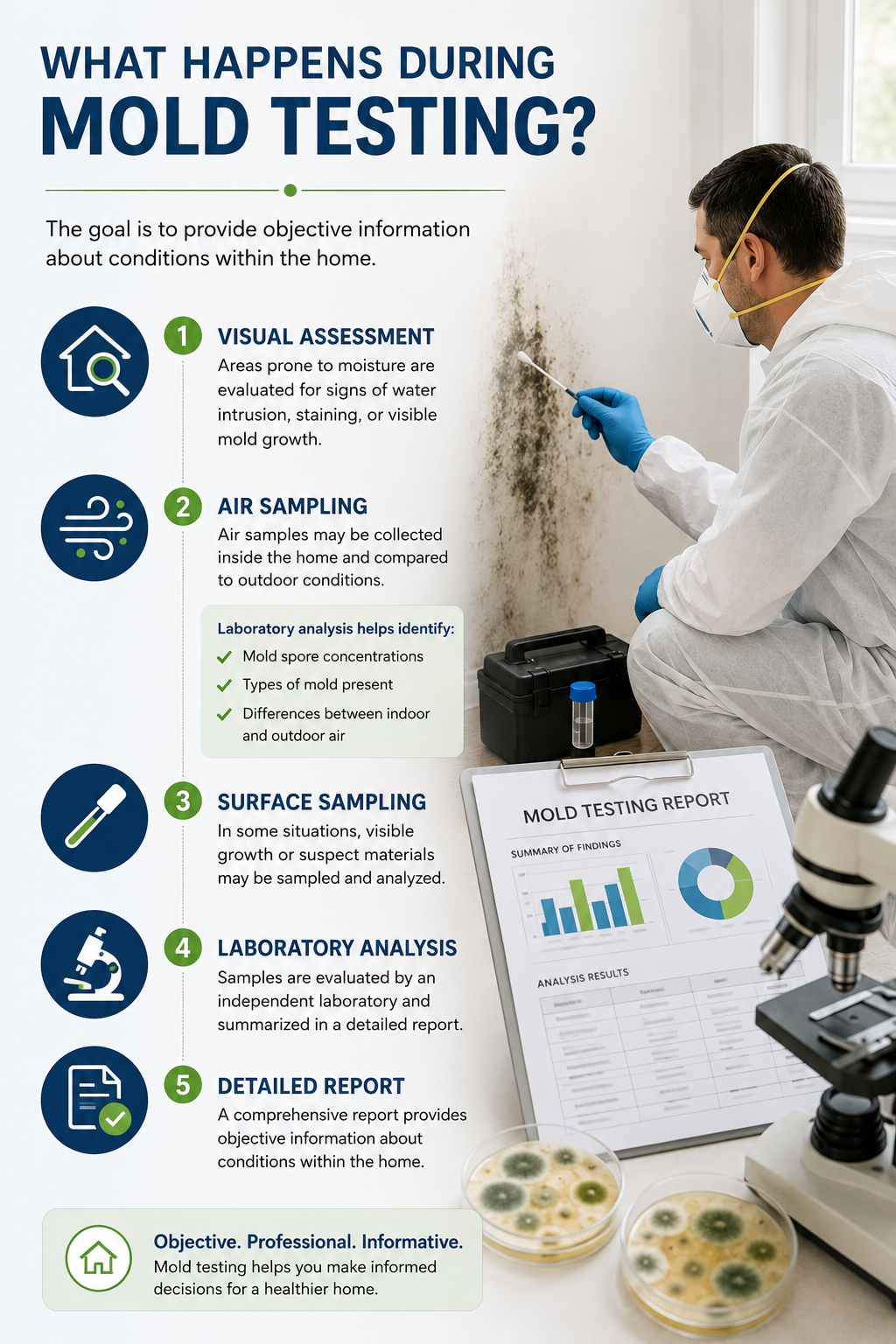
What Happens During Mold Testing?
Mold testing typically includes several components designed to provide a better understanding of indoor environmental conditions.
Visual Assessment
- Areas prone to moisture are evaluated for signs of water intrusion, staining, or visible mold growth.
Air Sampling
- Air samples may be collected inside the home and compared to outdoor conditions.
- Laboratory analysis helps identify
- Mold spore concentrations
- Types of mold present
- Differences between indoor and outdoor air
Surface Sampling
- In some situations, visible growth or suspect materials may be sampled and analyzed.
Laboratory Analysis
- Samples are evaluated by an independent laboratory and summarized in a detailed report.
The goal is to provide objective information about conditions within the home.
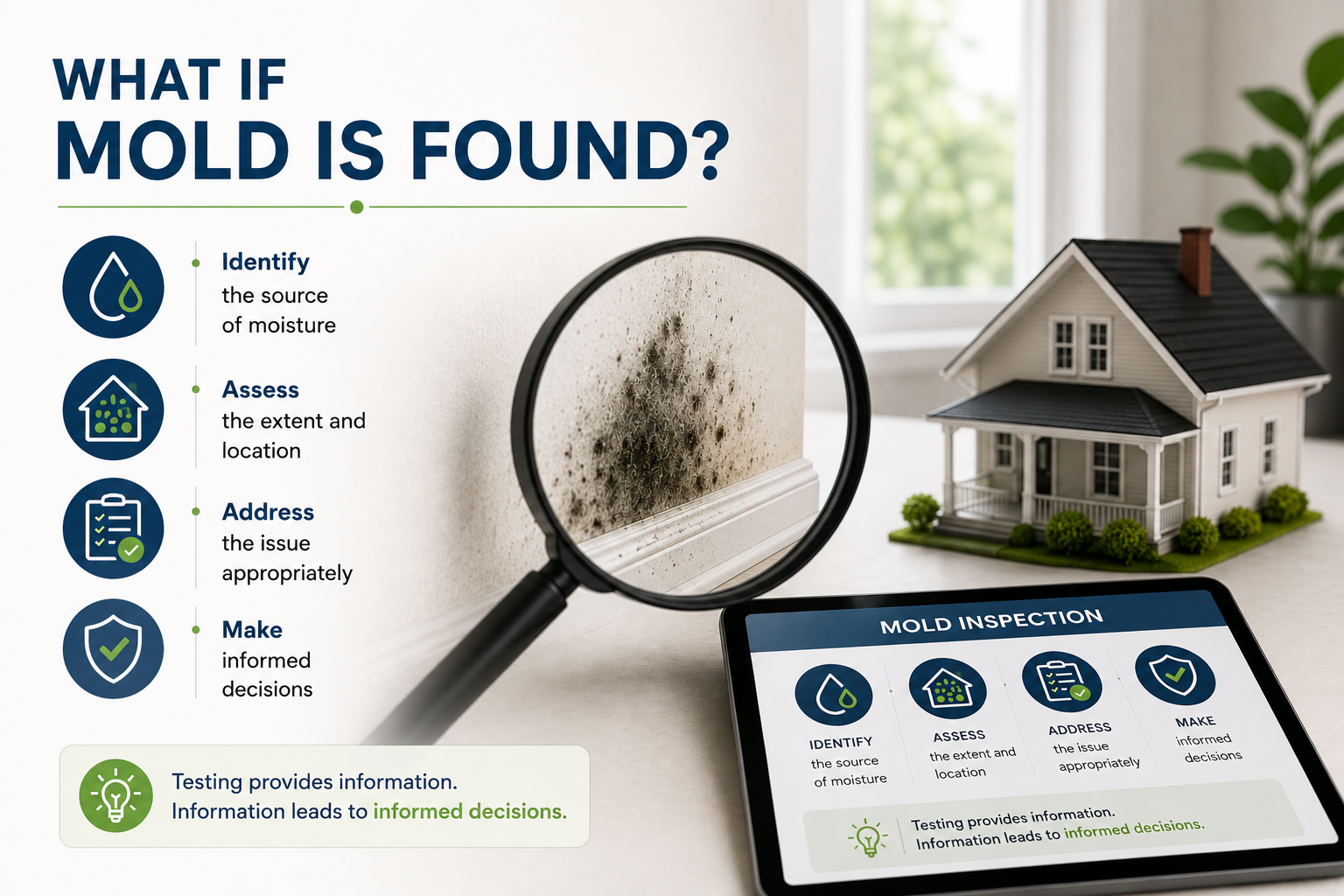
What If Mold Is Found?
Many buyers immediately assume that discovering mold means they should walk away from the home.
In most situations, that’s not necessarily the case.
The appropriate response depends on:
- The extent of the issue
- The source of moisture
- The location of the mold
- The cost of remediation
Many mold-related issues can be addressed successfully when the source of moisture is identified and corrected.
The important thing is knowing the condition exists before you close on the property.
Testing provides information.
Information leads to informed decisions.
Why Mold Testing Can Be Especially Valuable in Colorado
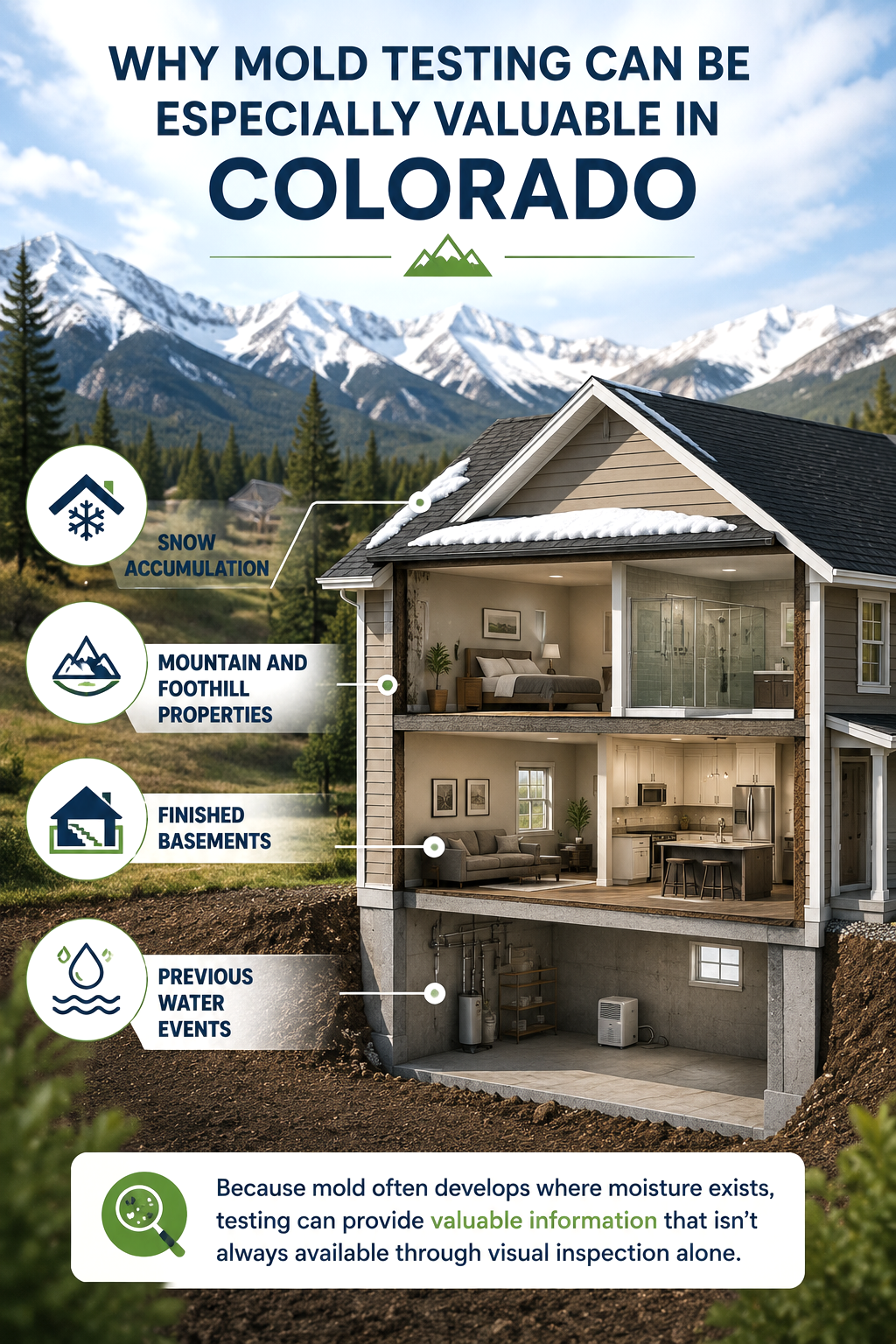
Colorado’s climate creates unique conditions that can contribute to mold concerns.
Examples include:
Snow Accumulation
- Melting snow can contribute to moisture intrusion around foundations and roofing systems.
Mountain and Foothill Properties
- Weather exposure and seasonal moisture conditions may increase the potential for hidden water intrusion.
Finished Basements
- Many Colorado homes contain finished basements where moisture concerns may remain hidden behind finished surfaces.
Previous Water Events
- Properties that have experienced plumbing failures, flooding, or moisture intrusion may warrant additional evaluation.
Because mold often develops where moisture exists, testing can provide valuable information that isn’t always available through visual inspection alone.
Colorado Buyer Tip
If a home shows signs of previous water intrusion, staining, musty odors, elevated humidity, or moisture concerns, mold testing may provide valuable information before closing.
The cost of testing is often small compared to the peace of mind it can provide.
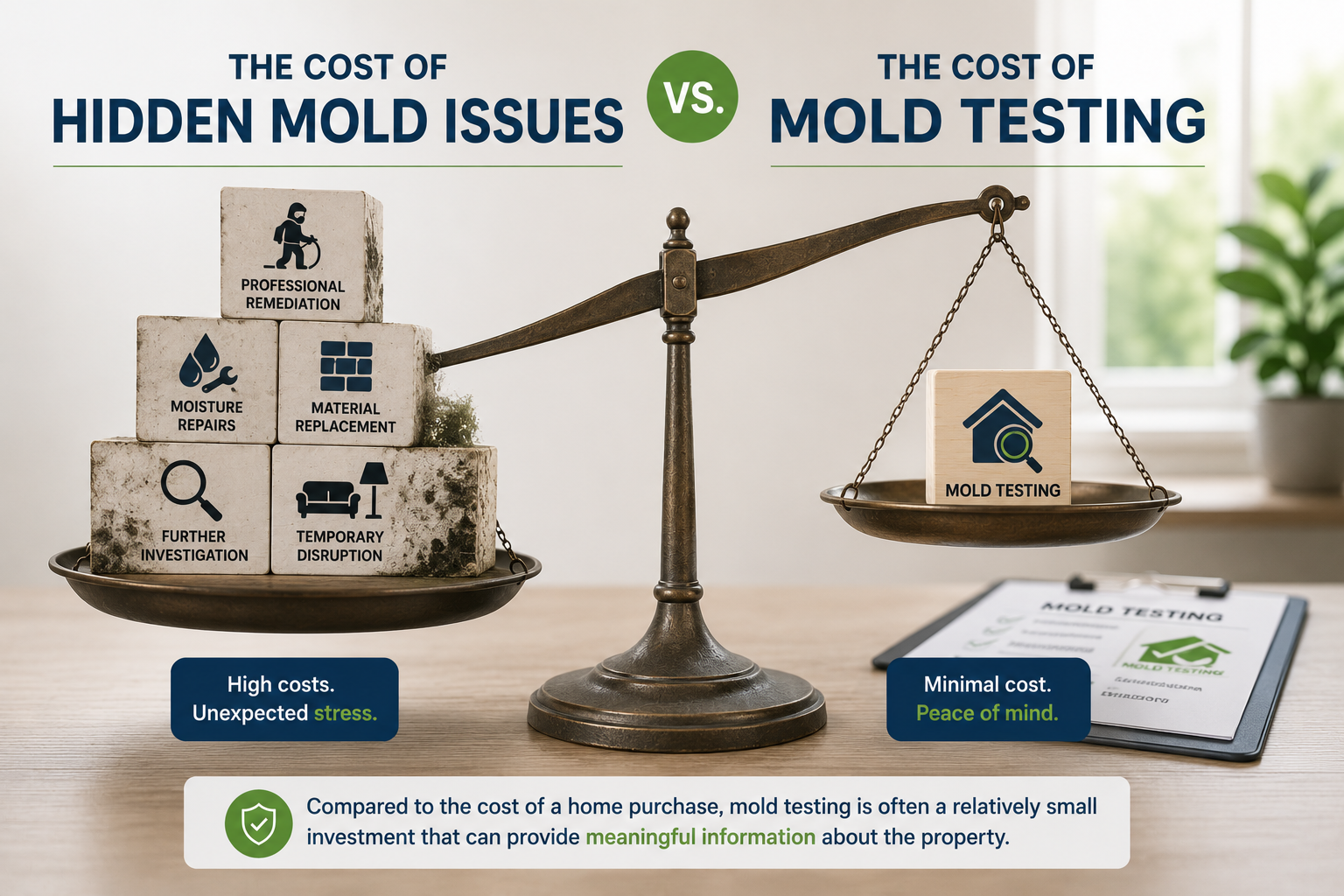
The Cost of Mold Testing vs. The Cost of Surprise
For many buyers, mold testing comes down to one simple question:
Is it worth it?
Consider the alternative.
Discovering a hidden mold issue after closing may involve:
- Further investigation
- Moisture repairs
- Material replacement
- Professional remediation
- Temporary disruption of living spaces
Compared to the cost of a home purchase, mold testing is often a relatively small investment that can provide meaningful information about the property.
Final Thoughts
Mold isn’t always visible.
It doesn’t always announce its presence.
And in many cases, it remains hidden until moisture problems become more significant.
That’s why mold testing can be such a valuable part of the home-buying process.
It helps uncover what may be happening behind walls, beneath flooring, and in areas that aren’t visible during a typical showing.
Because when you’re making one of the largest investments of your life, understanding the home’s condition matters.
A mold test doesn’t tell you whether to buy a home.
It helps you better understand the home you’re buying.
And that’s exactly what a quality inspection process is all about:
Clarity.
Confidence.
And peace of mind before closing.
Frequently Asked Questions (FAQs)
Possibly. Mold often develops in hidden locations such as behind walls, beneath flooring, inside crawlspaces, attics, HVAC systems, and other concealed areas. A home may appear clean and well-maintained while elevated mold levels remain hidden from view. Mold testing can help identify concerns that are not visible during a typical walkthrough or home inspection.
Mold testing may be worth considering if the home has:
- A history of water intrusion
- Musty odors
- Visible staining
- Elevated humidity levels
- Previous flooding or plumbing leaks
- Finished basements or crawlspaces
- Areas showing signs of moisture-related concerns
These conditions do not automatically mean mold is present, but they may warrant additional evaluation.
A typical mold assessment may include a visual evaluation of moisture-prone areas, air sampling, surface sampling when appropriate, and laboratory analysis. The testing process helps identify mold spore concentrations, compare indoor and outdoor air conditions, and provide objective information about the home’s indoor environment.
Not necessarily. The appropriate response depends on factors such as the extent of the mold, the source of moisture, the location of the affected area, and the cost of remediation. Many mold-related concerns can be successfully addressed when the underlying moisture problem is identified and corrected. The goal of testing is to provide information so buyers can make informed decisions.
Mold typically develops because moisture is present. Common causes include roof leaks, plumbing leaks, poor drainage, condensation, flooding, ventilation deficiencies, and elevated indoor humidity. In many situations, correcting the moisture source is just as important as addressing the mold itself.
Yes. Mold testing is often performed to better understand indoor environmental conditions and air quality within a home. While individuals react differently, some people—particularly those with allergies, asthma, respiratory sensitivities, or compromised immune systems—may be more concerned about elevated mold levels. Testing can provide valuable information about conditions that may not be visible during a standard home inspection.