

The Most Expensive Part of the Property You May Never See
Imagine moving into your dream home.
The inspection went well.
The roof looks great.
The furnace is working.
The plumbing fixtures function properly.
Everything seems perfect.
Then, a few months later, sewage begins surfacing in the backyard.
The culprit?
A failing septic system buried beneath the property.
A repair estimate arrives.
$18,000.
Suddenly, the septic system you never thought about becomes one of the most important systems on the entire property.
The reality is that septic systems are largely hidden from view. Unlike a roof, furnace, or water heater, most of the system is underground, making it easy for problems to go unnoticed until they become expensive.
If you’re buying a home with a septic system in Colorado, a professional septic inspection can be one of the smartest investments you make.
If you're buying a home with a septic system in Colorado, a professional septic inspection can be one of the smartest investments you make. [Septic Problems Stink]
BAM Home Inspections Share to X
Why Septic Systems Matter in Colorado
Many Front Range communities rely on onsite wastewater treatment systems because municipal sewer service isn’t available.
This is especially common in areas such as:
- Black Forest
- Peyton
- Falcon
- Calhan
- Elbert
- Monument
- Woodland Park
- Rural Colorado Springs
- Many mountain and acreage properties throughout Colorado
Thousands of Colorado homebuyers purchase homes with septic systems every year.
Many of them have never owned one before.
Unlike homes connected to municipal sewer systems, homeowners are responsible for maintaining and repairing their septic systems.
Understanding the condition of that system before closing is critical.
Thousands of Colorado homebuyers purchase homes with septic systems every year. Many of them have never owned one before. Unlike homes connected to municipal sewer systems, homeowners are responsible for maintaining and repairing their septic systems. [Septic Problems Stink]
BAM Home Inspections Share to X
Septic Systems 101: How Do They Work?
A septic system performs a simple but important job:
It treats and disperses wastewater generated by the home.
A typical septic system consists of:
- Septic Tank
- The tank receives wastewater from the home and separates solids from liquids.
- The tank receives wastewater from the home and separates solids from liquids.
- Distribution System
- The wastewater flows through pipes that distribute effluent into the absorption field.
- The wastewater flows through pipes that distribute effluent into the absorption field.
- Absorption Field (Leach Field)
- The soil helps filter and treat wastewater before it returns to the environment.
When functioning properly, the process is largely invisible.
When something goes wrong, repairs can be costly.
A septic system treats and disperses wastewater generated by the home. The system typically consists of the septic tank, distribution system, and absorption field--where the soil helps filter and treat wastewater before it returns to the environment. [Septic Problems Stink]
BAM Home Inspections Share to X
What Happens During a Septic Inspection?
Many buyers assume a septic inspection simply involves checking whether the toilets flush.
In reality, a professional septic inspection is far more comprehensive.
Depending on the system and site conditions, an inspection may include:
Locating System Components:
The inspector identifies the tank, distribution system, and other accessible components.
Opening and Evaluating the Tank
The tank is inspected for:
Structural condition
Water levels
Baffle condition
Signs of deterioration
Evidence of improper operation
Measuring Sludge and Scum Levels
Excessive buildup may indicate the system requires servicing.
Evaluating System Performance
The inspector assesses whether wastewater is flowing and functioning as intended.
Inspecting the Absorption Field
The field is evaluated for signs of failure such as:
Standing water
Saturated soil
Sewage odors
Poor drainage
The goal is to better understand the condition of the system and identify concerns before they become the buyer’s responsibility.
Common Septic Problems Found During Inspections
Many septic issues develop slowly and remain hidden underground.
Some of the more common concerns include:
Deferred Maintenance
Systems that have not been pumped or maintained on a regular schedule.
Damaged or Missing Components
Broken lids, deteriorated baffles, damaged risers, or missing access points.
Distribution Problems
Wastewater may not be dispersing evenly throughout the system.
Drainage Issues
Excess surface water can impact system performance and longevity.
Absorption Field Concerns
Saturated soils, ponding water, or signs of system failure.
Aging Systems
Some systems may simply be approaching the end of their useful service life.
Many of these issues are not obvious during a typical property showing.
That’s why a septic inspection can be so valuable.
Many septic issues are not obvious during a typical property showing. That's why a septic inspection can be so valuable. [Septic Problems Stink]
BAM Home Inspections Share to X
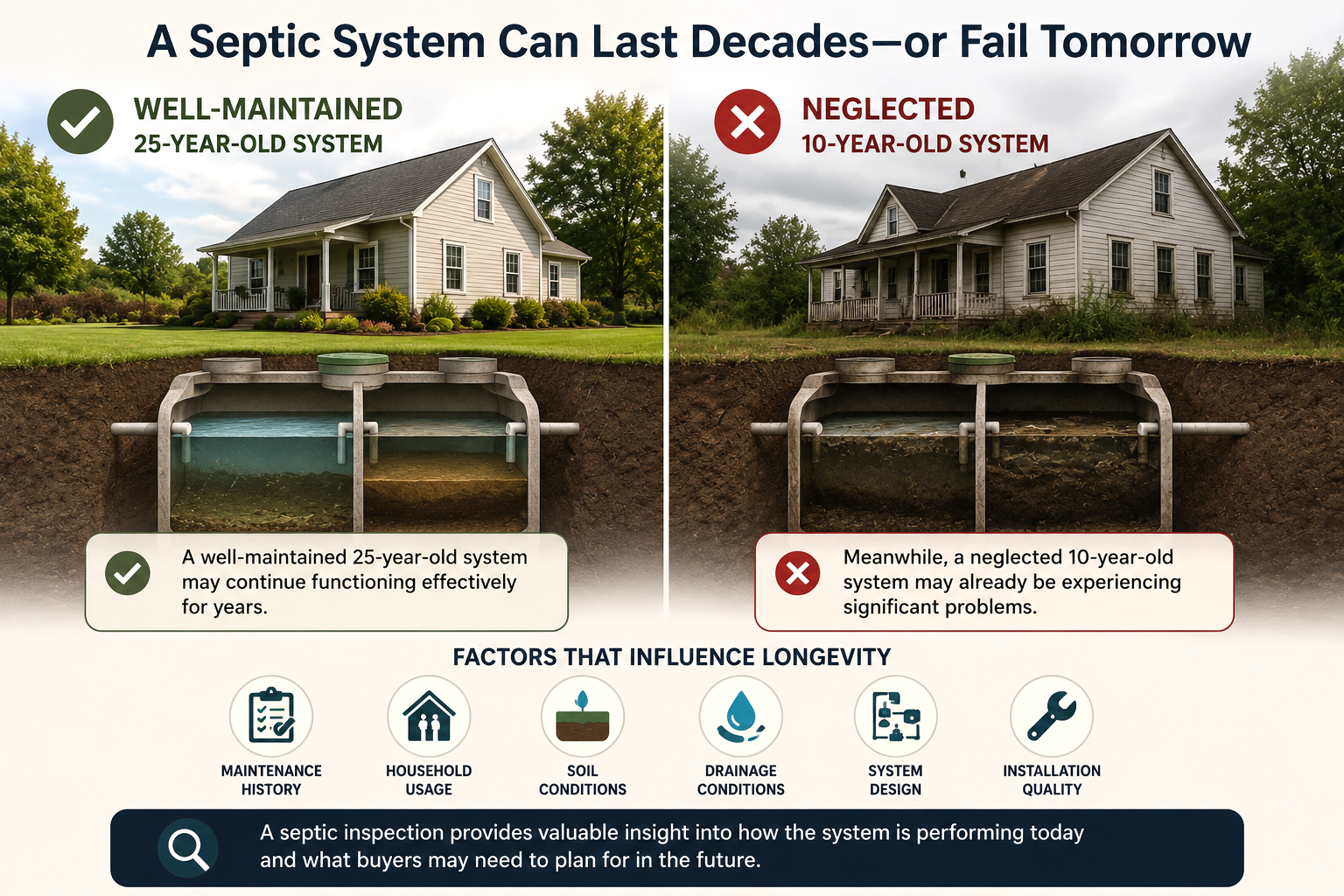
A Septic System Can Last Decades—or Fail Tomorrow
One of the biggest misconceptions about septic systems is that age alone determines their condition.
While age is certainly a factor, maintenance often plays an even bigger role.
For example:
A well-maintained 25-year-old system may continue functioning effectively for years.
Meanwhile, a neglected 10-year-old system may already be experiencing significant problems.
Factors that influence longevity include:
- Maintenance history
- Household usage
- Soil conditions
- Drainage conditions
- System design
- Installation quality
A septic inspection provides valuable insight into how the system is performing today and what buyers may need to plan for in the future.
How Septic Inspections Protect Homebuyers
The purpose of a septic inspection isn't simply to identify problems. It's to help buyers make informed decisions. A professional inspection can help. [Septic Problems Stink]
BAM Home Inspections Share to X
Colorado Buyer Tip
If you’re purchasing a property in Black Forest, Peyton, Falcon, Elbert, Monument, Woodland Park, or other rural areas, don’t assume the septic system is functioning properly simply because the toilets flush.
Many significant septic concerns remain hidden underground and cannot be evaluated during a standard home inspection alone.
Testing and inspection provide information that simply cannot be obtained through a visual walkthrough of the property.
The purpose of a septic inspection isn’t simply to identify problems.
It’s to help buyers make informed decisions.
A professional inspection can help:
Avoid Expensive Surprises
Major repairs or replacement costs can reach tens of thousands of dollars.
Support Negotiations
Buyers may be able to negotiate repairs, replacements, or credits before closing.
Improve Financial Planning
Understanding the condition of the system helps buyers budget for future maintenance and repairs.
Protect Health and Safety
Properly functioning systems help prevent sewage backups and environmental contamination.
Provide Peace of Mind
Knowing the condition of the system can help buyers move forward with greater confidence.
Never Owned a Septic System?
You’re not alone.
Many Colorado buyers are moving from neighborhoods served by municipal sewer systems and have little experience with septic systems.
The good news is that owning a septic system doesn’t have to be complicated.
Routine maintenance and periodic inspections can help extend the life of the system and reduce the likelihood of unexpected problems.
During your inspection, don’t hesitate to ask questions such as:
- How old is the system?
- When was it last serviced?
- What maintenance should I expect?
- Are there signs of concern?
- What should I monitor as a homeowner?
The more you understand the system, the more confident you’ll feel after moving in.
The good news is that owning a septic system doesn't have to be complicated. Routine maintenance and periodic inspections can help extend the life of the system and reduce the likelihood of unexpected problems. [Septic Problems Stink]
BAM Home Inspections Share to X

The Cost of Skipping a Septic Inspection

Because septic systems are hidden underground, buyers sometimes assume everything is fine if there are no obvious signs of trouble.
Unfortunately, that assumption can be expensive.
A failing septic system can impact:
- Property value
- Future resale opportunities
- Health and safety
- Repair budgets
- Overall enjoyment of the property
Compared to the cost of a home purchase, a septic inspection is a relatively small investment that can provide significant value.
Final Thoughts
The septic system may not be visible when you tour the property.
You won’t find it featured in listing photos.
It probably won’t be discussed during the open house.
But it may be one of the most important systems on the entire property.
A professional septic inspection helps uncover what lies beneath the surface before it becomes your responsibility.
Because when you’re making one of the largest investments of your life, what you can’t see can absolutely hurt you.
A septic inspection provides something every buyer deserves:
Clarity.
Confidence.
And peace of mind before closing.
Frequently Asked Questions (FAQs)
Yes. A septic system can appear to function normally while still having significant hidden defects. Many septic problems develop underground and may not produce obvious symptoms until the system begins to fail. A professional septic inspection evaluates components and conditions that cannot be assessed during a typical walkthrough of the property.
A professional septic inspection often includes locating system components, opening and evaluating the septic tank, inspecting baffles and structural conditions, measuring sludge and scum levels, assessing system performance, and evaluating the absorption field for signs of failure. The goal is to better understand the condition of the system before the buyer takes ownership.
There is no single lifespan for every septic system. While age is important, maintenance often plays an even larger role in determining longevity. A well-maintained older system may continue functioning effectively for many years, while a newer system that has been neglected may already be experiencing problems. Factors such as maintenance history, soil conditions, usage patterns, and installation quality all influence service life.
Common concerns include deferred maintenance, damaged or missing components, distribution issues, drainage problems, saturated absorption fields, and aging systems nearing the end of their useful life. Because many of these issues occur underground, they often go unnoticed until costly repairs are needed.
Not necessarily. The purpose of the inspection is to provide information so buyers can make informed decisions. Depending on the findings, buyers may be able to negotiate repairs, request seller concessions, budget for future maintenance, or simply gain a clearer understanding of the property’s condition before closing.
Not at all. Many Colorado buyers purchase homes with septic systems for the first time, particularly in areas such as Black Forest, Peyton, Falcon, Monument, Woodland Park, and other rural communities. Septic systems are generally reliable when properly maintained. A professional inspection can help you understand the system’s condition, maintenance requirements, and any potential concerns so you can move forward with confidence.