
The Most Expensive Problem You May Never See
Imagine moving into your dream home.
The inspection went well.
The roof is in good condition.
The furnace works.
The kitchen is beautiful.
Everything seems perfect.
Then one morning, the toilets won’t flush.
The shower begins backing up.
Wastewater starts appearing in a basement drain.
The culprit?
A damaged sewer line buried beneath the property.
The repair estimate?
$14,000.
Unfortunately, sewer line problems are among the most expensive hidden defects a homebuyer can inherit. And because they’re underground, they often remain completely invisible during a typical property showing.
That’s why sewer scope inspections have become one of the smartest investments a buyer can make.
Unfortunately, sewer line problems are among the most expensive hidden defects a homebuyer can inherit. And because they're underground, they often remain completely invisible during a typical property showing. [Down the Drain]
BAM Home Inspections Share to X
Why Sewer Scope Inspections Matter
The sewer line is responsible for carrying wastewater away from the home and into the municipal sewer system or septic system. When it's functioning properly, you'll never think about it. When it fails, you'll think about it a lot. [Down the Drain]
BAM Home Inspections Share to X
Most buyers focus on what they can see.
The roof.
The siding.
The kitchen.
The flooring.
But one of the most important systems in the home is hidden entirely underground.
The sewer line is responsible for carrying wastewater away from the home and into the municipal sewer system or septic system.
When it’s functioning properly, you’ll never think about it.
When it fails, you’ll think about it a lot.
Unfortunately, sewer line problems can be expensive, disruptive, and difficult to diagnose without specialized equipment.
A sewer scope inspection allows buyers to evaluate the condition of the line before closing, helping avoid costly surprises after moving in.
What Is a Sewer Scope Inspection?
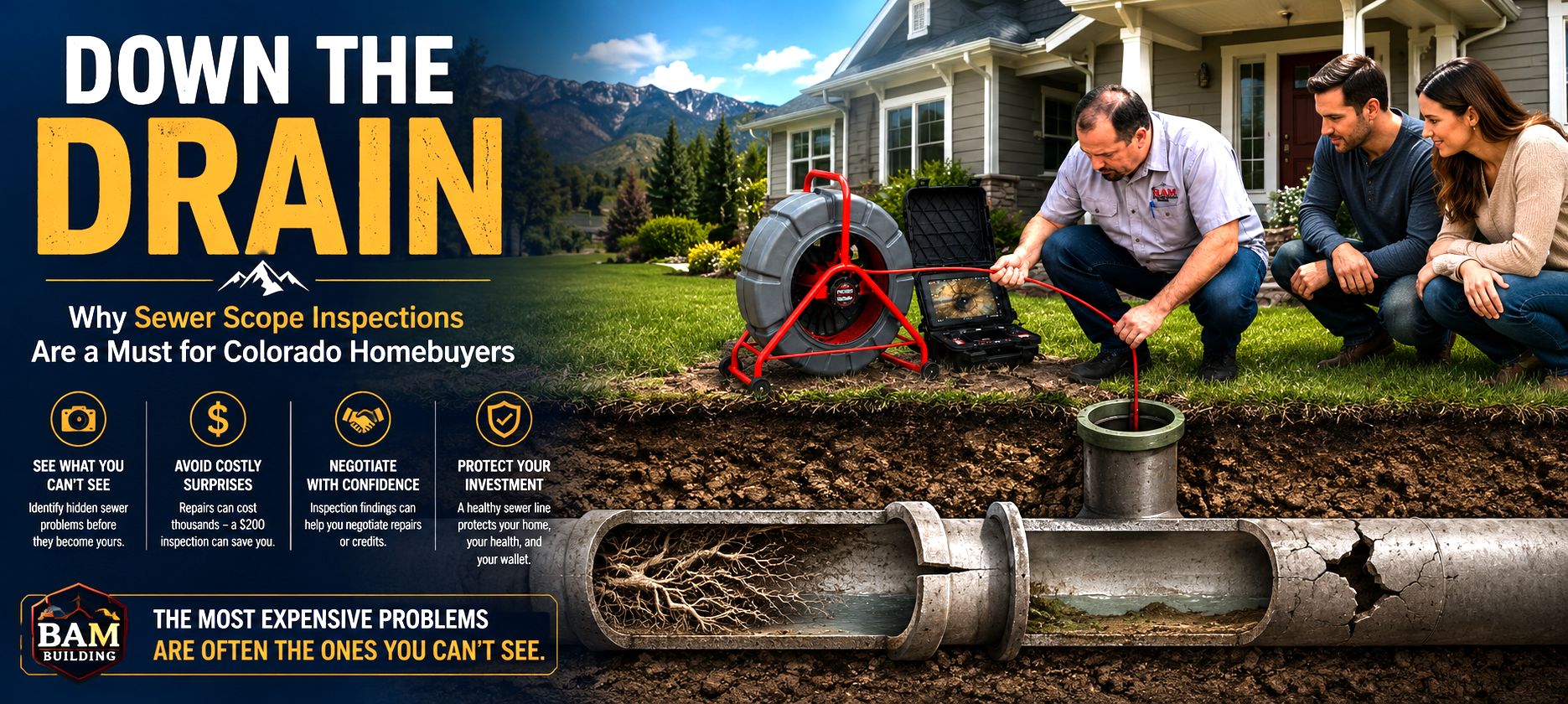
A sewer scope inspection uses a specialized waterproof camera to examine the inside of a home’s sewer line.
The camera is inserted through an accessible cleanout and advanced through the pipe while the specialist observes and records the condition of the line.
This allows inspectors to identify problems such as:
- Tree root intrusion
- Cracks or fractures
- Pipe separations
- Offsets
- Bellies (low spots)
- Corrosion
- Deterioration
- Blockages
- Improper repairs
The process provides a clear picture of what’s happening beneath the surface—something that simply isn’t possible during a visual walkthrough of the property.
A sewer scope inspection uses a specialized waterproof camera to examine the inside of a home's sewer line. The camera is inserted through an accessible cleanout and advanced through the pipe while the specialist observes and records the condition of the line. [Down the Drain]
BAM Home Inspections Share to X
Why a Standard Home Inspection Isn't Enough
While a home inspection evaluates many of the home's major systems and components, inspectors typically cannot see inside underground sewer lines during a standard inspection. [Down the Drain]
BAM Home Inspections Share to X
One of the most common misconceptions among buyers is:
“The home inspector already checked everything.”
While a home inspection visually evaluates many of the home’s major systems and components, inspectors typically cannot see inside underground sewer lines during a standard inspection.
Think about it this way:
A home inspector can observe the plumbing fixtures.
They can run water.
They can evaluate visible plumbing components.
But they cannot see what is happening 50, 75, or 100 feet underground.
A sewer scope inspection fills that gap.
It provides information about one of the few major systems in the home that is otherwise hidden from view.
Common Sewer Problems We Find
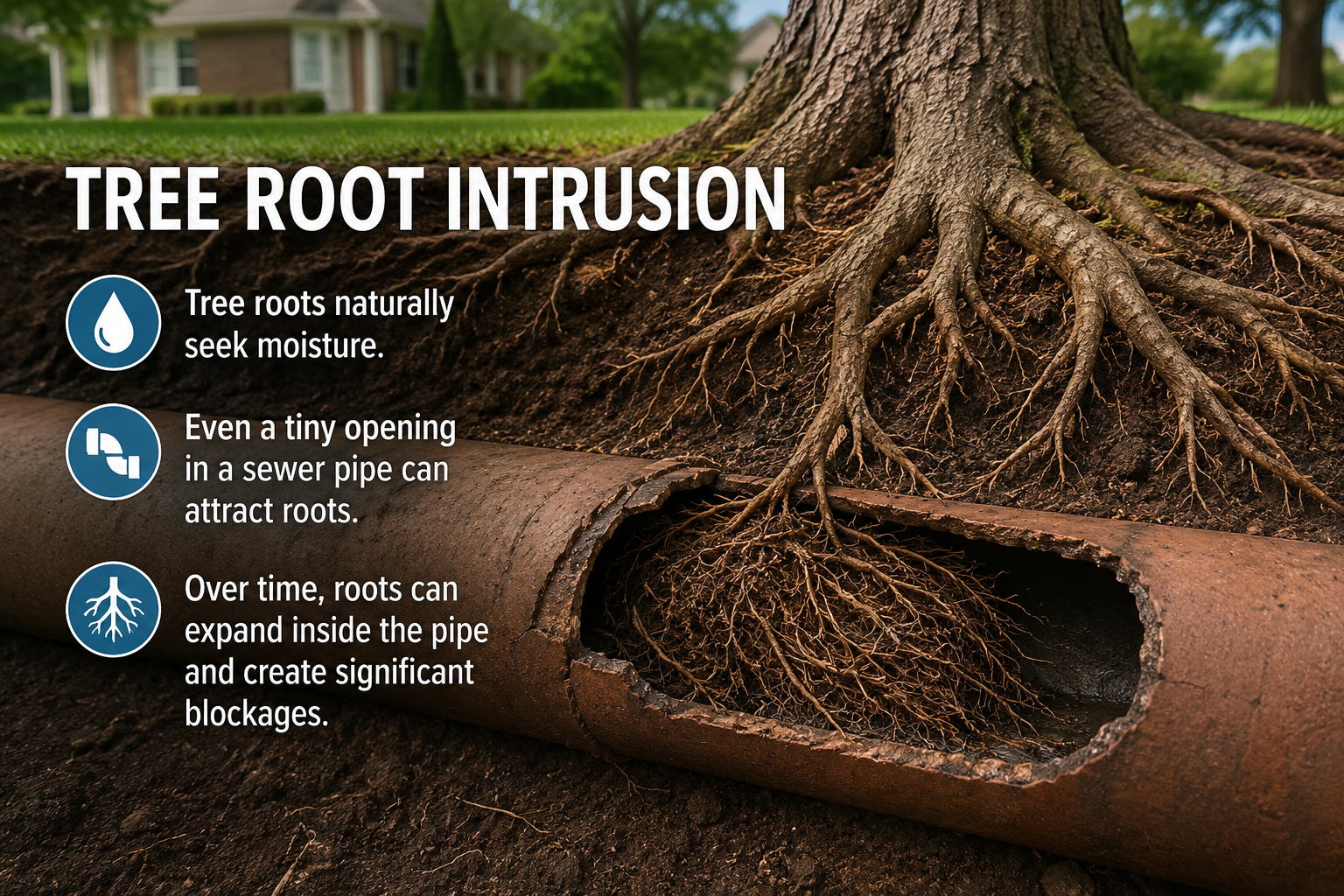
Tree Root Intrusion
Tree roots naturally seek moisture. Even a tiny opening in a sewer pipe can attract roots. Over time, roots can expand inside the pipe and create significant blockages.
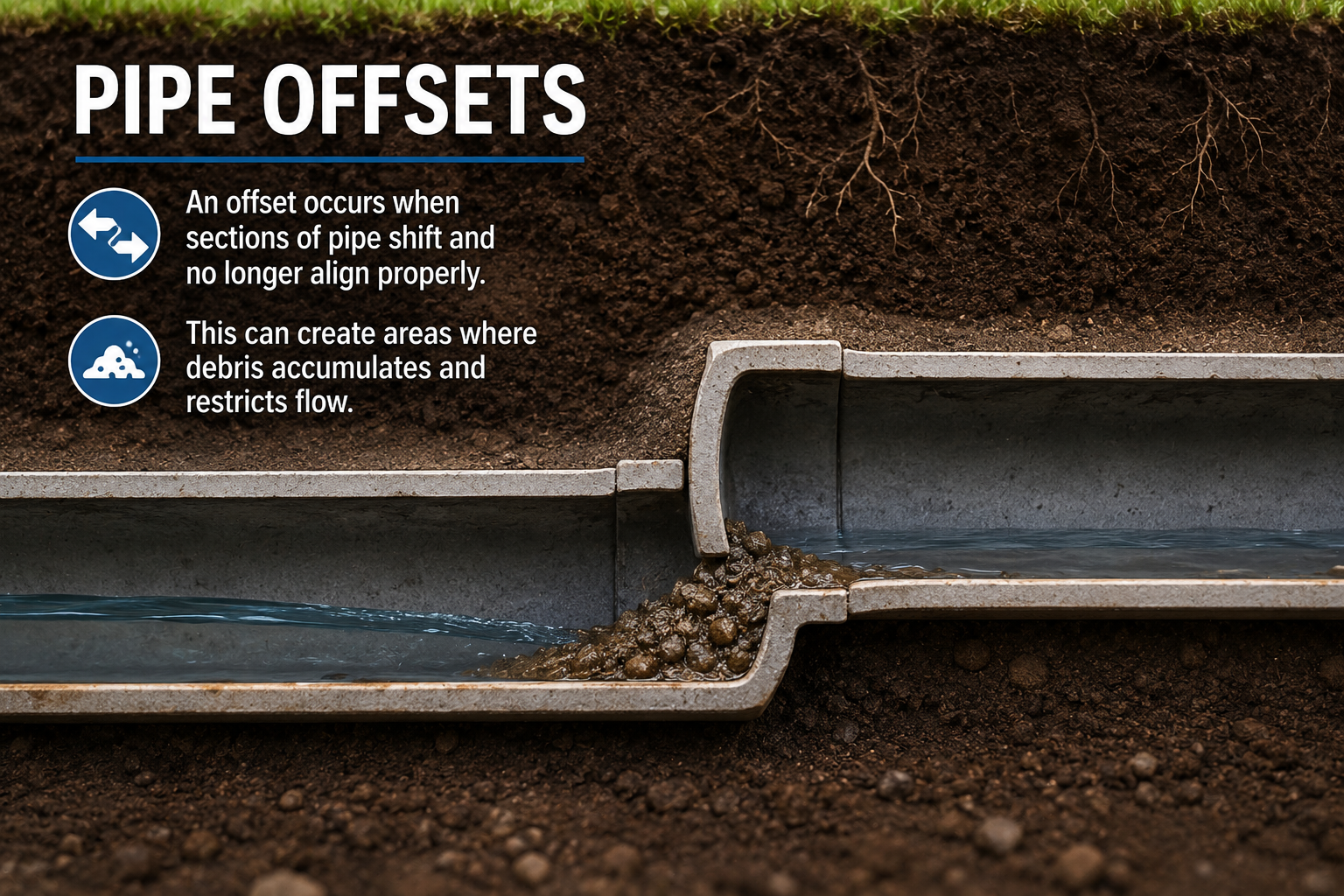
Pipe Offsets
An offset occurs when sections of pipe shift and no longer align properly. This can create areas where debris accumulates and restricts flow.
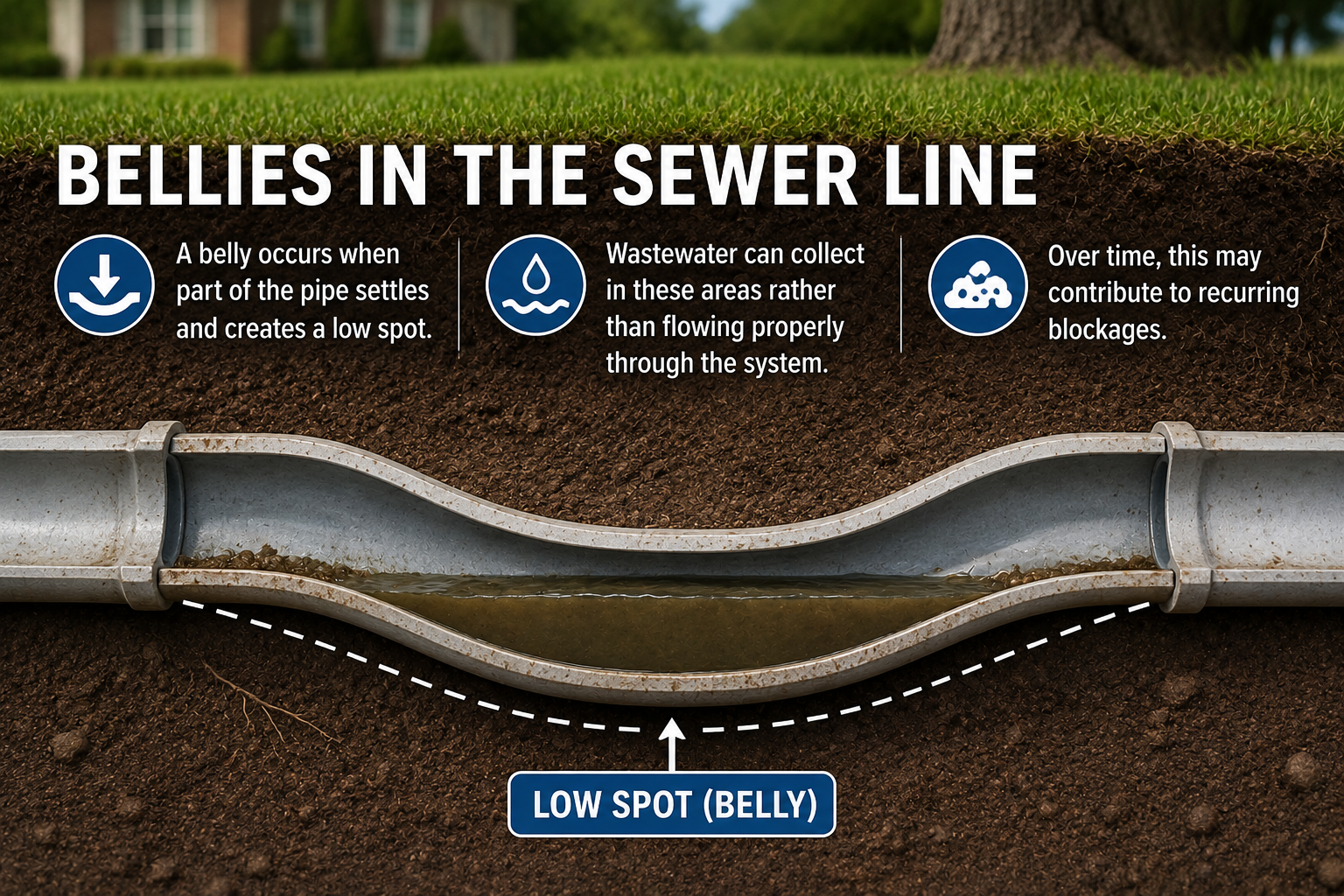
Bellies in the Sewer Line
A belly occurs when part of the pipe settles and creates a low spot. Wastewater can collect in these areas rather than flowing properly through the system. Over time, this may contribute to recurring blockages.
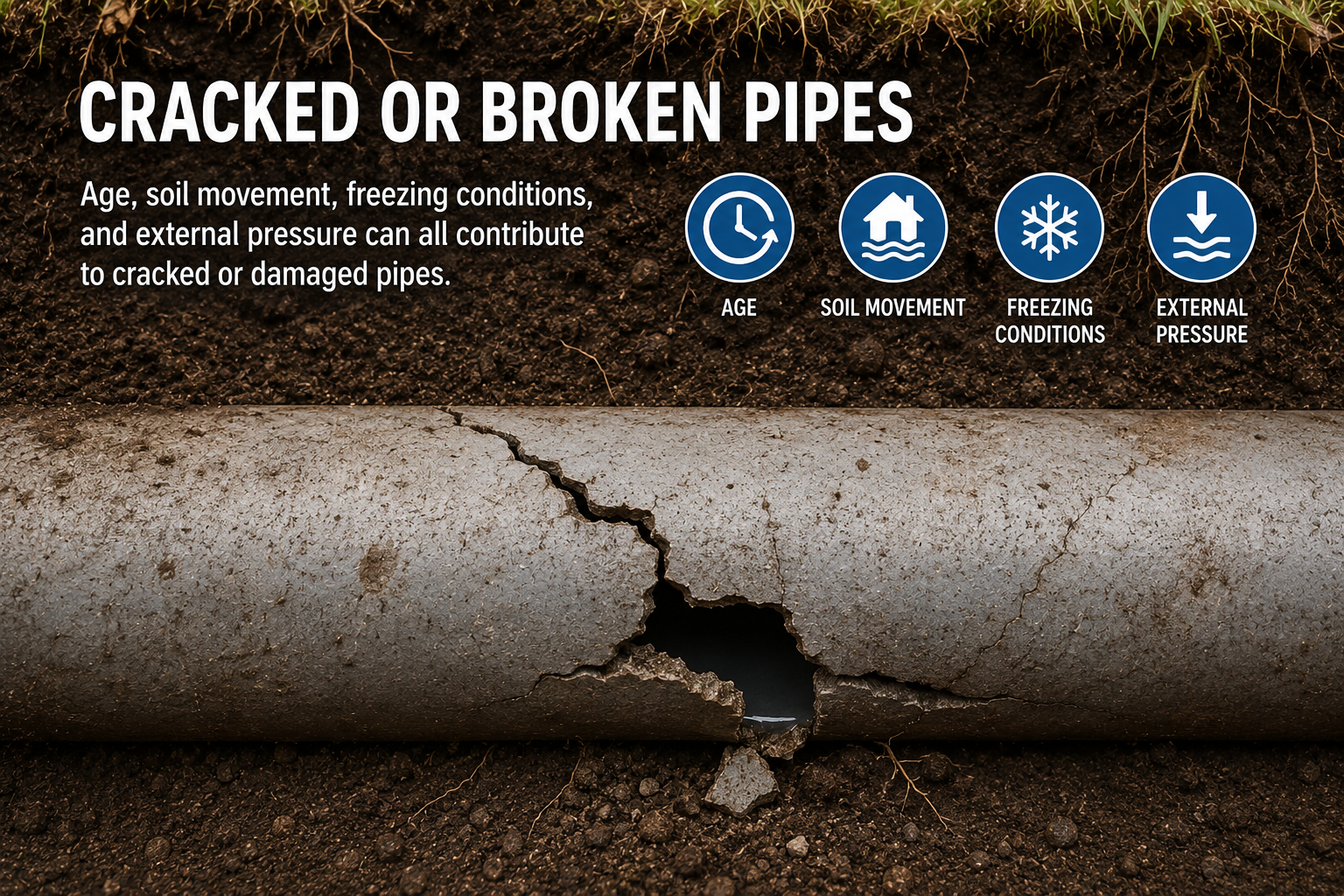
Cracked or Broken Pipes
Age, soil movement, freezing conditions, and external pressure can all contribute to cracked or damaged pipes.
Deteriorated Materials
Older homes may contain sewer lines made from materials such as:
- Clay pipe
- Cast iron
- Orangeburg pipe
These materials can become more susceptible to deterioration as they age.
Why Sewer Scope Inspections Are Especially Important in Colorado
Colorado presents several unique conditions that can impact underground sewer lines.
Mature Trees:
Many established neighborhoods contain large trees whose roots can infiltrate sewer lines.
Expansive Soils
Certain areas along Colorado’s Front Range experience soil movement that can affect underground utilities.
Freeze-Thaw Cycles
Colorado’s climate can contribute to shifting soils and stress on buried piping systems.
Older Housing Stock
Many older Colorado homes contain aging sewer infrastructure that may be approaching the end of its useful service life.
Because of these factors, sewer scope inspections are particularly valuable throughout Colorado Springs, Monument, Black Forest, Woodland Park, Denver, and many other Front Range communities.
A $200 Inspection Could Save Thousands
One of the most compelling reasons to perform a sewer scope inspection is simple:
The cost of the inspection is often insignificant compared to the potential cost of repairs.
Potential sewer-related expenses may include:
- Spot repairs
- Excavation
- Pipe replacement
- Concrete removal and replacement
- Landscaping restoration
- Trenchless repairs
Depending on the situation, repairs can range from a few thousand dollars to well over $20,000.
For many buyers, spending a few hundred dollars on a sewer scope inspection provides valuable information and peace of mind.
Colorado Buyer Tip:
A sewer line can be functioning today and still have significant defects.
Many serious sewer issues remain hidden underground and cannot be identified without a camera inspection.
If you’re buying a home—especially an older home or a property with mature trees—a sewer scope inspection is one of the best ways to understand the condition of the system before it becomes your responsibility.
How Sewer Scope Inspections Protect Homebuyers

A sewer scope inspection does more than identify defects.
It helps buyers make informed decisions.
The information obtained during the inspection may help buyers:
- Avoid Costly Surprises
- Unexpected sewer repairs can place significant strain on a homeowner’s budget.
- Support Negotiations
- Inspection findings may provide an opportunity to negotiate repairs, replacements, or seller concessions.
- Plan for Future Expenses
- Understanding the condition of the sewer line allows buyers to budget appropriately.
- Gain Peace of Mind
- Knowing the condition of the sewer line can eliminate uncertainty and increase confidence in the purchase.
When Should You Consider a Sewer Scope Inspection?
While sewer scope inspections are valuable for almost any home purchase, they are especially recommended when:
✓ The home was built before 1990
✓ Mature trees are present
✓ The property has a history of drainage concerns
✓ The home contains older piping materials
✓ You’re purchasing your first home
✓ You simply want a more complete understanding of the property’s condition

Final Thoughts
The sewer line may be one of the most important systems in the home.
Yet it’s also one of the few systems you can’t see during a showing, walkthrough, or standard home inspection.
A sewer scope inspection helps reveal what’s happening beneath the surface before it becomes your responsibility.
Because when you’re making one of the largest investments of your life, what you can’t see can absolutely cost you.
For many Colorado homebuyers, a sewer scope inspection isn’t just an add-on service.
It’s one of the smartest investments they can make before closing.
Remember:
A sewer line problem doesn’t have to ruin your home purchase.
But discovering it before closing can save you thousands.
Frequently Asked Questions (FAQs)
Yes. A sewer line can appear to function normally and still have significant defects hidden underground. Problems such as root intrusion, pipe offsets, cracks, bellies, and deteriorated piping materials may not cause noticeable symptoms until a backup or failure occurs. A sewer scope inspection allows buyers to evaluate the condition of the line before it becomes their responsibility.
No. A standard home inspection evaluates many visible and accessible components of the home, but inspectors generally cannot see inside underground sewer lines during a typical inspection. A sewer scope inspection uses a specialized camera to evaluate the condition of the sewer line and identify defects that would otherwise remain hidden.
Some of the most common sewer line defects include:
- Tree root intrusion
- Pipe offsets
- Bellies (low spots)
- Cracked or broken pipes
- Corrosion and deterioration
- Blockages
- Improper repairs
Many of these issues develop gradually and may go unnoticed until they create significant drainage problems or require costly repairs.
While sewer scope inspections can be valuable for almost any property, they are especially important for older homes, homes with mature trees, and properties that may contain aging piping materials such as clay, cast iron, or Orangeburg pipe. These conditions can increase the likelihood of sewer line deterioration and root intrusion.
Finding a sewer defect doesn’t automatically mean you should walk away from the purchase. In many cases, the information can help buyers negotiate repairs, request seller concessions, budget for future improvements, or simply make a more informed decision about the property. The goal is to identify the issue before closing—not after an expensive backup occurs.
The cost depends on the nature and location of the problem. Repairs may involve spot repairs, excavation, trenchless repair methods, concrete replacement, or landscaping restoration. In some cases, sewer line repairs can cost several thousand dollars, while full replacements may exceed $20,000. This is one reason many buyers consider a sewer scope inspection one of the best values available during the home-buying process.