
The Answers May Matter More Than the Inspection Report Itself
After a home inspection, buyers often receive a report filled with photographs, observations, recommendations, and technical information.
For some, it can feel overwhelming.
A typical home inspection report may contain dozens—or even hundreds—of findings. Some are minor maintenance items. Others may warrant further attention. Most fall somewhere in between.
The challenge isn’t usually a lack of information.
The challenge is understanding what matters most.
That’s why one of the most valuable parts of the inspection process often isn’t the report itself—it’s the conversation you have with your inspector.
A quality home inspector doesn’t simply identify concerns. They help you understand them.
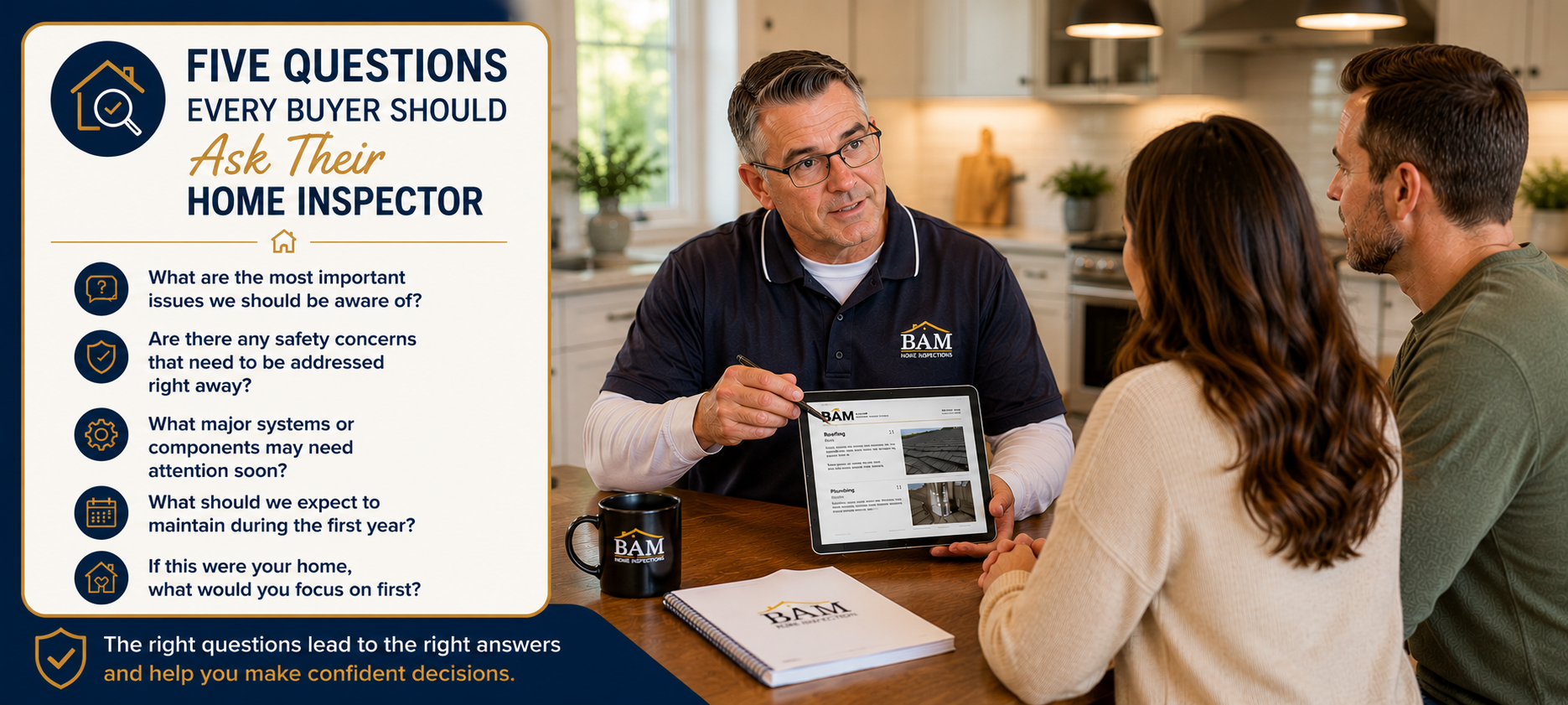
If you’re buying a home, these five questions can help you cut through the noise and focus on what truly matters.
A typical home inspection report may contain dozens—or even hundreds—of findings. Some are minor maintenance items. Others may warrant further attention. Most fall somewhere in between...The challenge isn't usually a lack of information. The challenge is understanding what matters most. [5 Questions Every Buyer Should Ask Their Home Inspector]
BAM Home Inspections Share to X
1. What Are the Most Important Issues We Should Be Aware Of?
This is often the best place to start.
Rather than getting lost in a long list of observations, ask your inspector to help identify the concerns that deserve the most attention.
A quality inspector can help separate:
- Significant concerns
- Moderate concerns
- Routine maintenance items
- Cosmetic issues
This allows you to focus on the findings that may have the greatest impact on your safety, finances, or future decision-making.
Remember:
Not every item in an inspection report carries the same level of importance.
Some concerns may simply be part of normal homeownership.
Others may require more immediate attention.
Your inspector can help you understand the difference.
Rather than getting lost in a long list of observations, ask your inspector to help identify the concerns that deserve the most attention. [5 Questions Every Buyer Should Ask Their Home Inspector]
BAM Home Inspections Share to X
2. Are There Any Safety Concerns That Need to Be Addressed Right Away?
Safety concerns deserve special attention because they can affect the well-being of you and your family.
Depending on the home, examples might include:
- Electrical hazards
- Missing safety devices
- Unsafe handrails or guardrails
- Active gas leaks
- Elevated radon levels
- Fire hazards
- Carbon monoxide concerns
Fortunately, many safety concerns are repairable.
The important thing is knowing they exist.
Ask your inspector:
“If my family were moving into this home tomorrow, are there any safety concerns you would recommend addressing first?”
The answer can help prioritize repairs and provide peace of mind.
"If my family were moving into this home tomorrow, are there any safety concerns you would recommend addressing first?" The answer can help prioritize repairs and provide peace of mind. [5 Questions Every Buyer Should Ask Their Home Inspector]
BAM Home Inspections Share to X
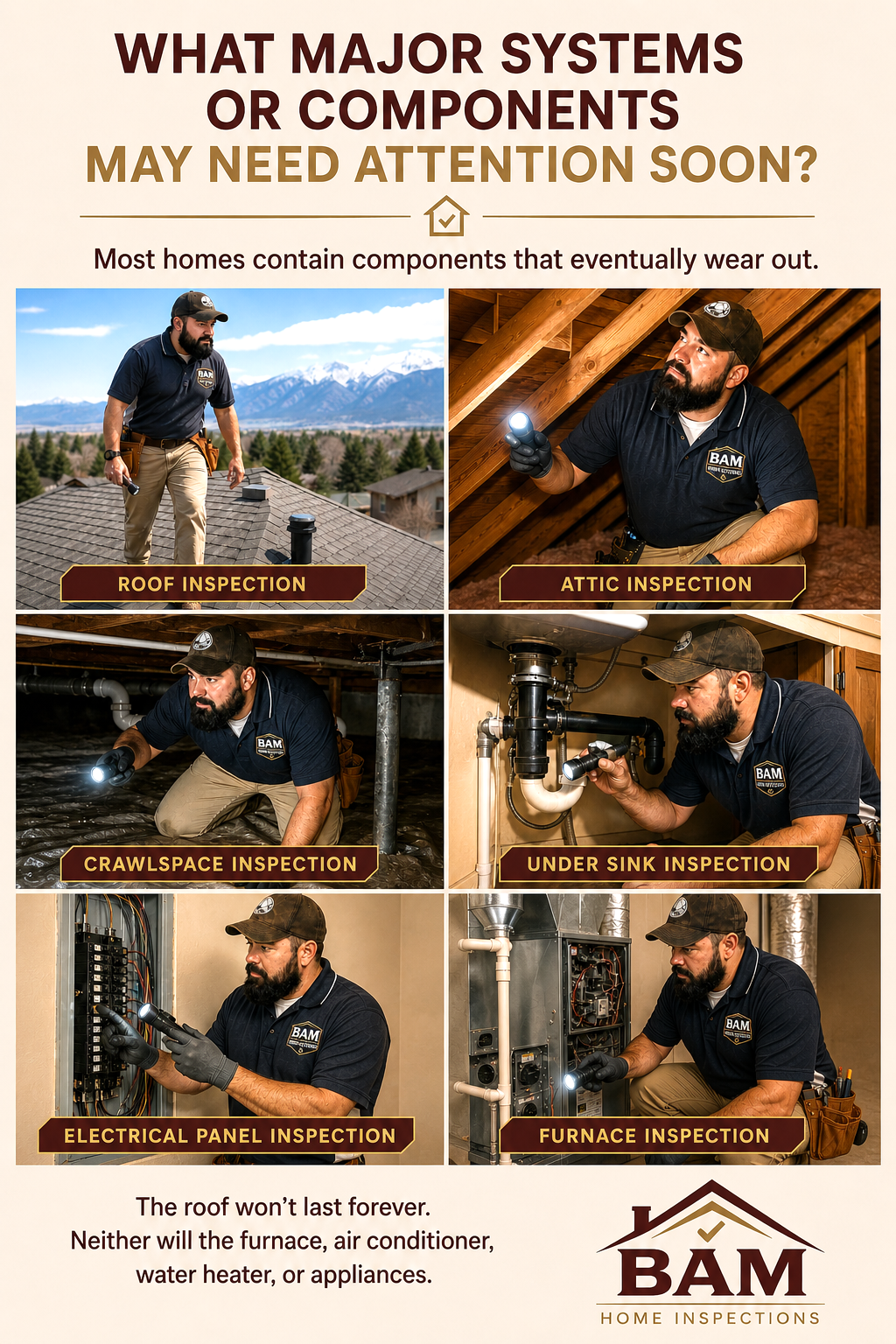
3. What Major Systems or Components May Need Attention Soon?
Most homes contain components that eventually wear out.
The roof won’t last forever.
Neither will the furnace, air conditioner, water heater, or appliances.
One of the most valuable insights a home inspection can provide is an understanding of which major systems may be nearing the end of their expected service life.
Ask your inspector:
“What systems should we be budgeting for in the next few years?”
Examples might include:
- Roofing materials
- Heating equipment
- Air conditioning systems
- Water heaters
- Exterior paint
- Decking
- Windows
Knowing what may need replacement in the near future helps buyers plan financially and avoid surprises.
A home doesn’t have to be perfect.
But it’s helpful to understand what expenses may be on the horizon.

4. What Should We Expect to Maintain During the First Year?
One of the biggest surprises for many first-time buyers is discovering that homeownership comes with ongoing maintenance.
Even homes in excellent condition require regular care.
Ask your inspector:
“What maintenance tasks would you recommend during our first year of ownership?”
The answer may include things such as:
- Replacing HVAC filters
- Cleaning gutters
- Servicing heating and cooling equipment
- Trimming vegetation away from the home
- Monitoring grading and drainage
- Caulking exterior penetrations
- Maintaining decks and fences
This question transforms the inspection from a defect-finding exercise into a practical roadmap for homeownership.
In many ways, the inspection is your first lesson in caring for the home.
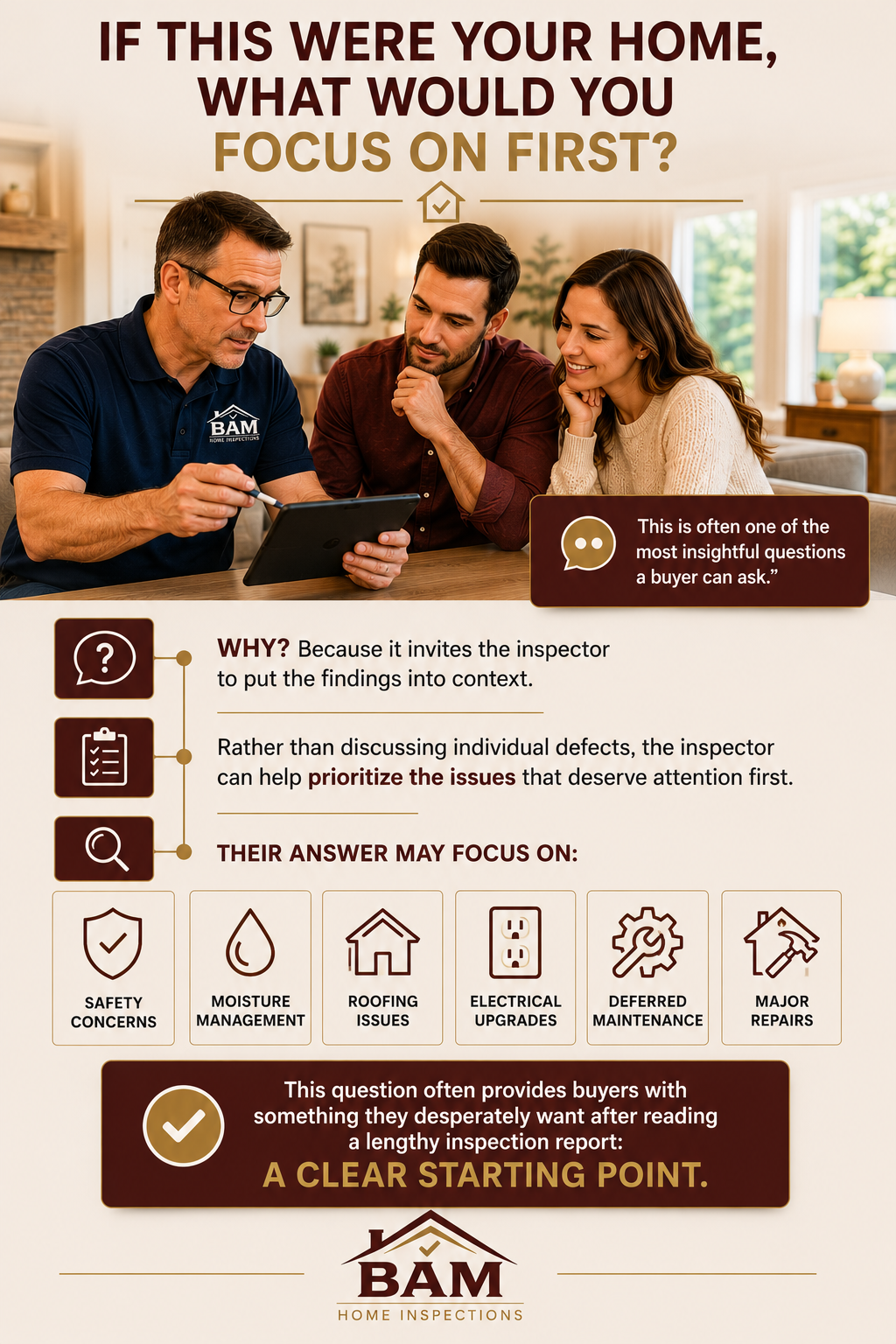
5. If This Were Your Home, What Would You Focus on First?
This is often one of the most insightful questions a buyer can ask.
Why?
Because it invites the inspector to put the findings into context.
Rather than discussing individual defects, the inspector can help prioritize the issues that deserve attention first.
Their answer may focus on:
- Safety concerns
- Moisture management
- Roofing issues
- Electrical upgrades
- Deferred maintenance
- Major repairs
This question often provides buyers with something they desperately want after reading a lengthy inspection report:
A clear starting point.
Many buyers don’t need more information.
They need help determining where to begin.
This question can provide that clarity.
The Goal Isn't to Find a Perfect House
One of the most important things buyers should remember is that every home has defects.
Even newly constructed homes have findings.
The purpose of a home inspection isn’t to find a perfect house.
It’s to help you understand the condition of the home so you can make informed decisions.
A quality inspector helps you distinguish between:
- What requires immediate attention
- What should be monitored
- What should be budgeted for
- What is simply part of normal homeownership
That perspective is often more valuable than any single item in the report.
The purpose of a home inspection isn't to find a perfect house. It's to help you understand the condition of the home so you can make informed decisions. [5 Questions Every Buyer Should Ask Their Home Inspector]
BAM Home Inspections Share to X
Final Thoughts
A home inspection report contains a tremendous amount of information.
But the most valuable part of the inspection may be the conversation you have with your inspector.
By asking these five questions, you can move beyond a list of findings and gain a deeper understanding of the home you’re considering purchasing.
Remember:
The goal isn’t to understand every defect.
The goal is to understand what matters most.
And when you know what matters most, you can move forward with greater clarity, confidence, and peace of mind.
Frequently Asked Questions (FAQs)
One of the most valuable questions is:
“What are the most important issues we should be aware of?”
Inspection reports often contain dozens of observations. This question helps buyers focus on the concerns that may have the greatest impact on safety, finances, or future maintenance planning. It allows the inspector to separate significant issues from routine homeownership items.
Not necessarily. Every home has findings—including newly constructed homes. Most inspection reports include a combination of maintenance items, aging components, recommendations, and observations. The key is understanding which findings require immediate attention and which are simply part of normal homeownership.
Safety concerns vary by property but may include electrical hazards, missing safety devices, unsafe railings, gas leaks, fire hazards, carbon monoxide concerns, or elevated radon levels. Ask your inspector which issues they would prioritize if your family were moving into the home tomorrow.
A home inspection isn’t just about identifying current defects—it’s also about planning for future ownership. Understanding which systems may be nearing the end of their service life can help buyers budget for future expenses such as roof replacement, HVAC equipment, water heaters, windows, or exterior maintenance.
Maintenance recommendations are not necessarily defects. They are often routine tasks that help protect the home and extend the life of its systems and components. Examples may include cleaning gutters, replacing HVAC filters, servicing heating equipment, trimming vegetation, or sealing exterior penetrations. Regular maintenance is simply part of responsible homeownership.
This is one of the most insightful questions a buyer can ask. It encourages the inspector to prioritize the findings and explain which concerns deserve attention first. Rather than focusing on dozens of individual observations, buyers gain a practical roadmap that may highlight safety issues, moisture concerns, deferred maintenance, or major systems that warrant closer attention.