
How to Protect One of the Largest Investments You'll Ever Make
Buying a home is exciting. It’s also one of the largest financial decisions most people will ever make.
Many buyers spend more time researching restaurants, televisions, and vacation rentals than they do selecting the company responsible for evaluating a six-figure investment…but not all Colorado home inspection companies are created equal.
Many buyers spend more time researching restaurants, televisions, and vacation rentals than they do selecting the company responsible for evaluating a six-figure investment...but not all home inspection companies are created equal. [The Ultimate Guide to Selecting the Best Home Inspection Company]
BAM Home Inspections Share to X
Why Your Choice of Inspector Matters
The home inspection is often the only opportunity buyers have to gain an independent assessment of a home’s major systems and components before closing.
A quality inspection can help uncover concerns involving:
- Roofing
- Plumbing
- Electrical systems
- Heating and cooling equipment
- Structural components
- Safety hazards
- Moisture intrusion
- Sewer lines
- Indoor air quality concerns
The right inspection company can provide clarity and confidence.
The wrong one can leave buyers with expensive surprises after moving in.
Step 1: Choose Experience Over Price
One of the most common mistakes buyers make is selecting an inspection company based primarily on cost.
While it’s natural to compare prices, a home inspection should never be viewed as a commodity.
A difference of $100 to $200 in inspection fees is insignificant compared to a missed roof defect, sewer line issue, or major mechanical failure.
A difference of $100 to $200 in inspection fees is insignificant compared to a missed roof defect, sewer line issue, or major mechanical failure. [The Ultimate Guide to Selecting the Best Home Inspection Company]
BAM Home Inspections Share to X
When evaluating an inspection company, ask:
- How long have they been in business?
- How many inspections have they completed?
- Do they specialize in residential inspections?
- Do they inspect homes similar to the one you’re purchasing?
Experience matters.
Inspectors who have evaluated thousands of homes often recognize patterns and concerns that less experienced inspectors may overlook.
Step 2: Verify Professional Certifications and Training
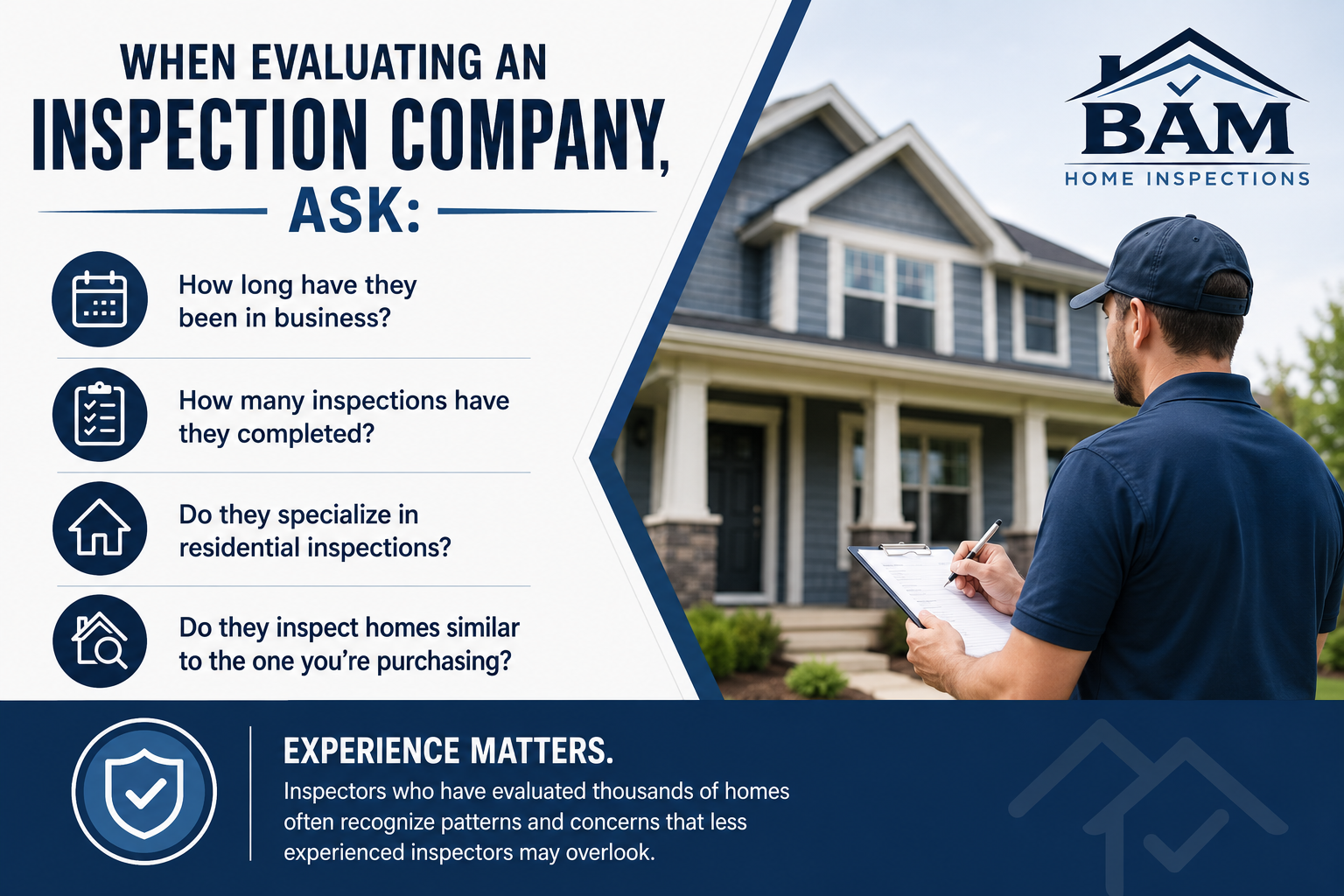
A professional inspector should demonstrate a commitment to ongoing education and industry standards.
Look for inspectors who maintain credentials through recognized organizations such as:
Certified Master Inspector (CMI)
One of the highest professional designations in the industry, awarded to inspectors who have demonstrated extensive experience, continuing education, and a commitment to professionalism.
Certified Professional Inspector (CPI)
A designation that demonstrates completion of professional training, testing, and continuing education requirements.
International Association of Certified Indoor Air Consultants (IAC2)
Training and certification related to services such as radon testing and mold inspections.
Professional certifications don’t guarantee perfection, but they do demonstrate a commitment to learning, professionalism, and industry best practices.
Step 3: Review a Sample Inspection Report
This may be the most overlooked step in the selection process.
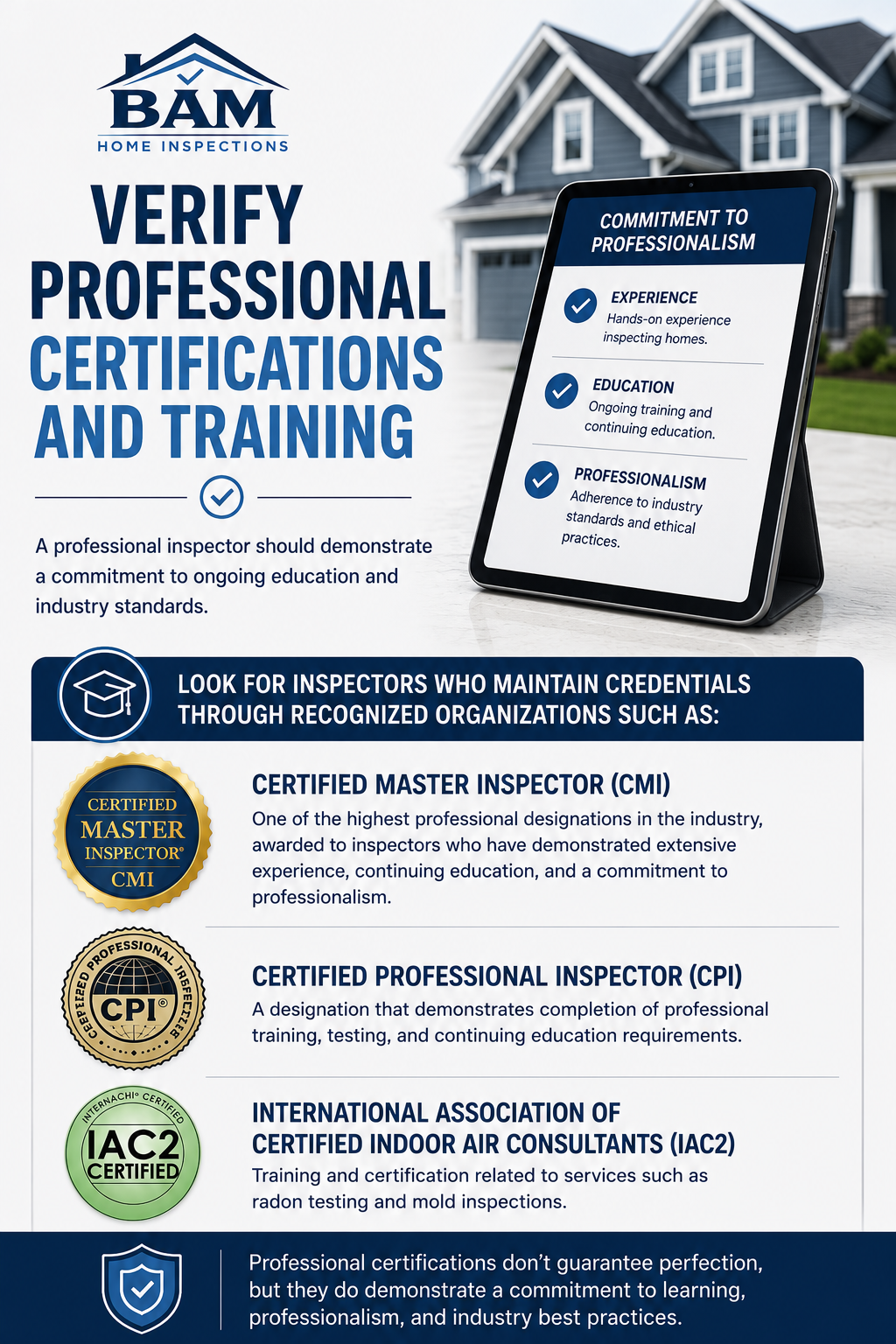
Before hiring an inspection company, ask to see a sample report.
A quality report should be:
Easy to Understand
The report should clearly explain:
- What was observed
- Why it matters
- The potential implications
- Recommended next steps
Well Organized
Buyers should be able to quickly identify:
- Safety concerns
- Major concerns
- Maintenance items
- Areas requiring further evaluation
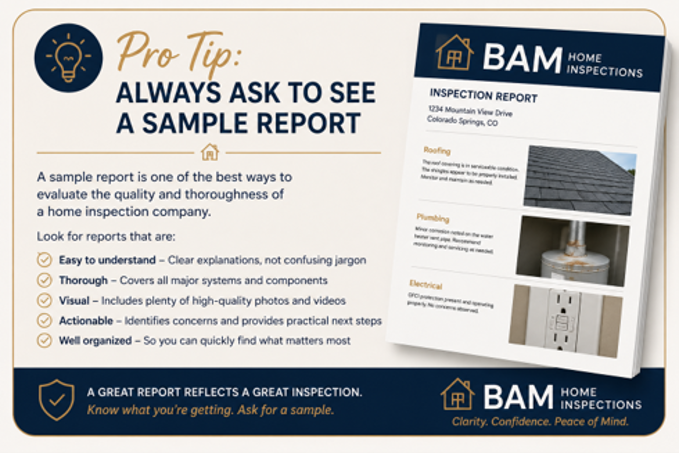
Rich with Photos and Videos
High-quality photographs and video clips often communicate concerns more effectively than paragraphs of technical language.
Remember:
You’re not simply hiring an inspector.
You’re hiring the report you’ll rely upon after the inspection is complete.
Remember: You're not simply hiring an inspector. You're hiring the report you'll rely upon after the inspection is complete. [The Ultimate Guide to Selecting the Best Home Inspection Company]
BAM Home Inspections Share to X
Step 4: Confirm the Company Carries Proper Insurance
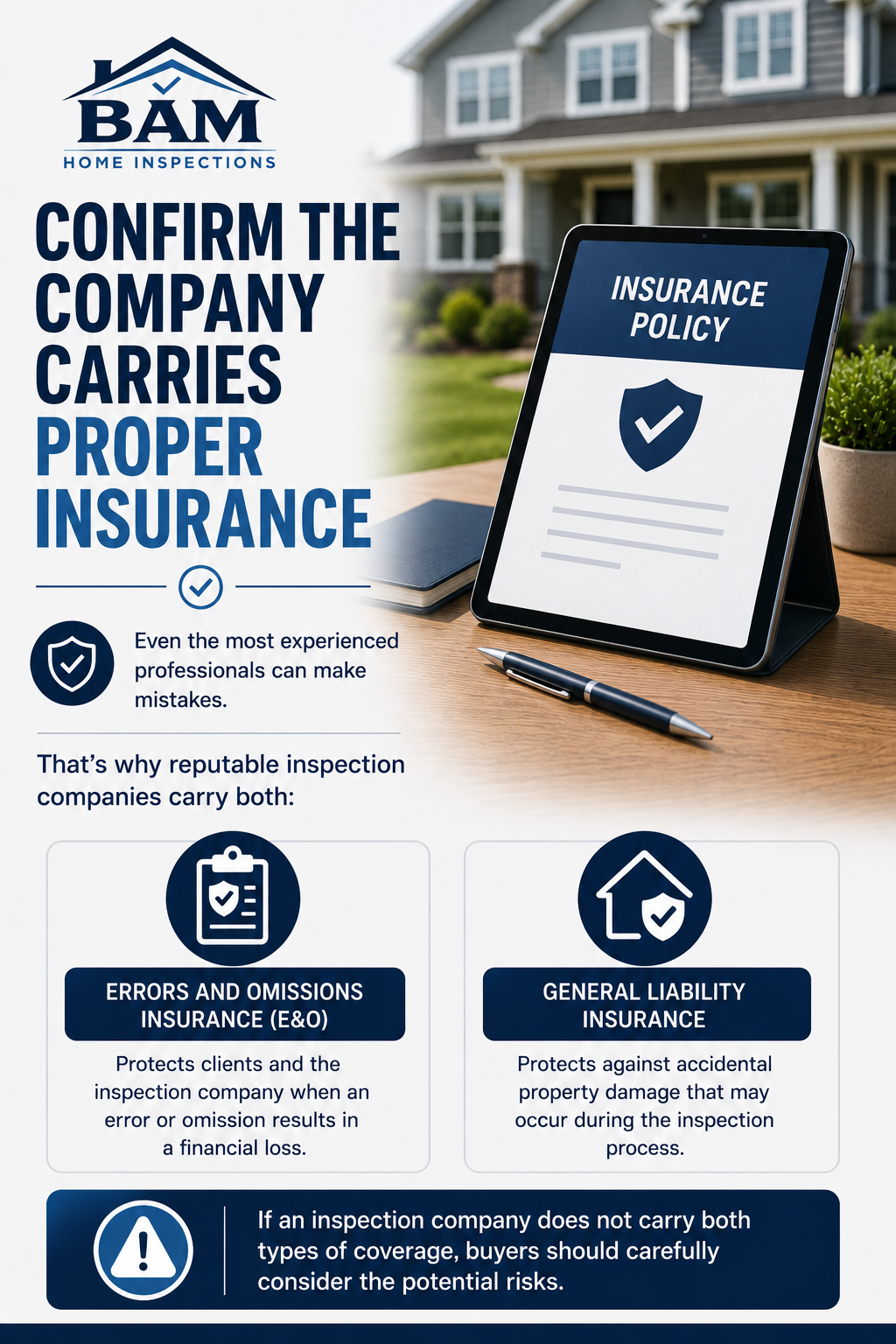
Even the most experienced professionals can make mistakes.
That’s why reputable inspection companies carry both:
- Errors and Omissions Insurance (E&O)
- Protects clients and the inspection company when an error or omission results in a financial loss.
- General Liability Insurance
- Protects against accidental property damage that may occur during the inspection process.
If an inspection company does not carry both types of coverage, buyers should carefully consider the potential risks.
If an inspection company does not carry both E&O and General Liability coverage, buyers should carefully consider the potential risks. [The Ultimate Guide to Selecting the Best Home Inspection Company]
BAM Home Inspections Share to X
Step 5: Look Beyond Online Reviews
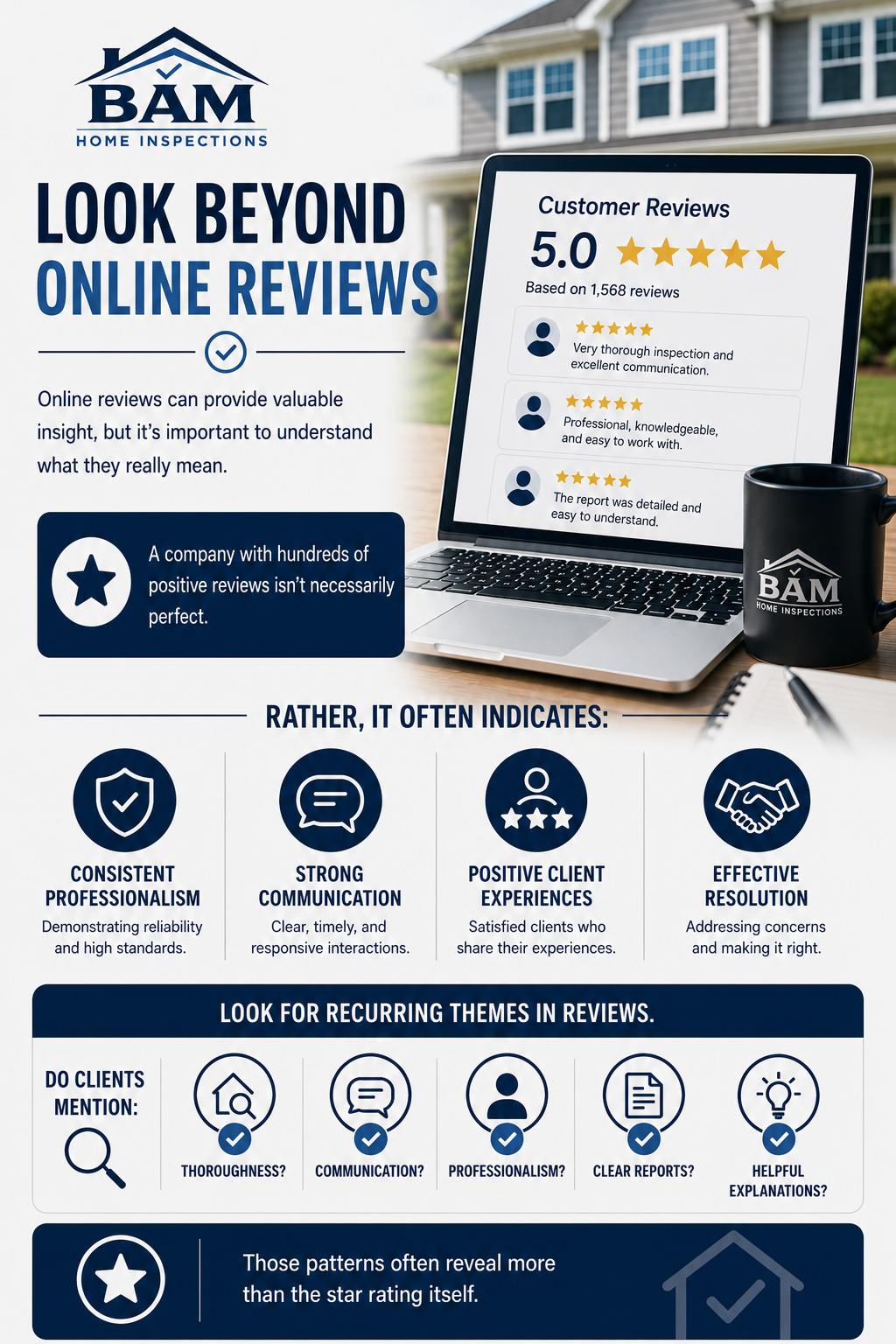
Online reviews can provide valuable insight, but it’s important to understand what they really mean.
A company with hundreds of positive reviews isn’t necessarily perfect.
Rather, it often indicates:
- Consistent professionalism
- Strong communication
- Positive client experiences
- Effective resolution of issues when they arise
Look for recurring themes in reviews.
Do clients mention:
- Thoroughness?
- Communication?
- Professionalism?
- Clear reports?
- Helpful explanations?
Those patterns often reveal more than the star rating itself.
Step 6: Understand What Is Included Beyond the Inspection
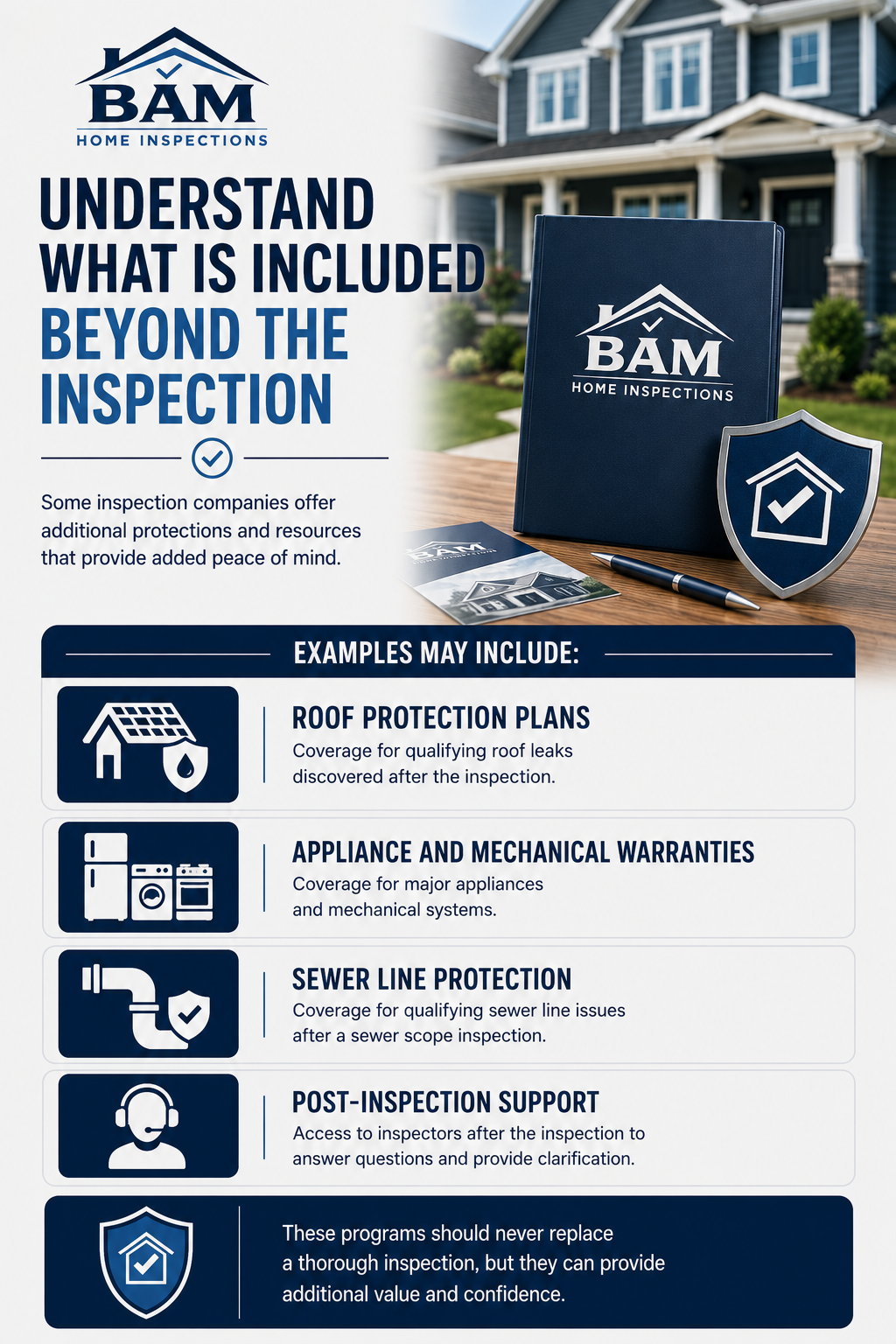
Some inspection companies offer additional protections and resources that provide added peace of mind.
Examples may include:
- Roof Protection Plans
- Coverage for qualifying roof leaks discovered after the inspection.
- Appliance and Mechanical Warranties
- Coverage for major appliances and mechanical systems.
- Sewer Line Protection
- Coverage for qualifying sewer line issues after a sewer scope inspection.
- Post-Inspection Support
- Access to inspectors after the inspection to answer questions and provide clarification.
These programs should never replace a thorough inspection, but they can provide additional value and confidence.
Step 7: Consider Colorado-Specific Concerns
If you’re purchasing a home in Colorado, there are several additional considerations that may not apply in other parts of the country.
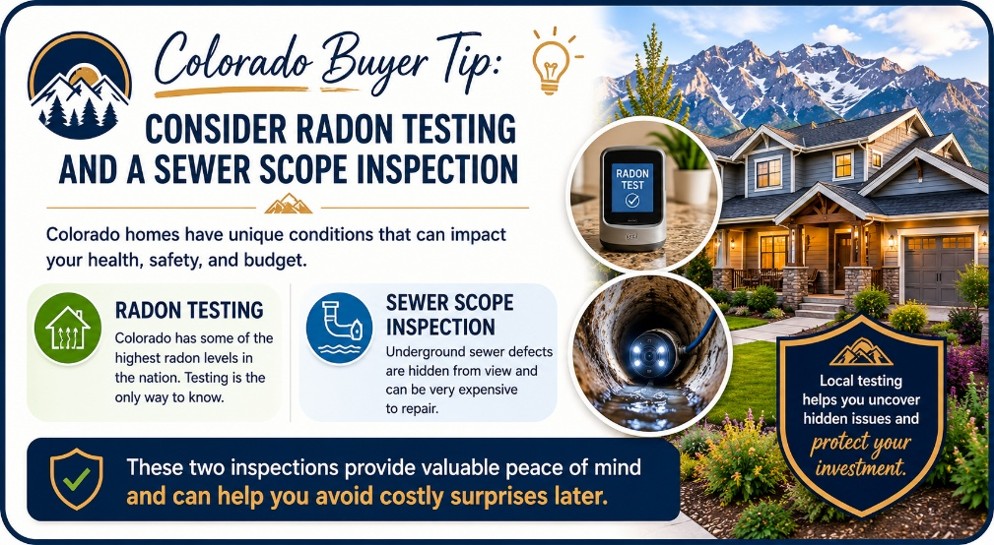
Colorado has some of the highest radon levels in the nation. Testing is the only way to determine whether elevated levels are present.
Underground sewer defects can be expensive and are often hidden from view. Sewer scope inspections can help identify issues before closing.
Hail Damage
Colorado’s frequent hailstorms can significantly impact roofing materials.
Expansive Soils
Certain areas along the Front Range are susceptible to soil movement that can affect foundations and structures.
A local inspection company familiar with Colorado-specific conditions can provide valuable insight.
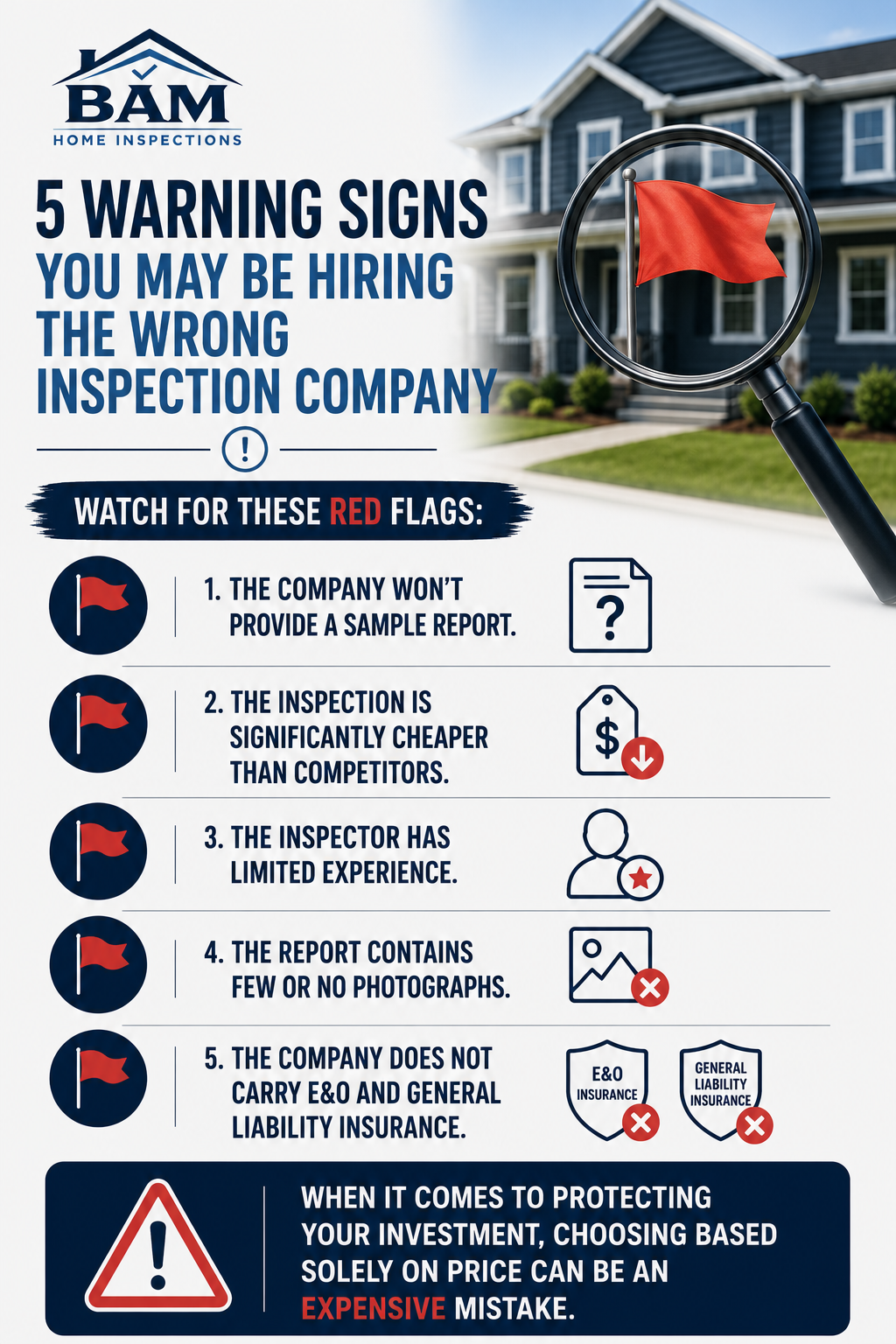
5 Warning Signs You May Be Hiring the Wrong Inspection Company
Watch for these red flags:
🚩 The company won’t provide a sample report.
🚩 The inspection is significantly cheaper than competitors.
🚩 The inspector has limited experience.
🚩 The report contains few or no photographs.
🚩 The company does not carry E&O and General Liability Insurance.
When it comes to protecting your investment, choosing based solely on price can be an expensive mistake.
Brick and Mortar Home Inspections shares five warning signs that you may be hiring the wrong inspection company. Here's how to know. [The Ultimate Guide to Selecting the Best Home Inspection Company]
BAM Home Inspections Share to X
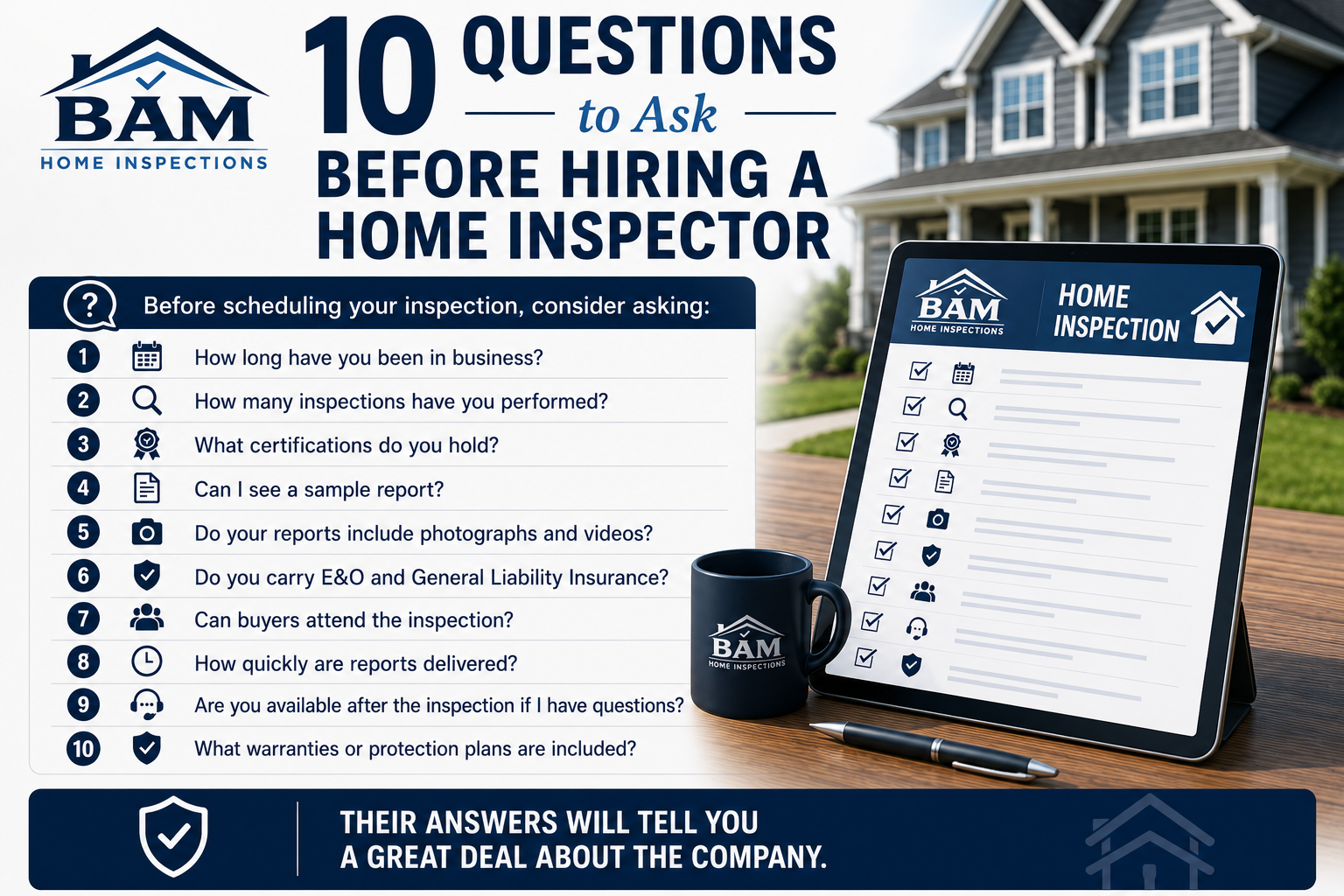
10 Questions to Ask Before Hiring a Home Inspector
Before scheduling your inspection, consider asking:
- How long have you been in business?
- How many inspections have you performed?
- What certifications do you hold?
- Can I see a sample report?
- Do your reports include photographs and videos?
- Do you carry E&O and General Liability Insurance?
- Can buyers attend the inspection?
- How quickly are reports delivered?
- Are you available after the inspection if I have questions?
- What warranties or protection plans are included?
Their answers will tell you a great deal about the company.
Final Thoughts
The best home inspection company isn’t necessarily the cheapest, the busiest, or the one with the most advertising.
It’s the company that combines experience, professional training, thorough reporting, strong communication, and a genuine commitment to helping clients understand the home they’re about to purchase.
When you choose the right inspection company, you’re not simply buying a report.
You’re investing in clarity, confidence, and peace of mind.
And when it comes to one of the largest investments you’ll ever make, that’s a decision worth getting right.
Frequently Asked Questions (FAQs)
Home inspection costs vary depending on the size, age, and complexity of the home, as well as the services included. While price is certainly a consideration, buyers should avoid selecting an inspection company based solely on cost. A slightly less expensive inspection can become very costly if significant issues are overlooked. Focus on experience, qualifications, report quality, and reputation rather than simply choosing the lowest price.
Yes. Whenever possible, buyers should attend at least part of the inspection. Being present allows you to ask questions, see concerns firsthand, and gain a better understanding of the home’s systems and maintenance needs. The inspection is often one of the best educational opportunities available during the home-buying process.
Look for inspectors who demonstrate a commitment to professional training and continuing education. Designations such as Certified Master Inspector (CMI), Certified Professional Inspector (CPI), and certifications related to radon, mold, or indoor air quality services can indicate a higher level of expertise and professionalism. Certifications alone don’t guarantee quality, but they do show dedication to industry standards and ongoing education.
The report is ultimately the product you’ll rely on after the inspection is complete. A quality report should be easy to understand, well organized, and include clear photographs and explanations. Reviewing a sample report before hiring an inspection company can help you determine whether the information will be useful when making important decisions about the property.
In many cases, yes. Colorado has some of the highest radon levels in the country, and elevated radon can only be identified through testing. Sewer line problems can also be expensive and often remain hidden until a backup occurs. Because these issues are common in many Colorado communities, buyers should strongly consider radon testing and a sewer scope inspection as part of their overall due diligence.
A reputable home inspection company should have extensive experience, professional certifications, strong reviews, proper insurance coverage, sample reports available for review, and a willingness to answer questions before and after the inspection. Look for a company that prioritizes education, communication, and helping buyers understand the condition of the home—not just checking boxes on a report.