Mold Testing in Colorado

Identify potential mold concerns and protect your indoor air quality with professional testing.

Professional testing and evaluation designed to identify potential mold concerns that may impact indoor air quality—providing a clearer understanding of the environment within the home and whether further action may be recommended.

Serving Colorado Springs, Pueblo, Castle Rock, Denver, and surrounding areas.

What is Mold and Why is it a Concern?

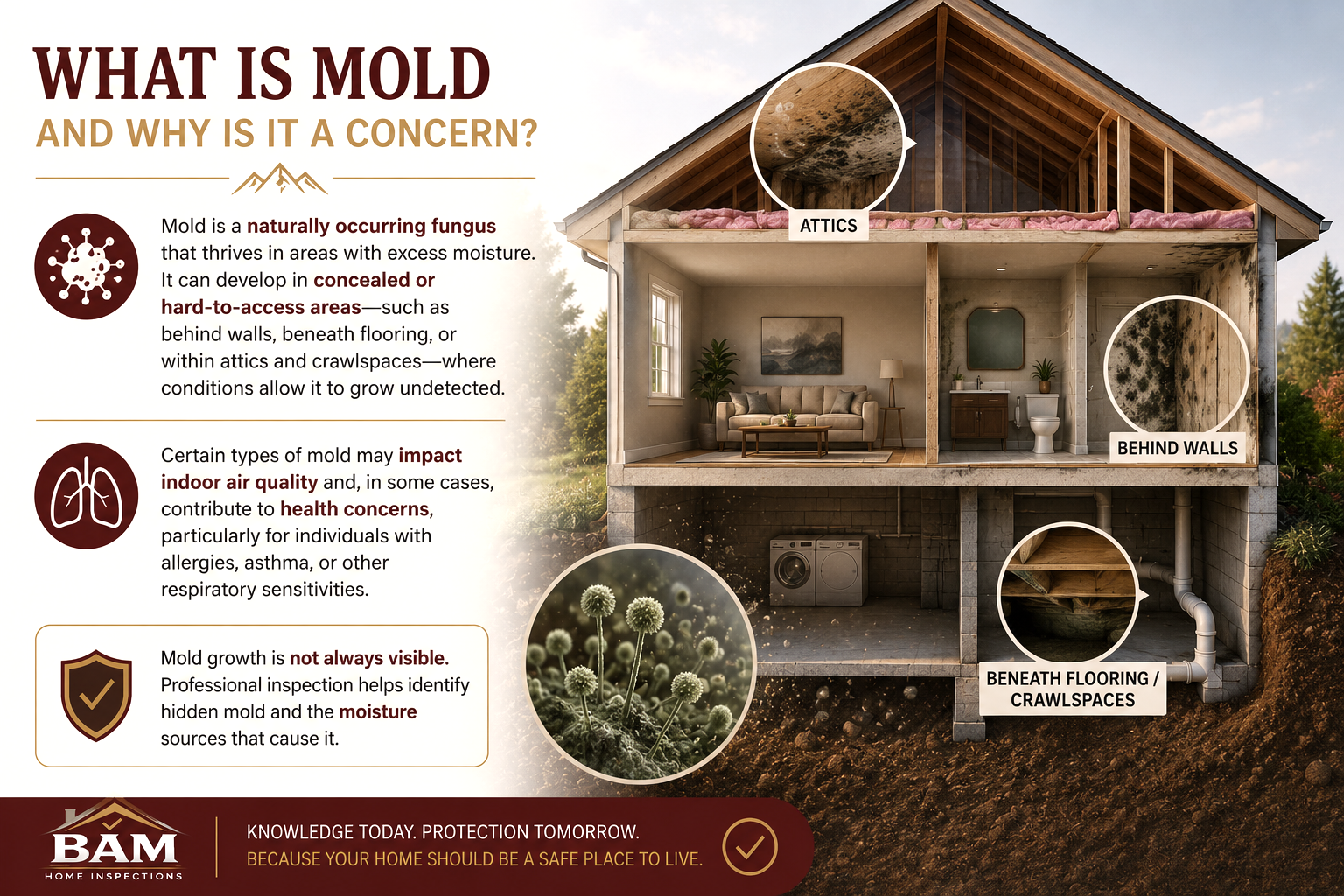
Mold is a naturally occurring fungus that thrives in areas with excess moisture. It can develop in concealed or hard-to-access areas—such as behind walls, beneath flooring, or within attics and crawlspaces—where conditions allow it to grow undetected.

Certain types of mold may impact indoor air quality and, in some cases, contribute to health concerns, particularly for individuals with allergies, asthma, or other respiratory sensitivities.

Click Image to Enlarge

What Are the Signs of a Potential Mold Issue?

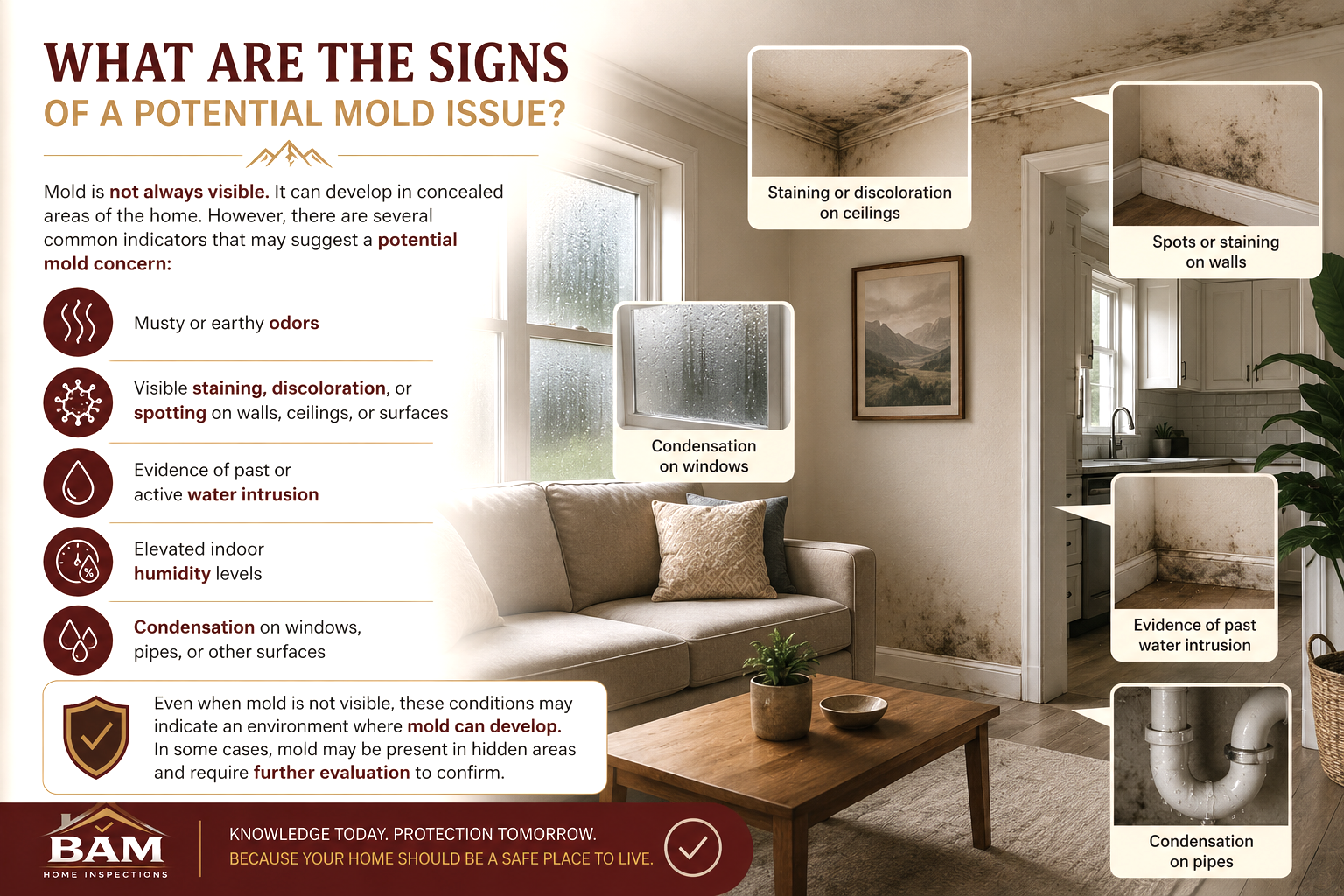
Mold is not always visible. It can develop in concealed areas of the home. However, there are several common indicators that may suggest a potential mold concern:

  • Musty or earthy odors
  • Visible staining, discoloration, or spotting on walls, ceilings, or surfaces
  • Evidence of past or active water intrusion
  • Elevated indoor humidity levels
  • Condensation on windows, pipes, or other surfaces

Even when mold is not visible, these conditions may indicate an environment where mold can develop. In some cases, mold may be present in hidden areas and require further evaluation to confirm.

When Is Mold Testing Recommended?

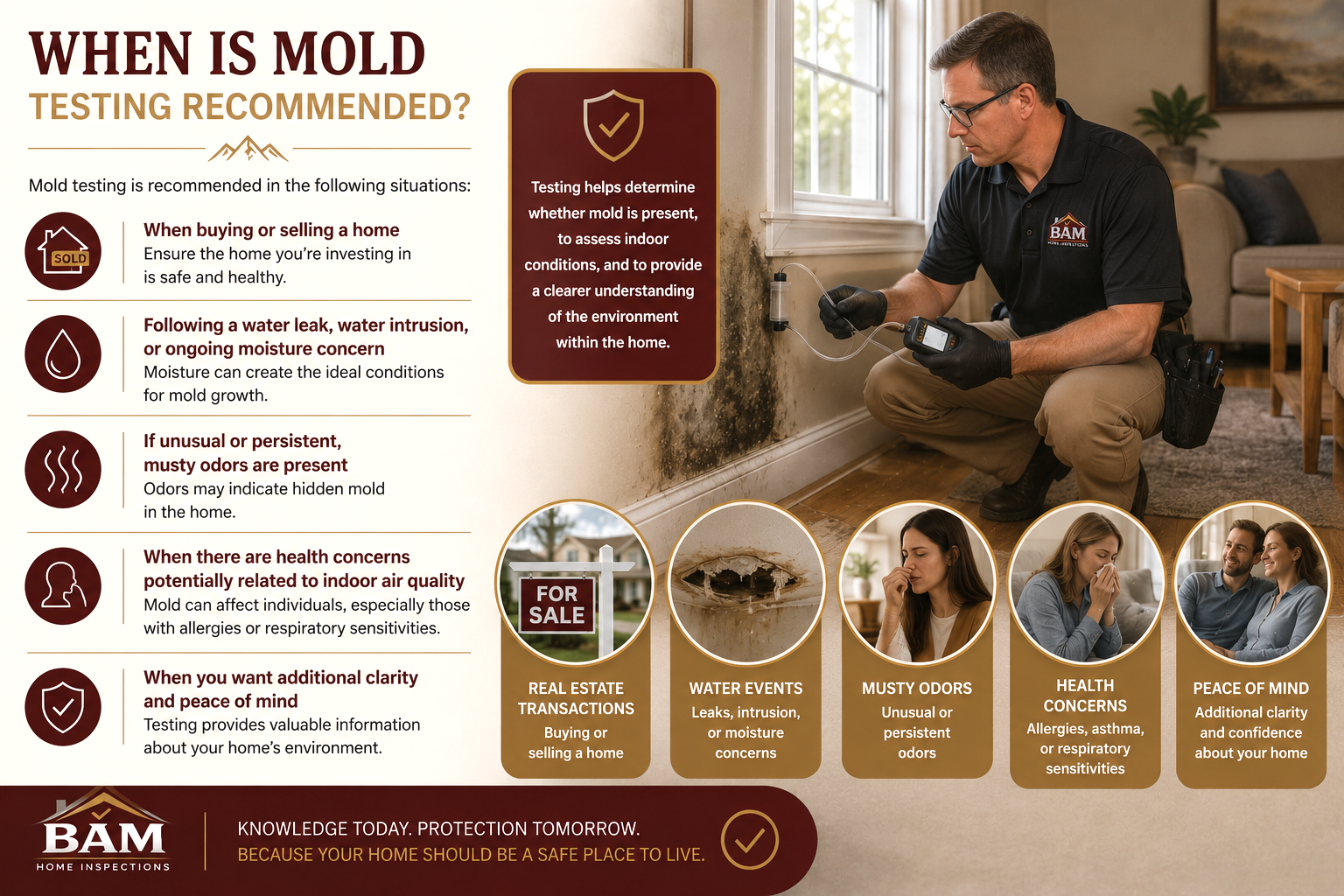
Mold testing may be beneficial in several situations where additional clarity about a home’s indoor environment is important, including:

  • During a real estate transaction to better understand the home’s overall condition
  • After a water leak, water intrusion event, or ongoing moisture concern that may create conditions for mold growth
  • When persistent or unusual musty odors are present, even if the source is not immediately visible
  • If there are concerns about indoor air quality or environmental conditions within the home
  • When you simply want greater clarity and peace of mind regarding the home’s indoor environment

Mold testing helps provide a clearer understanding of indoor conditions by determining whether mold may be present and offering insight into the overall environment within the home. 
Click to Enlarge Image

How Is Mold Testing Performed?

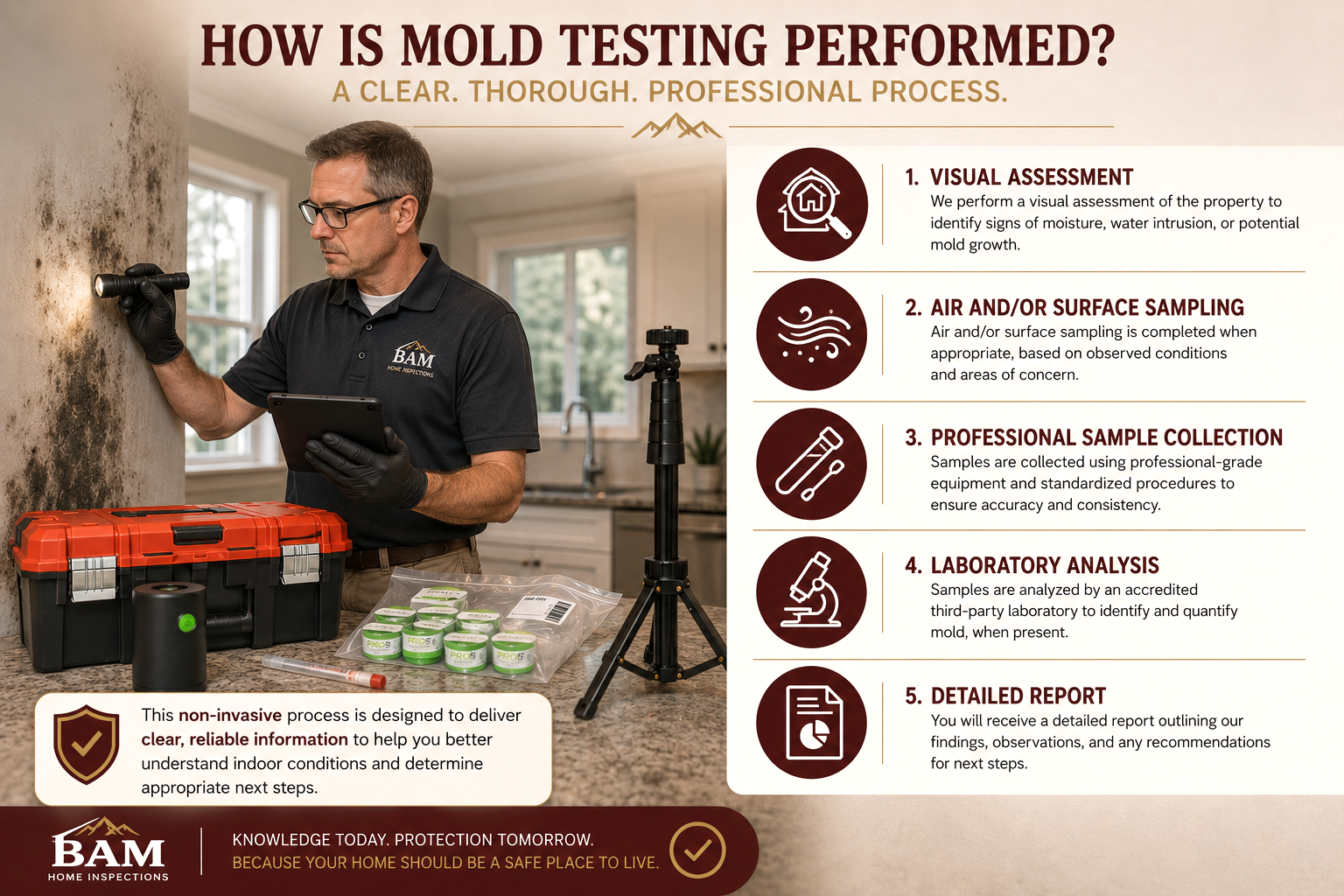
Our mold testing process is designed to provide a clear and accurate evaluation of the home’s environment and includes:

  • A visual assessment of the property to identify signs of moisture, water intrusion, or potential mold growth
  • Air and/or surface sampling, when appropriate, based on observed conditions
  • Collection of samples using professional-grade equipment and standardized procedures
  • Laboratory analysis by an accredited third-party lab
  • A detailed report outlining findings and observations


This non-invasive process is designed to deliver clear, reliable information to help you better understand indoor conditions and determine appropriate next steps.

What’s Included in Your Mold Test Report?

You’ll receive a clear, easy-to-understand report designed to help you fully interpret the results and what they mean for your home. Your report includes:

  • Laboratory results from a certified testing facility
  • Identification of mold types, if present
  • Clear explanations of the findings and their potential significance
  • Practical recommendations for next steps, if warranted

Our goal is to go beyond simply providing data. We help you understand what the results mean and how they may impact your home and indoor environment.

Click to Enlarge Image
Click Image to Enlarge

What Are the Next Steps If Mold Is Found?

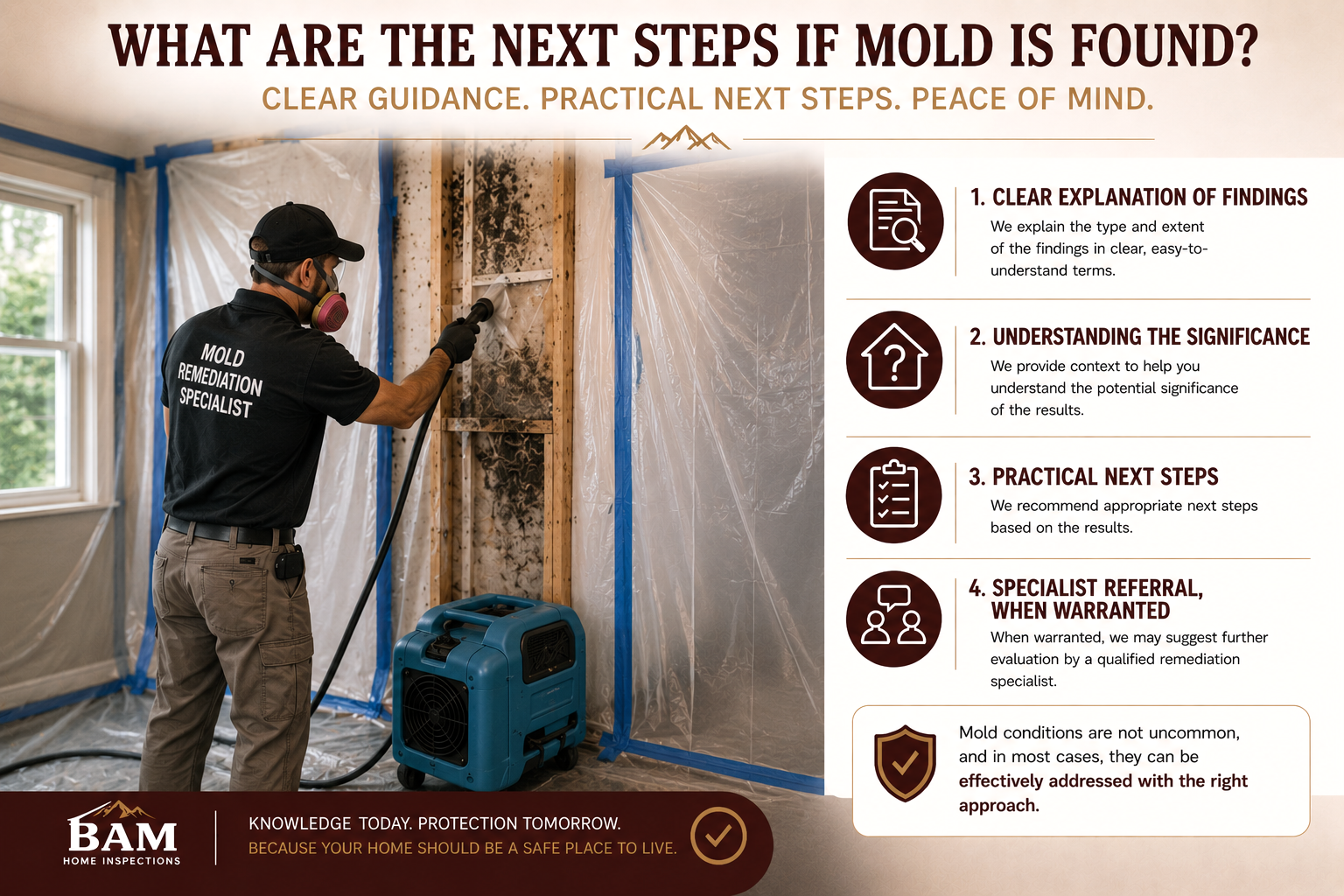
If mold is detected, we provide clear guidance to help you understand the findings and determine appropriate next steps:

  • We explain the type and extent of the findings in clear, easy-to-understand terms
  • We provide context to help you understand the potential significance
  • We recommend appropriate next steps based on the results
  • When warranted, we may suggest further evaluation by a qualified remediation specialist


Mold conditions are not uncommon, and in most cases, they can be effectively addressed with the right approach.

Mold Testing in Colorado

Proudly serving Colorado Springs and surrounding communities, including Monument, Fountain, Peyton, and Woodland Park—along with the greater Front Range, including Castle Rock, Denver, and Pueblo.

We understand how Colorado’s unique climate can contribute to moisture-related conditions within a home. During our inspection, we remain attentive to conditions that may indicate moisture-related concerns, including:

  • Evidence of hidden or concealed moisture within walls, ceilings, insulation, or structural components
  • Condensation resulting from temperature differences between interior and exterior environments, particularly around windows, attics, and ductwork
  • Ventilation deficiencies that may impact proper air circulation, humidity control, and overall indoor air quality
  • Areas where moisture intrusion may be more likely due to construction design, drainage patterns, or seasonal conditions
Click Image to Enlarge

With extensive experience inspecting homes throughout Colorado’s Front Range, we recognize how these factors commonly present and interact. Our approach is not just to identify visible concerns, but to interpret the subtle indicators that may suggest a larger pattern.

Click Image to Enlarge

What additional services are available?

A sewer scope is most valuable when combined with a full home inspection.

Also consider:

Radon Testing

Radon is an odorless, colorless, and naturally occurring radioactive gas that can cause serious health issues over time.

Sewer Scope Inspection

A sewer scope inspection uses a small camera to assess your sewer line quickly. By analyzing the pipes from the inside, an inspector can identify any issues early to prevent costly repairs.

Wood-Destroying Organism Inspection

Our WDO inspection includes a detailed examination of the home looking for signs of wood destroying organisms to include termites, carpenter ants, carpenter beetles, and wood-boring beetles. Fulfills most VA Loan requirements.

FAQs

Not all mold is harmful; however, certain types may impact indoor air quality and, in some cases, contribute to health concerns. Testing helps identify what is present and provides a clearer understanding of the home’s indoor environment.

Yes. Mold often develops in concealed areas of the home—such as behind walls, beneath flooring, and within attics or crawlspaces—where moisture conditions allow it to grow out of sight.

Because these areas are not easily visible, mold can remain undetected without further evaluation. This is why identifying moisture conditions and, when appropriate, conducting testing can provide valuable insight into the home’s environment.
The on-site portion of the mold testing process is typically completed within a short period of time. Once samples are collected, they are submitted to a certified laboratory, with results generally returned within a few days.

Mold growth is typically caused by excess moisture within the home. Common sources of moisture include plumbing leaks, roof leaks, elevated indoor humidity, condensation, and inadequate ventilation.

When moisture is present and not properly controlled, it creates conditions that allow mold to develop and spread—often in areas that are not immediately visible.

Yes. Mold can develop in any home when excess moisture is present. Because mold growth is driven by moisture—not the age or quality of construction—both new and older homes can be affected under the right conditions.