

Understanding These Five Things Can Help You Feel More Confident and Less Overwhelmed
Buying your first home is exciting.
It’s also filled with new experiences, unfamiliar terminology, and plenty of questions.
For many first-time buyers, the home inspection can feel especially intimidating.
You may be wondering:
- What if the inspector finds major problems?
- What if the report is overwhelming?
- How do I know what’s serious and what’s not?
- Should I be worried if defects are found?
If you’re feeling a little nervous, you’re not alone.
The good news is that understanding a few key concepts before inspection day can help you approach the process with confidence and realistic expectations.
Here are five things every first-time home buyer should know before the inspection.
If you're feeling a little nervous, you're not alone. The good news is that understanding a few key concepts before inspection day can help you approach the process with confidence and realistic expectations. [5 Things Every First-Time Home Buyer Should Know Before the Home Inspection]
BAM Home Inspections Share to X
1. No Home Is Perfect
This is perhaps the most important thing first-time buyers need to understand.
Many buyers unknowingly approach the inspection expecting one of two outcomes:
The home is perfect.
or
The home is a disaster.
In reality, most homes fall somewhere in between.
Even well-maintained homes typically have:
- Minor defects
- Maintenance items
- Aging components
- Opportunities for improvement
In fact, it would be unusual for an inspector not to identify any findings at all.
The goal of the inspection isn’t to find a perfect house.
The goal is to help you understand the condition of the home you’re considering purchasing.
Colorado Buyer Tip
Don’t Ask
“Is this house perfect?”
Ask
“What are the most important things I should know about this house?”
2. Not Every Finding Deserves the Same Level of Concern
One of the biggest challenges for first-time buyers is reading a lengthy inspection report.
A report may contain dozens of observations.
Some are significant.
Many are routine.
Some are simply maintenance recommendations.
A quality inspector helps you understand the difference between:
- Safety Concerns
- Important hazards that may require prompt attention.
- Major Concerns
- Significant defects that may require repair, replacement, or further evaluation.
- Maintenance Items
- Routine upkeep that comes with owning a home.
A loose door handle and a failing roof are both findings.
They are not equally important.
Understanding priorities is one of the most valuable parts of the inspection process.
A loose door handle and a failing roof are both findings. They are not equally important. Understanding priorities is one of the most valuable parts of the inspection process. [5 Things Every First-Time Home Buyer Should Know Before the Home Inspection]
BAM Home Inspections Share to X
3. The Inspection Is a Learning Opportunity
A great inspector doesn't simply identify concerns. They help you better understand the home. Take advantage of the opportunity to ask questions. [5 Things Every First-Time Home Buyer Should Know Before the Home Inspection]
BAM Home Inspections Share to X
Many first-time buyers assume the inspection is simply about finding defects.
In reality, it is often your first lesson in homeownership.
During the inspection, you’ll learn:
- How major systems work
- Where shutoffs are located
- Which components require regular maintenance
- The approximate age of major systems
- Tips for protecting your investment
A great inspector doesn’t simply identify concerns.
They help you better understand the home.
Take advantage of the opportunity to ask questions.
The more you learn now, the more confident you’ll feel after moving in.
4. Homeownership Comes With Ongoing Maintenance
Many first-time buyers spend months preparing for the purchase but very little time preparing for ownership.
Every home requires maintenance.
Even newer homes.
During your first year of ownership, you may find yourself:
- Replacing HVAC filters
- Cleaning gutters
- Servicing heating and cooling equipment
- Monitoring drainage around the home
- Touching up caulking
- Maintaining exterior surfaces
This isn’t a sign that something is wrong.
It’s simply part of responsible homeownership.
A home inspection can help you understand what maintenance items should be on your radar and how to prioritize them.
Many first-time buyers spend months preparing for the purchase but very little time preparing for ownership. Every home requires maintenance. Even newer homes. [5 Things Every First-Time Home Buyer Should Know Before the Home Inspection]
BAM Home Inspections Share to X
5. The Inspector Is One of Your Best Resources
Many buyers don’t realize how much knowledge a good inspector brings to the table.
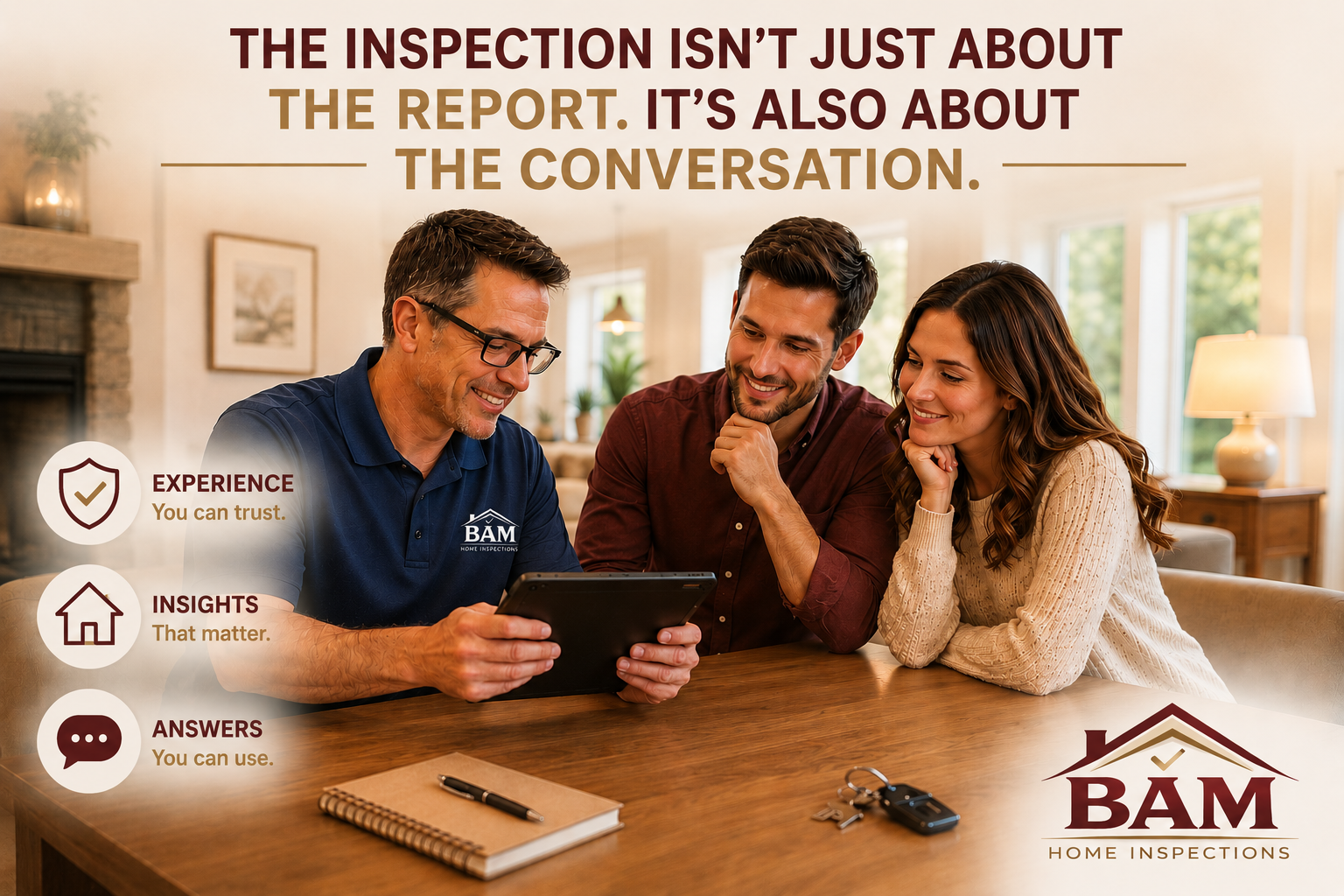
The inspection isn’t just about the report.
It’s also about the conversation.
Don’t be afraid to ask questions such as:
- What concerns you most about this home?
- Are there any safety issues that should be addressed right away?
- What major systems may need attention soon?
- What maintenance should I expect during the first year?
- If this were your home, what would you focus on first?
These questions often provide more clarity than any individual item in the report.
A quality inspector isn’t there to make decisions for you.
They’re there to provide information, context, and perspective.
Common Buyer Myth
Myth
“If the inspector finds problems, I shouldn’t buy the house.”
Reality
Every home has defects.
The question isn’t whether defects exist.
The question is:
Which concerns are significant, which are manageable, and what do they mean for me as the buyer?
The inspection helps answer those questions.
The Goal Isn't to Find a Perfect House
One of the most important things buyers should remember is that every home has defects.
Even newly constructed homes have findings.
The purpose of a home inspection isn’t to find a perfect house.
It’s to help you understand the condition of the home so you can make informed decisions.
A quality inspector helps you distinguish between:
- What requires immediate attention
- What should be monitored
- What should be budgeted for
- What is simply part of normal homeownership
That perspective is often more valuable than any single item in the report.
The purpose of a home inspection isn't to find a perfect house. It's to help you understand the condition of the home so you can make informed decisions. [5 Things Every First-Time Home Buyer Should Know Before the Home Inspection]
BAM Home Inspections Share to X
Final Thoughts
Buying your first home is a major milestone.
It’s natural to feel a little nervous about the inspection process.
But understanding these five principles can help you approach inspection day with greater confidence and realistic expectations.
Remember:
The goal isn’t to find a perfect house.
The goal is to understand the house you’re buying.
And when you understand the home, you can move forward with greater clarity, confidence, and peace of mind.
Quick Recap
✓ No home is perfect.
✓ Not every finding deserves the same level of concern.
✓ The inspection is a learning opportunity.
✓ Homeownership comes with ongoing maintenance.
✓ Your inspector is one of your best resources.
Frequently Asked Questions (FAQs)
Yes. In fact, it would be unusual for an inspector not to identify any findings. Most inspection reports contain a mix of maintenance items, aging components, recommendations, and observations. The presence of findings does not necessarily mean the home is in poor condition. The key is understanding which findings are significant and which are part of normal homeownership.
Not necessarily. Every home has defects, including newly constructed homes. The purpose of the inspection is not to determine whether a home is perfect but to help you understand its condition. The important questions are whether the issues are manageable, what repairs may be needed, and whether you’re comfortable moving forward with that knowledge.
Rather than focusing on the total number of findings, pay attention to:
- Safety concerns
- Major defects
- Expensive repairs
- Systems nearing the end of their service life
A quality inspector can help prioritize the findings and explain which items deserve immediate attention and which are routine maintenance concerns.
A home inspection is often your first lesson in homeownership. Buyers frequently learn:
- How major systems work
- Where utility shutoffs are located
- What maintenance tasks should be performed regularly
- The age and condition of major components
- How to better care for the home after moving in
Many buyers find this educational aspect just as valuable as the inspection findings themselves.
Every home requires ongoing maintenance. Common first-year tasks may include replacing HVAC filters, cleaning gutters, servicing heating and cooling equipment, monitoring drainage around the home, and maintaining exterior surfaces. These tasks are a normal part of homeownership and help protect your investment over time.
One of the most common mistakes is expecting the inspection to determine whether a house is “good” or “bad.” The real purpose of the inspection is to help you understand the home’s condition, identify potential concerns, and make informed decisions. Buyers who focus on understanding the findings rather than searching for a perfect house often feel more confident throughout the process.