

Simple Steps That Can Help Create a Smoother Transaction
Every seller hopes for a smooth home inspection.
The buyers are excited.
The contract is signed.
Closing is on the horizon.
Then the inspection report arrives.
While some findings are simply part of owning a home, many inspection comments involve issues that sellers could have addressed before listing the property.
The good news?
Many of the most common inspection findings are inexpensive, easy to correct, and entirely preventable.
Let’s look at ten common inspection headaches sellers can often avoid with a little preparation.
Many of the most common inspection findings are inexpensive, easy to correct, and entirely preventable. Let's look at ten common inspection headaches sellers can often avoid with a little preparation. [Top 10 Home Inspection Headaches Sellers Can Avoid]
BAM Home Inspections Share to X
1. Burned-Out Light Bulbs
This may seem insignificant, but burned-out bulbs are one of the most common issues inspectors encounter.
When a light doesn’t work, inspectors can’t immediately determine whether the problem is:
- A burned-out bulb
- A faulty switch
- A wiring issue
- A defective fixture
Replacing bulbs throughout the home helps eliminate unnecessary uncertainty.
Seller Tip
Walk through the home the evening before the inspection and turn on every light fixture.

2. Missing or Inoperable Smoke Alarms
Smoke alarms and carbon monoxide alarms are important safety devices.
Common findings include:
- Missing alarms
- Dead batteries
- Expired units
- Non-functional alarms
These are typically inexpensive fixes that can improve safety and reduce inspection comments.
Seller Tip
Test all alarms before listing and replace batteries as needed.
Smoke alarms and carbon monoxide alarms are important safety devices. Check missing alarms, dead batteries, expired units, etc. to reduce inspection comments. [Top 10 Home Inspection Headaches Sellers Can Avoid]
BAM Home Inspections Share to X
3. Dripping Faucets and Minor Plumbing Leaks
A dripping faucet may seem harmless.
However, buyers often view visible leaks as signs of deferred maintenance.
Inspectors frequently document:
- Dripping faucets
- Leaking shutoff valves
- Minor drain leaks
- Leaking hose bibs
Seller Tip
Address minor plumbing leaks before listing. Most repairs are quick and affordable.

4. Loose Handrails and Guardrails
Handrails and guardrails are among the most common safety-related inspection findings.
Over time, fasteners can loosen and connections can weaken.
Seller Tip
Check all stair handrails, deck rails, and guardrails to ensure they feel secure.

5. Missing GFCI Protection
Ground-Fault Circuit Interrupter (GFCI) protection is commonly required in areas such as:
- Bathrooms
- Kitchens
- Garages
- Exterior locations
- Laundry rooms
Missing or inoperable GFCI protection frequently appears in inspection reports.
Seller Tip
Test existing GFCI devices and consider consulting an electrician if upgrades may be needed.

6. Dirty HVAC Filters
A neglected HVAC filter can create concerns about overall system maintenance.
While replacing a filter won’t make an aging furnace new again, it demonstrates routine care.
Seller Tip
Install a clean filter before listing and keep a replacement available for the new owner.

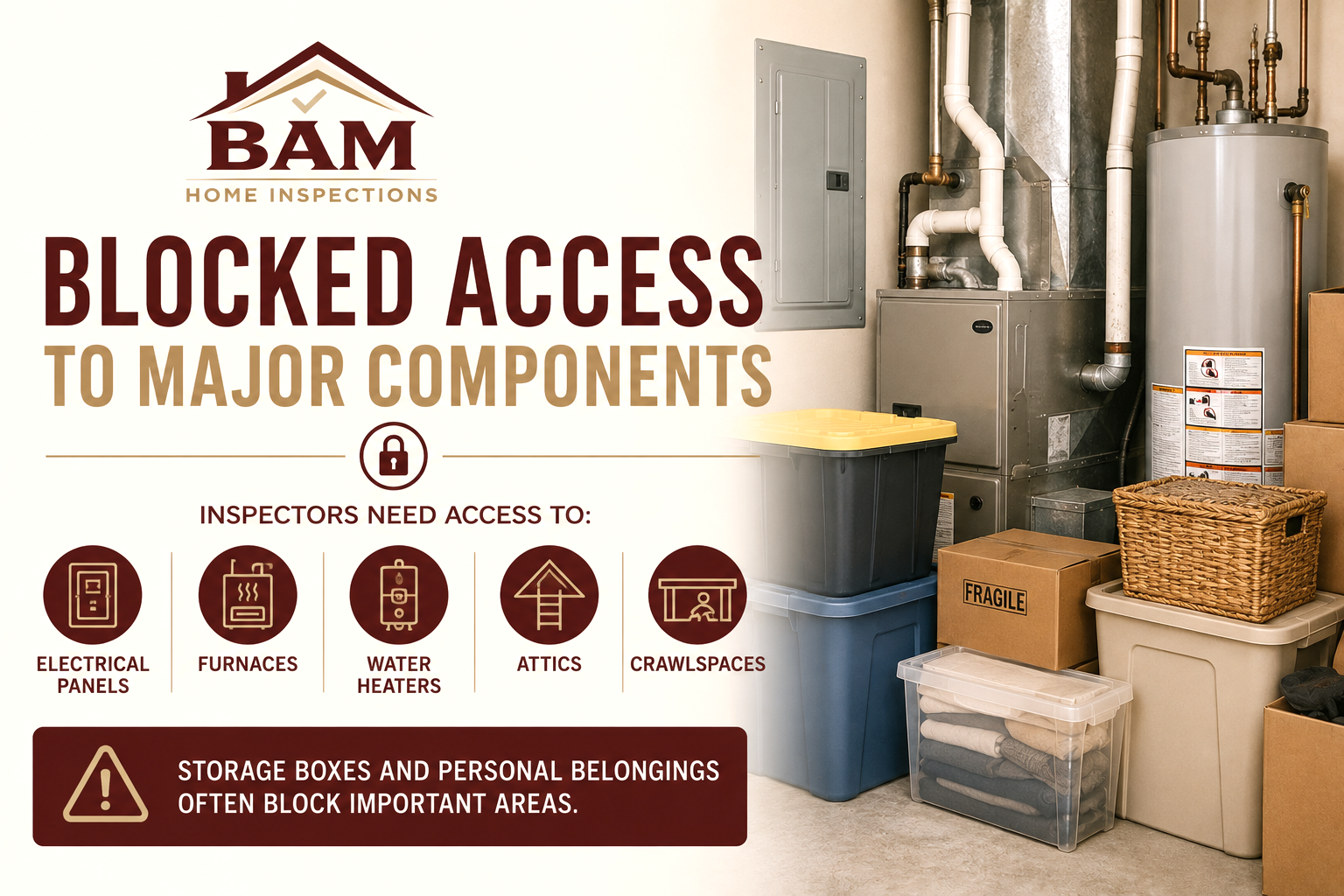
7. Blocked Access to Major Components
Inspectors need access to:
- Electrical panels
- Furnaces
- Water heaters
- Attics
- Crawlspaces
Storage boxes and personal belongings often block important areas.
Seller Tip
Maintain approximately three feet of clearance around major systems whenever possible.
8. Missing or Deteriorated Caulking
Inspectors frequently note deteriorated caulking around:
- Bathtubs
- Showers
- Sinks
- Exterior penetrations
- Windows
Caulking helps prevent moisture intrusion and contributes to a well-maintained appearance.
Seller Tip
Fresh caulk is inexpensive and can significantly improve presentation.

9. Neglected Exterior Maintenance
Many inspection findings occur outside the home.
Common examples include:
- Vegetation touching siding
- Missing splash blocks
- Poor grading
- Damaged weatherstripping
- Deteriorated exterior sealants
Seller Tip
Walk the perimeter of your home and view it from a buyer’s perspective.
Small improvements can make a big difference.

10. Missing Documentation
This isn’t technically an inspection finding, but it often creates unnecessary questions.
Buyers appreciate documentation for:
- Roof replacements
- HVAC upgrades
- Water heater installations
- Sewer repairs
- Radon mitigation systems
- Septic system maintenance
- Major remodeling projects
Seller Tip
Create a simple folder containing maintenance records, receipts, warranties, and permits.
Documentation helps tell the story of a well-maintained home.

The Biggest Headache Sellers Can Avoid
Surprisingly, the biggest inspection headache isn’t usually a loose handrail or dripping faucet.
It’s being caught off guard.
Many sellers become stressed because they don’t know what to expect.
Preparation changes that.
When sellers understand the most common findings and address what they can beforehand, inspection day often feels far less intimidating.

Colorado Seller Tip
Colorado homes face unique challenges including:
- Intense UV exposure
- Freeze-thaw cycles
- Snow and ice
- Wind exposure
- Hail events
- Expansive soils
As a result, maintenance-related findings are common and expected.
The goal isn’t perfection.
The goal is showing buyers that the home has been cared for.
What Sellers Should Remember
Even the most well-maintained home will likely have inspection findings.
That’s normal.
A successful inspection isn’t one with zero comments.
A successful inspection is one where:
✓ The home is accessible
✓ Major systems can be evaluated
✓ Maintenance has been reasonably addressed
✓ Buyers receive clear information
✓ Everyone moves forward with confidence

Final Thoughts
Most inspection headaches aren’t caused by major defects.
They’re caused by small issues that were easy to overlook.
The good news is that many of the most common inspection findings can be addressed with a little preparation before listing.
Replacing a light bulb.
Securing a handrail.
Fixing a dripping faucet.
Clearing access to the attic.
These simple steps won’t make a home perfect.
But they can help create a smoother inspection experience, reduce buyer concerns, and support a more confident transaction.

Seller Success Tip
The best time to address small issues is before they become inspection findings.
A little preparation today can help prevent unnecessary headaches tomorrow.
Frequently Asked Questions (FAQs)
Many of the most common inspection findings involve simple maintenance items such as burned-out light bulbs, dripping faucets, loose handrails, dirty HVAC filters, deteriorated caulking, blocked access to major systems, and missing smoke alarm batteries. These issues are often inexpensive to address and can help reduce unnecessary comments in the inspection report.
Small issues often influence buyer perception. While a single minor defect is rarely a major concern, multiple small maintenance items can create the impression that the home has not been cared for. Addressing these items beforehand helps demonstrate pride of ownership and may increase buyer confidence.
Yes. Replacing a dirty HVAC filter is a simple, inexpensive step that demonstrates routine maintenance and helps the system operate more efficiently. While it won’t change the age or condition of the equipment, it can contribute to a more positive impression during the inspection process.
Inspectors need access to electrical panels, furnaces, water heaters, attics, crawlspaces, and other key components. When these areas are blocked by storage or personal belongings, portions of the inspection may be limited or delayed. Providing reasonable access helps ensure buyers receive a complete evaluation of the property.
Helpful records may include:
- Roof replacement documentation
- HVAC service records
- Water heater installation records
- Sewer repair records
- Radon mitigation information
- Septic maintenance records
- Remodeling permits and warranties
Providing documentation can help answer buyer questions and demonstrate ongoing maintenance of the property.
In many cases, yes. While no home is free from inspection findings, addressing obvious maintenance concerns beforehand can reduce avoidable comments in the inspection report. Fewer minor findings may lead to fewer repair requests, less buyer concern, and smoother negotiations after the inspection is complete.