

Helping Buyers and Sellers Focus on What Matters Most
One of the most common mistakes we see during real estate transactions isn’t a defective roof.
It isn’t a cracked driveway.
It isn’t even an aging furnace.
It’s when buyers, sellers, and sometimes even Realtors become overwhelmed by the sheer number of findings in a home inspection report.
After more than 20,000 home inspections across Colorado, we’ve learned something important:
Most inspection findings aren’t deal killers.
In fact, many of the items that create the most anxiety during negotiations are simply normal aspects of homeownership.
That’s not to say buyers should ignore defects.
Far from it.
The goal is to understand which findings deserve serious attention—and which findings simply deserve perspective.
Let’s take a closer look.
Most inspection findings aren't deal killers. In fact, many of the items that create the most anxiety during negotiations are simply normal aspects of homeownership. [Not All Findings Are Created Equal]
BAM Home Inspections Share to X
Every Home Has Findings
This may be the most important thing a Realtor can communicate to clients.
Every home has defects.
Every single one.
New homes.
Luxury homes.
Historic homes.
Investment properties.
Even the best-maintained homes have maintenance items, aging components, and areas that could be improved.
A home inspection is not a pass-or-fail test.
Its purpose is to provide information.
The challenge comes when buyers view every finding as a crisis.

Finding #1: The Aging Water Heater
One of the most common comments we hear is:
“The water heater is old. Should we be concerned?”
Maybe.
Maybe not.
An inspector may note that a water heater is nearing the end of its expected service life.
That doesn’t necessarily mean it’s defective.
It doesn’t necessarily mean it needs replaced tomorrow.
It means buyers should understand that replacement may be needed in the future so they can budget accordingly.
Age alone rarely kills a deal.
Misunderstood findings often do.

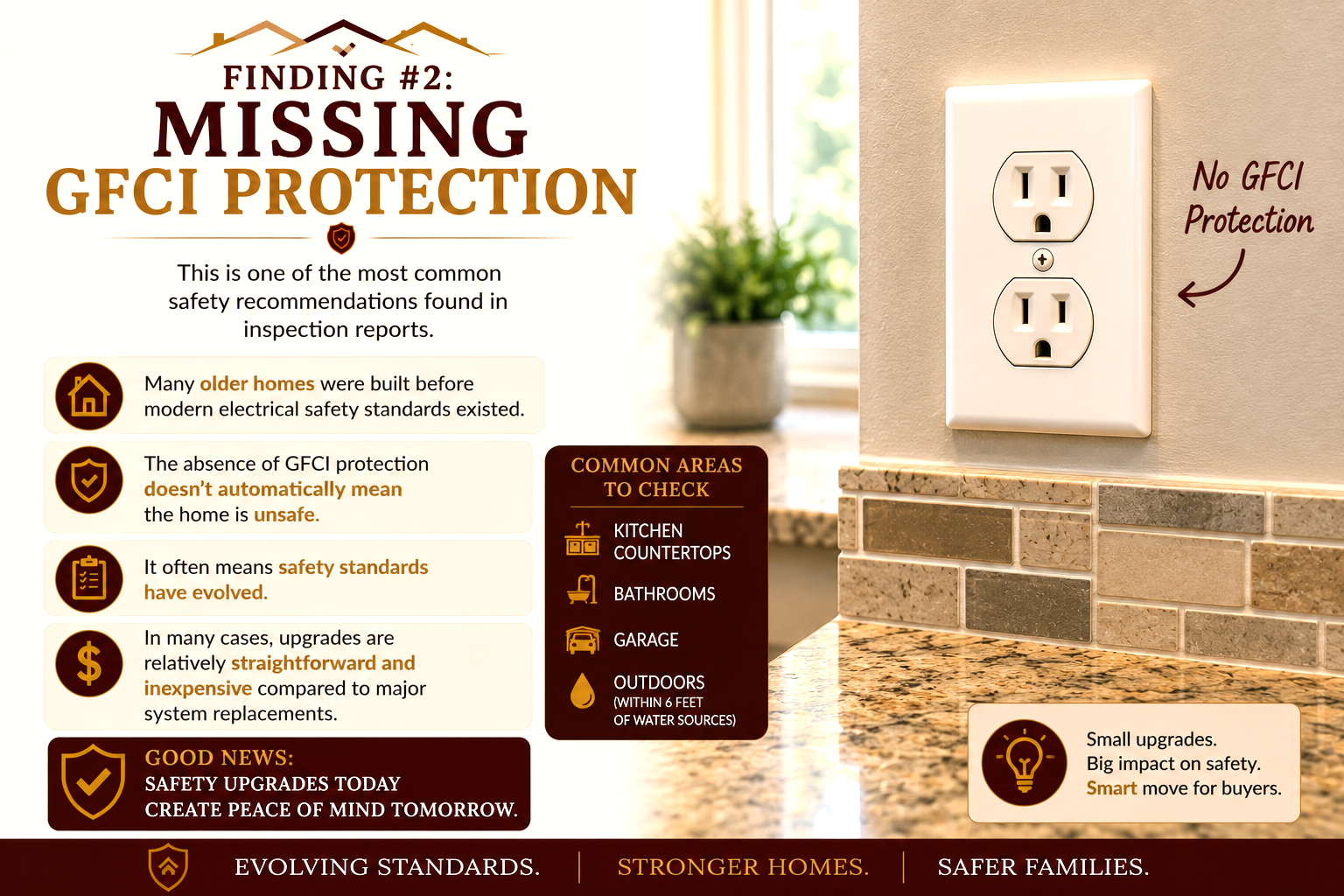
Finding #2: Missing GFCI Protection
This is one of the most common safety recommendations found in inspection reports.
Many older homes were built before modern electrical safety standards existed.
The absence of GFCI protection doesn’t automatically mean the home is unsafe.
It often means safety standards have evolved.
In many cases, upgrades are relatively straightforward and inexpensive compared to major system replacements.
Finding #3: Minor Plumbing Drips
A dripping faucet.
A slow leak beneath a sink.
A worn hose bib.
These items deserve attention.
But they’re usually maintenance concerns—not catastrophic defects.
Unfortunately, minor issues sometimes take on outsized importance during negotiations.
Experienced Realtors help clients distinguish between maintenance items and major concerns.

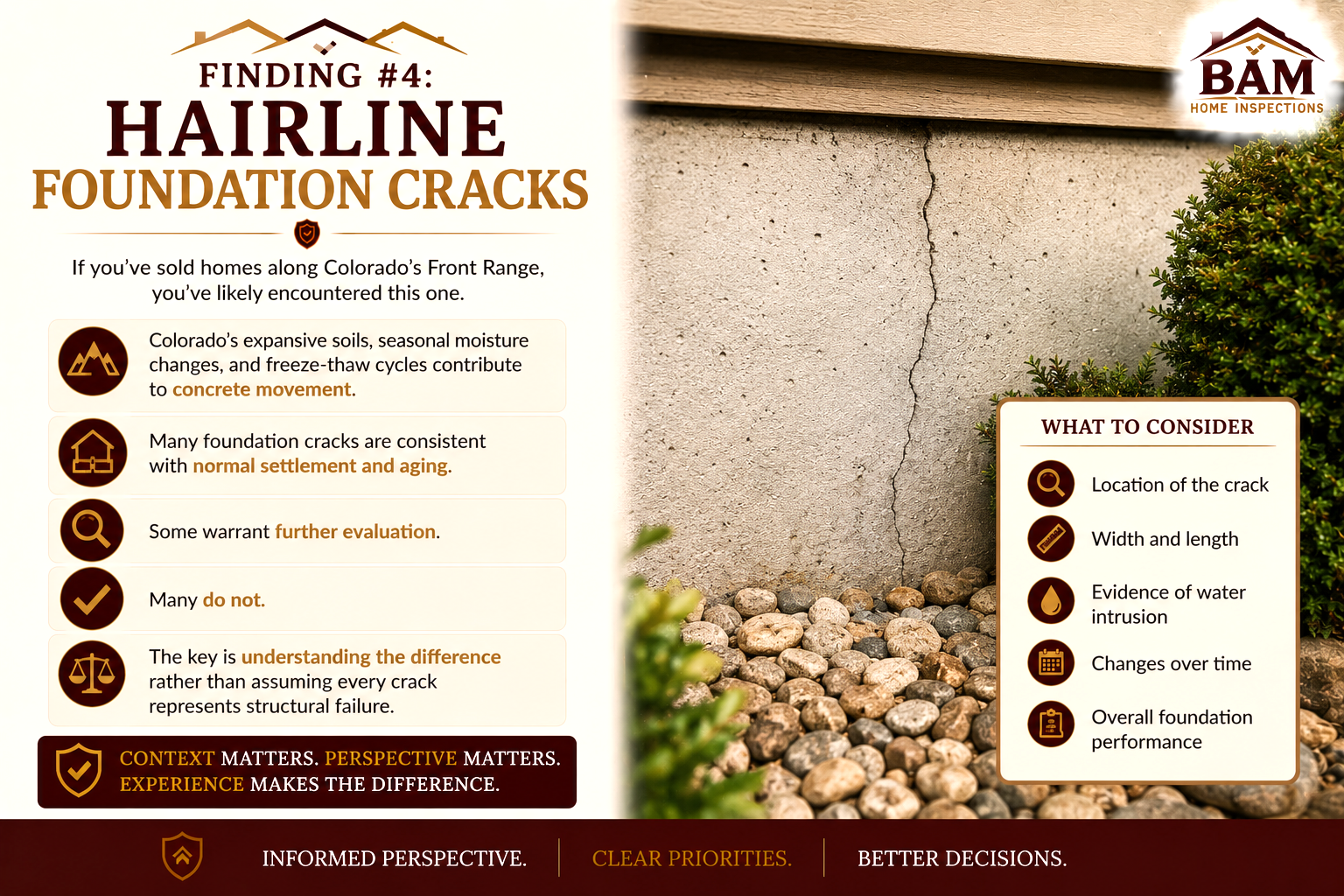
Finding #4: Hairline Foundation Cracks
If you’ve sold homes along Colorado’s Front Range, you’ve likely encountered this one.
Colorado’s expansive soils, seasonal moisture changes, and freeze-thaw cycles contribute to concrete movement.
Many foundation cracks are consistent with normal settlement and aging.
Some warrant further evaluation.
Many do not.
The key is understanding the difference rather than assuming every crack represents structural failure.
Finding #5: An HVAC System Nearing the End of Its Life
Inspectors frequently identify furnaces and air conditioners that are operating properly but are approaching the end of their typical service life.
This isn’t necessarily bad news.
Mechanical systems age.
That’s normal.
The question isn’t:
“How old is it?”
The better question is:
“Is it functioning properly today, and what should we expect in the future?”

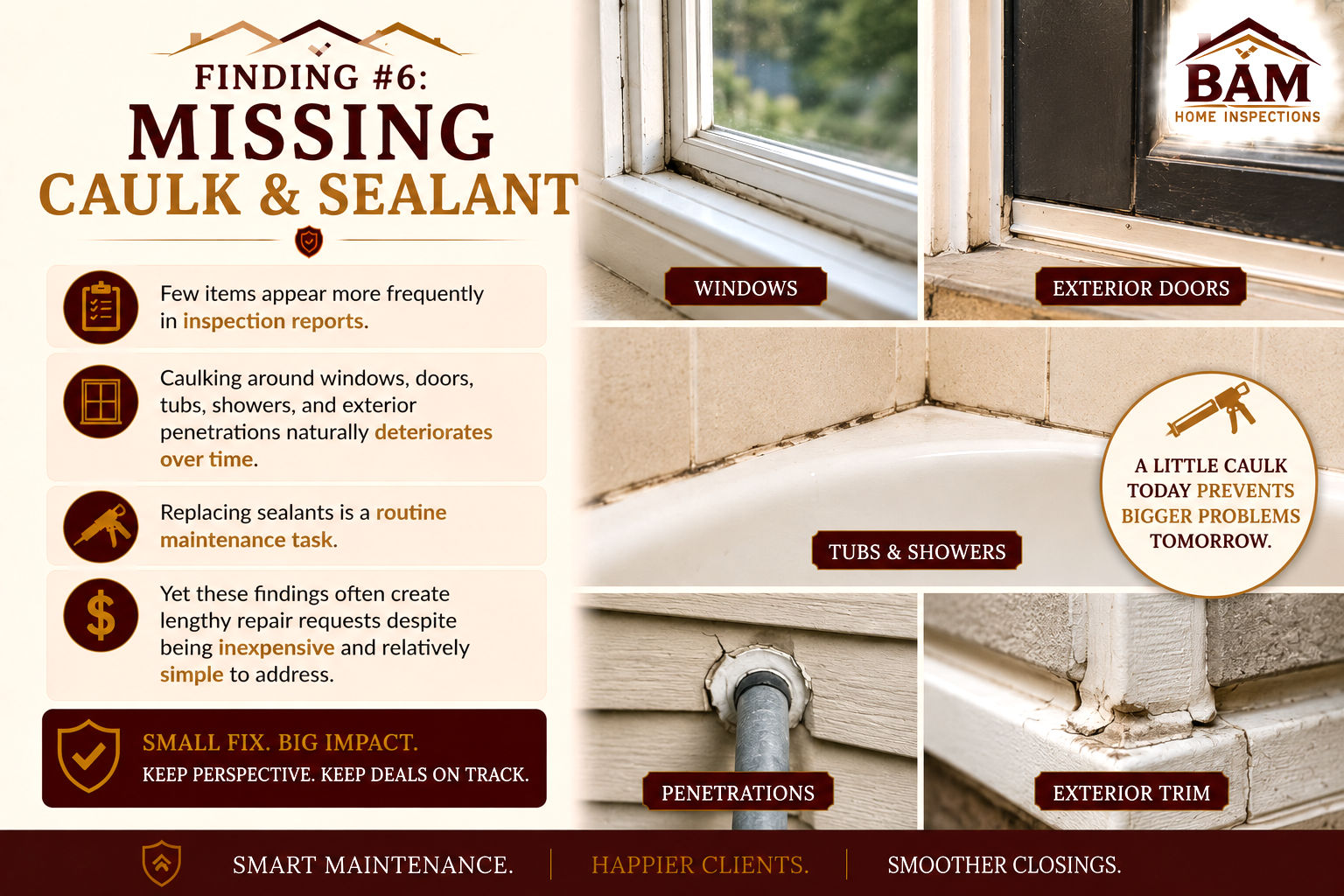
Finding #6: Missing Caulk and Sealant
Few items appear more frequently in inspection reports.
Caulking around windows, doors, tubs, showers, and exterior penetrations naturally deteriorates over time.
Replacing sealants is a routine maintenance task.
Yet these findings often create lengthy repair requests despite being inexpensive and relatively simple to address.
Finding #7: Roofs Showing Normal Wear
Colorado roofs endure:
- Hail
- Wind
- Intense UV exposure
- Snow
- Freeze-thaw cycles
It’s common for inspectors to note aging, weathering, or routine maintenance needs.
Not every roof finding means replacement is required.
Understanding the difference between normal aging and significant damage is critical.

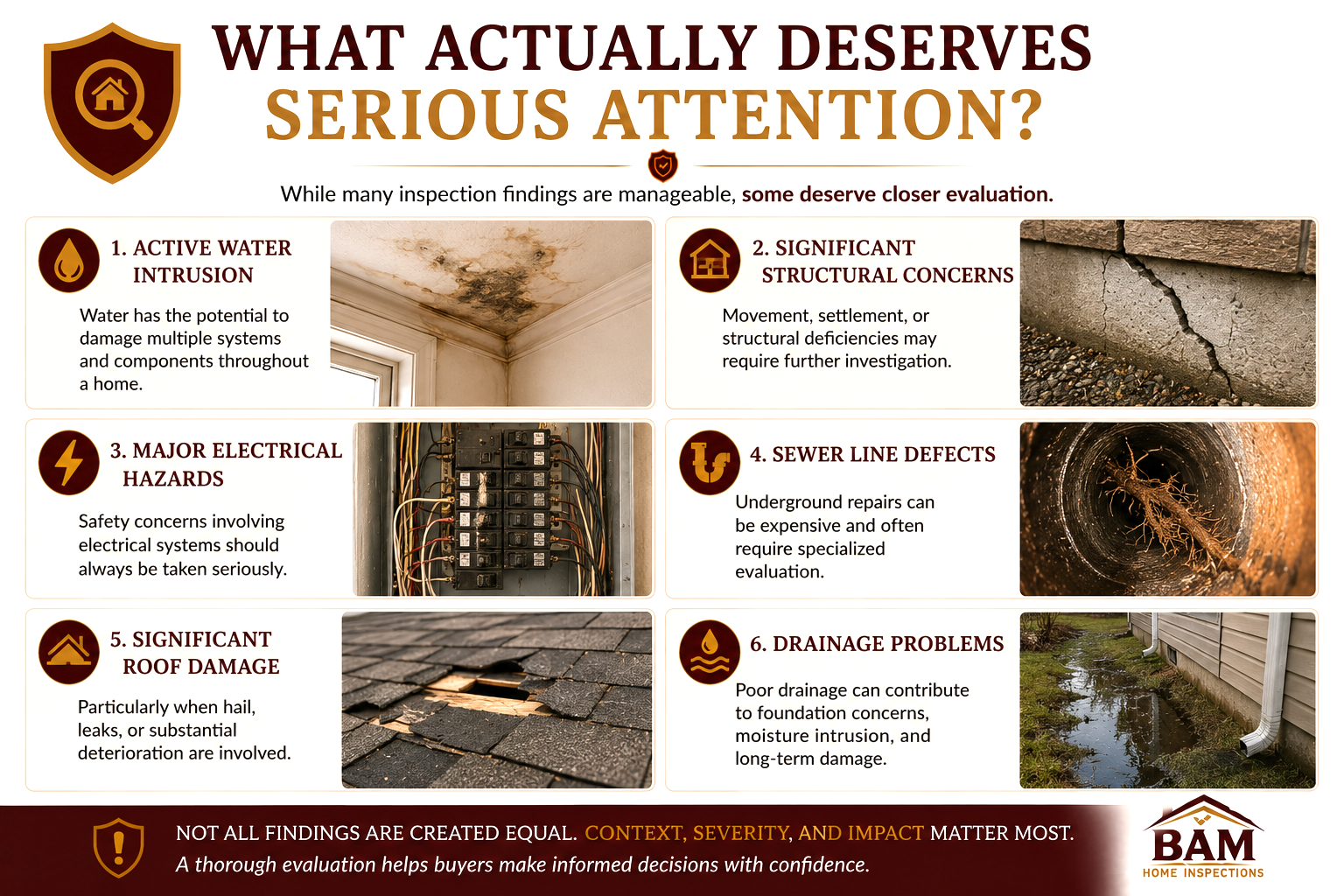
What Actually Deserves Serious Attention?
While many inspection findings are manageable, some deserve closer evaluation.
Examples include:
Active Water Intrusion
Water has the potential to damage multiple systems and components throughout a home.
Significant Structural Concerns
Movement, settlement, or structural deficiencies may require further investigation.
Major Electrical Hazards
Safety concerns involving electrical systems should always be taken seriously.
Sewer Line Defects
Underground repairs can be expensive and often require specialized evaluation.
Significant Roof Damage
Particularly when hail, leaks, or substantial deterioration are involved.
Drainage Problems
Poor drainage can contribute to foundation concerns, moisture intrusion, and long-term damage.
The Realtor's Most Valuable Role
One of the greatest services a Realtor can provide isn’t negotiating repairs.
It’s providing perspective.
When buyers receive a lengthy inspection report, they’re often overwhelmed.
When sellers receive repair requests, they’re often defensive.
A skilled Realtor helps everyone focus on what matters most.
The conversation shifts from:
“Look at all these problems.”
To:
“Which of these findings actually deserve our attention?”
That distinction can save transactions.

What We've Learned After 20,000+ Inspections
The transactions that fall apart are rarely the ones with the longest reports.
They’re the ones where people lose perspective.
The most successful transactions happen when buyers, sellers, inspectors, and Realtors understand that:
- Every home has findings.
- Maintenance is normal.
- Aging components are expected.
- Safety concerns matter.
- Major defects deserve attention.
Most importantly:
The purpose of a home inspection isn’t to find reasons to walk away.
It’s to help people make informed decisions.
Realtor Takeaway
A good inspection report identifies defects.
A great Realtor helps clients understand them.
When buyers and sellers focus on significance rather than quantity, inspections become what they were always intended to be: a tool for making smart decisions—not a reason to kill a deal.