
Why Every Realtor Should Understand One of the Most Expensive Hidden Defects in a Home
When buyers walk through a home, they notice the kitchen.
They notice the flooring.
They notice the paint colors, countertops, and mountain views.
What they rarely think about is the sewer line buried beneath the property.
And yet, after more than 20,000 home inspections across Colorado, we’ve learned that some of the most expensive surprises are often hidden underground.
A sewer line can function perfectly one day and reveal significant problems the next.
The challenge is simple:
Most sewer defects are invisible until someone looks.
That’s why sewer scope inspections have become one of the most valuable services available during the home-buying process.
Most sewer defects are invisible until someone looks. That's why sewer scope inspections have become one of the most valuable services available during the home-buying process. [Sewer Scope Inspections: Why Sewer Scopes are Becoming Essential in Colorado]
BAM Home Inspections Share to X
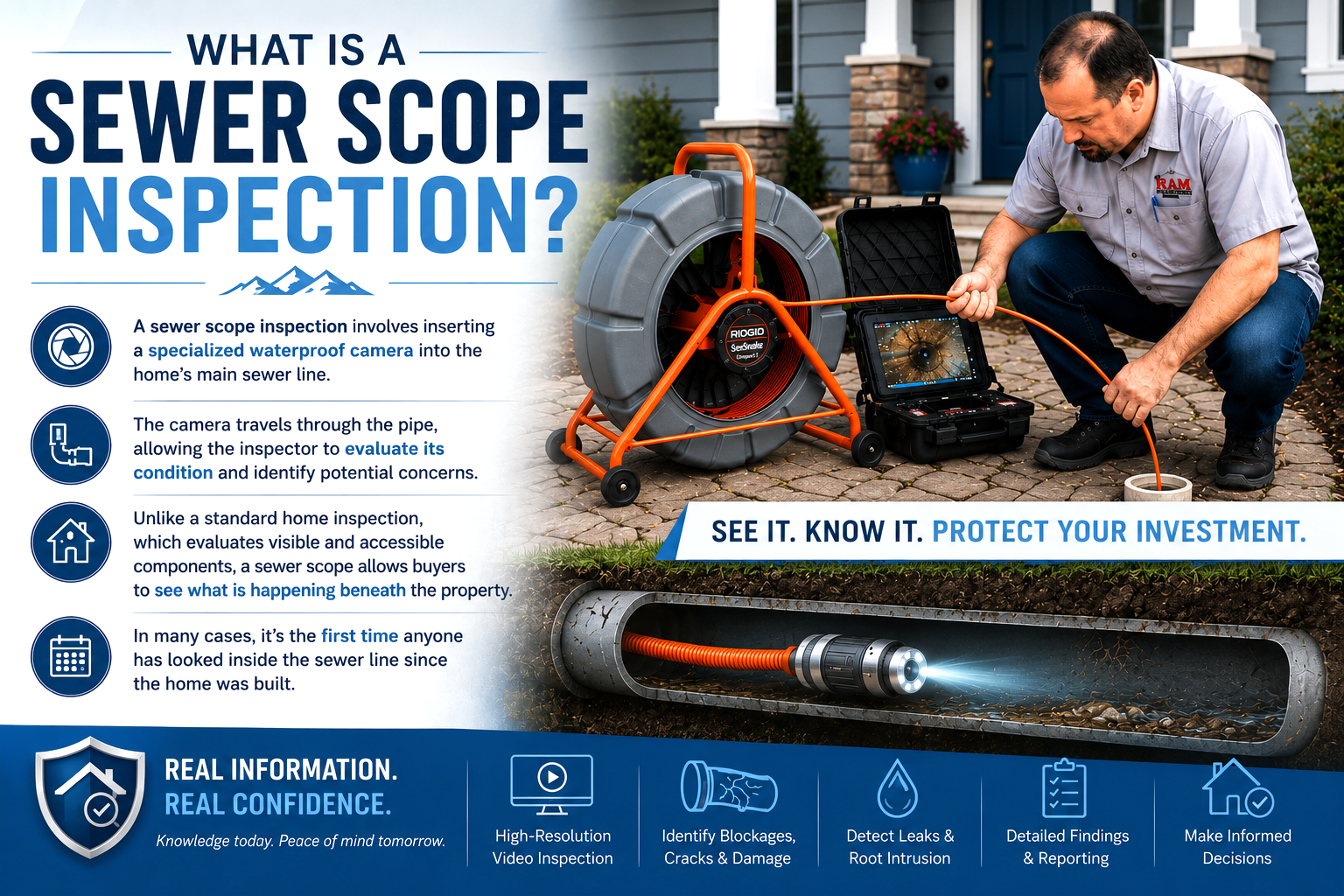
What Is a Sewer Scope Inspection?
A sewer scope inspection involves inserting a specialized waterproof camera into the home’s main sewer line.
The camera travels through the pipe, allowing the inspector to evaluate its condition and identify potential concerns.
Unlike a standard home inspection, which evaluates visible and accessible components, a sewer scope allows buyers to see what is happening beneath the property.
In many cases, it’s the first time anyone has looked inside the sewer line since the home was built.
Why Sewer Lines Matter
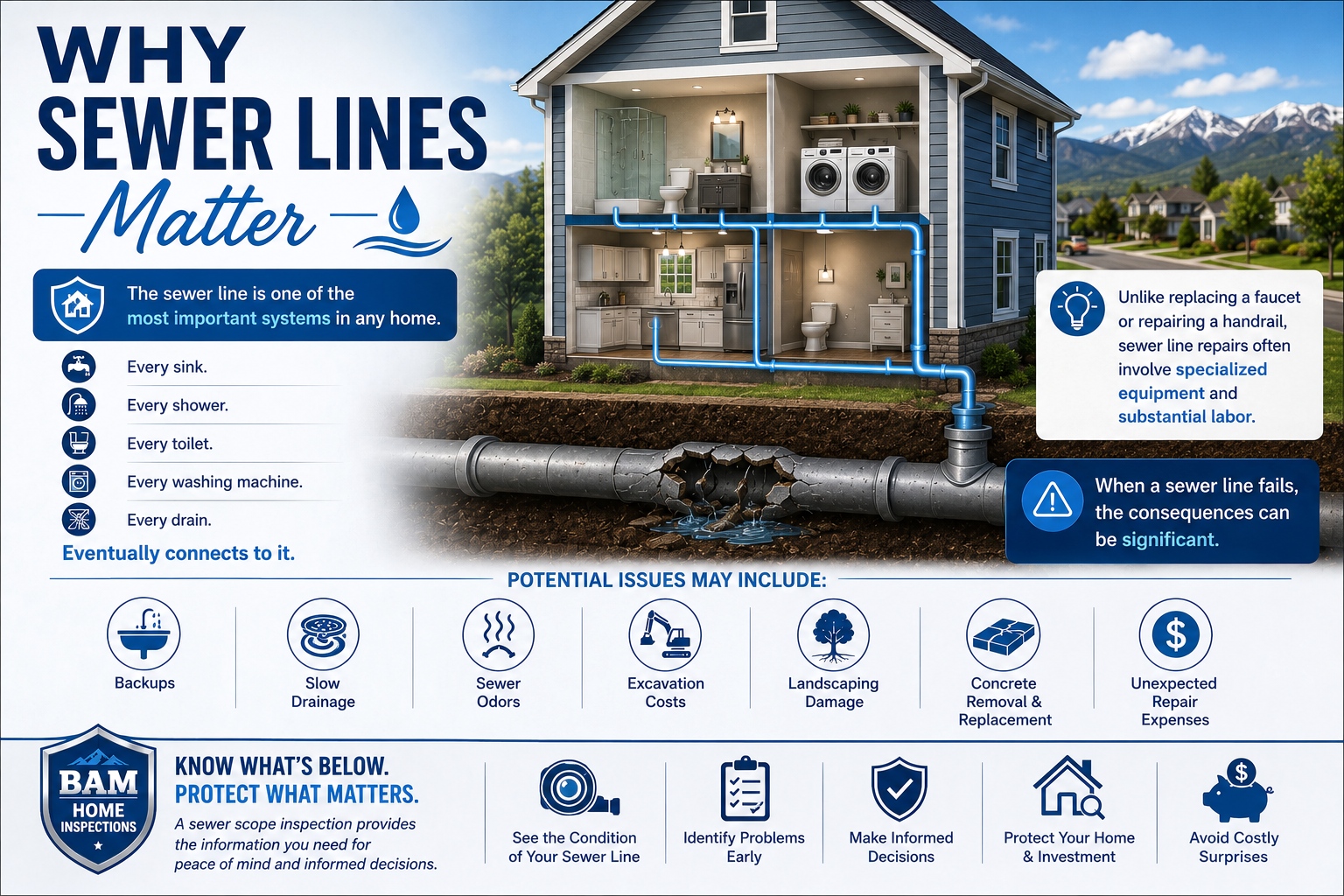
The sewer line is one of the most important systems in any home.
Every sink.
Every shower.
Every toilet.
Every washing machine.
Every drain.
Eventually connects to it.
When a sewer line fails, the consequences can be significant.
Potential issues may include:
- Backups
- Slow drainage
- Sewer odors
- Excavation costs
- Landscaping damage
- Concrete removal and replacement
- Unexpected repair expenses
Unlike replacing a faucet or repairing a handrail, sewer line repairs often involve specialized equipment and substantial labor.
Why Colorado Homes Face Unique Sewer Challenges
Colorado presents several conditions that can affect underground sewer systems.
Expansive Soils
The same soils that contribute to foundation movement can also affect underground piping.
As soils expand and contract, sewer lines may shift, settle, or develop alignment issues.
Freeze-Thaw Cycles
Colorado’s temperature swings create ongoing movement in the ground surrounding buried utilities.
Aging Infrastructure
Many Front Range communities contain homes built decades ago.
Older properties may still have:
- Clay pipe
- Cast iron pipe
- Orangeburg pipe
- Aging concrete materials
Each presents its own set of potential concerns.
Tree Root Intrusion
Colorado homeowners love mature trees.
Unfortunately, sewer lines often do as well.
Roots naturally seek moisture and can enter sewer systems through joints, cracks, and openings.
Once inside, they can continue growing and restrict flow.

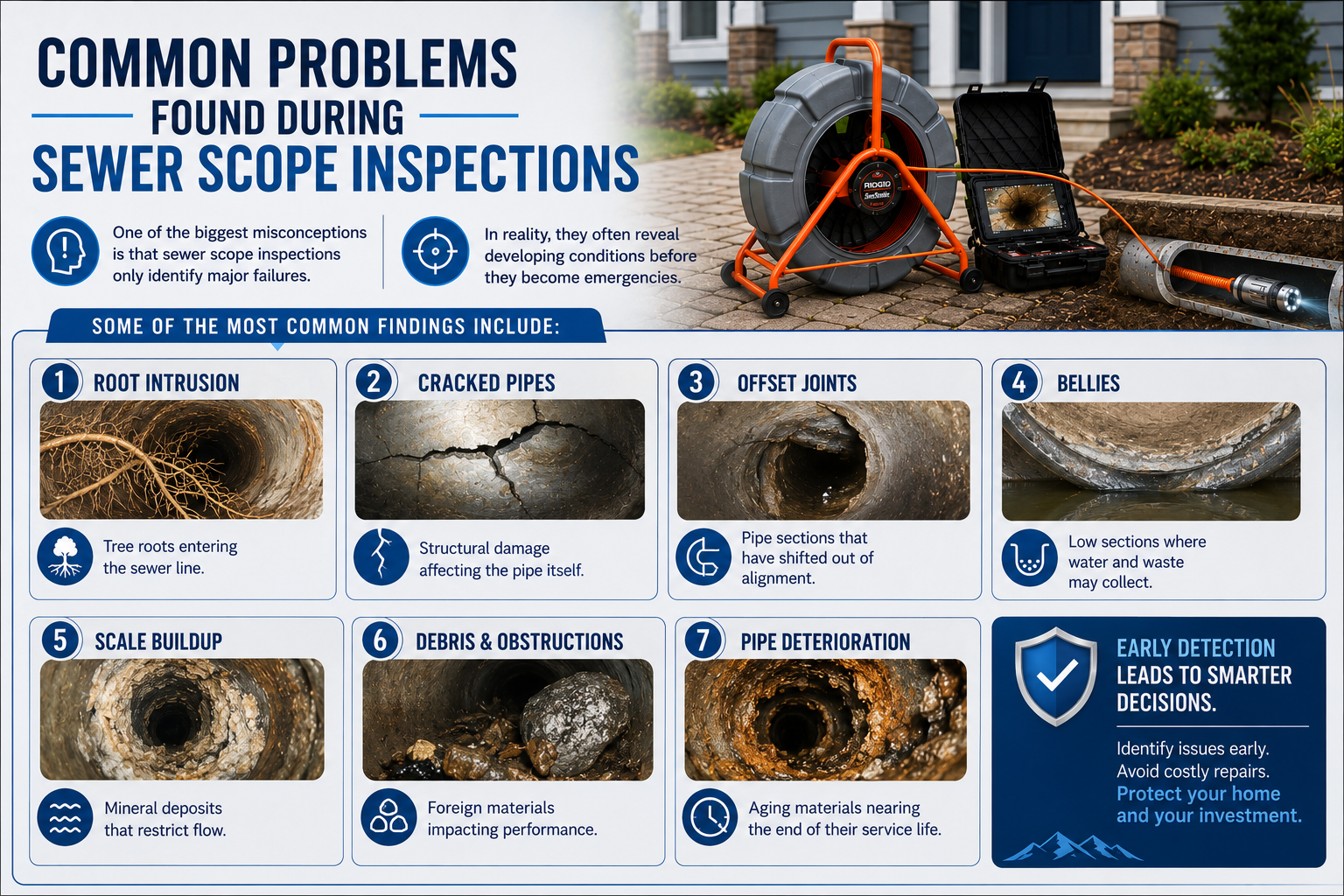
Common Problems Found During Sewer Scope Inspections
One of the biggest misconceptions is that sewer scope inspections only identify major failures.
In reality, they often reveal developing conditions before they become emergencies.
Some of the most common findings include:
Root Intrusion
Tree roots entering the sewer line.
Cracked Pipes
Structural damage affecting the pipe itself.
Offset Joints
Pipe sections that have shifted out of alignment.
Bellies
Low sections where water and waste may collect.
Scale Buildup
Mineral deposits that restrict flow.
Debris and Obstructions
Foreign materials impacting performance.
Pipe Deterioration
Aging materials nearing the end of their service life.
The Orangeburg Pipe Conversation
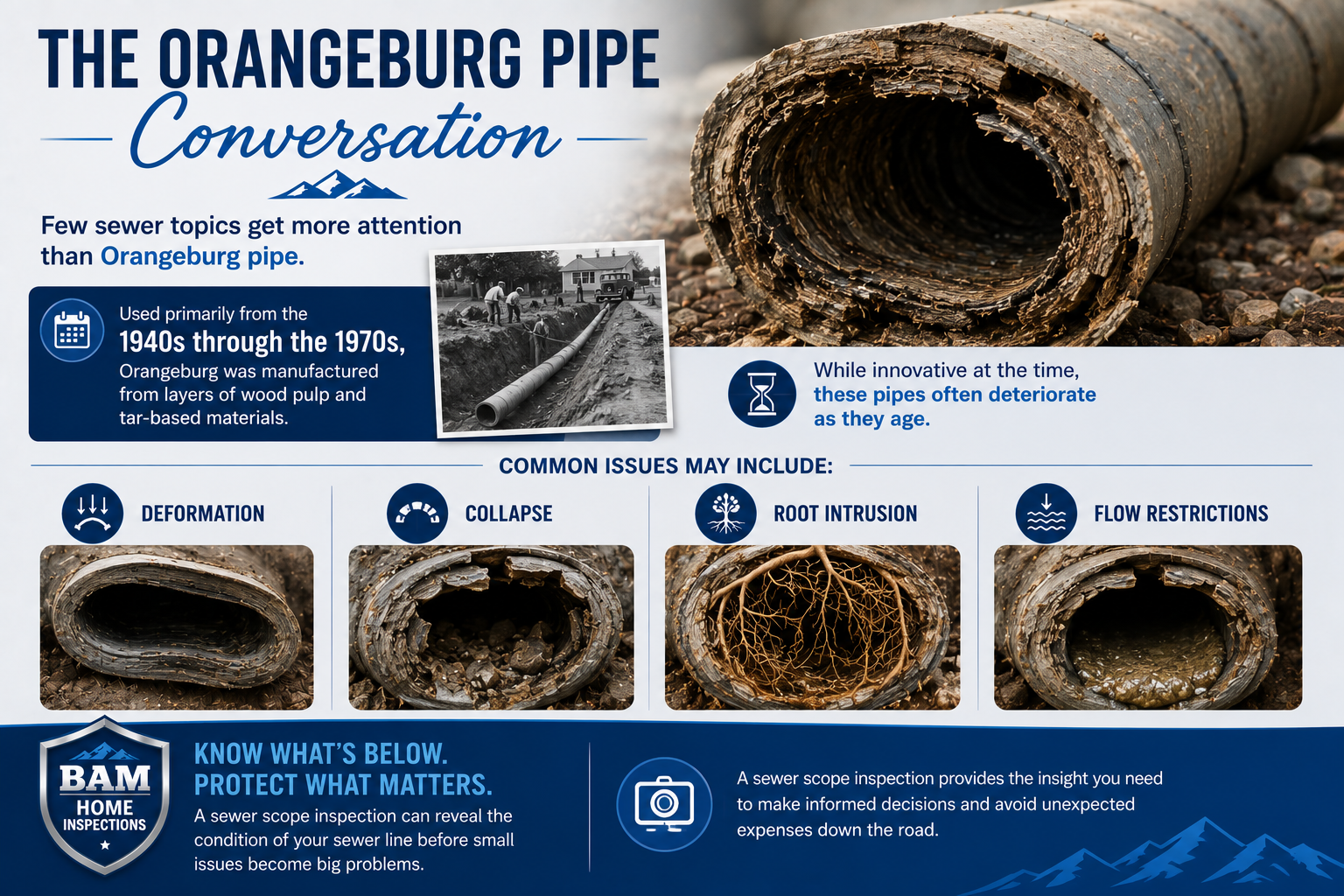
Few sewer topics get more attention than Orangeburg pipe.
Used primarily from the 1940s through the 1970s, Orangeburg was manufactured from layers of wood pulp and tar-based materials.
While innovative at the time, these pipes often deteriorate as they age.
Common issues may include:
- Deformation
- Collapse
- Root intrusion
- Flow restrictions
Not every Orangeburg line has failed.
However, understanding its condition is often important when purchasing a home.
Why Sewer Scope Inspections Are Becoming Standard Practice
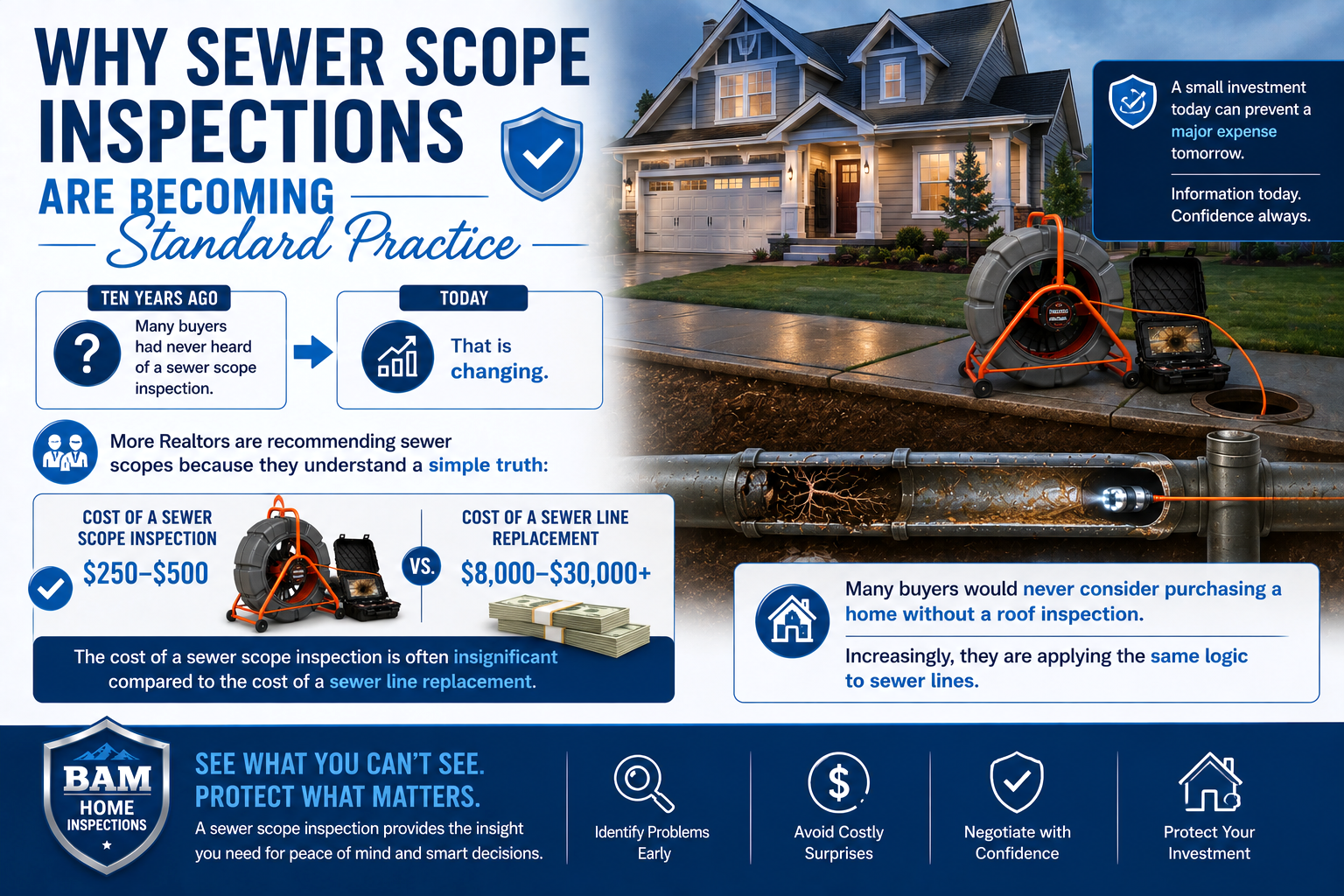
Ten years ago, many buyers had never heard of a sewer scope inspection.
Today, that is changing.
More Realtors are recommending sewer scopes because they understand a simple truth:
The cost of a sewer scope inspection is often insignificant compared to the cost of a sewer line replacement.
Many buyers would never consider purchasing a home without a roof inspection.
Increasingly, they are applying the same logic to sewer lines.
What Realtors Should Know
Sewer scope inspections rarely create problems.
They reveal problems that already exist.
That’s an important distinction.
The goal is not to create fear.
The goal is to reduce surprises.
A sewer issue discovered before closing often creates options.
A sewer issue discovered after closing often creates invoices.
Helping buyers understand that difference can significantly improve decision-making.

What Sellers Should Know
A sewer scope inspection should not automatically be viewed as a threat to the transaction.
In many cases, the sewer line is functioning well and no significant concerns are identified.
When concerns are discovered, everyone benefits from having accurate information.
The inspection allows buyers and sellers to make informed decisions based on facts rather than assumptions.

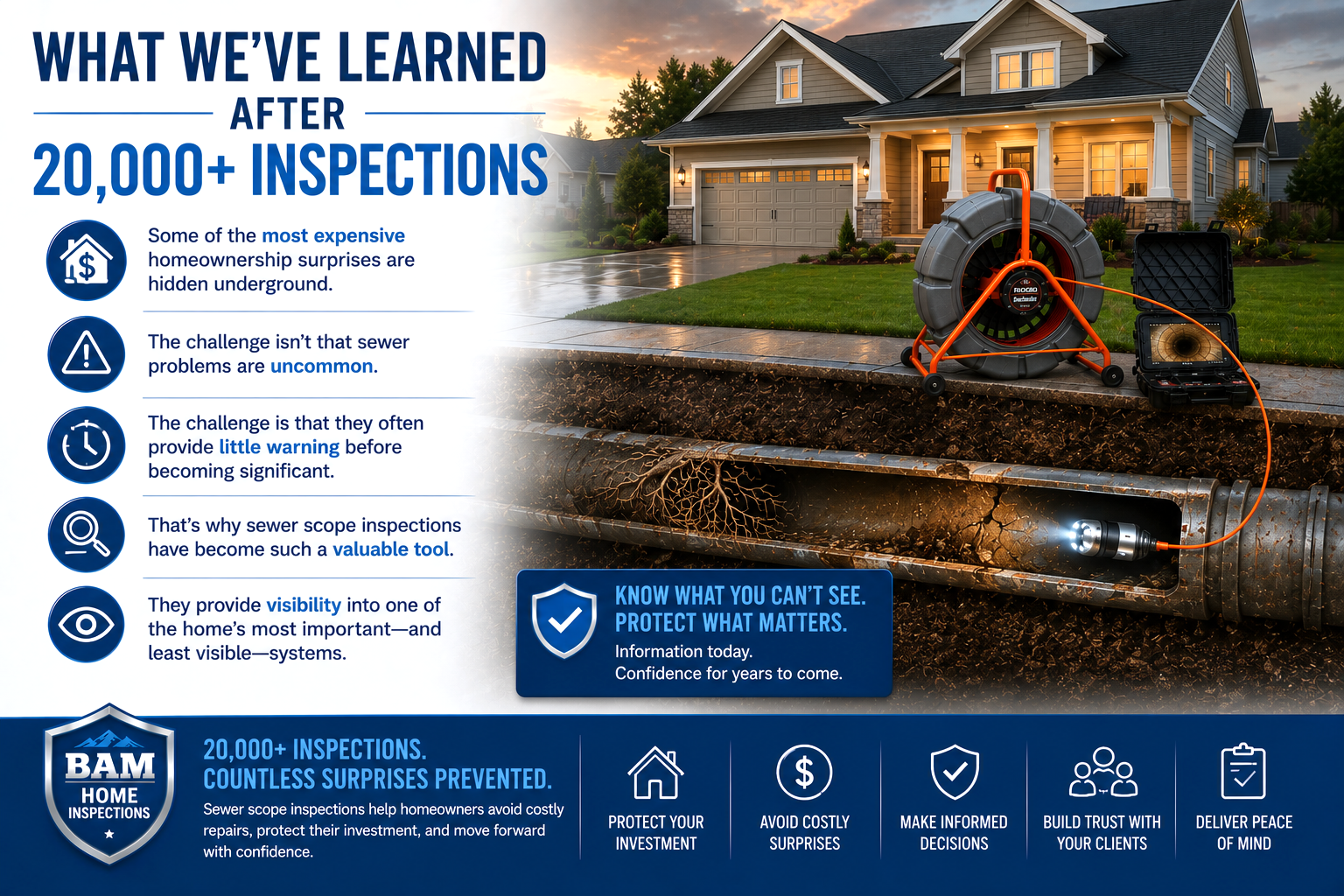
What We've Learned After 20,000+ Inspections
Some of the most expensive homeownership surprises are hidden underground.
The challenge isn’t that sewer problems are uncommon.
The challenge is that they often provide little warning before becoming significant.
That’s why sewer scope inspections have become such a valuable tool.
They provide visibility into one of the home’s most important—and least visible—systems.
Final Thoughts
A sewer line may not be the most exciting part of a home.
It won’t influence paint colors.
It won’t affect curb appeal.
And buyers rarely ask about it during a showing.
Yet when problems occur, few systems have the potential to create greater disruption or expense.
That’s why more buyers, sellers, and Realtors are recognizing the value of sewer scope inspections.
Because the most expensive surprises are often the ones hidden beneath the surface.
Realtor Takeaway
A sewer scope inspection isn’t about looking for problems.
It’s about understanding one of the home’s most important systems before ownership changes hands.
The best time to learn about a sewer line issue is before closing—not after moving day.