
What Buyers and Sellers Should Know to Keep the Transaction Moving Forward
The home inspection is complete.
Everyone is excited.
The buyers are imagining move-in day.
The sellers are looking forward to closing.
Then the inspection report arrives.
Suddenly, the transaction slows down.
Questions arise.
Contractors get involved.
Additional inspections are scheduled.
Negotiations begin.
While most real estate transactions continue successfully after the inspection, certain findings can create delays if they require additional information, evaluations, or decisions.
The good news?
Many of the most common delays are predictable—and often manageable.
Understanding them can help buyers, sellers, and Realtors navigate the process with greater confidence.
Many of the most common delays are predictable—and often manageable. Understanding them can help buyers, sellers, and Realtors navigate the process with greater confidence. [Hail Damage & Selling in Colorado]
BAM Home Inspections Share to X
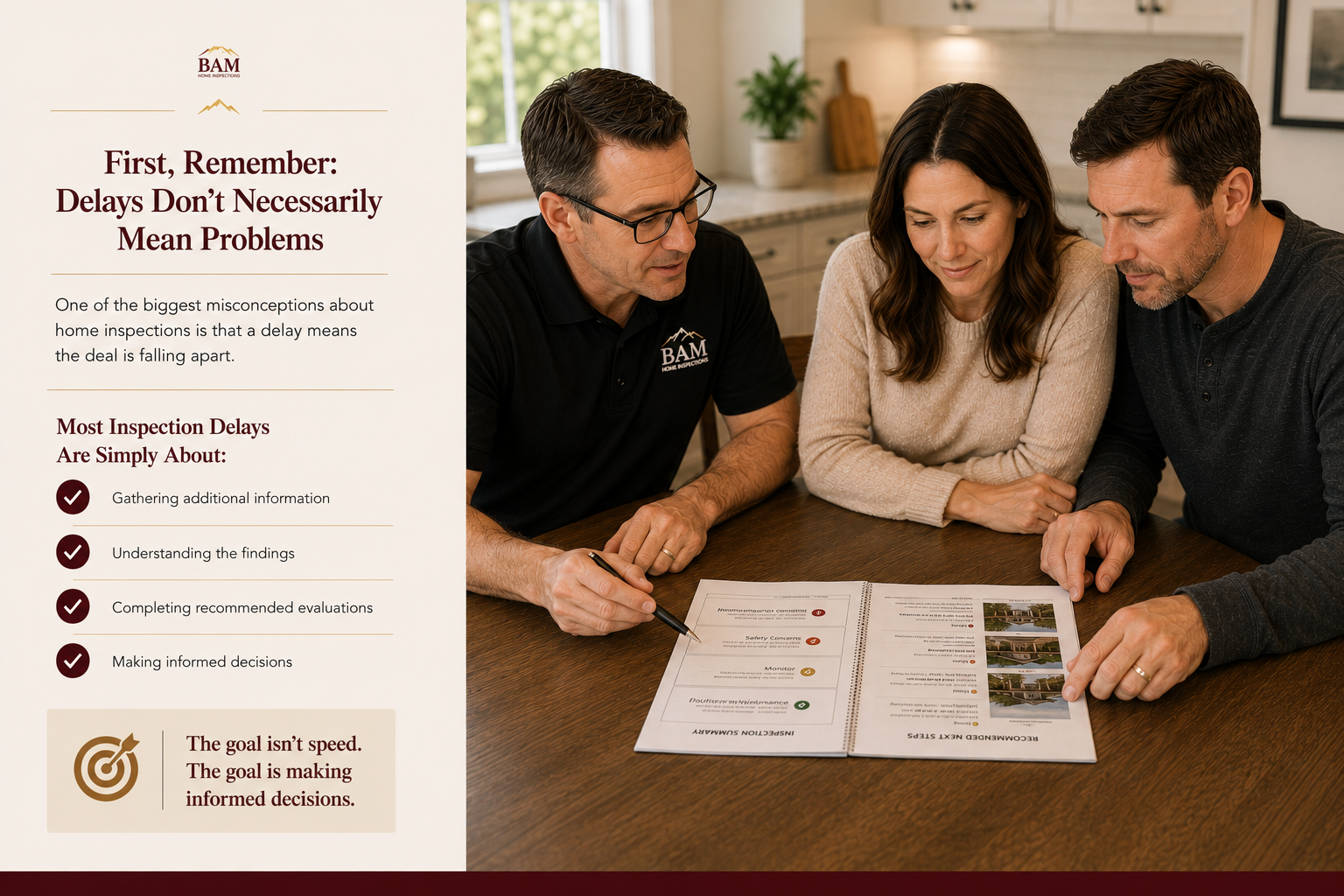
First, Remember: Delays Don't Necessarily Mean Problems
One of the biggest misconceptions about home inspections is that a delay means the deal is falling apart.
In reality, most delays simply mean people need more information before moving forward.
The inspection is designed to uncover facts.
Sometimes those facts require additional investigation.
That’s normal.
The goal isn’t speed.
The goal is making informed decisions.
1. Roof Concerns
Roof-related findings are among the most common causes of post-inspection delays.
Questions often include:
- Is the roof nearing the end of its life?
- Is there hail damage?
- Are repairs needed?
- Does replacement need to be considered?
When significant roof concerns are identified, buyers and sellers often seek additional evaluation from a qualified roofing contractor.
This additional step can add time to the transaction.
Colorado Consideration
Hail damage is one of the most common reasons roof evaluations are requested in Colorado.

2. Sewer Line Issues
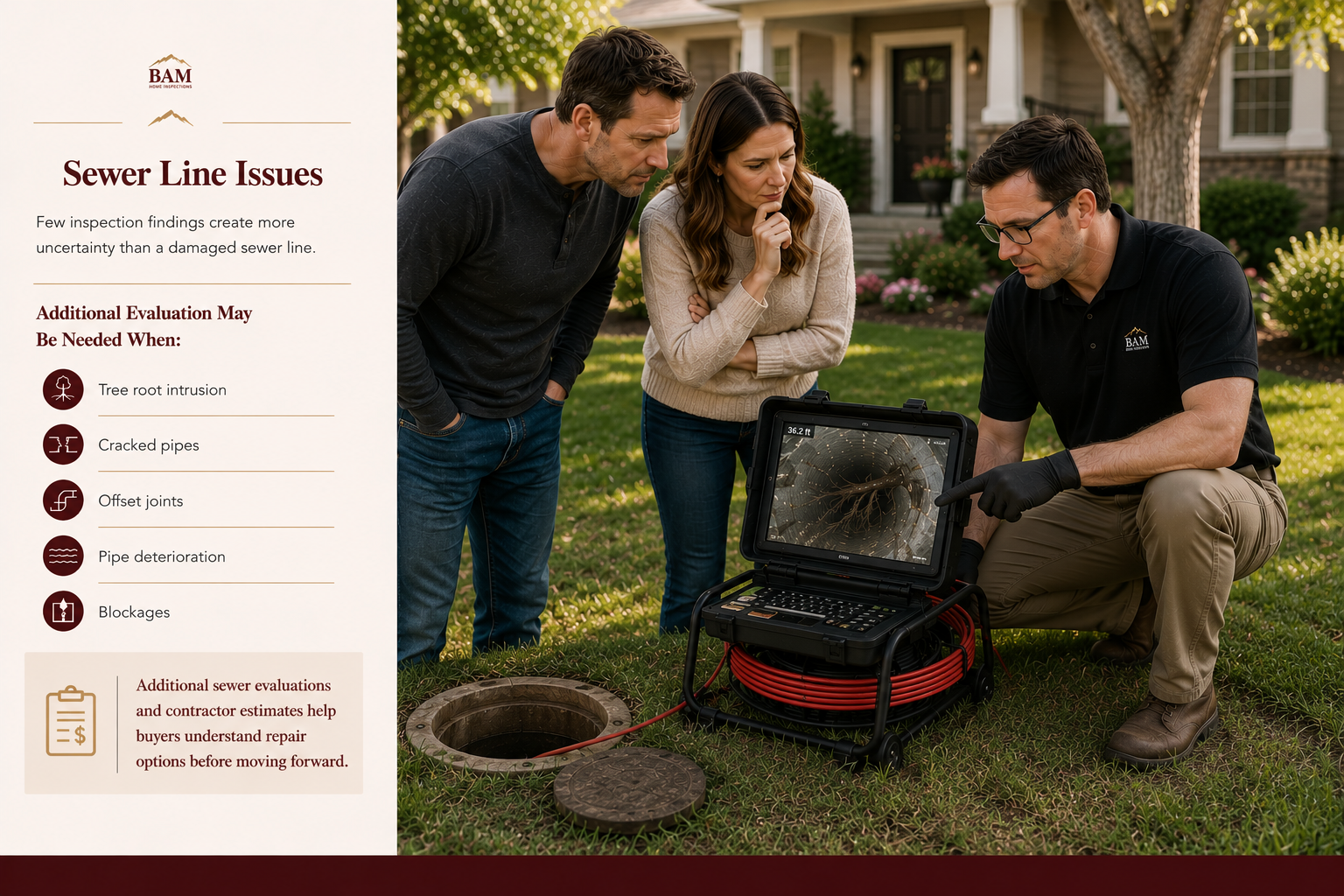
Few inspection findings create more uncertainty than a damaged sewer line.
Common concerns include:
- Tree root intrusion
- Cracked pipes
- Offset joints
- Pipe deterioration
- Blockages
Because sewer repairs can be expensive, buyers often want additional information before proceeding.
In many cases, contractors may need to provide repair estimates.
3. Structural Questions
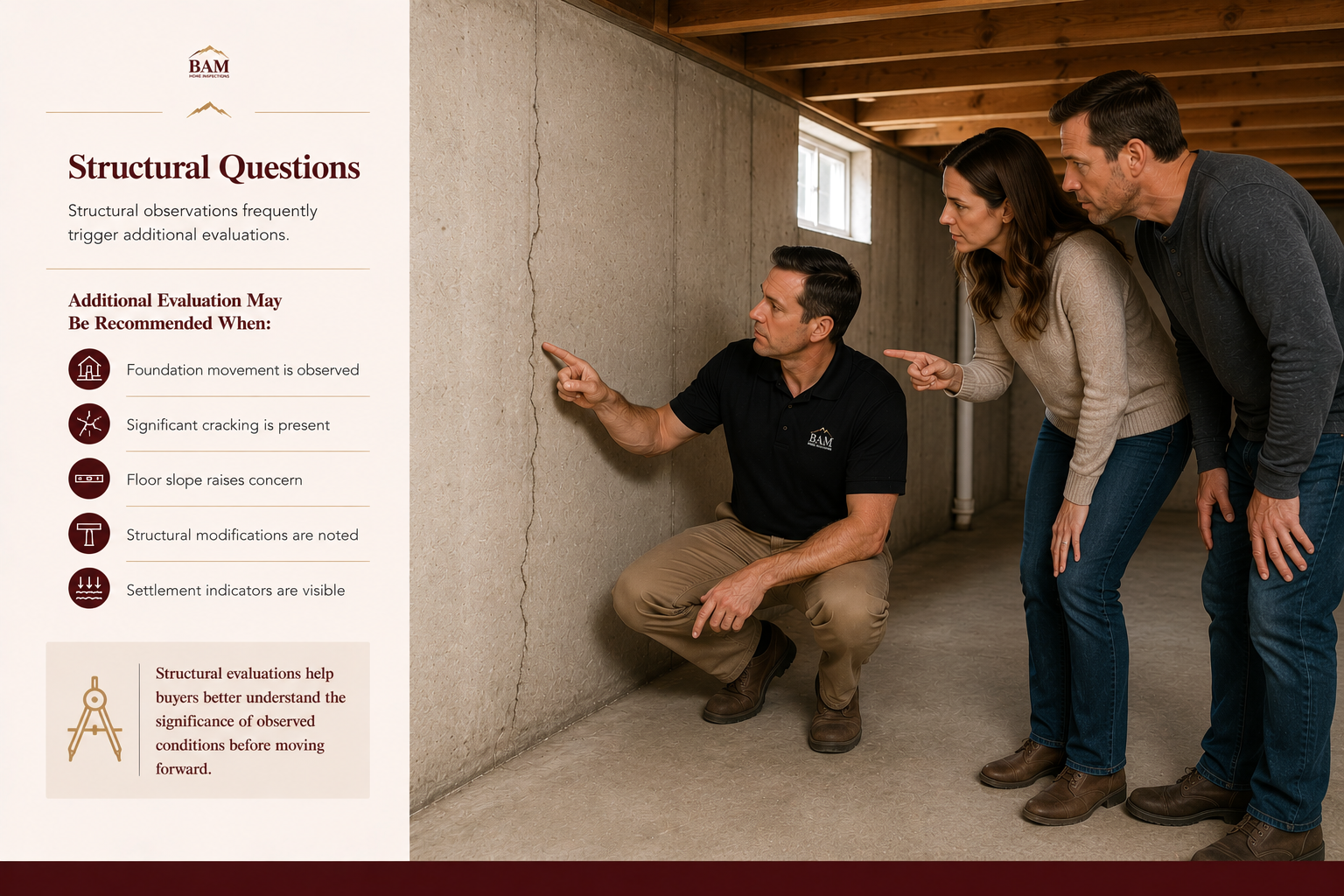
Structural observations frequently trigger additional evaluations.
Examples may include:
- Foundation movement
- Significant cracking
- Floor slope concerns
- Structural modifications
- Settlement indicators
Home inspectors identify visible conditions, but structural engineers are often consulted when further analysis is needed.
Scheduling these evaluations can extend timelines.
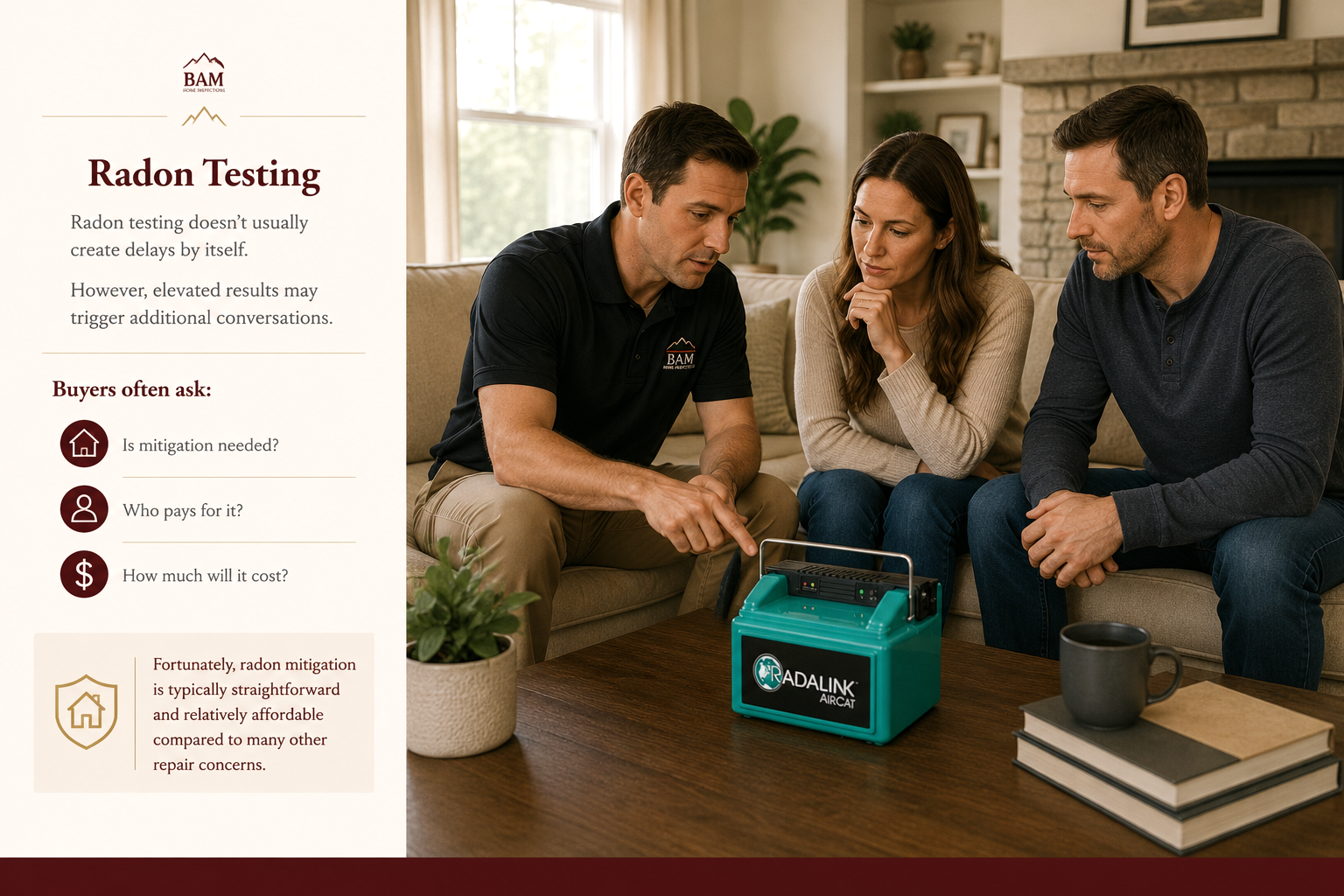
4. Radon Testing
Radon testing doesn’t usually create delays by itself.
However, elevated results may trigger additional conversations.
Buyers often ask:
- Is mitigation needed?
- Who pays for it?
- How much will it cost?
Fortunately, radon mitigation is typically straightforward and relatively affordable compared to many other repair concerns.
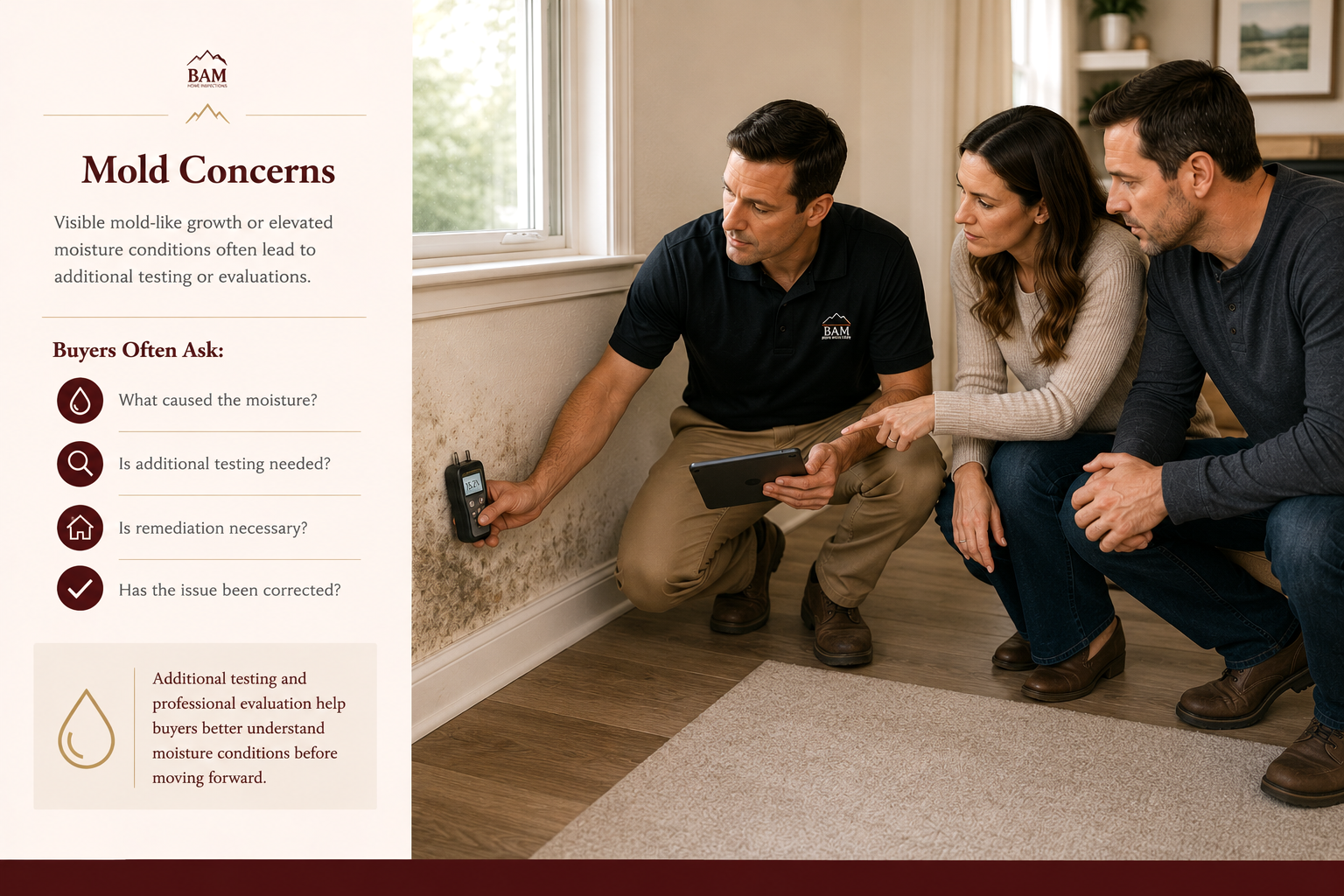
5. Mold Concerns
Visible mold-like growth or elevated moisture conditions often lead to additional testing or evaluations.
Buyers naturally want answers to questions such as:
- What caused the issue?
- Is remediation necessary?
- Has the problem been corrected?
Obtaining additional information may require environmental specialists or remediation contractors.
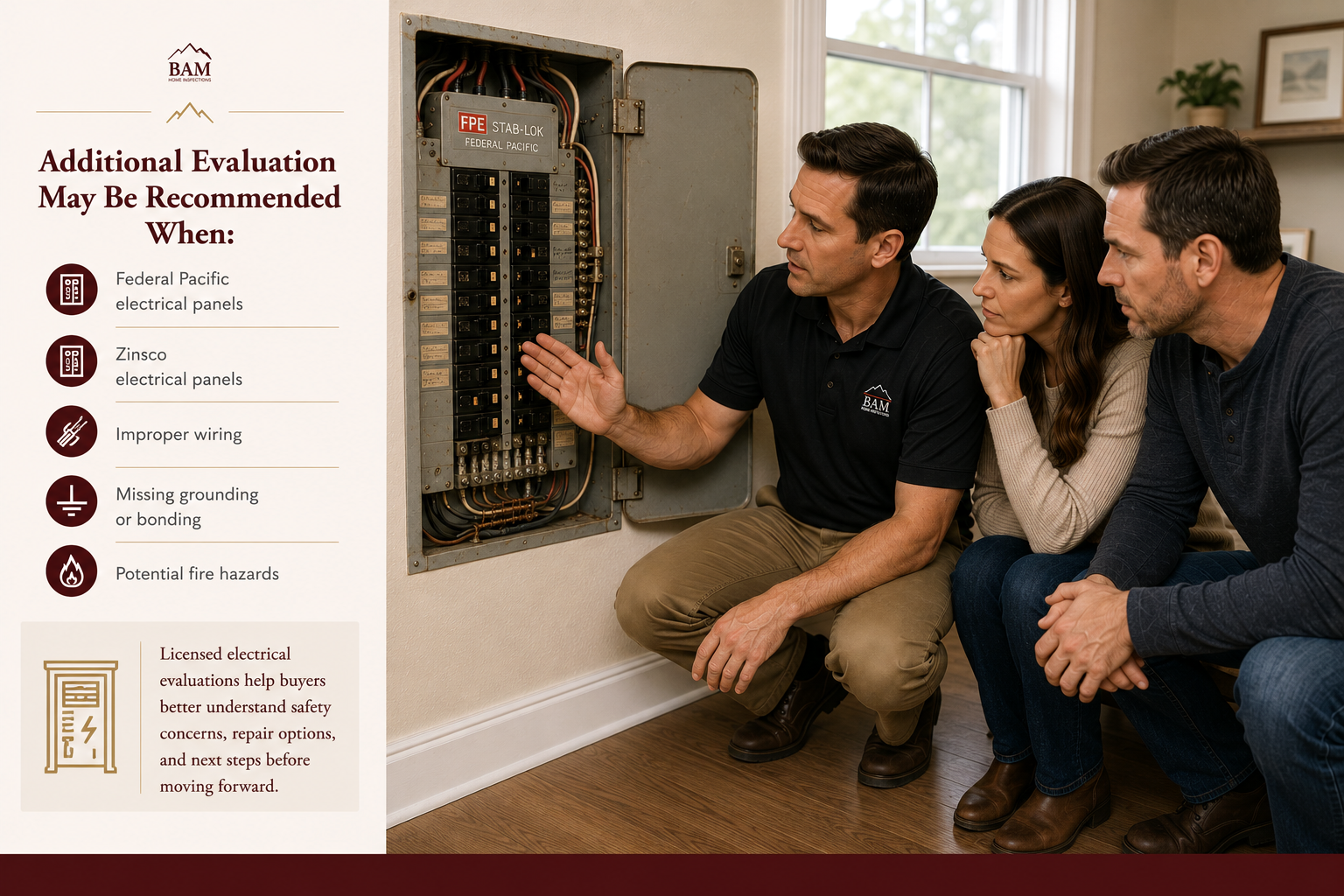
6. Electrical Safety Concerns
Significant electrical findings can create delays because safety is involved.
Examples may include:
- Federal Pacific electrical panels
- Zinsco electrical panels
- Improper wiring
- Missing grounding
- Fire hazards
Buyers frequently request further evaluation by a licensed electrician.
Obtaining estimates and determining repair responsibilities can take time.
7. Insurance-Related Questions
In today’s market, insurance concerns sometimes create delays that have little to do with the actual inspection report.
Examples include:
- Roof age concerns
- Hail damage history
- Previous claims
- Insurability questions
Buyers may need to consult their insurance carrier before moving forward.

8. Septic System Concerns
Properties served by private septic systems often require specialized inspections.
Potential delays may involve:
- Pumping requirements
- Inspection scheduling
- Repairs
- System documentation
- Capacity concerns
Because septic systems are largely underground, additional evaluations are often necessary.

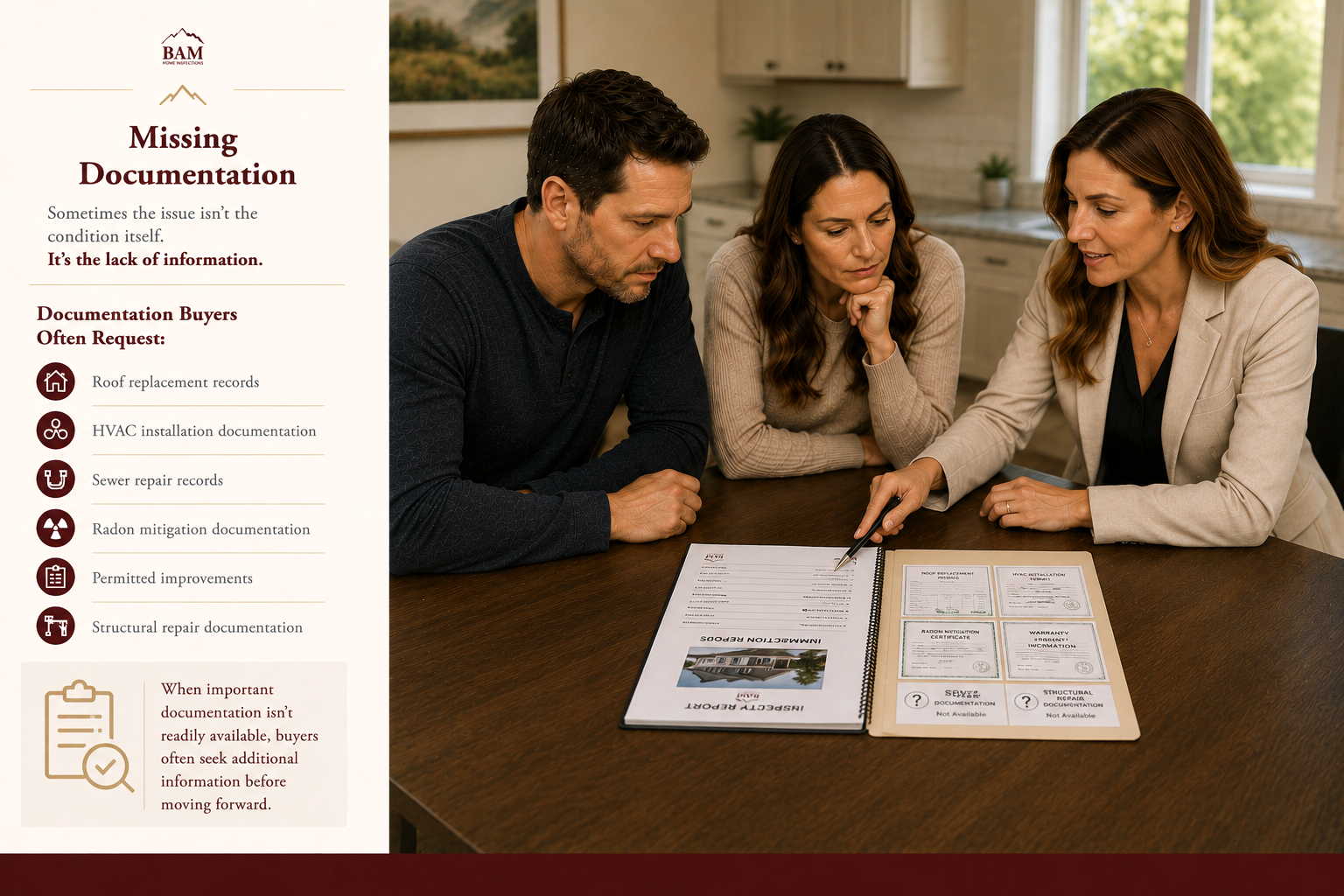
9. Missing Documentation
Sometimes the issue isn’t the condition itself.
It’s the lack of information.
Buyers frequently request documentation for:
- Roof replacements
- HVAC installations
- Sewer repairs
- Radon mitigation systems
- Permitted improvements
- Structural repairs
When documentation cannot be located quickly, additional questions often follow.
10. Repair Negotiations
The most common cause of delays isn’t the inspection itself.
It’s deciding what to do about the findings.
Questions often include:
- Which repairs are reasonable?
- Who should pay?
- Should repairs be completed before closing?
- Is a credit more appropriate?
Most transactions involve some level of negotiation after the inspection.
The more significant the findings, the more discussion is typically required.

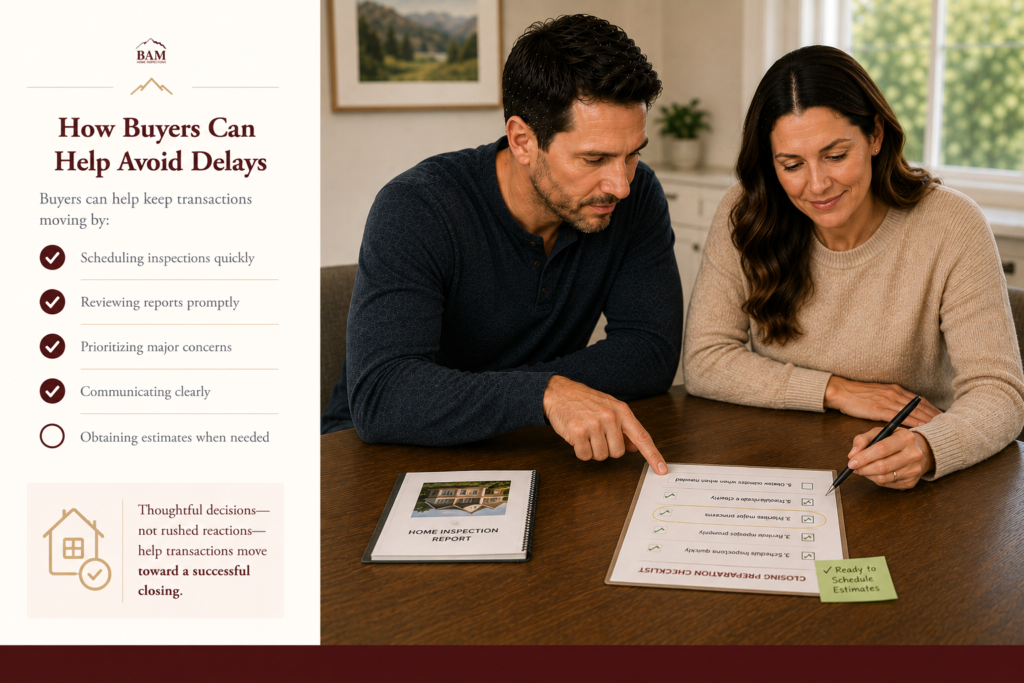
How Buyers Can Help Avoid Delays
Buyers can help keep transactions moving by:
✓ Scheduling inspections quickly
✓ Reviewing reports promptly
✓ Prioritizing major concerns
✓ Communicating clearly
✓ Obtaining estimates when needed
Remember that not every finding requires immediate action.
Focus first on the items that matter most.
How Sellers Can Help Avoid Delays
Sellers can often reduce surprises by being proactive.
Consider:
✓ Completing routine maintenance
✓ Gathering documentation
✓ Addressing known concerns
✓ Considering a pre-listing inspection
✓ Evaluating older roofs before listing
Preparation often creates smoother transactions.

Colorado Homebuyer Tip
Some of the most common inspection-related delays in Colorado involve:
- Hail damage
- Sewer line issues
- Radon testing
- Structural concerns
- Drainage issues
Understanding these areas before the inspection can help buyers and sellers prepare for potential conversations.
The Good News: Most Deals Move Forward
Home inspections are designed to provide information—not stop transactions.
In fact, most inspection-related concerns are resolved through:
- Additional evaluations
- Documentation
- Repair agreements
- Seller concessions
- Buyer understanding
The inspection process often creates clarity rather than conflict.

Final Thoughts
The home inspection is one of the most important steps in a real estate transaction because it helps everyone better understand the property.
Occasionally, findings require additional investigation or negotiation.
That’s normal.
Roof evaluations, sewer line concerns, structural questions, radon testing, and repair negotiations are among the most common reasons transactions experience delays after an inspection.
The key is preparation.
When buyers, sellers, and Realtors understand what typically causes delays, they can address concerns more efficiently and keep the transaction moving forward.
Success Tip
The inspection report isn’t the finish line—it’s often the beginning of a more informed conversation about the home. The faster everyone focuses on the issues that matter most, the smoother the path to closing becomes.
Frequently Asked Questions (FAQs)
Not necessarily. In many cases, delays simply mean buyers and sellers need additional information before moving forward. Contractor evaluations, repair estimates, documentation requests, and specialized inspections are common reasons transactions slow down temporarily. Most delays are part of the due diligence process rather than signs that the deal is falling apart.
Some of the most common causes of post-inspection delays in Colorado include:
- Roof and hail damage concerns
- Sewer line issues
- Structural questions
- Radon testing results
- Septic system concerns
- Drainage issues
These findings often require additional evaluation, estimates, or discussions before decisions can be made.
Roof issues often involve significant repair or replacement costs. When concerns such as hail damage, aging materials, or visible defects are identified, buyers and sellers frequently seek additional evaluations from roofing contractors. Obtaining inspections, estimates, and documentation can add time to the transaction.
Sellers can often reduce delays by:
- Completing routine maintenance
- Gathering repair and replacement records
- Addressing known concerns before listing
- Considering a pre-listing inspection
- Evaluating older roofs before putting the home on the market
Preparation often reduces surprises and helps keep transactions moving forward.
Buyers should prioritize findings that involve safety concerns, significant defects, expensive repairs, or major systems. Rather than becoming overwhelmed by the total number of findings, buyers should focus on understanding which issues truly matter and whether additional evaluation is warranted.
Surprisingly, it’s often not the inspection findings themselves—it’s the negotiations that follow. Buyers and sellers must decide which repairs are reasonable, whether credits or concessions are appropriate, and how concerns will be addressed before closing. The more significant the findings, the more discussion is typically required.