

Understanding the Difference Between Normal Homeownership and Major Concerns
The home inspection is complete. How do you know which points are common inspection findings?
The report arrives.
You open it and begin scrolling.
Page after page of comments.
Photos.
Recommendations.
Maintenance items.
Deficiencies.
Suddenly, your excitement about the home begins to fade.
You think:
“Is this house falling apart?”
The answer is usually no.
One of the biggest misconceptions about home inspections is that a lengthy report means a bad house.
In reality, even well-maintained homes often generate dozens of inspection findings.
The purpose of a home inspection isn’t to determine whether a home is perfect.
It’s to help buyers better understand the condition of the property.
Many findings are simply part of normal homeownership.
Let’s look at some common inspection observations that often sound more concerning than they actually are.
Many inspection findings are simply part of normal homeownership. Let's look at some common inspection observations that often sound more concerning than they actually are. [Common Inspection Findings That Don't Mean Disaster]
BAM Home Inspections Share to X
First, Remember: Every Home Has Findings
Whether a home is…
- Brand new
- Ten years old
- Fifty years old
…it will likely have inspection findings.
In fact, many new construction homes generate surprisingly long reports.
Why?
Because inspectors are trained to document observed conditions, maintenance items, safety concerns, and areas that may warrant future attention.
A report filled with observations doesn’t automatically indicate a problematic home.
The key is understanding what those observations mean.

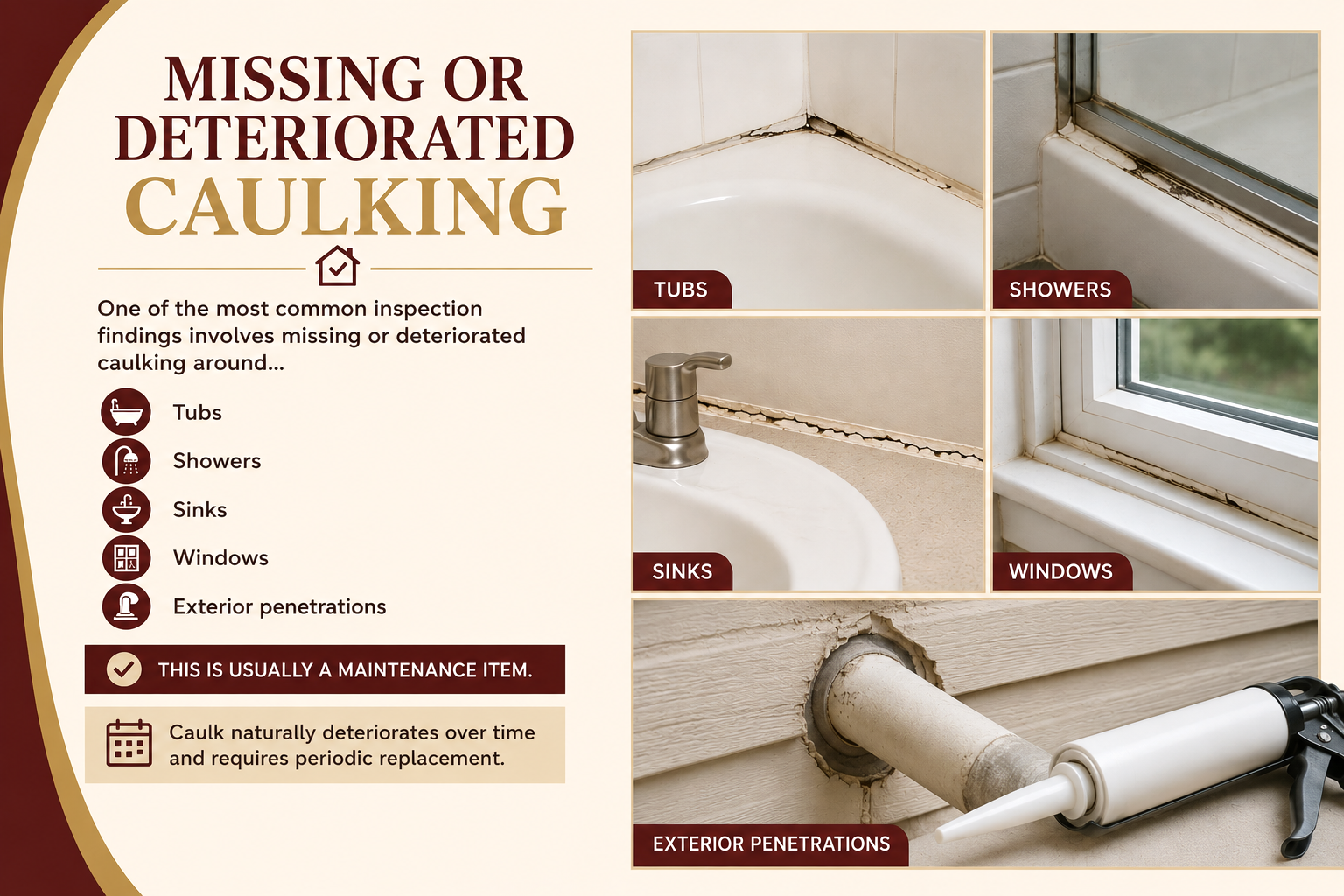
1. Missing or Deteriorated Caulking
One of the most common inspection findings involves missing or deteriorated caulking around…
- Tubs
- Showers
- Sinks
- Windows
- Exterior penetrations
This is usually a maintenance item.
Caulk naturally deteriorates over time and requires periodic replacement.
What It Usually Means
Routine home maintenance.
What It Usually Doesn't Mean
A major defect.
Smoke alarms and carbon monoxide alarms are important safety devices. Check missing alarms, dead batteries, expired units, etc. to reduce inspection comments. [Top 10 Home Inspection Headaches Sellers Can Avoid]
BAM Home Inspections Share to X
2. Loose Handrails
Inspectors frequently identify loose handrails or guardrails.
These are typically classified as safety concerns because handrails are designed to provide support and stability.
What It Usually Means
The handrail needs to be secured.
What It Usually Doesn't Mean
A major structural issue.

3. Burned-Out Light Bulbs
Believe it or not, burned-out bulbs appear in inspection reports regularly.
When a light doesn’t function, the inspector cannot immediately determine whether the issue is:
- The bulb
- The fixture
- The switch
- The wiring
What It Usually Means
Replace the bulb and retest.
What It Usually Doesn't Mean
A major electrical problem.

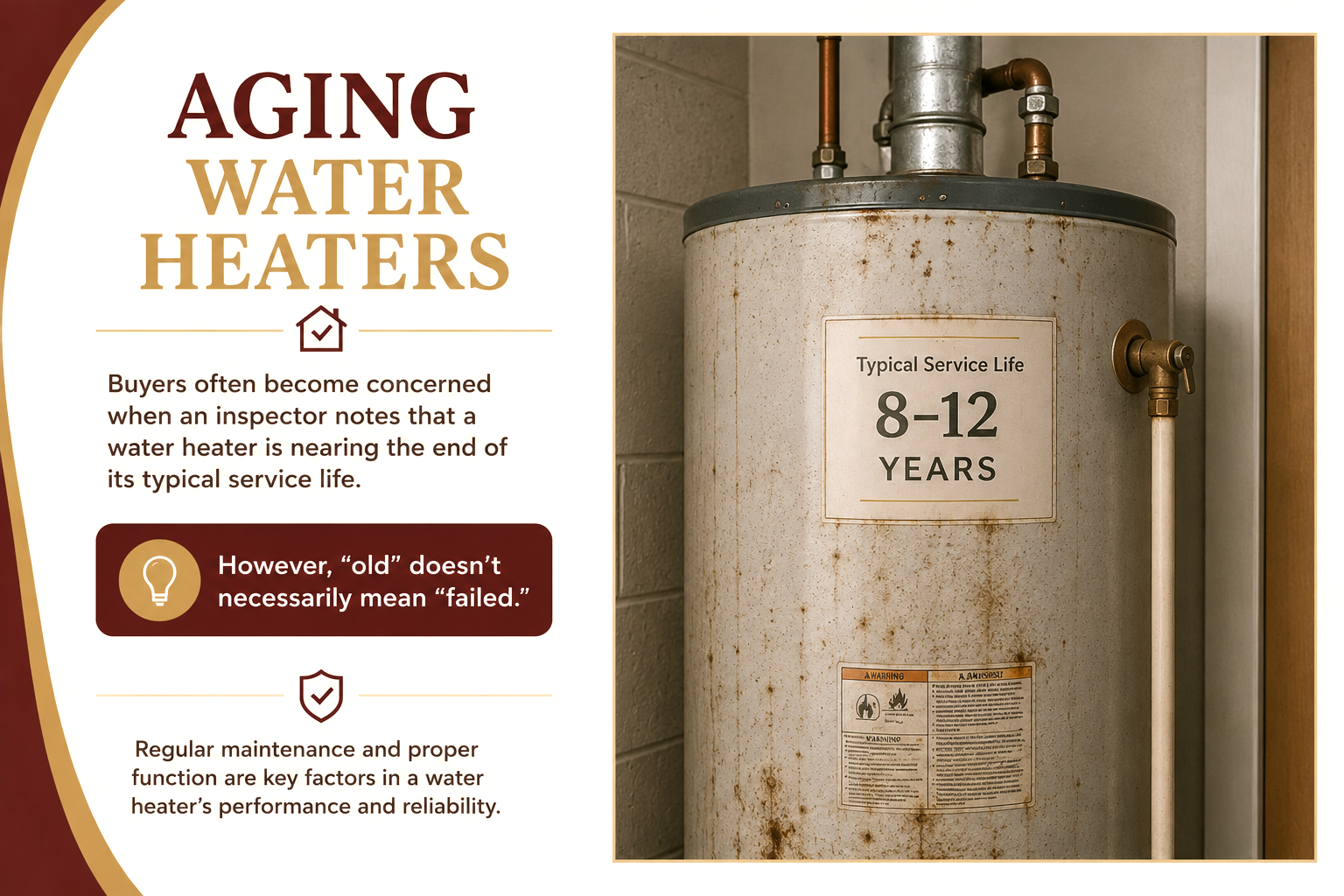
4. Aging Water Heaters
Buyers often become concerned when an inspector notes that a water heater is nearing the end of its typical service life.
However, “old” doesn’t necessarily mean “failed.”
What It Usually Means
Budget for replacement in the future.
What It Usually Doesn't Mean
Immediate replacement is required.
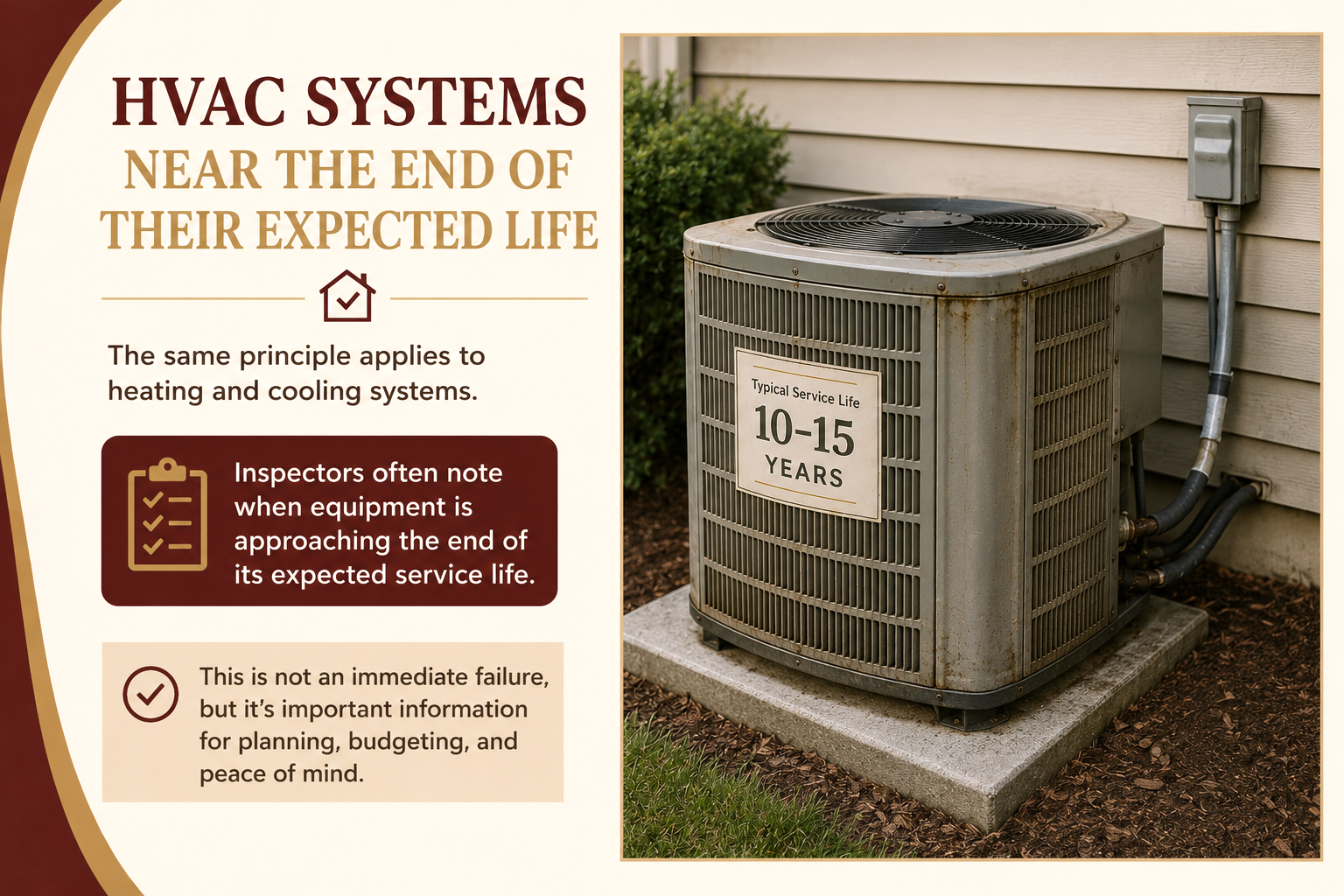
5. HVAC Systems Near the End of Their Expected Life
The same principle applies to heating and cooling systems.
Inspectors often note when equipment is approaching the end of its expected service life.
What It Usually Means
The system may require replacement sooner rather than later.
What It Usually Doesn't Mean
The system has stopped functioning.
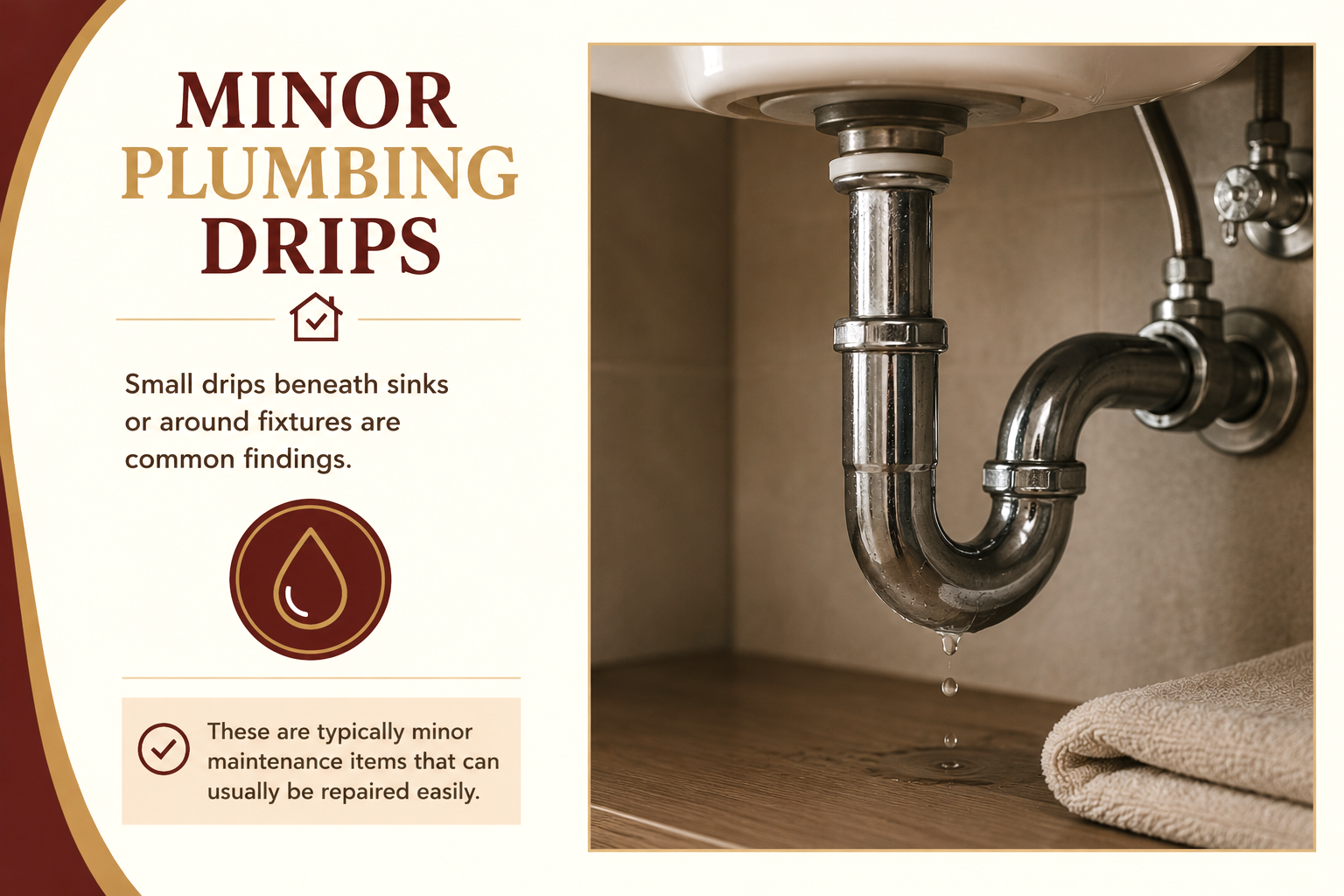
6. Minor Plumbing Drips
Small drips beneath sinks or around fixtures are common findings.
What It Usually Means
A repair should be made to prevent future issues.
What It Usually Doesn't Mean
A catastrophic plumbing failure is imminent.
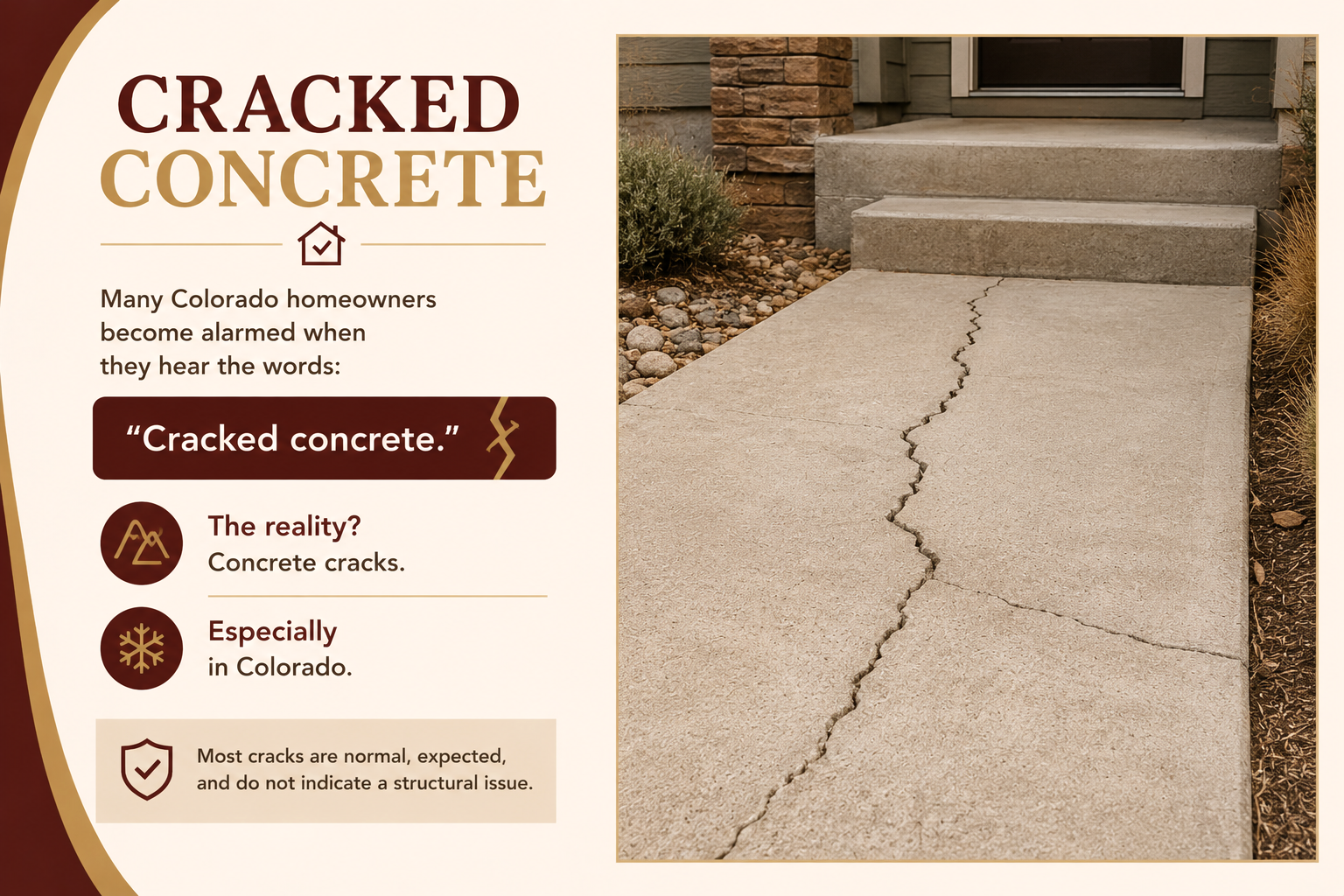
7. Cracked Concrete
Many Colorado homeowners become alarmed when they hear the words:
“Cracked concrete.”
The reality?
Concrete cracks.
Especially in Colorado.
What It Usually Means
Normal movement and settlement.
What It Usually Doesn't Mean
Foundation failure.
Of course, some cracks warrant further evaluation—but many are cosmetic or expected.
8. Weathered Exterior Sealants
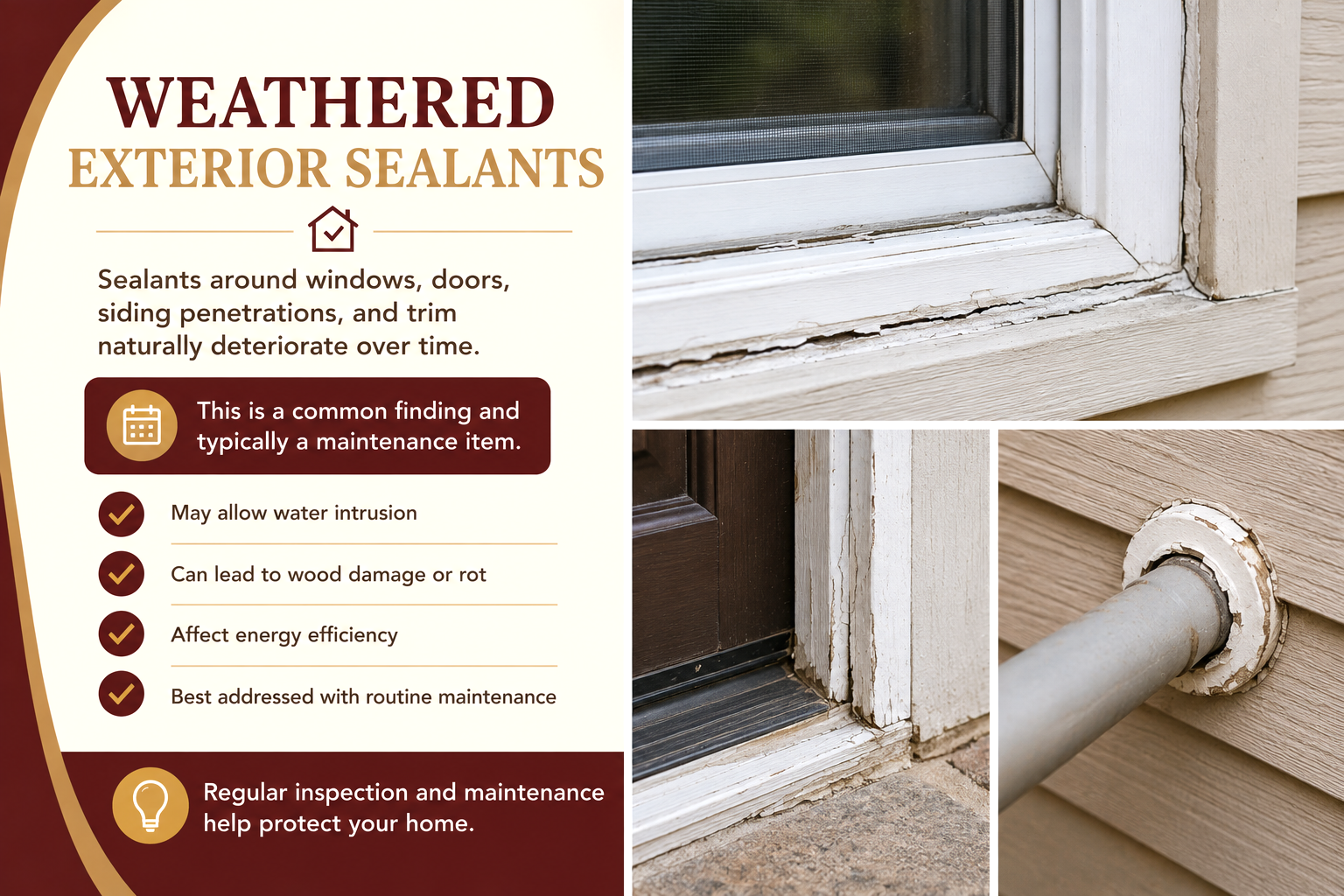
Sealants around windows, doors, siding penetrations, and trim naturally deteriorate over time.
What It Usually Means
Maintenance is needed.
What It Usually Doesn't Mean
Major water intrusion has occurred.
9. Dirty HVAC Filters
Inspectors often note dirty air filters.
What It Usually Means
The filter should be replaced.
What It Usually Doesn't Mean
The HVAC system is defective.

10. Missing GFCI Protection
In older homes, inspectors frequently recommend upgrading electrical safety devices to modern standards.
What It Usually Means
Safety improvements may be beneficial.
What It Usually Doesn't Mean
The home is unsafe to occupy.

Why Inspection Reports Sometimes Feel Overwhelming
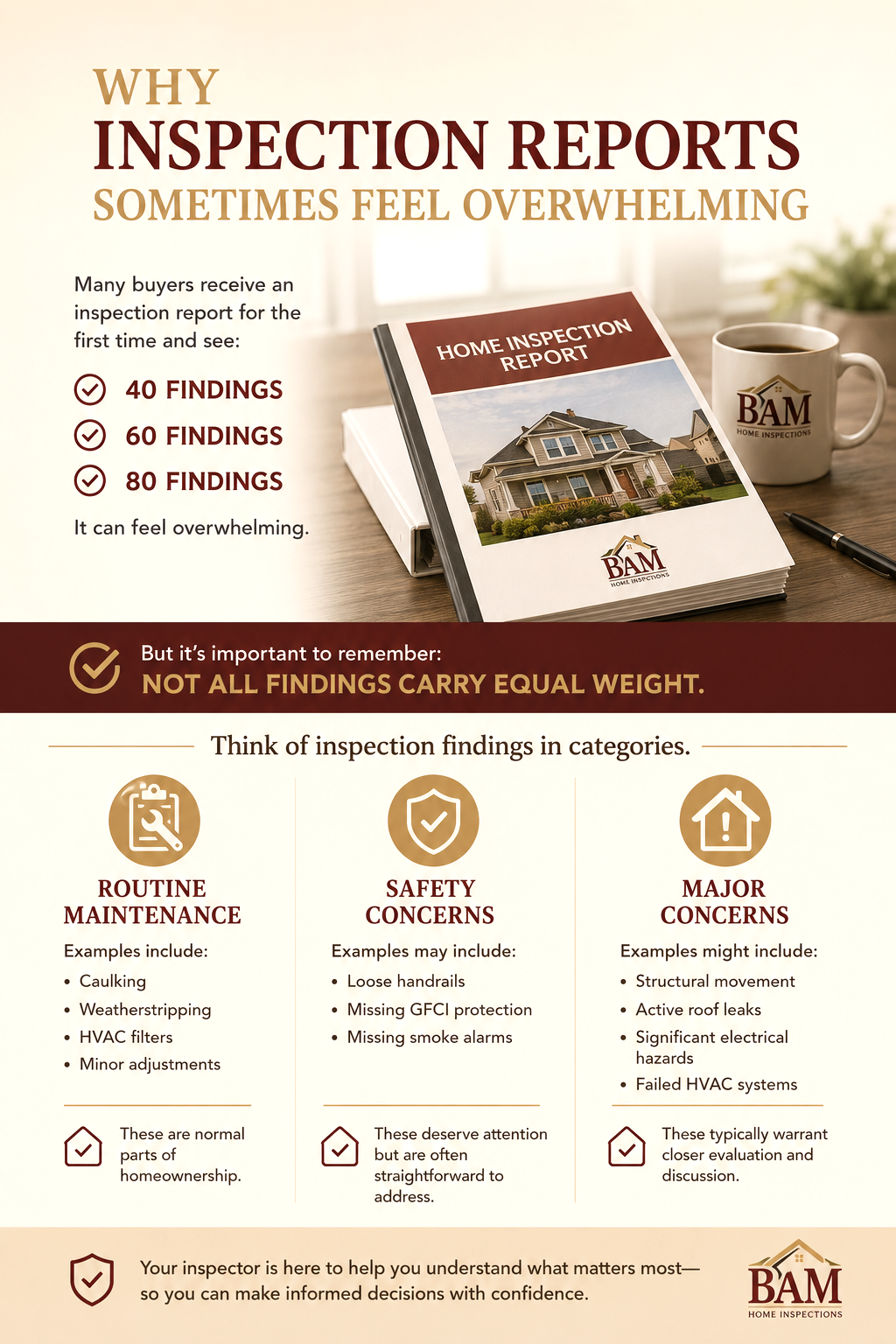
Many buyers receive an inspection report for the first time and see:
- 40 findings
- 60 findings
- 80 findings
It can feel overwhelming.
But it’s important to remember:
Not all findings carry equal weight.
Think of inspection findings in categories.
Routine Maintenance
Examples include:
- Caulking
- Weatherstripping
- HVAC filters
- Minor adjustments
These are normal parts of homeownership.
Safety Concerns
Examples may include:
- Loose handrails
- Missing GFCI protection
- Missing smoke alarms
These deserve attention but are often straightforward to address.
Major Concerns
Examples might include:
- Structural movement
- Active roof leaks
- Significant electrical hazards
- Failed HVAC systems
These typically warrant closer evaluation and discussion.
The Five Questions Every Buyer Should Ask
Rather than focusing on the number of findings, ask your inspector:
- What are the most important issues we should be aware of?
- Are there any safety concerns that need attention right away?
- What major systems may need attention soon?
- What should we expect to maintain during the first year?
- If this were your home, what would you focus on first?
These questions often provide far more clarity than simply counting findings.
Colorado Home Seller Tip
Colorado homes experience:
- Intense sun exposure
- Freeze-thaw cycles
- Hail events
- Wind exposure
- Expansive soils
As a result, maintenance-related findings are common and expected.
The goal isn’t finding a perfect home.
The goal is understanding the home’s condition so you can make informed decisions.
Final Thoughts
A home inspection report is not a list of reasons to walk away from a property.
It’s a tool designed to help buyers better understand the home they’re considering purchasing.
Many inspection findings are simply part of normal homeownership.
Caulk wears out.
Water heaters age.
Concrete cracks.
Filters get dirty.
Handrails loosen.
That’s life.
The key is distinguishing between routine maintenance, safety concerns, and major issues.
Because once you understand the difference, the inspection report becomes much less intimidating—and much more valuable.
Seller Success Tip
Don’t ask:
“How many findings were in the report?”
Ask:
“Which findings matter most?”
That’s where the real value of a home inspection begins.
Frequently Asked Questions (FAQs)
Not necessarily. Even well-maintained homes often generate lengthy inspection reports. Inspectors are trained to document observed conditions, maintenance items, safety concerns, and components that may require future attention. The number of findings is often far less important than the significance of the findings themselves.
Not automatically. When inspectors note that a system is nearing the end of its expected service life, they are often encouraging buyers to budget for future replacement. It does not necessarily mean the equipment has failed or requires immediate replacement. Understanding the difference between “aging” and “defective” is important.
No. Concrete cracking is common, particularly in Colorado where expansive soils, temperature changes, and freeze-thaw cycles can contribute to movement. While some cracks may warrant further evaluation, many are cosmetic or consistent with normal settlement and aging.
Common maintenance-related findings include deteriorated caulking, weathered sealants, dirty HVAC filters, minor plumbing drips, loose hardware, and other items that naturally require periodic attention over time. These are often part of normal homeownership rather than indications of major defects.
Instead of focusing on the total number of findings, buyers should ask their inspector which issues matter most. Many findings can be grouped into categories such as routine maintenance, safety concerns, and major defects. Understanding which items deserve immediate attention and which can be addressed over time helps buyers make more informed decisions.
A maintenance item is typically a condition that homeowners routinely address as part of owning and caring for a home, such as replacing caulk, changing HVAC filters, or repairing minor leaks. A major defect generally involves a significant concern affecting safety, structural integrity, functionality, or substantial repair costs. One of the most valuable roles of a home inspector is helping buyers understand the difference between the two.