1-Year Builder Warranty Inspections in Colorado
Identify issues before your builder’s warranty expires—so you don’t pay for them later.
Identifying issues before your builder’s warranty expires—so you have the opportunity to address concerns and request repairs while coverage is still in place.
looking for something specific?
click for your question -->
+ What is a 1-Year Warranty Inspection?
+ Why is a 1-Year Warranty Inspection Important?
+ What are the Most Common Issues Found During a 1-Year Warranty Inspection?
+ What Do We Inspect?
+ What Does Your 1-Year Warranty Inspection Report Include?
+ How Do You Work with a Builder During a 1-Year Warranty Inspection?
+ When Should You Schedule Your 1-Year Warranty Inspection?
+ 1-Year Warranty Inspections in Colorado
+ What Sets BAM Home Inspections Apart?
+ What Additional Services are Available?
+ FAQs
What Is a 1-Year Warranty Inspection?
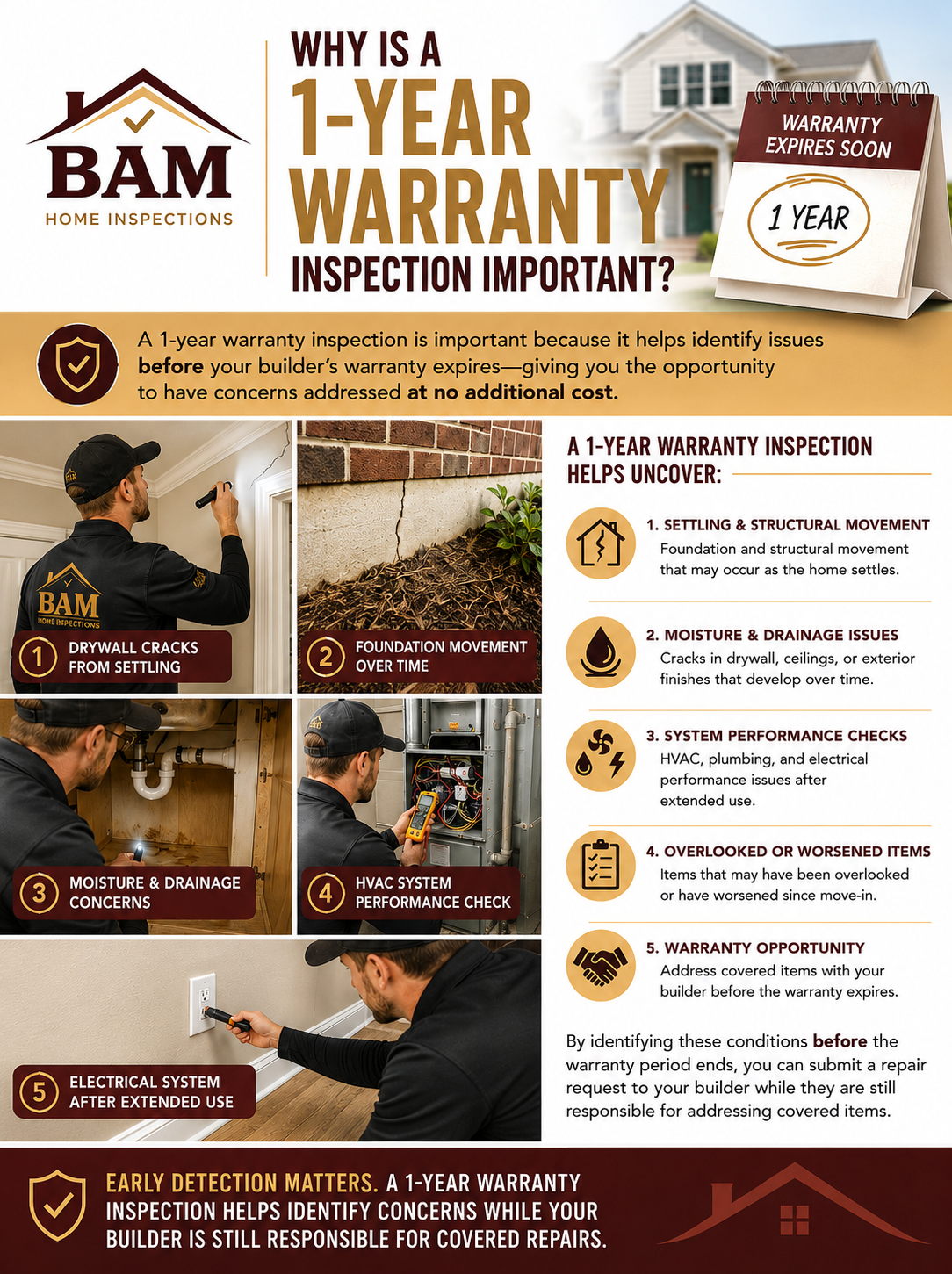
A 1-year warranty inspection is a comprehensive home inspection performed before your builder’s warranty expires. The purpose is to identify defects, incomplete work, or system issues that may be covered by the builder—so they can be addressed before you become financially responsible.
Why Is a 1-Year Warranty Inspection Important?
A 1-year warranty inspection is important because it helps identify issues before your builder’s warranty expires—giving you the opportunity to have concerns addressed at no additional cost.
A 1-year warranty inspection helps uncover:
- Foundation and structural movement that may occur as the home settles
- Cracks in drywall, ceilings, or exterior finishes that develop over time
- Moisture-related concerns such as drainage issues or minor leaks
- HVAC, plumbing, and electrical performance issues after extended use
- Items that may have been overlooked or have worsened since move-in
By identifying these conditions before the warranty period ends, you can submit a repair request to your builder while they are still responsible for addressing covered items.
What Are the Most Common Issues Found During a 1-Year Warranty Inspection?
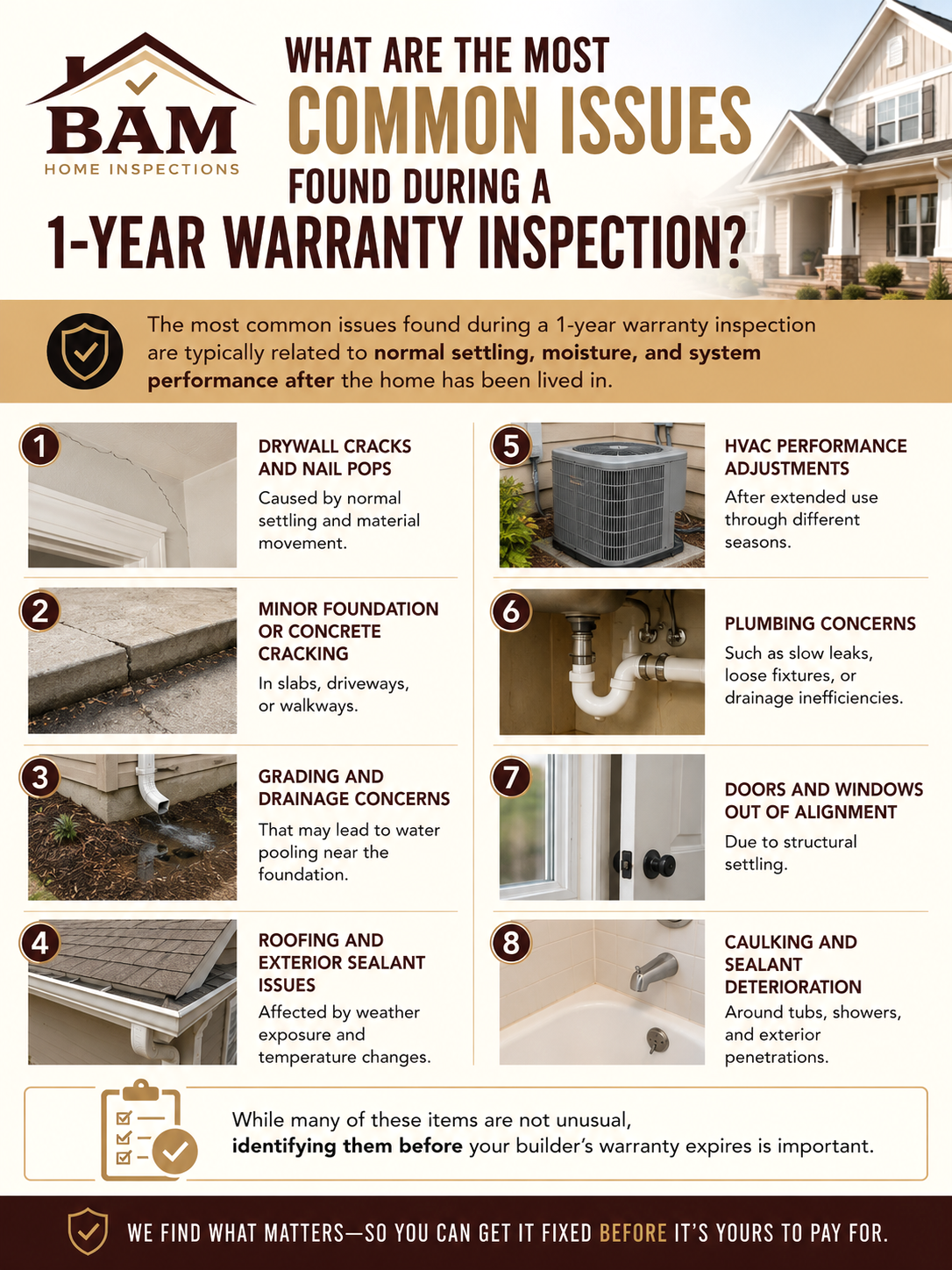
The most common issues found during a 1-year warranty inspection are typically related to normal settling, moisture, and system performance after the home has been lived in.
Common issues may include:
- Drywall cracks and nail pops caused by normal settling and material movement
- Minor foundation or concrete cracking in slabs, driveways, or walkways
- Grading and drainage concerns that may lead to water pooling near the foundation
- Roofing and exterior sealant issues affected by weather exposure and temperature changes
- HVAC performance adjustments after extended use through different seasons
- Plumbing concerns, such as slow leaks, loose fixtures, or drainage inefficiencies
- Doors and windows out of alignment due to structural settling
- Caulking and sealant deterioration around tubs, showers, and exterior penetrations
While many of these items are not unusual, identifying them before your builder’s warranty expires is important.
What Do We Inspect?
Structure & Exterior
– Foundation
– Visible structural components
– Exterior finishes
– Drainage
Roof & Attic
– Roof Condition
– Roof Installation
– Ventilation
– Insulation
Electrical Systems
– Panels, outlets, and fixtures
– Safety concerns
Plumbing Systems
– Supply and drain lines
– Fixtures
– Water heater
HVAC Systems
– Heating
– Cooling systems
– Airflow
– System Condition
Interior Components
– Walls, ceilings, & floors
– Doors & windows
– General Wear & Performance
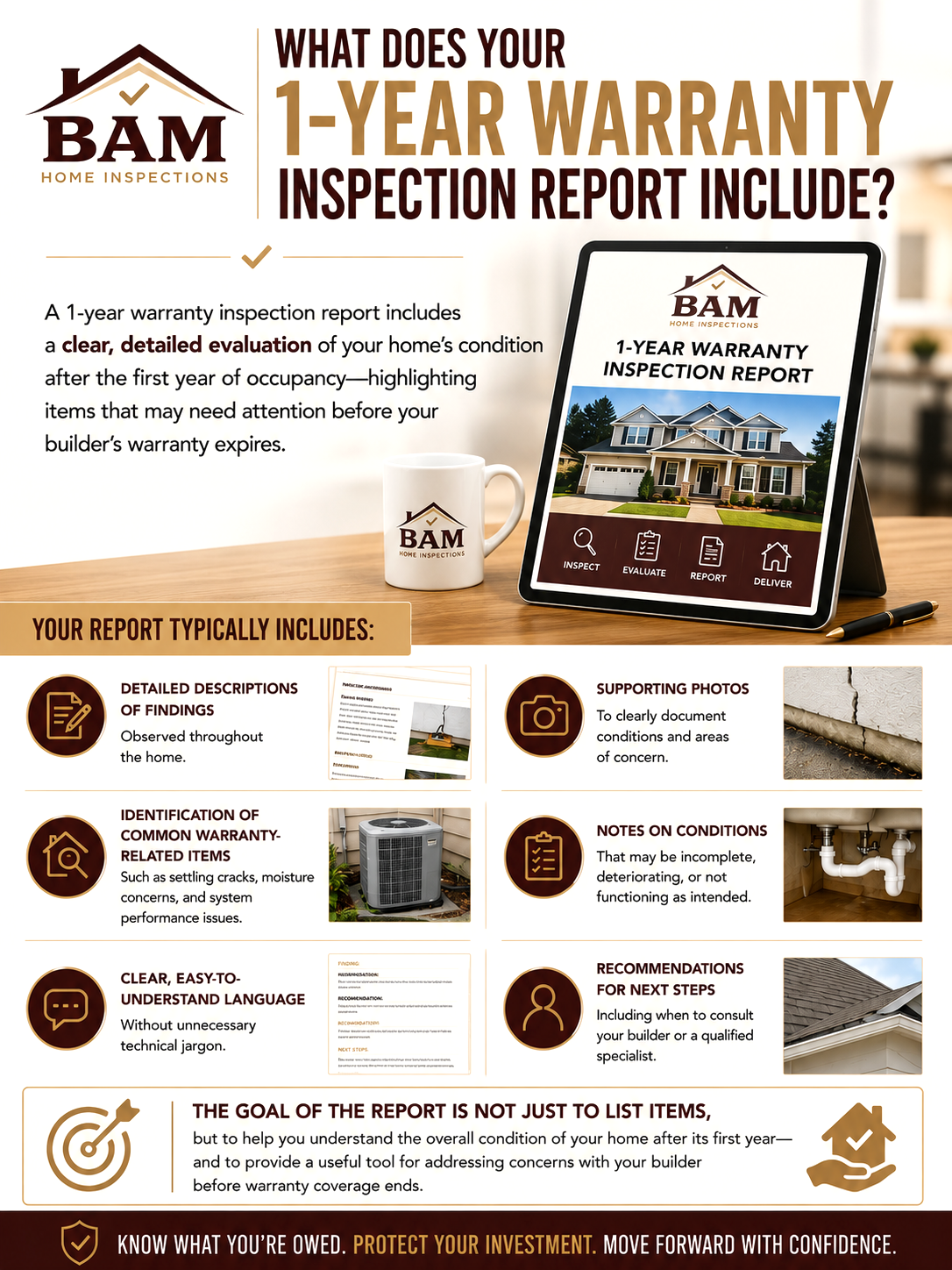
What Does Your 1-Year Warranty Inspection Report Include?
A 1-year warranty inspection report includes a clear, detailed evaluation of your home’s condition after the first year of occupancy—highlighting items that may need attention before your builder’s warranty expires.
Your report typically includes:
- Detailed descriptions of findings observed throughout the home
- Supporting photos and videos to clearly document conditions and areas of concern
- Identification of common warranty-related items, such as settling cracks, moisture concerns, and system performance issues
- Notes on conditions that may be incomplete, deteriorating, or not functioning as intended
- Clear, easy-to-understand language—without unnecessary technical jargon
- Recommendations for next steps, including when to consult your builder or a qualified specialist
The goal of the report is not just to list items, but to help you understand the overall condition of your home after its first year—and to provide a useful tool for addressing concerns with your builder before warranty coverage ends.
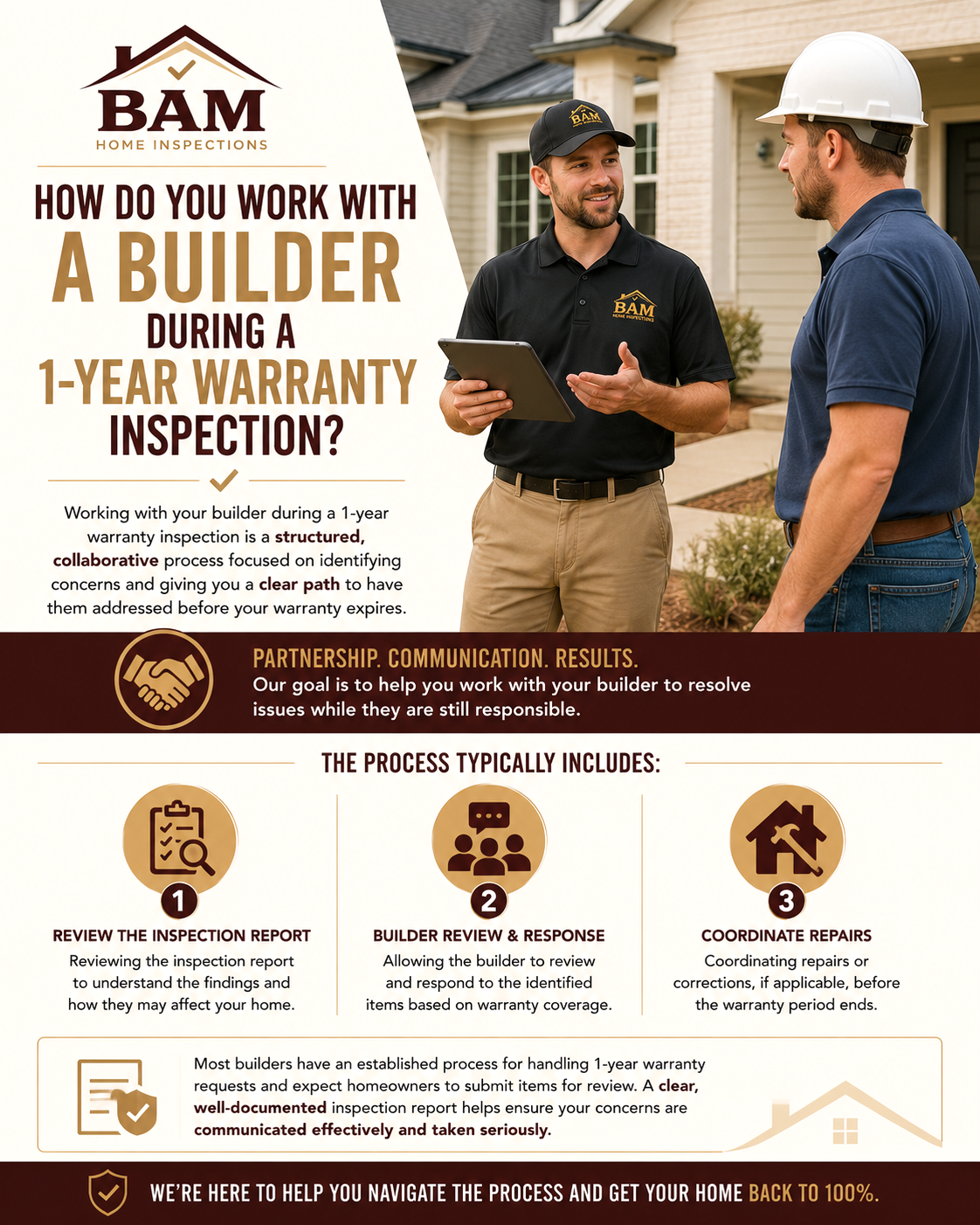
How Do You Work With a Builder During a 1-Year Warranty Inspection?
Working with your builder during a 1-year warranty inspection is a structured, collaborative process focused on identifying concerns and giving you a clear path to have them addressed before your warranty expires.
The process typically includes:
- Reviewing the inspection report to understand the findings and how they may affect your home
- Allowing the builder to review and respond to the identified items based on warranty coverage
- Coordinating repairs or corrections, if applicable, before the warranty period ends
Most builders have an established process for handling 1-year warranty requests and expect homeowners to submit items for review. A clear, well-documented inspection report helps ensure your concerns are communicated effectively and taken seriously.
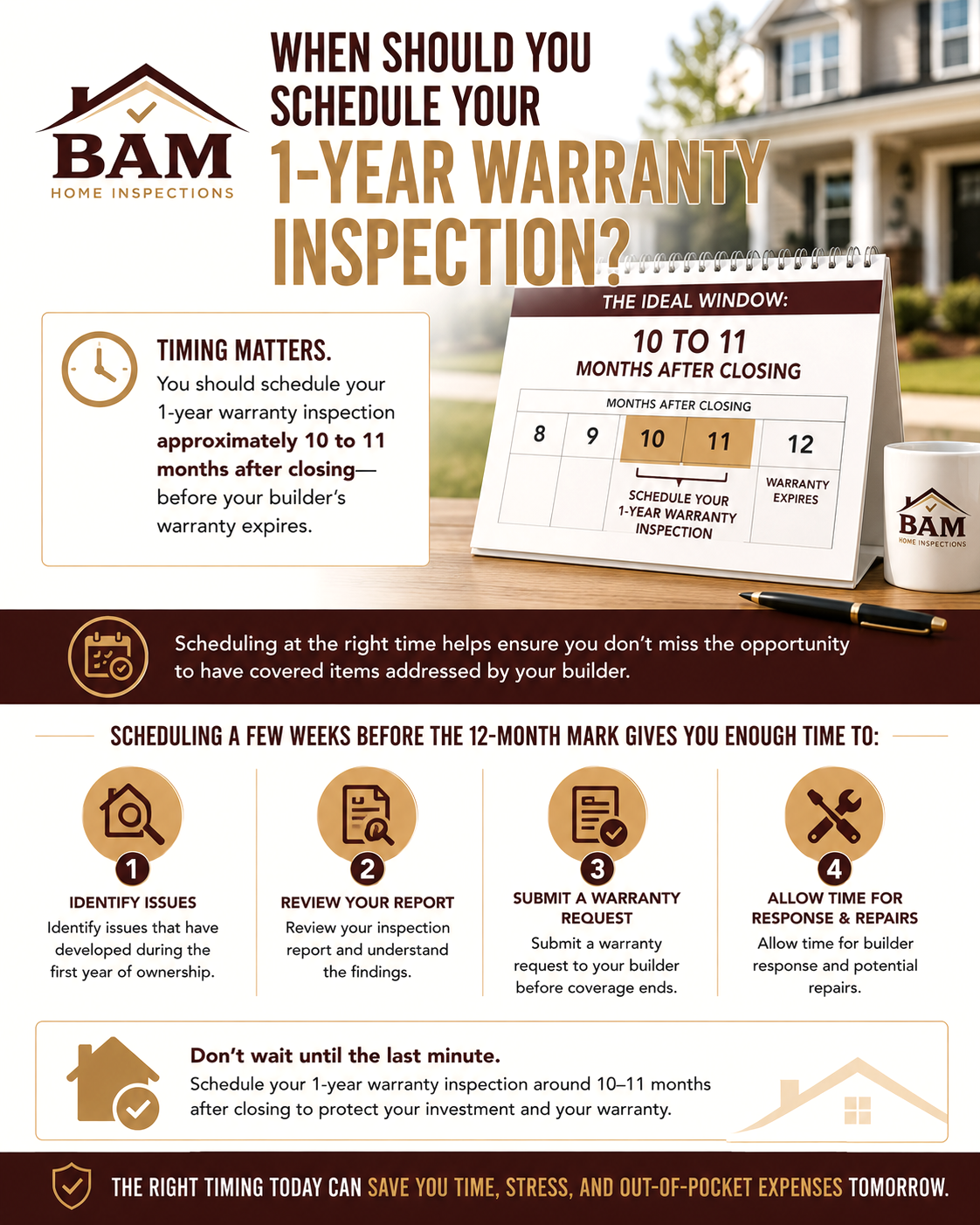
When Should You Schedule Your 1-Year Warranty Inspection?
Timing matters. You should schedule your 1-year warranty inspection approximately 10 to 11 months after closing—before your builder’s warranty expires.
Scheduling the inspection a few weeks before the 12-month mark gives you enough time to:
- Identify issues that have developed during the first year of ownership
- Review your inspection report and understand the findings
- Submit a warranty request to your builder before coverage ends
- Allow time for builder response and potential repairs
Scheduling at the right time helps ensure you don’t miss the opportunity to have covered items addressed by your builder.
1-Year Warranty Inspections In Colorado
Proudly serving Colorado Springs and surrounding communities, including Monument, Fountain, Peyton, and Woodland Park—along with the greater Front Range, including Castle Rock, Denver, and Pueblo.
We understand how Colorado homes settle and perform over time—especially during the first year of ownership. Homes throughout Colorado’s Front Range are influenced by unique regional factors, including expansive soils, seasonal moisture changes, and significant temperature fluctuations.
Our experience in this region allows us to recognize common first-year conditions, including:
- Foundation and structural settling related to soil movement and moisture variation
- Drywall cracking and nail pops caused by normal expansion and contraction
- Grading and drainage changes after seasonal weather cycles
- Exterior wear and sealant movement due to sun exposure and temperature swings
- System performance adjustments as HVAC, plumbing, and electrical components are used over time
Because these patterns are common in Colorado homes, understanding how they present—and when they may require attention—is an important part of a 1-year warranty inspection.
What additional services are available?
A sewer scope is most valuable when combined with a full home inspection.
Also consider:
Radon Testing
Radon is an odorless, colorless, and naturally occurring radioactive gas that can cause serious health issues over time.
Sewer Scope Inspection
A sewer scope inspection uses a small camera to assess your sewer line quickly. By analyzing the pipes from the inside, an inspector can identify any issues early to prevent costly repairs.
Mold Testing
Mold is more than just an unsightly problem—it can affect both the structural integrity of a home and the health of those living inside it.
Learn More
FAQs
Yes. During the first year of ownership, it’s common for homes to experience settling, seasonal changes, and normal wear that can reveal issues not visible at closing. Without an inspection, some of these conditions may go unnoticed until after your warranty coverage ends.
A 1-year warranty inspection helps you:
- Identify issues early, such as settling cracks, moisture concerns, and system performance problems
- Document findings clearly so they can be submitted to your builder
- Take advantage of your builder’s warranty before it expires
- Avoid out-of-pocket repairs for items that may otherwise be covered
The purpose of this inspection is not to create concern—but to ensure your home is performing as intended and that any necessary corrections are addressed while coverage is still in place.
If issues are found during a 1-year warranty inspection, they are documented in a detailed report that you can submit to your builder for review and potential repair before the warranty expires.
The process typically includes:
- Clear documentation of findings, including photos and easy-to-understand descriptions
- Reviewing the report so you understand what was observed and why it matters
- Submitting a warranty request to your builder using the inspection report as supporting documentation
- Builder evaluation and response, based on the terms of your warranty coverage
- Repairs or adjustments, if the items are covered under the warranty
Many builders have established procedures for handling 1-year warranty requests and expect homeowners to submit items for review.
A 1-year warranty inspection typically takes 2 to 4 hours, depending on the size, condition, and accessibility of the home.
Inspection time can vary based on:
- Square footage and layout of the home
- Accessibility of key areas, such as attics, crawlspaces, and mechanical systems
- Number of findings that require closer evaluation and documentation
- Overall condition and complexity of the property
During this time, the inspector carefully examines the home and documents any conditions that may have developed over the first year, including settling, moisture concerns, and system performance issues.
A 1-year warranty inspection is similar to a standard home inspection in scope, but it is focused specifically on identifying issues that have developed during the first year of ownership—before the builder’s warranty expires.
Both inspections involve a comprehensive, visual evaluation of the home’s structure, systems, and major components. However, the timing and purpose are different.
A standard home inspection (typically before closing):
- Evaluates the home at the time of purchase
- Identifies existing or visible conditions prior to move-in
- Helps buyers make informed decisions during the transaction
A 1-year warranty inspection (after move-in):
- Evaluates how the home has performed over time
- Identifies issues related to settling, seasonal changes, and system use
- Helps homeowners address concerns while the builder is still responsible
While the process is similar, the value of a 1-year warranty inspection lies in its timing. It provides a final opportunity to identify and document issues before warranty coverage ends.

Yes. A 1-year warranty inspection can help you avoid future costs by identifying issues while your builder’s warranty is still in effect.
A 1-year warranty inspection helps you:
- Catch issues early, before they become more extensive or costly to repair
- Document concerns clearly so they can be submitted to your builder for potential coverage
- Take full advantage of your warranty, reducing the likelihood of out-of-pocket expenses
- Prevent minor issues from developing into larger problems over time
Without an inspection, some conditions may go unnoticed until after the warranty expires—at which point repairs may become your responsibility.