New Construction Home Inspections in Colorado

Even new homes can have issues—verify everything before you move in.

Even newly built homes can have defects. Our inspections are designed to identify installation issues, overlooked details, and construction-related concerns before you move in—so you can move forward with clarity and confidence.

Serving Colorado Springs, Pueblo, Castle Rock, Denver, and surrounding areas.

Do New Homes Really Need an Inspection?

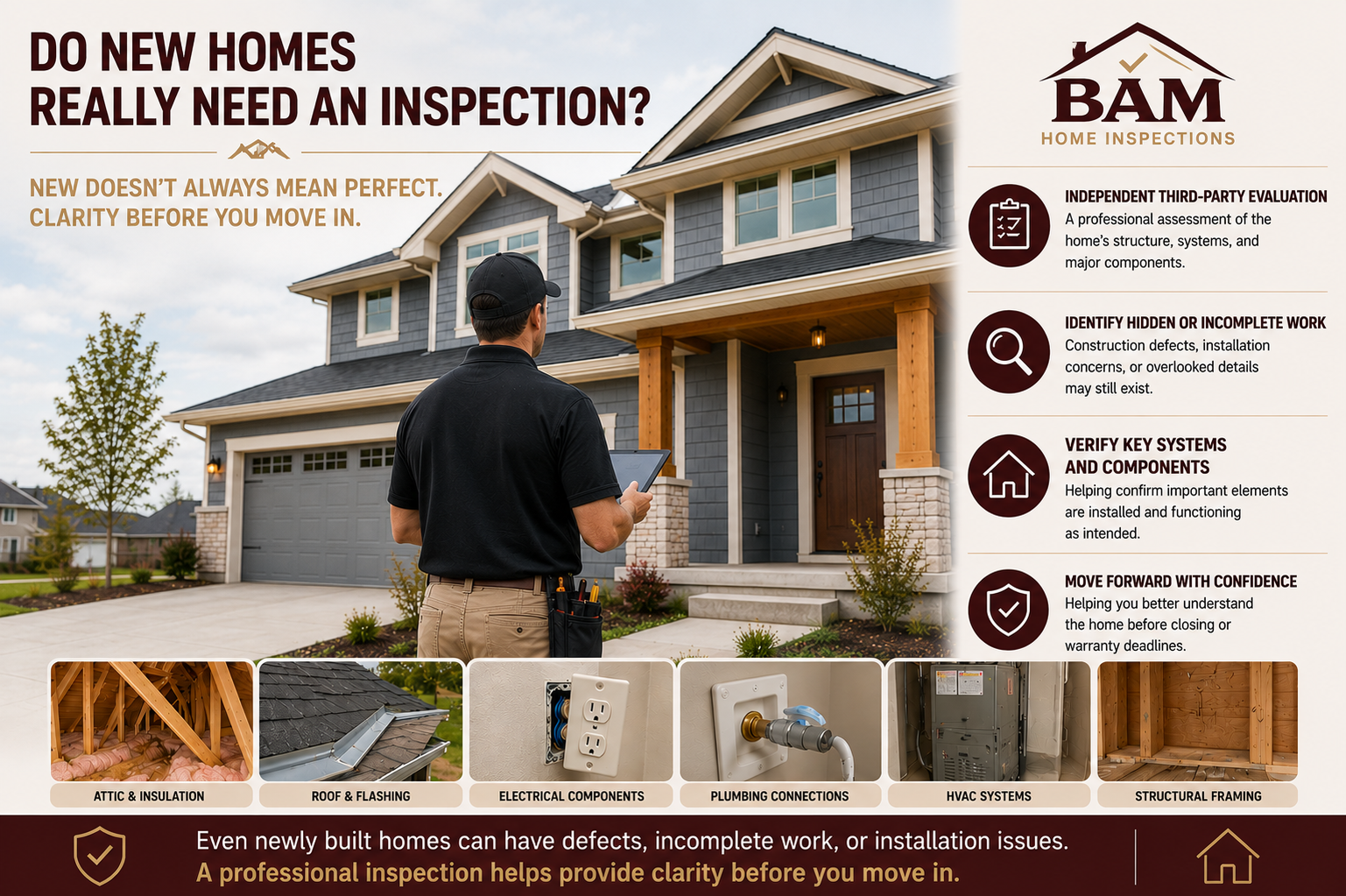
Yes. Even newly constructed homes can have defects, incomplete work, or installation issues. While everything may appear new on the surface, construction involves multiple trades, tight timelines, and varying levels of oversight—conditions where details can sometimes be missed.

A new construction inspection provides an independent, third-party evaluation of the home’s structure, systems, and major components. This process helps identify concerns that may not be immediately visible and confirms whether key elements are installed and functioning as intended.

Click Image to Enlarge

What Should You Expect During a New Construction Inspection?

New homes are built through multiple phases of construction, often involving a variety of trades, subcontractors, and overlapping timelines. While this process is designed to deliver a completed home, the pace and complexity can sometimes lead to details being missed. A professional inspection provides an independent evaluation and helps you:

  • Identify concerns prior to closing
  • Address items with your builder while they are still responsible
  • Confirm that major systems and components are installed and functioning as intended
  • Move into your home with greater clarity and confidence


The purpose of a new construction inspection is not to create unnecessary concern, but to help verify that the home has been completed with the level of quality and attention to detail you expect.

What Do We Inspect?

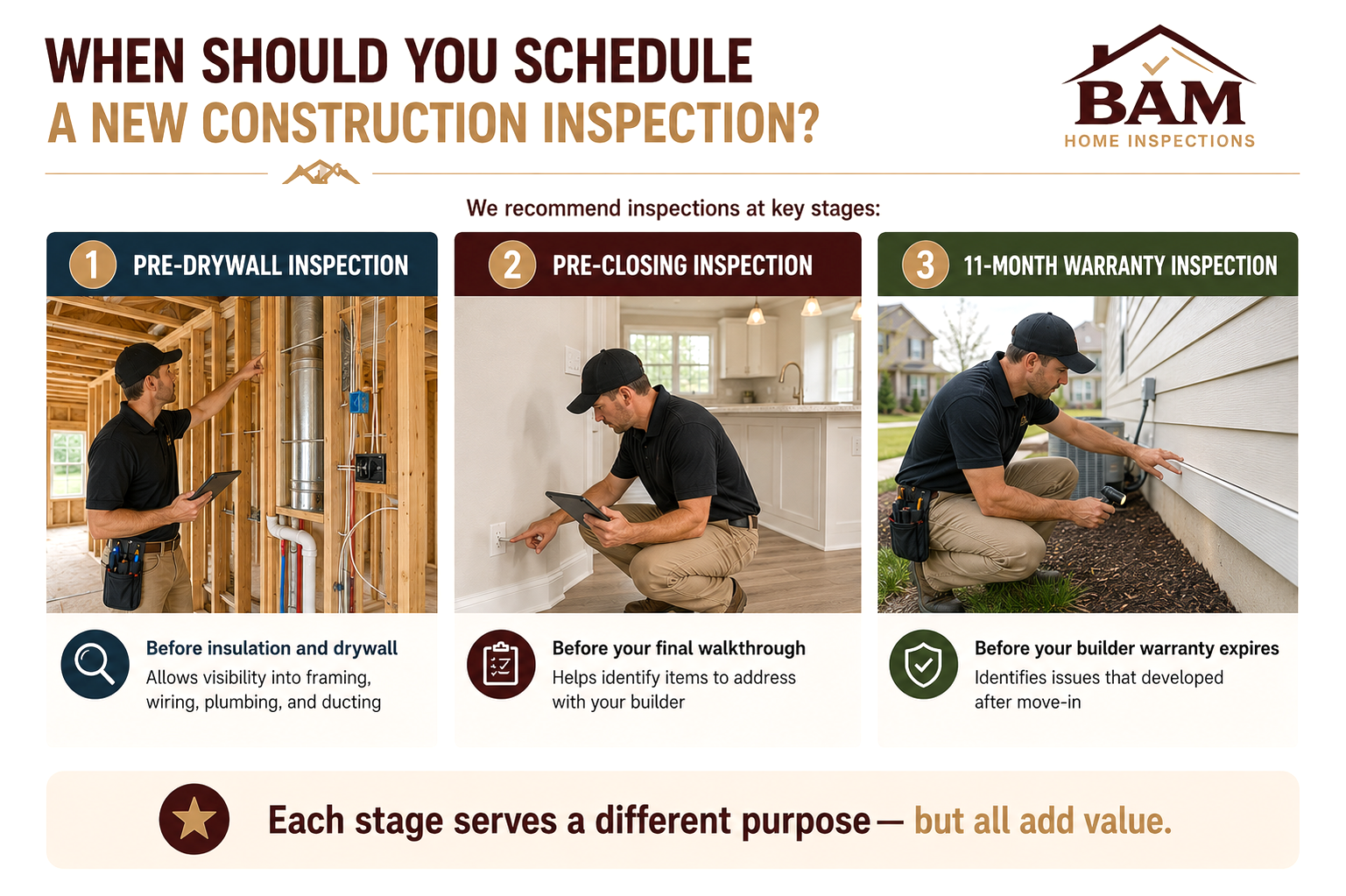
When Should You Schedule a New Construction Inspection?

We recommend inspections at key stages:

Pre-Drywall Inspection

  • Before insulation and drywall
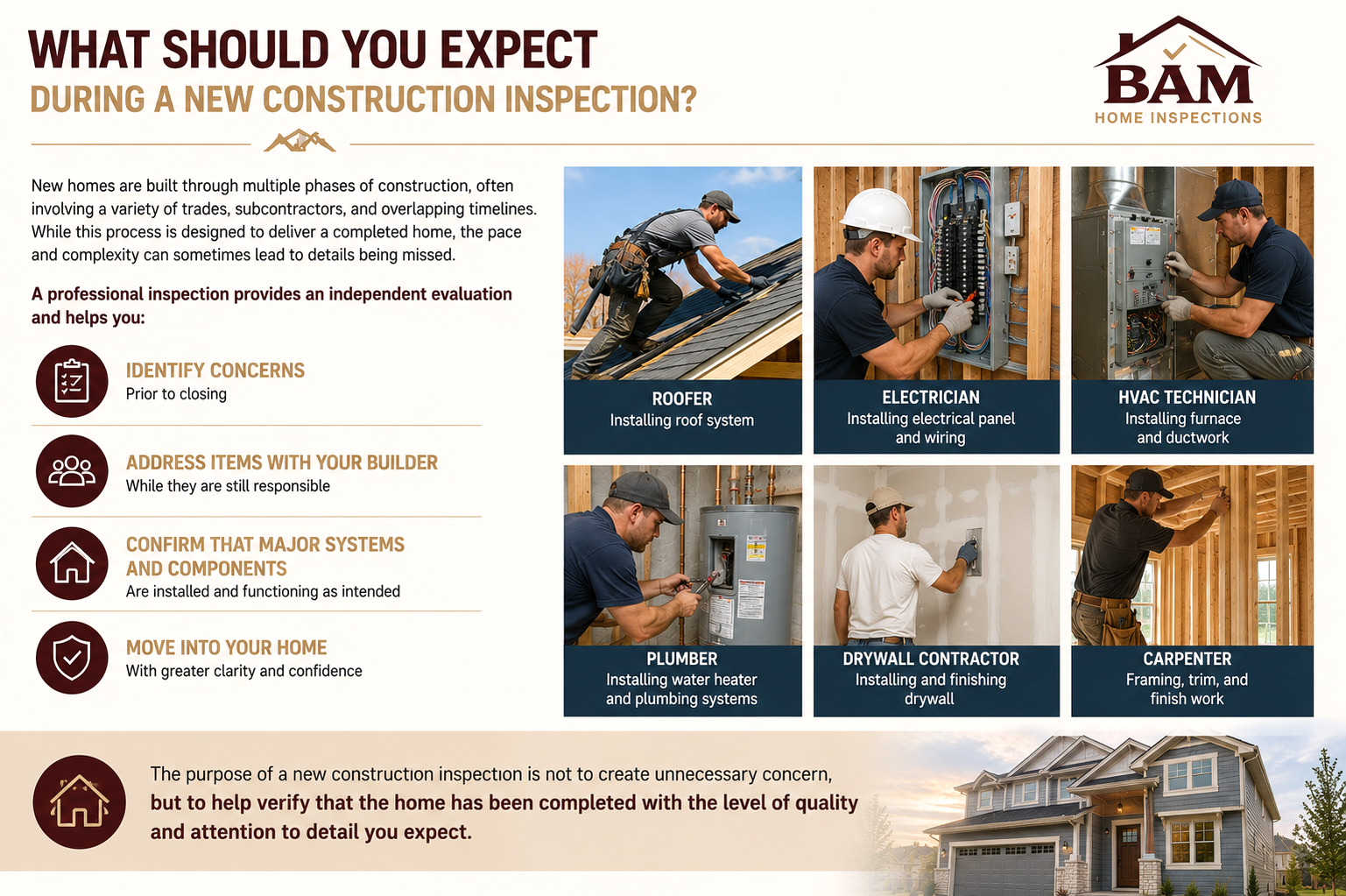
  • Allows visibility into framing, wiring, plumbing, and ducting


Pre-Closing Inspection

  • Before your final walkthrough
  • Helps identify items to address with your builder


11-Month Warranty Inspection

  • Before your builder warranty expires
  • Identifies issues that developed after move-in


Each stage serves a different purpose—but all add value.

Click Image to Enlarge

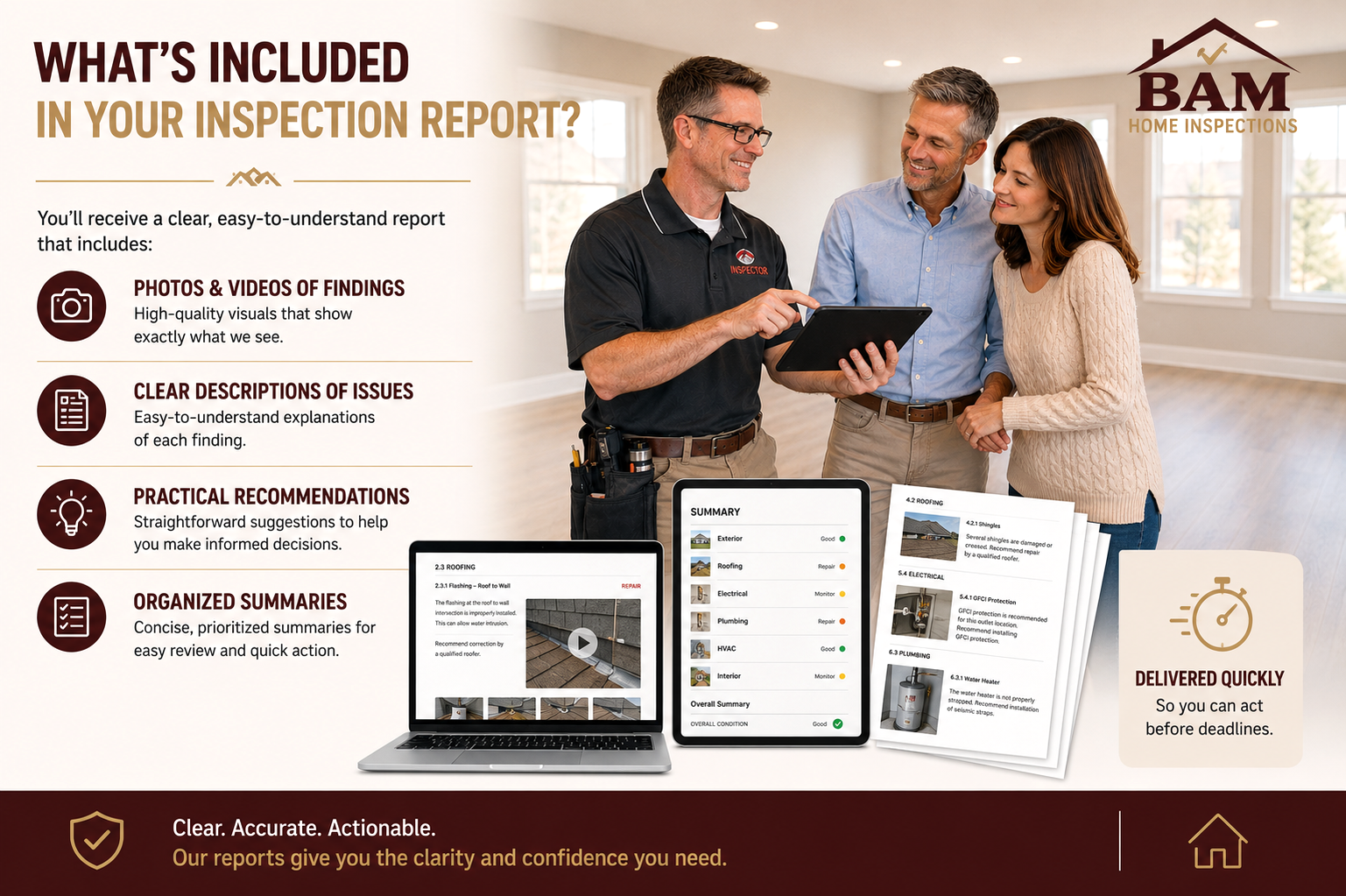
What’s Included In Your Inspection Report?

You’ll receive a clear, easy-to-understand report that includes:

  • Photos and videos of findings
  • Clear descriptions of issues
  • Practical recommendations
  • Organized summaries for easy review


Delivered quickly so you can act before deadlines.

How Do You Work With a Builder During a New Construction Inspection?

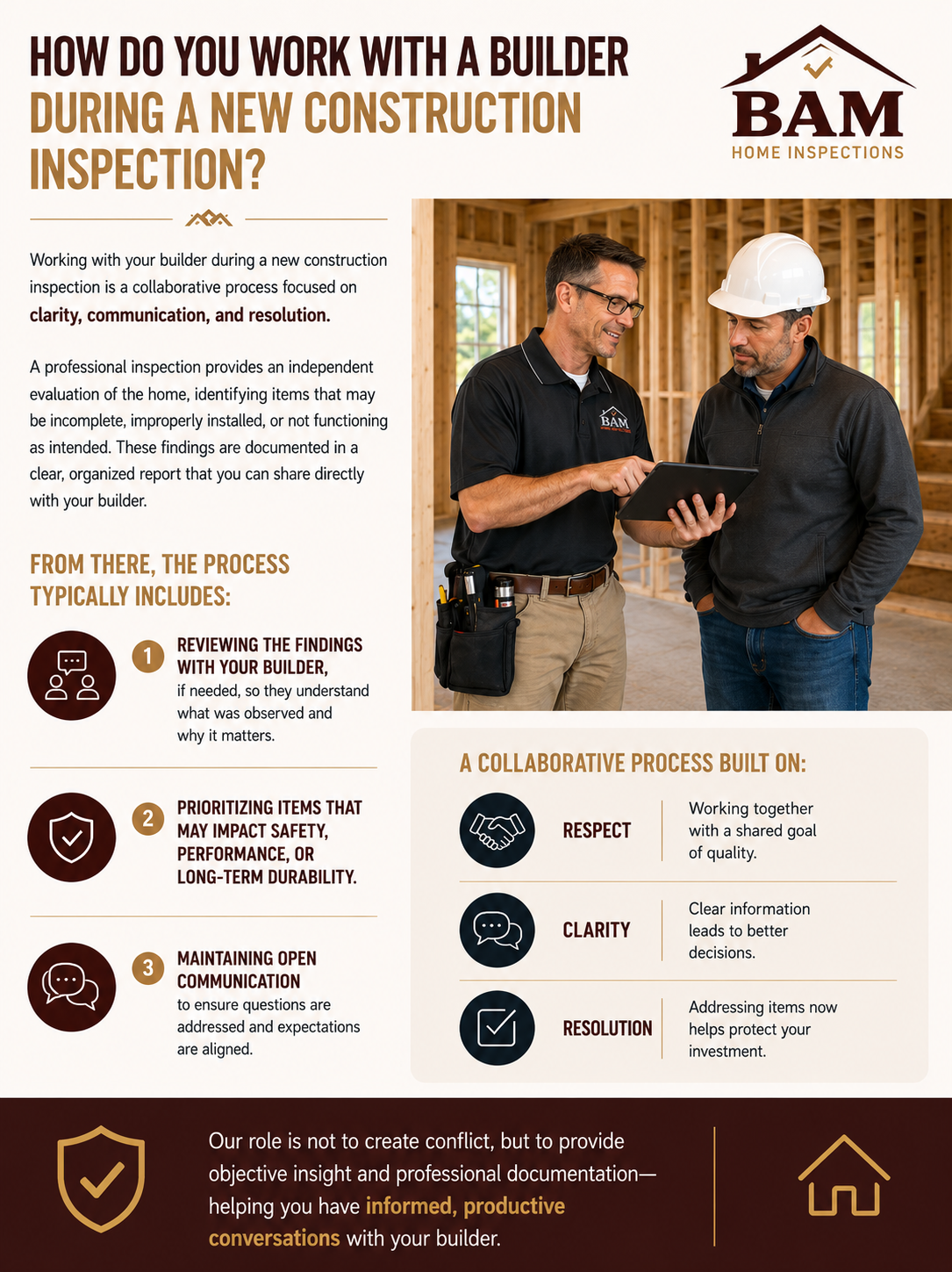
Working with your builder during a new construction inspection is a collaborative process focused on clarity, communication, and resolution.

A professional inspection provides an independent evaluation of the home, identifying items that may be incomplete, improperly installed, or not functioning as intended. These findings are documented in a clear, organized report that you can share directly with your builder.

From there, the process typically includes:

  • Reviewing the findings with your builder, if needed, so they understand what was observed and why it matters
  • Prioritizing items that may impact safety, performance, or long-term durability
  • Maintaining open communication to ensure questions are addressed and expectations are aligned


Our role is not to create conflict, but to provide objective insight and professional documentation—helping you have informed, productive conversations with your builder.

Click Image to Enlarge

New Construction Inspections In Colorado

Proudly serving Colorado Springs and surrounding communities, including Monument, Fountain, Peyton, and Woodland Park—along with the greater Front Range, including Castle Rock, Denver, and Pueblo.

We understand how local building practices, soil conditions, and climate impact homes throughout Colorado’s Front Range.

Homes in Colorado are built to accommodate unique regional challenges, including expansive soils, significant temperature swings, freeze–thaw cycles, low humidity, and seasonal moisture from snow and rain. These factors influence how foundations perform, how materials expand and contract, and how moisture moves through a home.

Click Image to Enlarge

Our experience in this region allows us to recognize conditions that are common in Colorado properties, including:

  • Soil movement that may affect foundations, flatwork, and structural stability
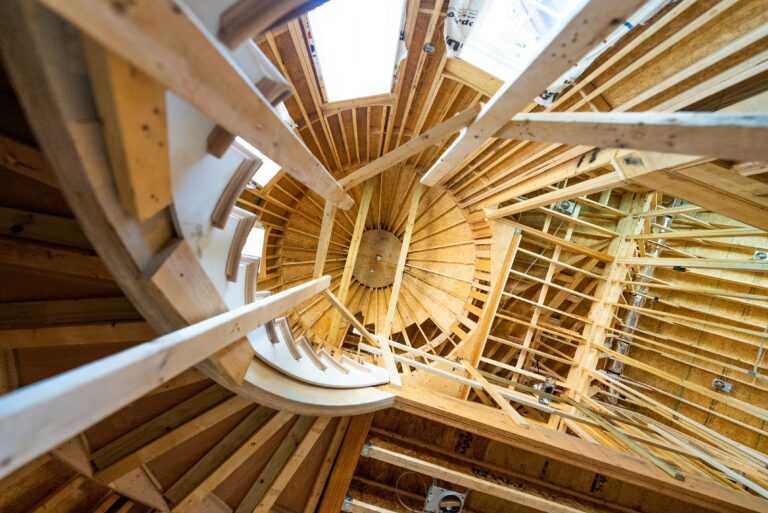
  • Climate-related wear on roofing, exterior materials, and sealants due to sun exposure and seasonal changes
  • Moisture patterns influenced by snowmelt, drainage, and grading around the property
  • Construction methods and materials commonly used to address Colorado’s environmental conditions

Because these regional factors can directly impact a home’s performance over time, understanding them is an important part of a thorough inspection.

Our local experience allows us to recognize how these conditions commonly present in Colorado homes. We focus not only on identifying visible concerns, but also on noting patterns and contributing factors that may increase risk over time.

Click Image to Enlarge

What additional services are available?

A sewer scope is most valuable when combined with a full home inspection.

Also consider:

Radon Testing

Radon is an odorless, colorless, and naturally occurring radioactive gas that can cause serious health issues over time.

Sewer Scope Inspection

A sewer scope inspection uses a small camera to assess your sewer line quickly. By analyzing the pipes from the inside, an inspector can identify any issues early to prevent costly repairs.

Mold Testing

Mold is more than just an unsightly problem—it can affect both the structural integrity of a home and the health of those living inside it.

FAQs

Isn’t the city inspector already checking the home?

Yes—but municipal inspections are limited in scope, time, and purpose. A private home inspection provides a more detailed and buyer-focused evaluation.

A private inspection typically provides:

  • A more thorough review of accessible systems, components, and installation quality
  • Identification of incomplete work, deficiencies, or items that may have been overlooked
  • Clear documentation with photos and easy-to-understand explanations
  • Practical insight into how the home is functioning—not just whether it meets minimum code

While municipal inspections play an important role in the construction process, they are not a substitute for a dedicated, third-party inspection.

No. Professional builders expect inspections and understand the value of independent, third-party evaluations.

In fact, most reputable builders view inspections as a normal and constructive part of the homebuying process. An independent inspection provides an additional layer of review that can help identify incomplete items, installation concerns, or details that may benefit from further attention before closing or within the warranty period.

Builders typically appreciate:

  • Clear, organized documentation of findings
  • The opportunity to review and correct items before closing
  • A smoother process with fewer surprises after move-in
  • An informed buyer who understands the home and its systems

It’s important to remember that construction involves multiple trades and timelines. Even in well-built homes, small items can be missed. An inspection simply helps bring those items to light in a professional and objective way.

Yes. Even well-built homes can have oversights or incomplete items due to the complexity of the construction process.

Building a home involves multiple phases, trades, and timelines. With so many moving parts, it’s possible for small details to be missed, installations to be incomplete, or components to require adjustment—even in homes built by experienced, reputable builders.

These items are often minor, but they can include:

  • Incomplete or improperly finished installations
  • Systems or components not fully calibrated or functioning as intended
  • Items that may have been overlooked during final walkthroughs
  • Conditions that may benefit from correction before closing or within the builder’s warranty period

The purpose isn’t to find fault with the construction, but to provide a thorough, independent evaluation that helps ensure the home is complete, functional, and performing as expected.

Most new construction inspections are scheduled before closing, but pre-drywall and warranty inspections are also highly valuable. Each stage of the construction process offers a different opportunity to evaluate the home:

  • A pre-drywall inspection (before insulation and drywall are installed) allows for evaluation of structural components, framing, plumbing, electrical, and HVAC systems while they are still visible. This stage helps identify concerns early—before they are concealed.
  • A pre-closing inspection (final inspection) is conducted when construction is substantially complete. This inspection focuses on the home as a finished product, identifying incomplete items, installation concerns, or systems that may not be functioning as intended prior to closing.
  • A 1-year warranty inspection is performed before the builder’s warranty expires. This provides an opportunity to identify issues that may have developed over time, allowing them to be addressed while the builder is still responsible

If issues are found during a new construction inspection, they are documented and shared with your builder so they can be reviewed and addressed.

When concerns are identified, the process typically includes:

  • Clearly documenting the findings with photos, videos, and concise explanations
  • Reviewing the report with your builder to ensure items are understood
  • Requesting repairs or completion of identified items prior to closing or within the warranty period
  • Allowing the builder an opportunity to correct concerns as part of their standard process

In many cases, builders address these items promptly once they are brought to their attention. The goal is not to create conflict, but to ensure the home is complete, functional, and performing as intended.

You don’t always need multiple inspections on a newly constructed home—but scheduling inspections at different stages can provide a more complete and thorough evaluation. Each phase of construction offers a unique opportunity to assess different components of the home, many of which may not be visible later in the construction process.

Multiple inspections may include:

While many buyers choose a single pre-closing inspection, combining multiple inspections provides added insight and allows concerns to be addressed at the most appropriate time—often before they become more difficult or costly to resolve.