
Wood-Destroying Organism (WDO) Inspections in Colorado
Identify termites and other wood-destroying organisms before they compromise your home.
A detailed inspection for termites and other wood-destroying organisms, designed to identify conditions that may compromise the structural integrity of the home and provide a clearer understanding of any areas requiring attention.
looking for something specific?
click for your question -->
+ What is a Wood-Destroying Organism (WDO) Inspection?
+ Why is a WDO Inspection Important?
+ What are Common Wood-Destroying Organisms?
+ What are the Signs of WDO Activity?
+ What Should You Expect During Your Inspection?
+ What’s Included in Your WDO Report?
+ What are the Next Steps if Activity is Identified?
+ WDO Inspections in Colorado
+ What Sets BAM Home Inspections Apart?
+ What Additional Services are Available?
+ FAQs
What Is a Wood-Destroying Organism (WDO) Inspection?
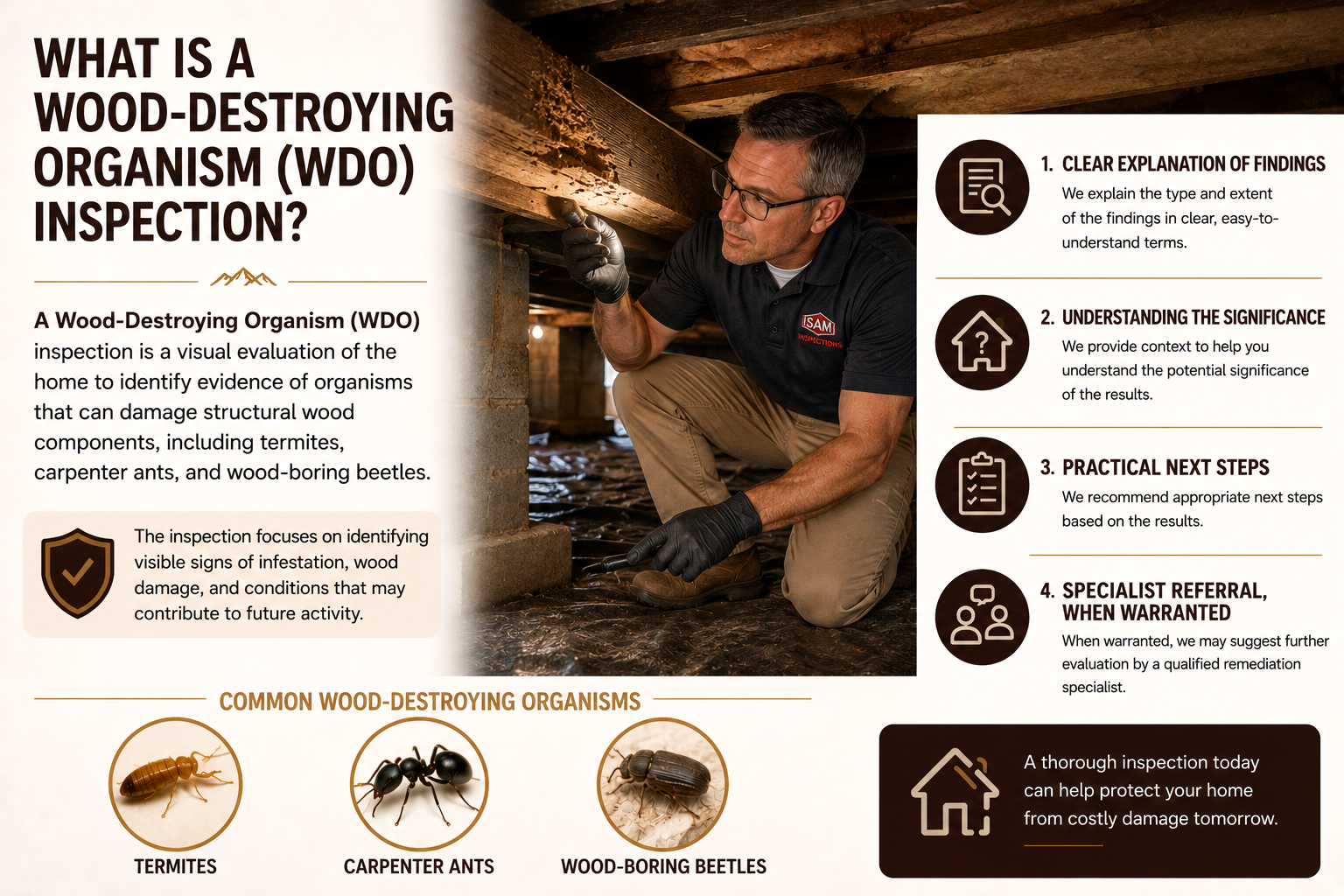
A Wood-Destroying Organism (WDO) inspection is a visual evaluation of the home to identify evidence of organisms that can damage structural wood components, including termites, carpenter ants, and wood-boring beetles.
The inspection focuses on identifying visible signs of infestation, wood damage, and conditions that may contribute to future activity.
Why Is a WDO Inspection Important?
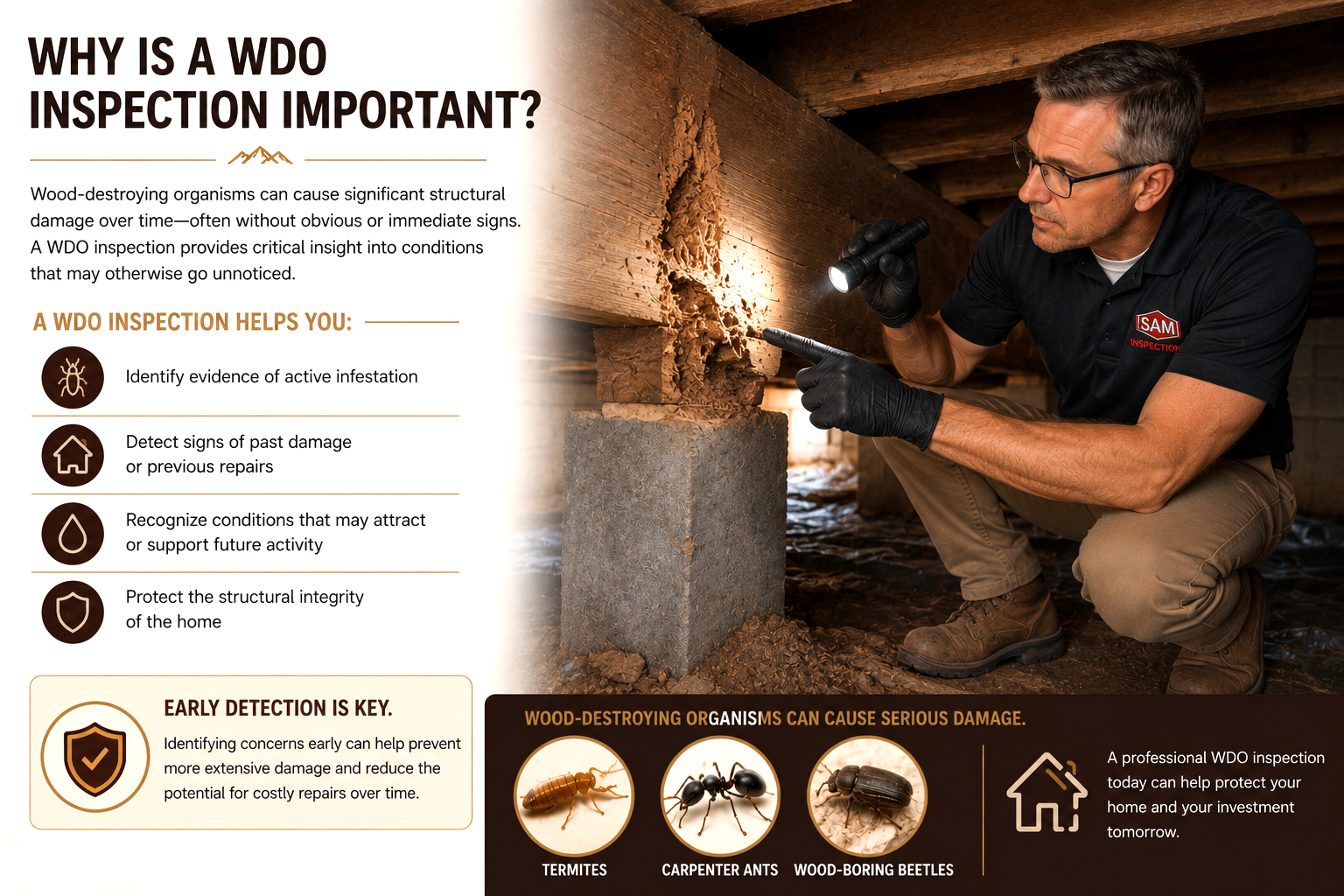
Wood-destroying organisms can cause significant structural damage over time—often without obvious or immediate signs. A WDO inspection provides critical insight into conditions that may otherwise go unnoticed.
A WDO inspection helps you:
- Identify evidence of active infestation
- Detect signs of past damage or previous repairs
- Recognize conditions that may attract or support future activity
- Protect the structural integrity of the home
Early detection is key. Identifying concerns early can help prevent more extensive damage and reduce the potential for costly repairs over time.
What Are Common Wood-Destroying Organisms?
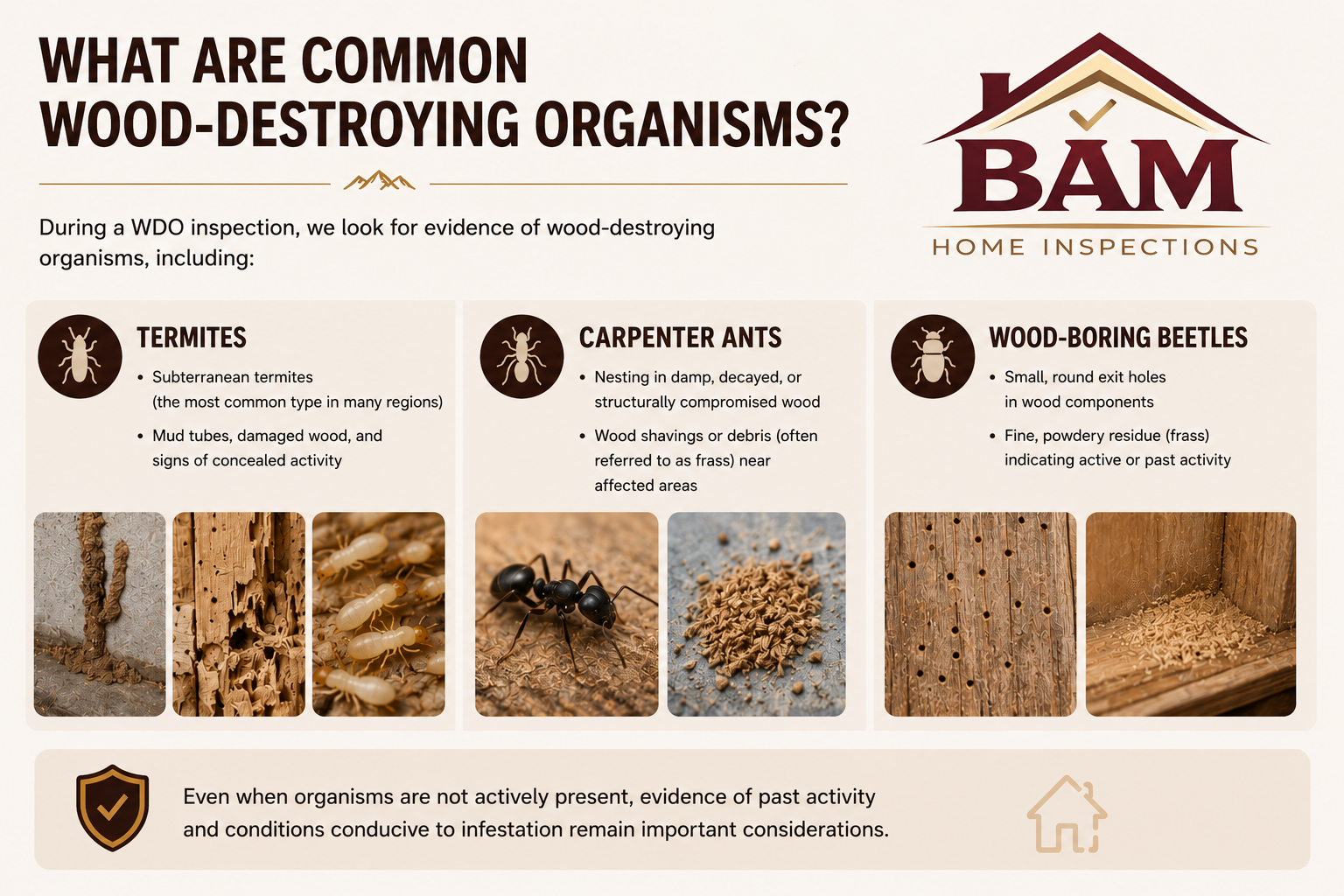
During a WDO inspection, we look for evidence of wood-destroying organisms, including:
- Termites
- Subterranean termites (the most common type in many regions)
- Mud tubes, damaged wood, and signs of concealed activity
- Carpenter Ants
- Nesting in damp, decayed, or structurally compromised wood
- Wood shavings or debris (often referred to as frass) near affected areas
- Wood-Boring Beetles
- Small, round exit holes in wood components
- Fine, powdery residue (frass) indicating active or past activity
Even when organisms are not actively present, evidence of past activity and conditions conducive to infestation remain important considerations.
What Are the Signs of WDO Activity?
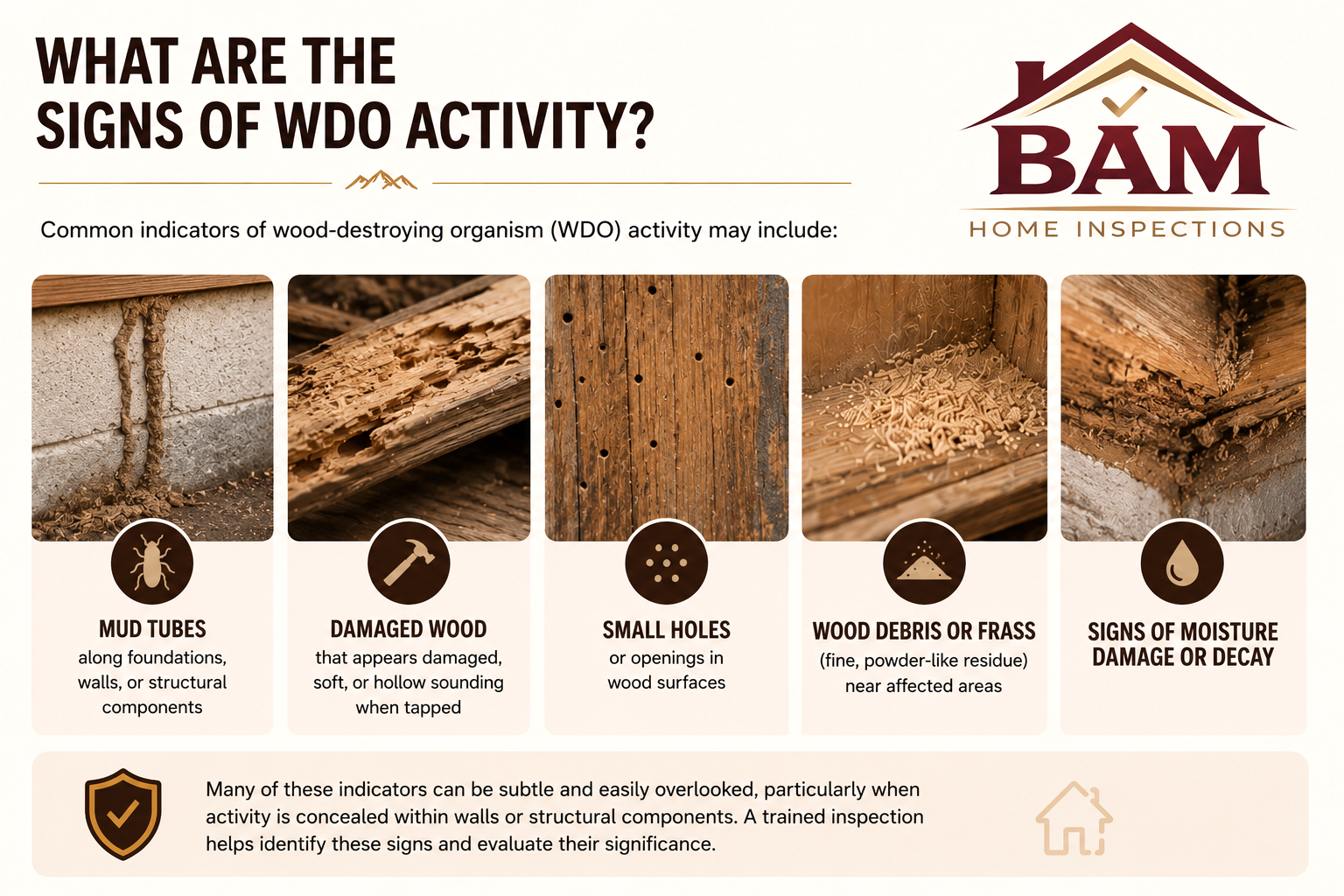
Common indicators of wood-destroying organism (WDO) activity may include:
- Mud tubes along foundations, walls, or structural components
- Wood that appears damaged, soft, or hollow sounding when tapped
- Small holes or openings in wood surfaces
- Wood debris or frass (fine, powder-like residue) near affected areas
- Wood that shows signs of moisture damage or decay
Many of these indicators can be subtle and easily overlooked, particularly when activity is concealed within walls or structural components. A trained inspection helps identify these signs and evaluate their significance.
What Should You Expect During Your Inspection?
Our WDO inspection includes a visual evaluation of the home’s accessible areas to identify evidence of wood-destroying organisms and conditions that may contribute to activity, including:
- Structural wood components throughout the home
- Crawlspaces and basements
- Attics, when safely accessible
- Exterior wood elements such as siding, trim, decks, and porches
- Areas prone to moisture or damage, where conditions may support infestation
This inspection focuses on accessible areas and visible evidence, providing a practical assessment of current conditions and potential risk factors.


What’s Included In Your WDO Report?
You’ll receive a clear, easy-to-understand report designed to help you interpret the findings and understand their significance. Your report includes:
- Identification of any visible signs of activity or damage
- Detailed documentation of findings, supported by photos
- Notes on conditions that may contribute to current or future activity
- Practical recommendations for further evaluation or treatment, if warranted
You will also receive a completed National Pest Management Association (NPMA-33) report, which is a standardized document commonly required for certain loan types and real estate transactions.
Our goal is to go beyond simply documenting findings—we help you understand what was observed, what it may mean, and how to move forward with confidence.
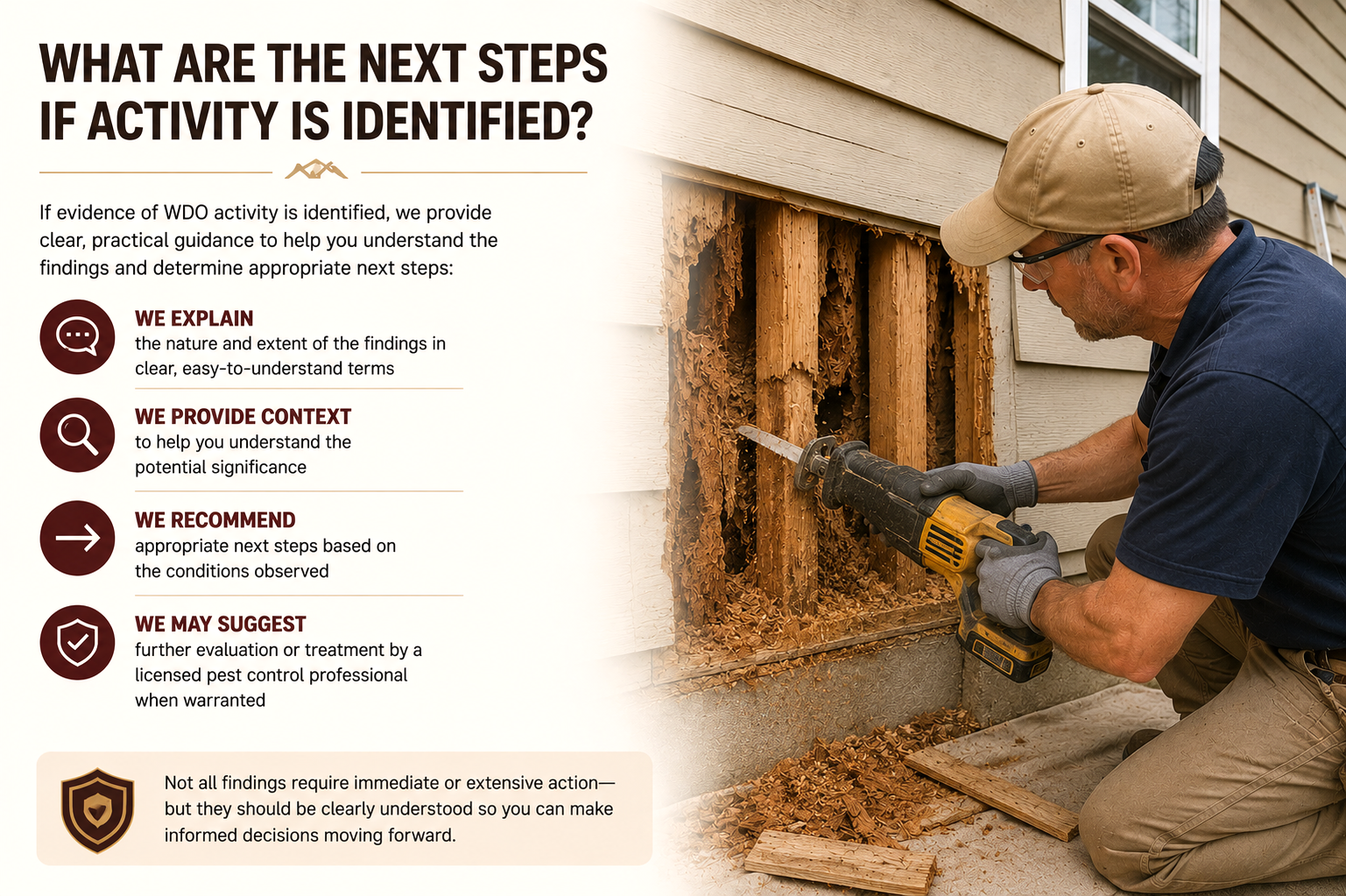
What Are the Next Steps If Activity Is Identified?
If evidence of WDO activity is identified, we provide clear, practical guidance to help you understand the findings and determine appropriate next steps:
- We explain the nature and extent of the findings in clear, easy-to-understand terms
- We provide context to help you understand the potential significance
- We recommend appropriate next steps based on the conditions observed
- When warranted, we may suggest further evaluation or treatment by a licensed pest control professional
Not all findings require immediate or extensive action—but they should be clearly understood so you can make informed decisions moving forward.
WDO Inspections In Colorado
Proudly serving Colorado Springs and surrounding communities, including Monument, Fountain, Peyton, and Woodland Park—along with the greater Front Range, including Castle Rock, Denver, and Pueblo.
We understand how regional conditions throughout Colorado’s Front Range can influence the presence and behavior of wood-destroying organisms, as well as the long-term performance of structural wood components. During our inspection, we remain attentive to conditions that may contribute to:
- Moisture-related pest activity, including environments that may attract or sustain termites, carpenter ants, or other wood-destroying organisms
- Structural vulnerabilities, where wood components may be more susceptible to damage due to prolonged exposure, prior repairs, or environmental stressors
- Environmental factors affecting wood materials, such as elevated moisture levels, poor drainage, wood-to-soil contact, or inadequate ventilation

Our local experience allows us to recognize how these conditions commonly present in Colorado homes. We focus not only on identifying visible concerns, but also on noting patterns and contributing factors that may increase risk over time.

What additional services are available?
A sewer scope is most valuable when combined with a full home inspection.
Also consider:
Radon Testing
Radon is an odorless, colorless, and naturally occurring radioactive gas that can cause serious health issues over time.
Sewer Scope Inspection
A sewer scope inspection uses a small camera to assess your sewer line quickly. By analyzing the pipes from the inside, an inspector can identify any issues early to prevent costly repairs.
Mold Testing
Mold is more than just an unsightly problem—it can affect both the structural integrity of a home and the health of those living inside it.
FAQs
While wood-destroying organisms are generally less prevalent in Colorado than in more humid regions, they are still present and should not be overlooked. Subterranean termites, carpenter ants, and other wood-destroying insects can establish activity when conditions are favorable—particularly where moisture, wood-to-soil contact, or concealed entry points exist.
In some real estate transactions, a WDO inspection may be required as part of the lending process or specified within the purchase contract. This is particularly common with certain loan types—such as VA or FHA financing—where verification of the absence (or presence) of wood-destroying organism activity is often a condition of approval
Yes. A home may show evidence of prior wood-destroying organism activity even when no current infestation is observed at the time of the inspection. This can include visible damage to wood components, repaired or replaced materials, or conditions that suggest previous treatment..
A WDO inspection is typically completed in less than an hour, particularly when it is performed in conjunction with a full home inspection. Because many of the areas evaluated for wood-destroying organisms—such as crawlspaces, basements, attics, and accessible structural components—are already part of the overall inspection process, the additional time required is usually minimal.
If conditions warrant, we will recommend further evaluation and, if necessary, treatment by a licensed pest control professional. These specialists have the training, tools, and authority to more thoroughly assess the extent of activity, confirm identification of the organism, and determine appropriate treatment options.
New homes are generally less likely to have active infestations; however, they are not entirely immune to wood-destroying organisms. In some cases, conditions that are conducive to activity can be present from the time of construction or develop shortly thereafter.