Radon Testing in Colorado
Protect your home and your health with professional radon testing.
Professional radon testing identifies elevated levels of this naturally occurring, invisible gas—commonly found in Colorado homes—providing a clear understanding of indoor air quality and whether mitigation may be recommended.
looking for something specific?
click for your question -->
+ What is Radon and Why is it Dangerous?
+ Why is Radon Testing important in Colorado?
+ When is Radon Testing Recommended?
+ How is Radon Testing Performed?
+ How are Radon Test Results Interpreted?
+ What if Elevated Radon Levels are Detected?
+ Radon Testing in Colorado
+ What Sets BAM Home Inspections Apart?
+ What Additional Services are Available?
+ FAQs
What Is Radon and Why Is It Dangerous?
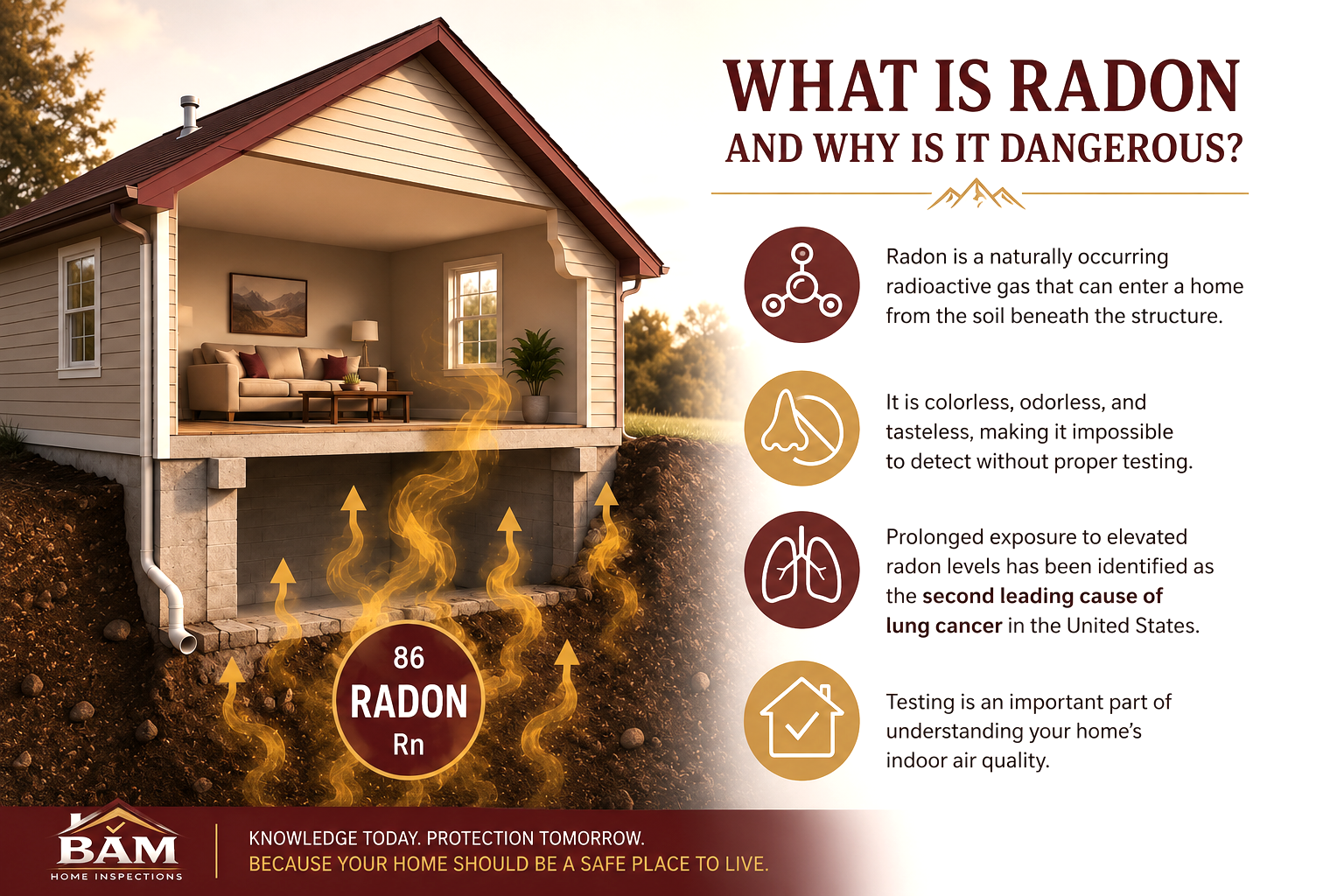
Radon is a naturally occurring radioactive gas that can enter a home from the soil beneath the structure. It is colorless, odorless, and tasteless, making it impossible to detect without proper testing. Prolonged exposure to elevated radon levels has been identified as the second leading cause of lung cancer in the United States, which is why testing is an important part of understanding your home’s indoor air quality.
Why is Radon Testing Important in Colorado?
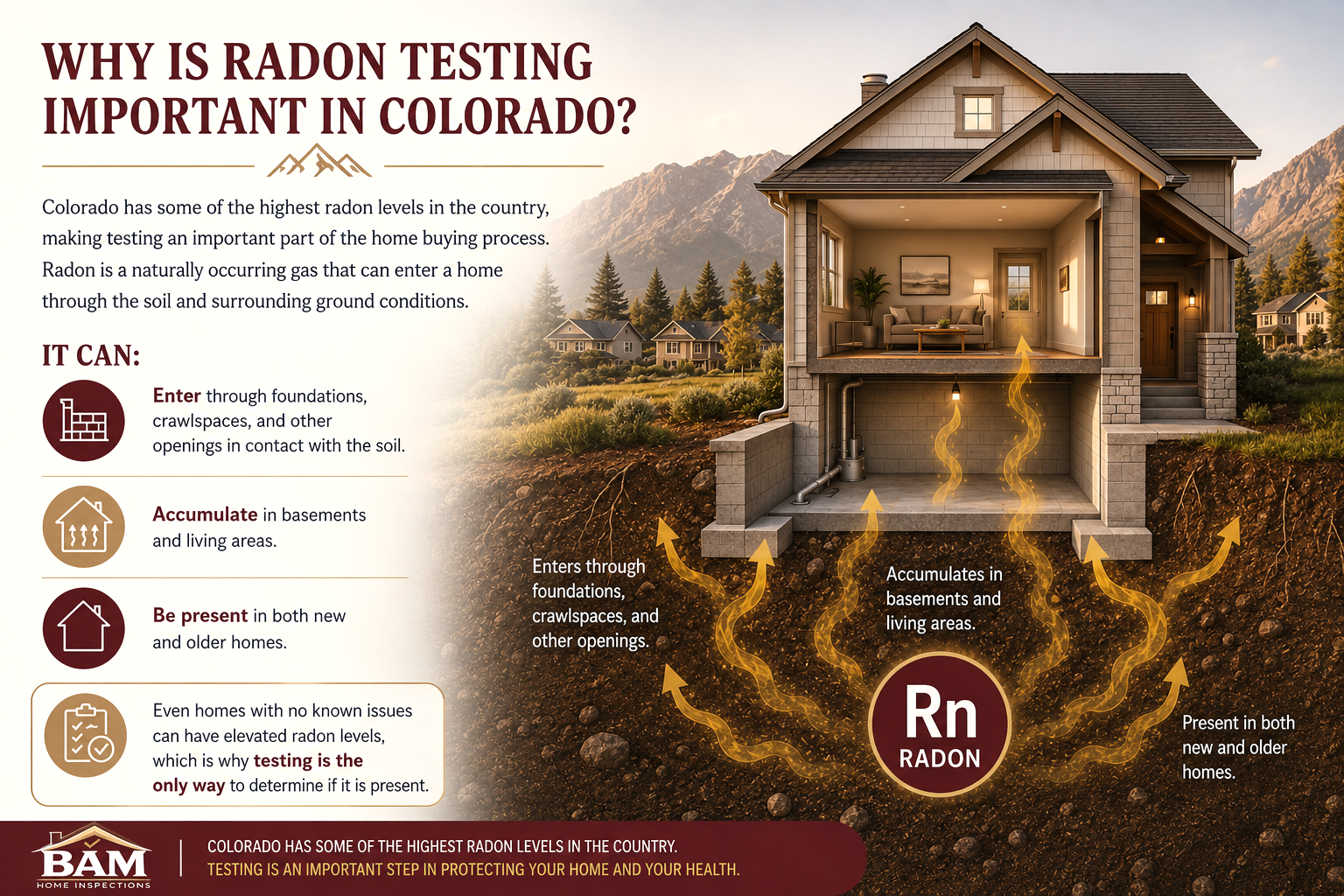
Colorado has some of the highest radon levels in the country, making testing an important part of the home buying process. Radon is a naturally occurring gas that can enter a home through the soil and surrounding ground conditions.
It can:
- enter through foundations, crawlspaces, and other openings in contact with the soil.
- accumulate in basements and living areas.
- be present in both new and older homes.
Even homes with no known issues can have elevated radon levels, which is why testing is the only way to determine if it is present.
When Is Radon Testing Recommended?
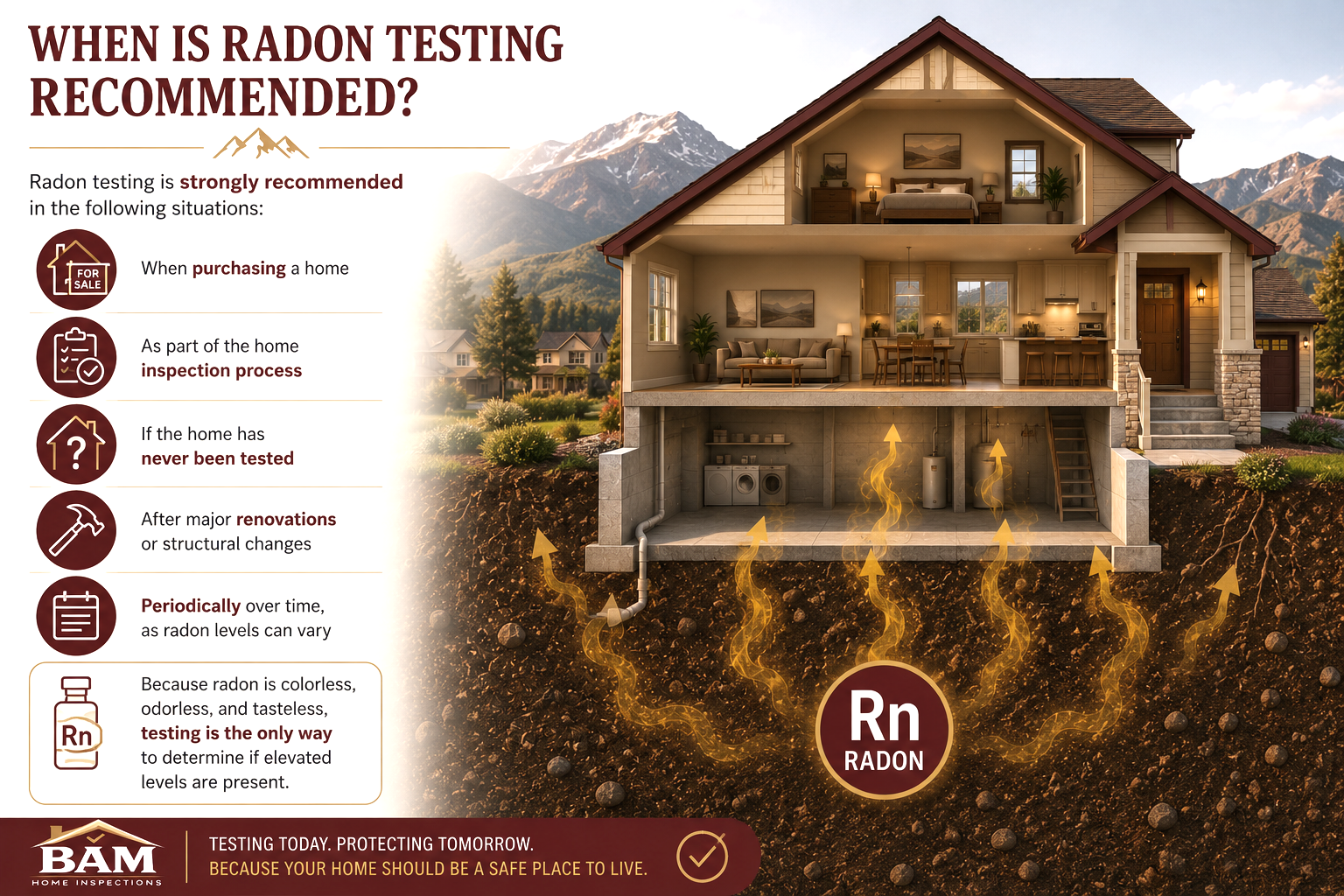
Radon testing is strongly recommended in the following situations:
- When purchasing a home
- As part of the home inspection process
- If the home has never been tested
- After major renovations or structural changes
- Periodically over time, as radon levels can vary
Because radon is colorless, odorless, and tasteless, testing is the only way to determine if elevated levels are present.
How Is Radon Testing Performed?
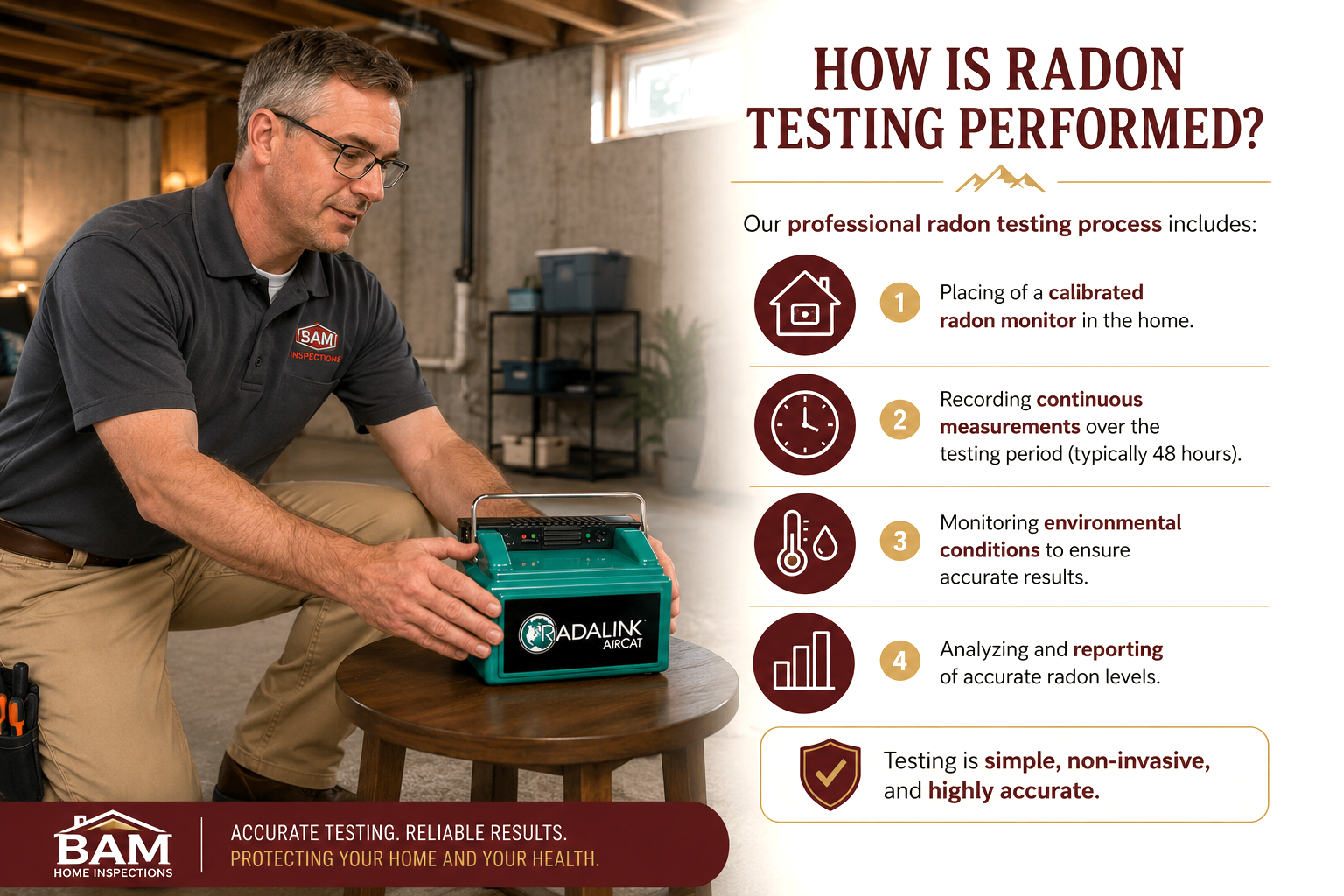
Our professional radon testing process includes:
- Placing a calibrated radon monitor in the home.
- Obtaining continuous measurements over the testing period (typically 48 hours).
- Monitoring environmental conditions to ensure accurate results.
- Analyzing and reporting radon levels.
Testing is simple, non-invasive, and highly accurate.
How are Radon Test Results Interpreted?
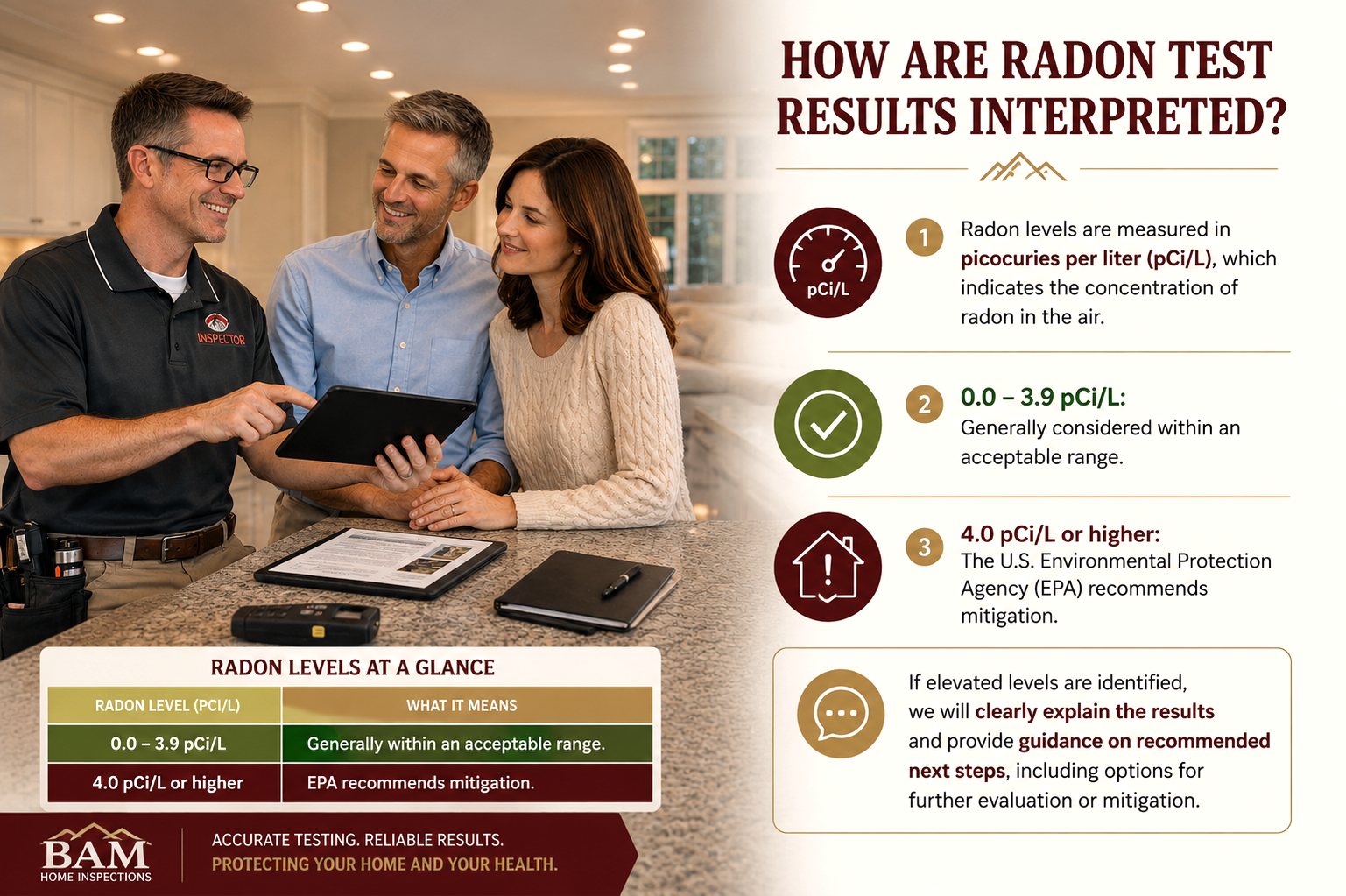
Radon levels are measured in picocuries per liter of air (pCi/L), which indicates the concentration of radon in the air.
- 0.0 – 3.9 pCi/L: Generally considered within an acceptable range.
- 4.0 pCi/L or higher: The U.S. Environmental Protection Agency (EPA) recommends mitigation
If elevated levels are identified, we will clearly explain the results and provide guidance on recommended next steps, including options for further evaluation or mitigation.
What If Elevated Radon Levels Are Detected?
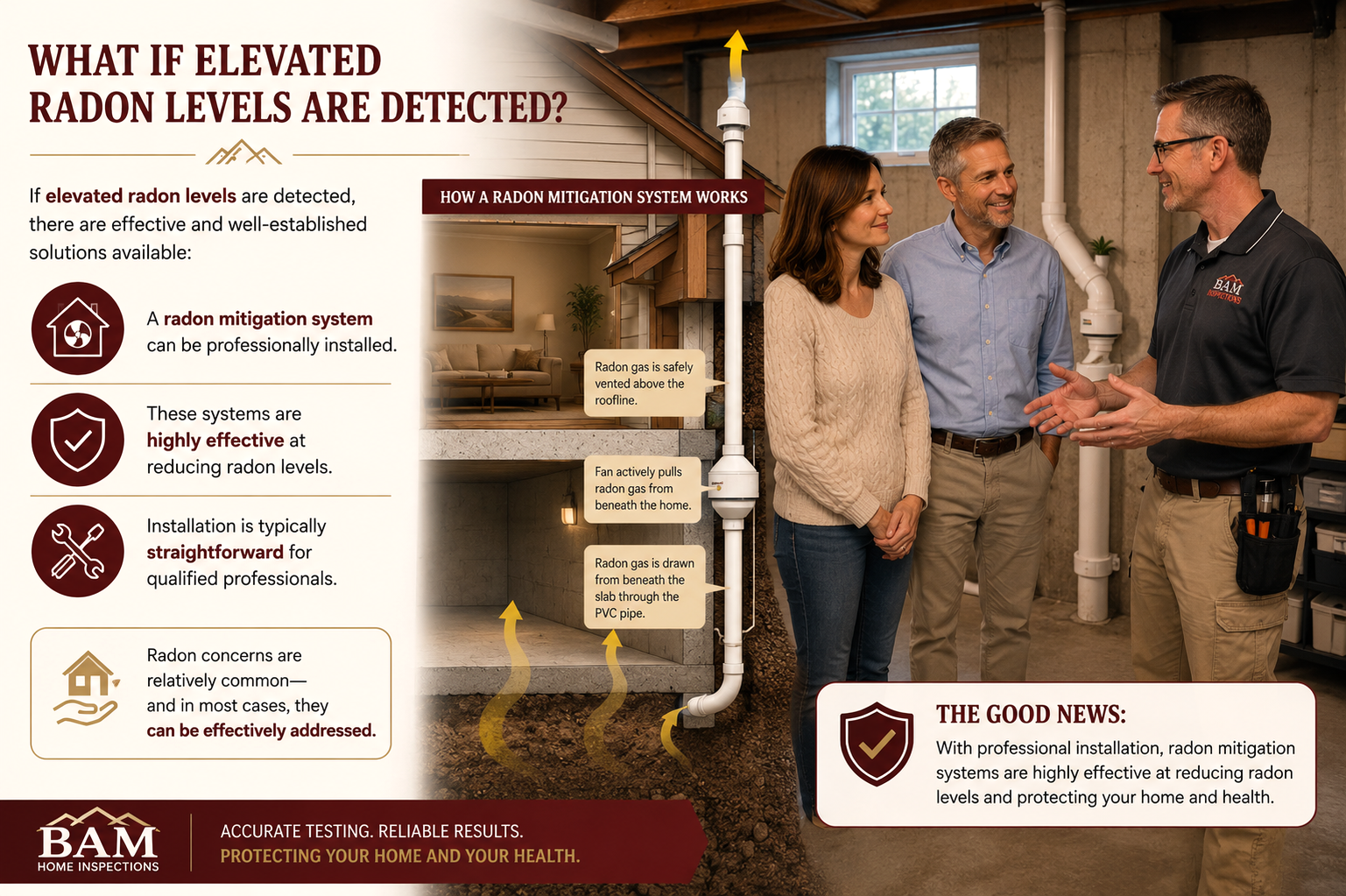
If elevated radon levels are detected, there are effective and well-established solutions available:
- A radon mitigation system can be professionally installed.
- These systems are highly effective at reducing radon levels.
- Installation is typically straightforward for qualified professionals.
Radon concerns are relatively common—and in most cases, they can be effectively addressed.
Radon Testing in Colorado
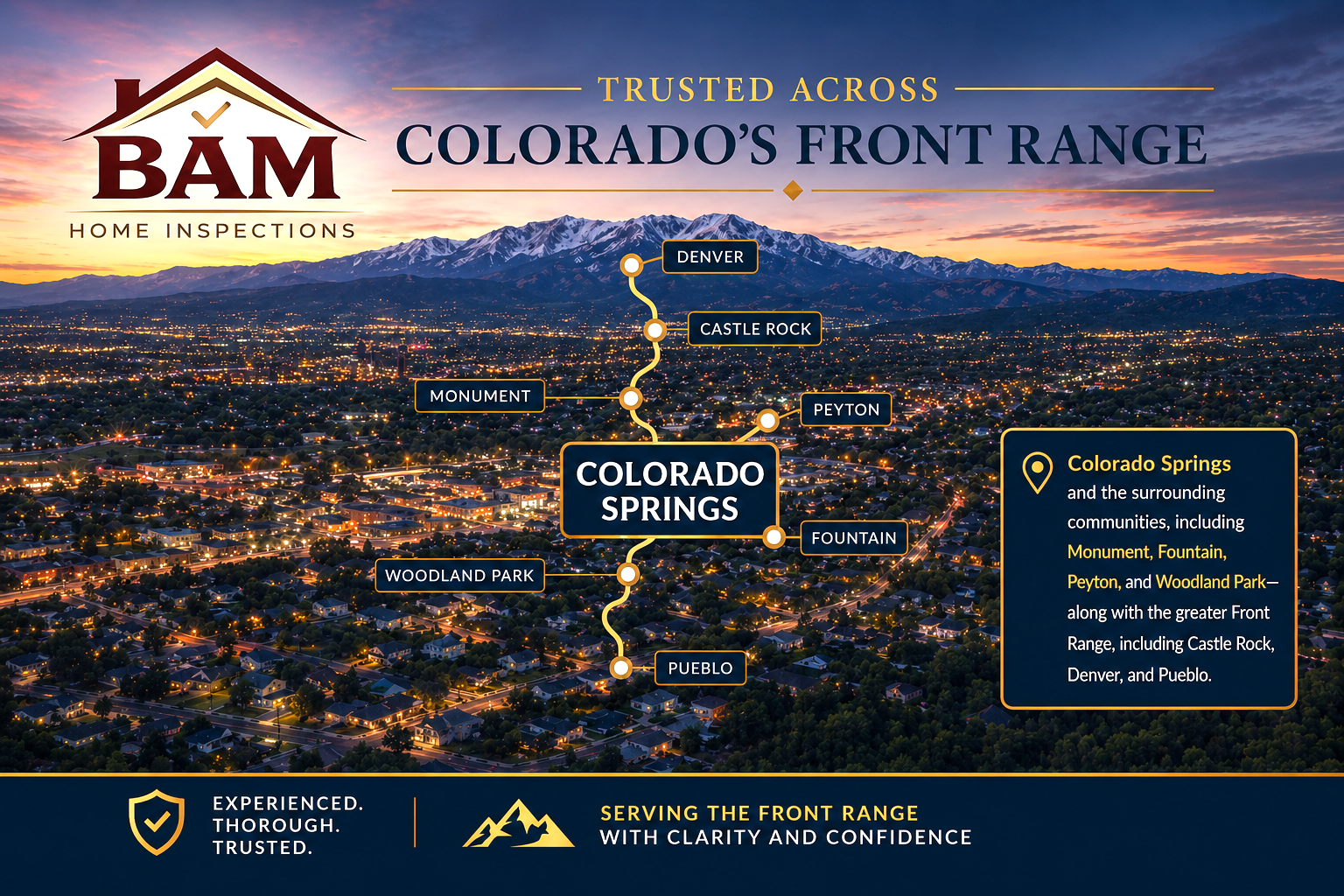
Proudly serving Colorado Springs and surrounding communities, including Monument, Fountain, Peyton, and Woodland Park—along with the greater Front Range, including Castle Rock, Denver, and Pueblo.
We understand the radon risks and testing protocols specific to Colorado homes, allowing us to provide accurate testing and meaningful insight into your home’s indoor air quality.
What additional services are available?
Sewer Scope Inspection
A sewer scope inspection uses a small camera to assess your sewer line quickly. By analyzing the pipes from the inside, an inspector can identify any issues early to prevent costly repairs.
Mold Testing
Mold is more than just an unsightly problem—it can affect both the structural integrity of a home and the health of those living inside it.
Wood-Destroying Organism Inspection
Our WDO inspection includes a detailed examination of the home looking for signs of wood destroying organisms to include termites, carpenter ants, carpenter beetles, and wood-boring beetles. Fulfills most VA Loan requirements.
FAQs
Yes. Colorado has some of the highest radon levels in the country, making testing highly recommended for all homes. Because radon is a naturally occurring, invisible gas that cannot be seen or smelled, testing is the only way to determine if elevated levels are present.
Yes. Radon can be present in both new and older homes, regardless of construction quality. Because radon originates from the soil beneath the home, its presence is not related to how well the home is built—making testing important for any property.
Most radon tests are conducted over a minimum of 48 hours to ensure accurate and reliable readings. This timeframe allows the test to capture normal fluctuations in radon levels, providing a more representative measurement of the home’s indoor air conditions.
No. Radon testing is a passive, non-intrusive process that does not disrupt normal living conditions. For accurate results, windows and exterior doors should remain closed as instructed during the testing period..
Costs can vary depending on the home and system design; however, radon mitigation is generally considered a practical and cost-effective solution. In most cases, systems can be installed efficiently by licensed professionals.
Radon testing is recommended every few years, as well as after any major changes to the home, such as renovations, additions, or alterations to the foundation or ventilation systems. Because radon levels can vary over time, periodic testing helps ensure levels remain within an acceptable range.